

Grammar Guru: Whose vs. Who’s. (And Your vs. You’re, Too!)
Confused by whose vs. who’s or your vs. you’re? Learn the simple trick for getting these commonly confused words right every time. Image: iStock
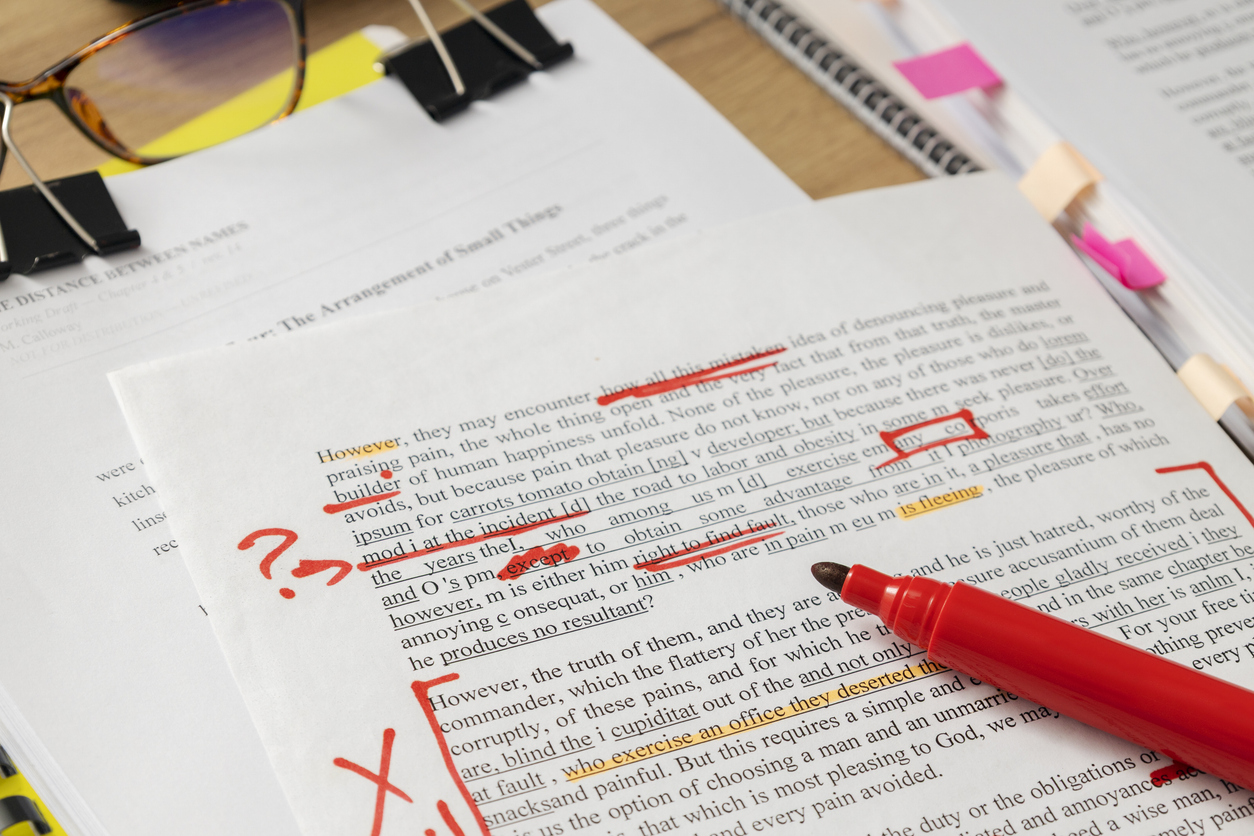
Grammar Guru is back at it. After a bit of a hiatus, we’ve returned with a lesson on the apostrophe mix-ups we see every single day. If you’ve ever paused mid-text, wondering whether it’s who’s versus whose, this one is for you. It’s back-to-school season, which means it’s the perfect time for all of us to sharpen our pencils … and our grammar.
Today’s lesson tackles two of the most common apostrophe errors in the English language. I see these daily in social media captions, emails, and yes, even in PR pitches sent to our StyleBlueprint inboxes. The good news? Both follow the same rule, so once you learn the trick, you’ve solved two problems at once.
And, I know, I know. You know these rules … BUT. BUT. BUT. Their misuse is a bit of an epidemic in communications today. So, even if you read this with a resounding “YES! Please, for the love …,” just know that it’s a glaring grammar rule that, when broken, makes people look uneducated or sloppy. Neither is good.
Whose vs. Who’s
Here’s everything you need to know: who’s is a contraction, and whose shows possession.
Who’s always means “who is” or “who has.” That apostrophe is standing in for the missing letters, just as it does in don’t and can’t.
Correct Example: Who’s bringing the queso to the tailgate? (Who is bringing the queso?)
Correct Example: Who’s been to the new restaurant in Nashville’s 12 South neighborhood? (There are a number of them, so who has been?)
Whose is the possessive form. It tells you that something belongs to someone.
Correct Example: Whose casserole dish is still in my kitchen from book club?
Correct Example: She’s the neighbor whose garden stops traffic every spring.
My test: Read the sentence out loud and replace the word with “who is.” If the sentence still makes sense, you want who’s. If it sounds ridiculous, you want whose. Try it: “Who is casserole dish is still in my kitchen?” sounds completely off, so whose wins.
Why is this confusing? Because we’re taught that apostrophes show possession (Sally’s coffee, the dog’s leash). But possessive pronouns are the exception to that rule. Whose, its, yours, hers, theirs … Not an apostrophe in the bunch.
Your vs. You’re
Don’t you just cringe when someone is criticizing someone on social media, or trying to make a sound argument, and you see your instead of the proper you’re? Yep. Me, too. It’s an instant way to prove your comment should be discounted. Harsh, but that’s the truth. Improper grammar can disqualify your opinion in a millisecond.
Just like who’s versus whose, you’re is a contraction of “you are.” Your shows possession.
Correct Example: You’re going to love this recipe. (You are going to love it.)
Correct Example: Your recipe was the hit of the potluck. (The recipe belongs to you.)
Incorrect Example: Your welcome!
That last one deserves a moment of silence. “Your welcome” tells me that a welcome belongs to me, which is a lovely gift, I suppose, but not what anyone means. When you respond to a thank-you, it’s you’re welcome, as in “you are welcome.”
The same test applies as before. Swap in “you are.” If it works, use you’re. If it doesn’t, use your.
Correct Example: You’re never going to believe whose car is parked in your driveway.
Look at that sentence. All three lessons in one place!
Why This One Matters and Why So Many Mistakes Are Made
Autocorrect will not save you here. Both spellings are real words, so your phone shrugs and lets the error sail right through. Then, you notice later and feel silly!
This is one you have to catch with your own eyes, which is why even smart, seasoned writers slip up when typing fast.
My advice? Slow down. Proofread anything before hitting send, and make it a habit to specifically look for contractions to double-check. Seriously, it just takes an extra five seconds, but it keeps you off of someone else’s list of grammar pet-peeves.
**********
For your most cherished “me” moment of the day, subscribe to StyleBlueprint.

Liza Graves
As CEO of StyleBlueprint, Liza also regularly writes for SB. Most of her writing is now found in the recipe archives as cooking is her stress relief!