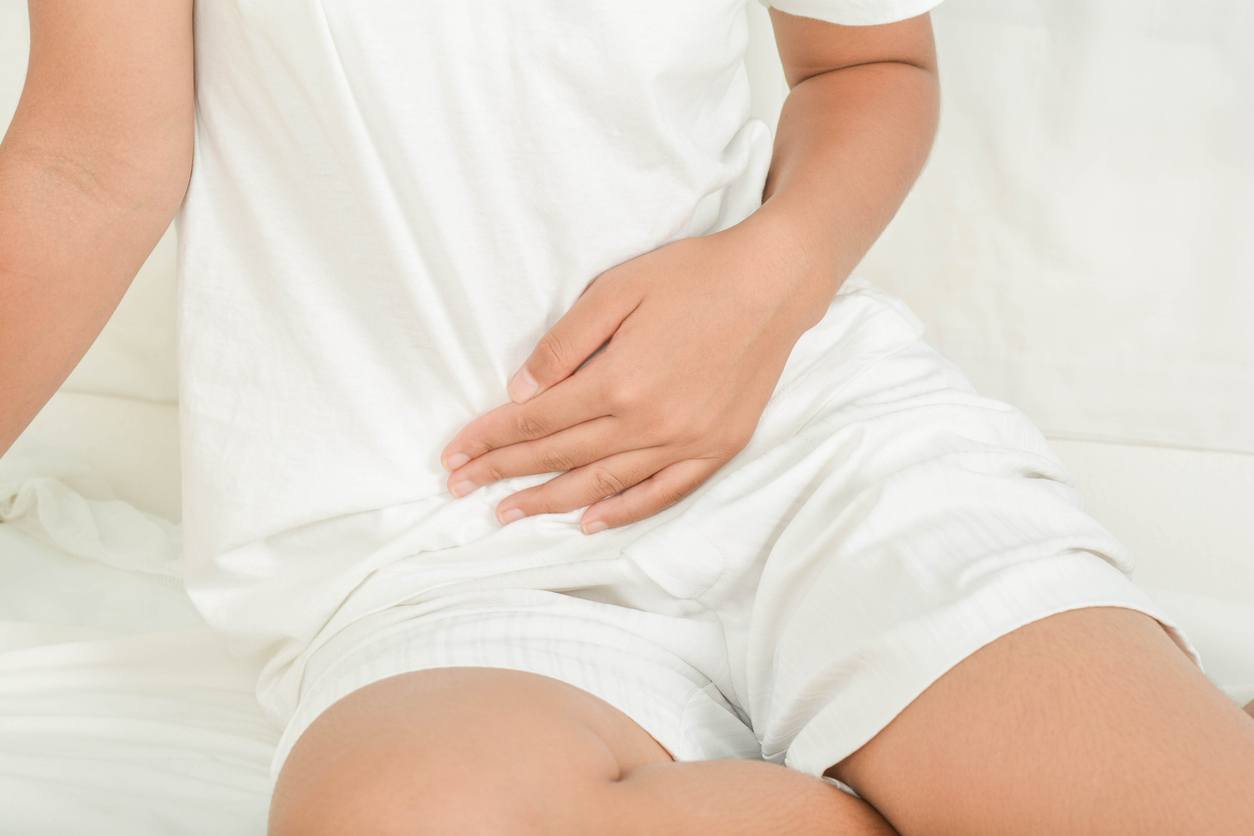
Pelvic pain is a serious matter that many women ignore but shouldn’t. We talk a medical expert at Norton Healthcare, who underscores the importance of talking to a pelvic specialist to help diagnose and treat the causes of pelvic pain.
Before he began practicing medicine, Dr. Daniel Ginn, D.O., was warned that patients with pelvic pain were the most challenging to treat. And in most cases, they told him, they probably couldn’t be helped.
As an obstetrician and gynecologist with Norton Healthcare with a focus on endometriosis, large uterine fibroids and prior surgeries that have left severe scars and adhesion damage, Dr. Ginn has, indeed, seen many patients with pelvic pain. He also found that many of them hadn’t been helped, simply because other doctors may not have been able to get to the true cause of the disease.
Instead of accepting the reality that his patients would be riddled with chronic, unbearable pain for the rest of their lives, Dr. Ginn saw his patients’ struggles as an opportunity. “Standard protocols of additional surgery, sending patients to a gastroenterologist or narcotic pain management were the most common answers to pelvic pain,” he says, “but even these were not generally enough.”
In the end, Dr. Ginn, who is part of Norton Women’s Care Pelvic Health Program, says the way to help patients find relief from pelvic pain begins with getting to the root of their issues.
PinDr. Daniel Ginn, D.O., is an obstetrician and gynecologist with Norton Women’s Care Pelvic Health Program
Getting to the Root Pelvic Pain
Pelvic pain can be triggered by a variety of causes, from endometriosis to sexually transmitted diseases, fibrosis to ovarian cysts. In fact, Dr. Ginn notes that there are more than 70 different origins of pelvic pain, and they often work in tandem.
For example, if a patient has endometriosis and suffers from pelvic pain, the pain may actually be the result of severe scar tissue caused be the endometriosis. Additionally, the patient may find that being intimate with their partner causes more pain that causes their muscles to tense up in response. This tensing of the muscles can cause muscle spasms and, unfortunately, even more pain.
This is why Dr. Ginn encourages his patients to tell their whole pain story — when they do, he often finds that there are multiple issues leading to their chronic suffering. Learning the ins and outs of his patients’ experiences also helps Dr. Ginn to prescribe the proper protocols to put them on the path toward relief.
Common Causes of Pelvic Pain — And How to Treat Them
Endometriosis
Endometriosis, caused when endometrial cells are implanted outside of the uterus, is one of the most common sources of pelvic pain. “The cells are hormonally active and around the time of the menstrual cycle, they cause bleeding, swelling, inflammation and scar tissue,” says Dr. Ginn. “It’s painful, but the pain is felt around the tubes and ovaries, not necessarily around the uterus.”
Treating endometriosis most often begins with medication because that is the easiest and least invasive treatment. Dr. Ginn warns, however, that if medications aren’t working within a reasonable amount of time, surgery should strongly be considered. “The most common surgery has traditionally been ablation (or burning of lesions), but ablation is not the most effective treatment in the long term,” says Dr. Ginn. “The best procedure for long-term treatment is excision to remove the cells completely, but this is a procedure some gynecologists may not be comfortable performing.”
Ovarian Cysts
Ovarian cysts are another common cause of pelvic pain, though they can be difficult to treat because they come and go with the cycle. Ovarian cysts are typically more painful around ovulation, but they are not always large. They can be small and cause just as much pain when they are released around the same time eggs are released during a woman’s menstrual cycle.
The most common way to treat pain associated with ovarian cysts is via birth control that can suppress the menstrual cycle. However, this is obviously not a viable option for women who are trying to get pregnant. To treat the actual cyst — and not just the pain — it’s important to identify what’s causing the cyst. “It could be an issue of compromised blood flow, in which surgery may be performed as treatment,” explains Dr. Ginn.
PinThere are many causes of pelvic pain, including ovarian cysts, endometriosis, bladder issues and many more.Bladder Issues
Bladder symptoms, such as interstitial cystitis, can cause pelvic pain and even ulcers inside the bladder. Because dietary choices can cause irritation of these ulcers, diet may also alleviate this pain and help the problem. Additionally, there are medications to help numb the bladder spasms caused by interstitial cystitis.
It’s understandable that bladder issues can cause pelvic pain, as the bladder is located in the pelvis. But sometimes pelvic pain can be caused by organs sitting on the pelvis. Irritable Bowel Syndrome (IBS), for example, can also cause pelvic pain, even though the bowels aren’t technically pelvic organs.
Uterine Fibroids
Uterine fibroids, noncancerous growths of uterine muscle tissue, are very common and can become extremely large. Symptoms of uterine fibroids include heavy periods and, often, pelvic pain.
Treatment of uterine fibroids is largely dependent on the location of the fibroids. “Most of the time, a minimally invasive procedure can be done to shrink or remove them,” says Dr. Ginn, “but it’s important for your physician to do an ultrasound to help identify the location and size of the fibroid in order to make a best-case treatment decision.”
Whatever decision is made, it’s important to follow through with treatment because, in addition to causing excruciating pain, fibroids in some locations can also cause miscarriage.
PinThe key to finding relief is finding a physician you are comfortable with and being honest about your pain.
Finding Relief from Pelvic Pain
Ultimately, finding relief from pelvic pain hinges as much on a patient’s willingness to be completely transparent with her doctor — regarding pain, challenges, previous protocols, etc. — as it does the actual cause of the pain. This process can be daunting for both the physician and the patient, but Dr. Ginn has found that the effort put forth by both can yield life-changing results.
“Sadly, many patients seeking relief have been accused of drug seeking, told they can’t be helped, or told they are making the pain up,” he says. “I encourage patients to partner with a physician who will listen to them and work with them to find relief.”
To learn more about the Norton Women’s Care Pelvic Health Program, visit NortonHealthcare.com.This article is sponsored by Norton Healthcare.
Our unofficial motto at StyleBlueprint is "Be kind. Do good." We encourage this to be the basis for all comments on our articles. Provide feedback that adds to the story. Some controversy or disagreements are part of any good dialogue between friends, but anything that tears down or belittles others is subject to disapproval or removal. Thank you for being a member of the StyleBlueprint community! View our Community Guidelines.