Most of us are just now hearing about the thriving arts town of Natchez, MS. The jewel of the Mississippi River is attracting artists, galleries, and even entire creative industries from around the globe because of a few key ingredients that make it a creative haven.
When I first began researching all-things art in Natchez, Mississippi, something weird started happening. Each person I spoke with knew the one I spoke to before and then connected me to the next contact. Their stories wove together and overlapped beautifully. Each was kind and eager to talk about their place within the arts. A quick search of Natchez online doesn’t turn up much about art, surprisingly, but I came to realize that art is the not-so-secret cornerstone of the oldest town on the Mississippi River.
PinNatchez is known for its exquisite sunsets, architecture, riverboats, balloon festival, and flourishing creative community.
“As far as I’m concerned, the arts community in Natchez has always been here,” says artist and Natchez local Kate Lee Laird. “It’s just that no one knew about it outside of Natchez. COVID opened its doors. People started traveling inward instead of outward, and are finally learning about hidden gems like Natchez.” Kate Lee, like so many others, felt magnetized back to Natchez after she finished art school at LSU. “We have sculptors, painters, live music, drag shows, photography, writers, theater, a pottery studio, architects, and more. There are so many different forms of art here,” she says.
We are grateful to all our sponsors:
“Natchez has always had a very unique creative energy. There is inspiration everywhere you turn. The rich, deep history produces rich, deep creatives. It is very supportive of the arts and weird people. It’s a very progressive town,” Kate Lee continues. “Natchez is called ‘The Little Easy’ because it’s akin to a small New Orleans. You’ll find lots of different architecture everywhere because Natchez was the territory of the Native Americans, the Spanish, the French … all contributing their different cultures to the town.”
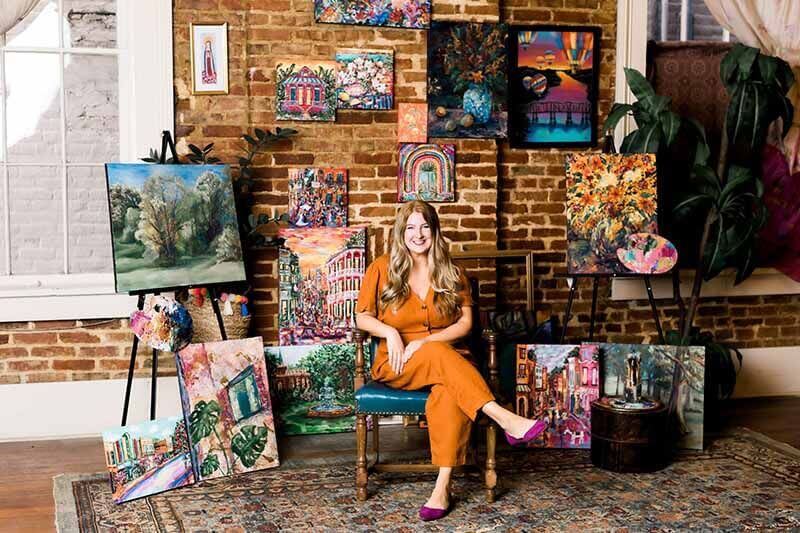
PinKate Lee shares an eclectic space in downtown Natchez with her friend, photographer Taylor Cooley. The two collaboratively showcase their work, host events, and welcome visitors. Image: Taylor Cooley
Established in 1716, Natchez was passed from the French to the English in 1763 and then was under Spanish rule from 1779 to 1798 when the United States named it the first capital of the Mississippi Territory. The city economically thrived in the pre-Civil War years as an industrial power, a leader in cotton production, and a central player in the slave trade. There are more surviving historic structures in Natchez than any other city in the South. Many are marvelously preserved and restored examples of Greek Revival architecture and life in the 1800s. This amalgamation of historical influence and the wealth of its diverse patrons can be seen at every turn.
It’s almost as if Natchez locals have shared this remarkable inside joke and the rest of us are just now becoming privy to it. Locals and transplants want to let us in on it though. In fact, Natchez’s Shift South initiative is currently offering a $6,000 credit to remote workers who move there and buy a house with a value of at least $150,000. Aside from the curious road-tripper and the incentivized remote worker, people show up in droves to Natchez by boat. The famous American Queen Steamboat Company and American Cruise Lines bring hundreds of travelers a day to the Natchez shores on their voyages from Memphis to New Orleans and beyond.
We are grateful to all our sponsors:
Kate Lee says not only do people enjoy the river views and sunsets, she adds, laughing, “Even the cemetery is gorgeous … with rolling hills, live oaks with limbs touching the ground, mausoleums and intricate gravestones everywhere. Every few feet there’s a story about a person from Natchez.” She didn’t plan on living in Natchez long-term, but she just never wanted to leave. Part of an artsy family, she began doing graphic design and painting for her mother’s sign company. She was soon reminded of her hometown’s support of art. So she stayed and grew her business of wildly colorful live event paintings. “I wouldn’t be as successful as I am if it weren’t for Natchez,” says Kate Lee.
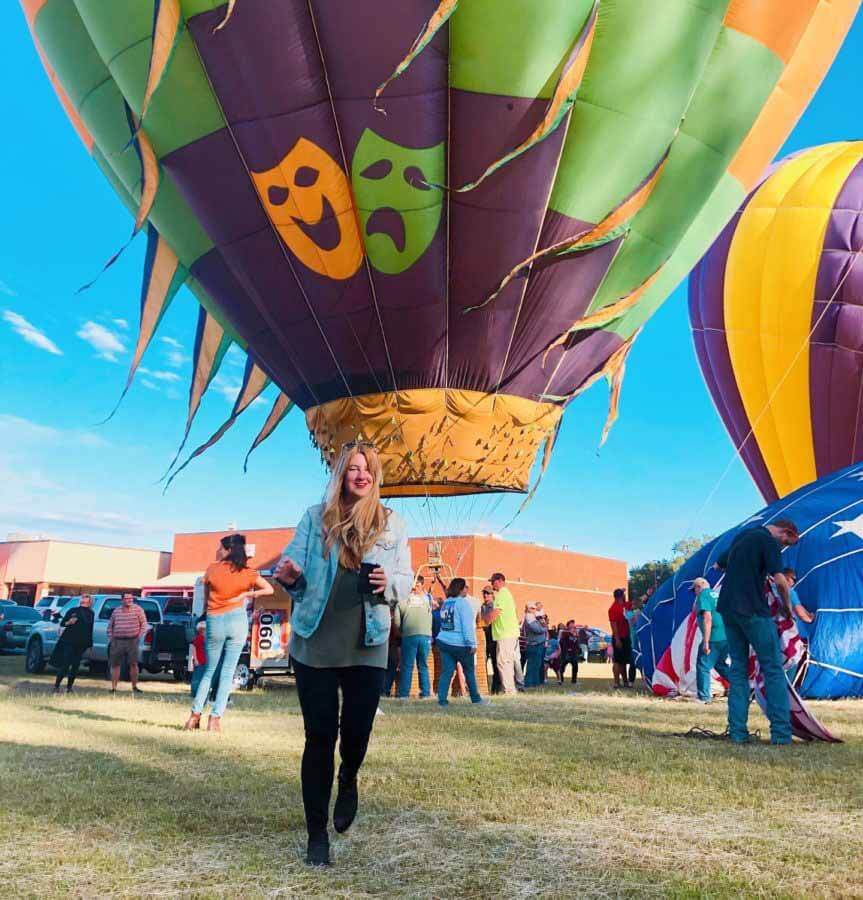
PinKate Lee also oversees the arts and crafts portion of the Natchez Balloon Festival, a beloved celebration for 34 years. The long-weekend-spanning party brings hot-air balloonists and onlookers from all over the world, many of whom are – surprise! — now moving to Natchez full-time. Image: Provided
Visit Kate Lee at her studio on Franklin Street and she will tell you all about the people who’ve nurtured her craft — people she’s grown up around, people who’ve moved to Natchez, and all the people who just pass through. “The community is like a family. We support one another and help each other out. But tourists are also a large part — they buy art and travel to see the art, especially the art carved into the buildings. They’re contributing to the growth of Natchez.”
RELATED: 5 Luxurious & Unusual Southern AirbnbsPin“My artwork is greatly influenced by this city,” Kate Lee says. “I like to create very colorful and happy paintings. I want to bring color into other people’s lives. I would not be as successful as I am if it weren’t for Natchez. The community supported me like no other.” Image: Taylor Cooley
Stacy Conde with her husband, artist Andrés Conde, ran the successful contemporary art museum Conde Contemporary in Miami … until they moved the gallery to Natchez. “Natchez has a very bohemian feeling pulsating just barely beneath the surface, which is what I think attracts artists to the area,” Stacy says. “That and the tremendous amount of visual information available at every turn. It’s not all antebellum homes either … it’s the river, the old worn-out buildings, the people, and the abundance of nature all around us.” Combine all these vibrant stimuli with the slower, more deliberate pace of life and affordability. “Honestly, it’s difficult not to feel creatively stimulated here. I always find it hard to leave Natchez, and when I do, I can’t want to get back,” Stacy says.
PinWith the pandemic shifting most of the gallery’s business to online, the Condes seized the opportunity to cut costs and shift to Natchez’s Deep South lifestyle. Image: Conde ContemporaryRELATED: This Mississippi Food is Having a Moment
“Our approach to art is very laid back and welcoming,” Stacy says, intentional in sharing that she was barefooted as we spoke. “We don’t seek to make anyone feel uninformed or uncomfortable. Instead, we engage visitors in common sense conversations about art.” While the Condes don’t take themselves too seriously — they are very serious about the work. “We represent an international group of artists, many of whom have work in museum collections, including the Tate, the Whitney, and the Metropolitan Museum of Art, to name a few.”
We are grateful to all our sponsors:
Stacy says The Historic Natchez Foundation, ArtsNatchez and Mississippi School of Folk Arts should definitely be on any art lover’s itinerary. Echoing Kate Lee’s sentiment, Stacy says, “Another place that I find incredibly inspiring and beautiful is the cemetery. It’s massive and beautifully laid out like a park. Among the headstones and tombs are beautiful examples of sculpture. It’s my favorite spot in town.”
Nine years ago, Sarah Freeman, President of Mississippi School of Folk Arts in Natchez, made the move from the “The Big Easy” to “The Little Easy.” Growing up in New Orleans, Sarah spent a lot of time in Natchez and had that “I could live here” thought nearly 30 years ago. “Natchez is so friendly. You really get to know everyone. It’s still a small town and everyone comes together to make things happen,” she says. The gallery and shop at the Mississippi School of Folk Art are chock-full of handmade things including pottery, textiles, paintings and handmade jewelry. “It’s exciting that there is more than one place in town to shop our makers,” Sarah says.
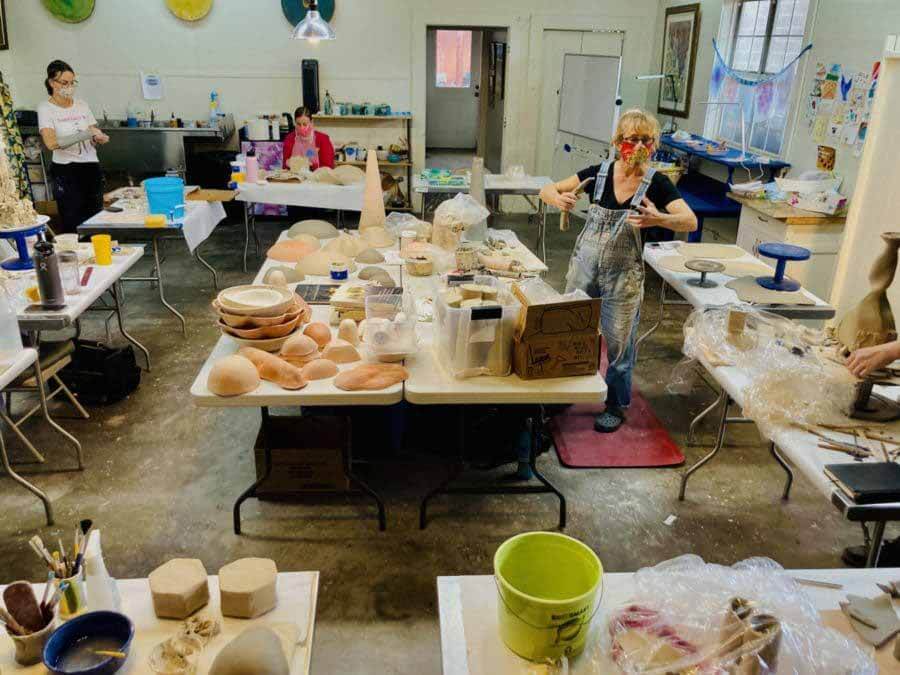
PinThe Mississippi School of Folk Art has a full pottery studio and offers private lessons in almost everything they teach (about $40 for a two-hour lesson). They also host private events and parties. Image: Mississippi School of Folk Art
After talking to several artists, Sarah decided to found the school, and it became a non-profit in August of 2019. “We hope to promote more makers as well as artists,” Sarah says. “We love bringing in instructors and lecturers, and we are starting to bring those events back.” They just sold-out an event on Mayan art and will soon be hosting workshops on precious metal clay and eco-printing. Sarah is most excited for a world-renowned Nigerian-born indigo master to visit Natchez and lead a workshop at the school. “Indigo was grown around here before cotton,” she says. “We have a largely Black community in Natchez, so I think it’s interesting to tie something beautiful like the indigo tradition into this pretty ugly history.”
We are grateful to all our sponsors:
Everyone I spoke to in Natchez returned to the architecture as being integral to the thriving arts. At the Spring Pilgrimage, old houses are open to the public, and Sarah says that this year will focus more on the back-house history. “Who built these houses and who maintained them? The slaves,” she says. “Natchez was one of the wealthiest places in the country before the Civil War, with more millionaires than anywhere else. But they made their money off of the people they owned.” Overflowing with history, the stunning structures help tell the multi-layered, multi-cultural stories of the city.
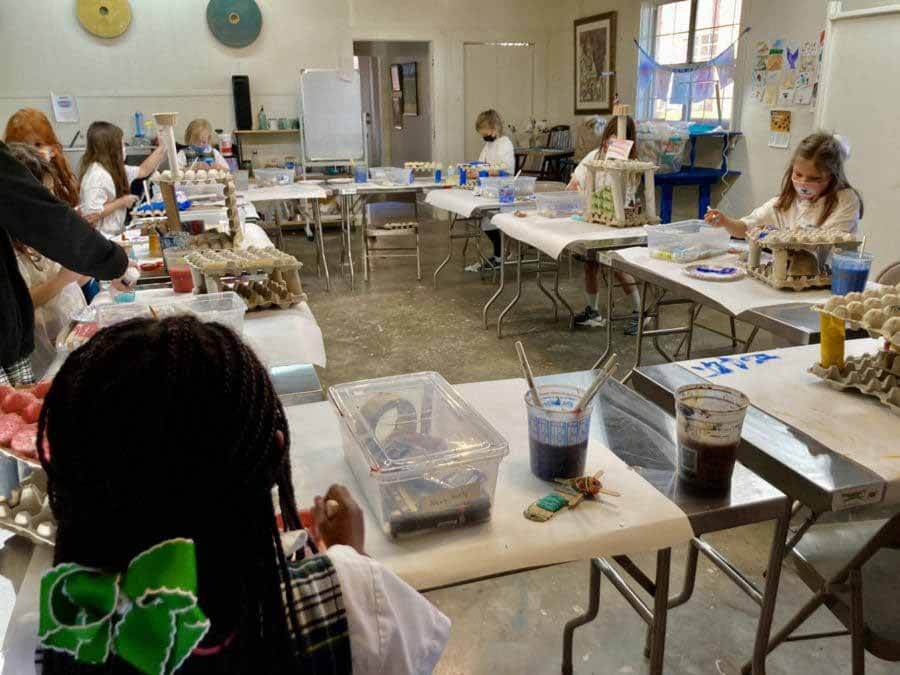
To further support its artists, Natchez hosts a market of hand-made items in its convention center twice a year; publications like Natchez Magazine spotlight local artists monthly; and Sarah’s school has an artist-in-residence program and also builds a calendar full of interesting lectures and classes for the whole community, including children.
PinSarah strives to connect Natchez with more artists and craftsmen in the Black community, Choctaw artists native to the area, and more young school children with the artistic spark.
“We have such a diverse, accepting and inclusive community here. No one feels pressure to compete,” Sarah says. “The more the arts are promoted, the better it is for everyone. Last year, everyone learned that life is short and many decided to pursue what they love. It’s the perfect place for that.”
Kate Lee also shares that while there is so much art to consume already in Natchez, there are even more artsy endeavors in the works. “There’s a group developing an art map, another one organizing the creation of more murals,” she says, “and the movie industry has fallen in love with Natchez. It’s not uncommon to hear about a famous actor in town working on the latest film.” The fervor of these ambassadors to the arts community is hard to ignore, and we all want a piece of it.
**********
Meet more inspiring people, discover new travel destinations, find delicious recipes and more! Subscribe to StyleBlueprint.
Zoe is a StyleBlueprint freelance writer, Charlotte native, Washington & Lee graduate, and Nashville transplant since 2012. She teaches Pilates, helps manage recording artists, and likes to "research" Germantown's food scene.
Our unofficial motto at StyleBlueprint is "Be kind. Do good." We encourage this to be the basis for all comments on our articles. Provide feedback that adds to the story. Some controversy or disagreements are part of any good dialogue between friends, but anything that tears down or belittles others is subject to disapproval or removal. Thank you for being a member of the StyleBlueprint community! View our Community Guidelines.