Her Town Washed Away: How Nancy Owen Revived Banner Elk After Hurricane Helene
Nancy Owen helped build a Walmart-like distribution center after the hurricane that even FEMA couldn't believe. Now, Banner Elk's tourism director is ready and eager to welcome you back to the "hidden gem of the High Country!" Image: Nancy Owen
When Nancy Owen first moved to Banner Elk, North Carolina, she thought it would be a one-year adventure in the ski industry before graduate school. That was nearly three decades ago. Today, as the town’s tourism director, she’s not only witnessed Banner Elk evolve into a four-season destination but also helped shepherd the community through one of its darkest times: the catastrophic storm that cut the town off from the outside world in September 2024.

It’s been a year since Hurricane Helene, which must be hard to think about. Do you mind walking us through that week?
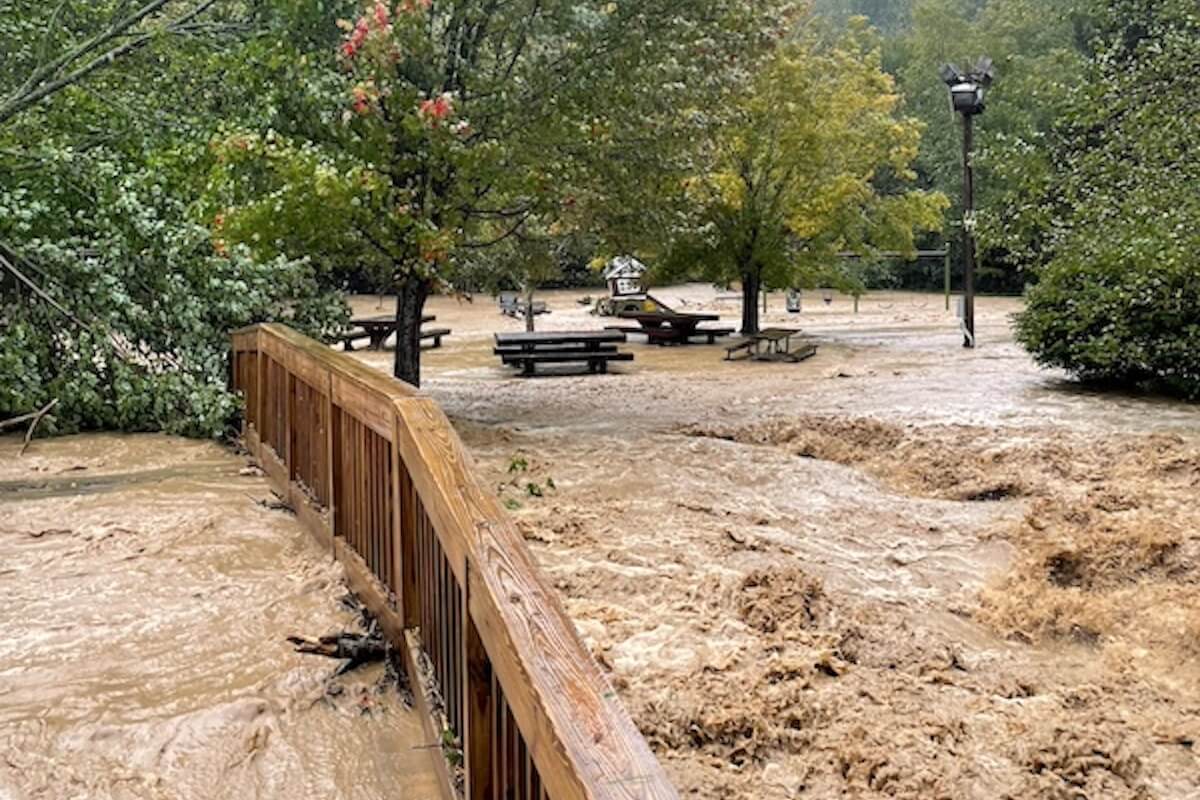
It started on a Tuesday with what looked like a minor flash flood — just a couple of inches of rain in under 30 minutes. By Thursday night into Friday, the wind was like nothing I’d ever heard in my life. The rain was relentless. Banner Elk sits in a valley with Beech Mountain on one side, Sugar Mountain on the other, and two waterways running through town. It was the perfect setup for disaster.
Within hours, creeks and rivers swelled over their banks, and every road into town was wiped out. We were completely cut off. Because our water and sewer lines ran under those roads, those systems went out, too. Over 30 inches of rain fell in less than 48 hours. It was terrifying.

What was it like to see your community hit with no warning?
That day, my husband, my son, our two dogs, and I evacuated to Town Hall. Trees were falling all over our yard, and we were afraid one would hit our house. At first, we were completely isolated — no way in or out, radios down, internet gone.
But we had a generator and a landline. Soon, people started walking to Town Hall to charge phones and call their families. Lees-McRae College hadn’t evacuated either, so suddenly we had 700 to 800 students in need, plus residents. Town Hall became the hub for everything — supplies, communication, shelter.
It’s hard to overstate how much the community of Banner Elk came together right after the storm and immediately got to work. Hardly anyone had any experience in storm recovery, but the way the town and community responded was just so beautiful. It will surely be a case study of how to help your neighbor.
At what point did outside help arrive?
By Saturday and Sunday, the National Guard was coordinating with us. Helicopters brought in supplies and even evacuated stranded people and an entire condo complex. That’s not something I ever imagined I’d be organizing. Planes began landing at our private airstrip with food, water, and aid.
When the donations started pouring in, we became the county’s distribution center, not just for Banner Elk but for surrounding towns, too. We set it up like an organized store so people could “shop” with dignity for what they needed. Everything was free, and no questions were asked. We even had counseling and legal aid on site, knowing the trauma people were carrying.

How did you manage tourism during this time?
It was tricky. Fall leaf season is our bread and butter, but we had to tell people: Please don’t come. Not only could we not support visitors, but gawkers were hindering recovery efforts. Later, once we were safe enough, we shifted our message: Please come back, but stay respectful and mindful of the communities still grieving and rebuilding.
Did national media coverage help or hurt?
Both. National outlets showed devastation across western North Carolina, but people outside the area were confused. Some thought the entire state was shut down, while others thought the hurricane only affected the coast. Even months later, this May, I met a woman at an art fair who could not believe we were having the event. She thought we still didn’t have potable water.

Amid the tragedy, you helped launch Elk River Helping Hands. How did that come about?
So many people started calling, wanting to donate money, but towns can’t really take funds directly. A friend suggested running funds through their newly formed nonprofit, Elk River Helping Hands. It was created to support people facing catastrophic events like medical diagnoses. No one imagined a hurricane would hit a month later.
Within weeks, we had raised millions and could quietly and effectively get cash into people’s hands — $500 here and there — to survive those first weeks. Over the past year, we’ve given out $1.5 million to more than 300 individuals and families, covering everything from funerals to vehicles to housing. It’s been incredible to see.

Entering this fall with the town back on its feet, what are you most excited about?
I’m thrilled about the return of the Woolly Worm Festival — it’s our anchor festival, and we had to cancel everything last fall. This year feels extra special because we get to welcome people back in full force.
I’ve always called Banner Elk “the hidden gem of the High Country.” People know Boone and Blowing Rock, but when they stumble into Banner Elk, they’re blown away. We may not have a big shopping scene, but we have 15 independently owned restaurants within our one-stop light downtown.

What’s the best advice you’ve received?
A friend of mine always says, “Give pause.” I’m naturally pretty reactionary, but with everything over the past year, I’ve learned to stop — even for 20 seconds — and think before reacting. That mantra has really helped me.
Name three things you can’t live without.
My dogs, Kirby and Rei, Diet Coke, and Mackie’s Pizza (my family’s restaurant in southern Illinois, which has been open for 53 years!).
Thank you for sharing your incredible story, Nancy!
**********
For more inspiring stores, visit our FACES Archives!

Zoe Yarborough
Zoe is a StyleBlueprint freelance writer, Charlotte native, Washington & Lee graduate, and Nashville transplant since 2012. She teaches Pilates, helps manage recording artists, and likes to "research" Germantown's food scene.