

Madam C.J. Walker: The South’s First Female Beauty Mogul
Born in the Deep South just after slavery was abolished, Madam C.J. Walker built a beauty empire that made her the first female self-made millionaire and changed what was possible for women and Black entrepreneurs across the country. Image: OpenAI

Long before women could vote or open bank accounts on their own, long before Civil Rights laws existed, and long before “entrepreneurship” was a buzzword, Madam C.J. Walker built a beauty empire that made her the first self-made female millionaire in the United States — not by inheritance, not by marriage, not by luck, but by grit, vision, and relentless belief in herself. And she did it as a Black woman born in the Deep South in the years just after slavery was abolished.
Her legacy is about independence for so many women, community wealth, and busting doors open that had been bolted shut for generations. Today, our FACE of the South is the late, great Madam C.J. Walker.
The Beginning of Madam’s Rise
Madam C.J. Walker was born Sarah Breedlove in 1867 in Delta, Louisiana, just two years after the end of the Civil War. Her parents had been enslaved, and she was the first in her family born into freedom. But freedom in the Reconstruction South did not mean safety, stability, or opportunity.
Sarah was orphaned at seven and went to work as a child, picking cotton and doing domestic labor. By fourteen, she married to escape an abusive brother-in-law. By twenty, she was widowed with a young daughter named Lelia, who would later change her name to A’Lelia. She then landed in St. Louis, where four of her brothers were barbers.

Like many Black women at the time, Sarah earned her living as a laundress and a cook. Her hands were constantly in harsh chemicals and hot water. She struggled with scalp disease and hair loss, which was becoming too common among women who had limited access to clean water, medical care, and quality hair products.
At the turn of the twentieth century, the South was still deep in Jim Crow. Segregation laws were tightening. Lynchings were rising. Black entrepreneurship was dangerous, but also essential. Economic independence was one of the only forms of protection available. Though Sarah didn’t yet know it, she was standing at the starting line of a business revolution.
A Personal Struggle Becomes a National Brand
In the early 1900s, Sarah began experimenting with hair treatments and learning from other Black entrepreneurs, including Annie Turnbo Malone, who was already selling hair products to Black women. Working as a sales rep for Annie catalysed Sarah to start her own beauty brand.
After moving to St. Louis, then Denver, she refined her formula and rebranded herself as Madam C.J. Walker, a name inspired by her third husband, an ad man named Charles Joseph Walker. He helped her advertise at the beginning, but Madam C.J. built the business on her own and was off and running by the time of their divorce in 1910.
Her first product, Madam Walker’s Wonderful Hair Grower, was marketed directly to Black women who had been ignored by the mainstream beauty industry. She sold door-to-door, gave demonstrations, and trained other women to do the same. It worked.

By 1910, Madam C. J. had moved the company’s headquarters to Indianapolis and built a factory, a beauty school, and a research lab. She created a nationwide sales force of women called “Walker Agents,” who sold products, taught hair care, and built their own incomes in the process. Ultimately, the company employed more than 40,000 people across the United States, the Caribbean, and Central America.
In today’s dollars, her business was generating millions annually. When she died in 1919, her estate was valued at between $600,000 and $1 million, which is about $8 to $30 million today. And she had built it all in less than twenty years.
A Businesswoman in the Jim Crow South
To understand how extraordinary Madam C.J.’s success was, we have to remember what the South looked like during her lifetime. Between 1890 and 1920, Southern states passed hundreds of Jim Crow laws enforcing racial segregation. Black Americans were being systematically stripped of voting rights through poll taxes and literacy tests. Women could not vote at all until 1920.
Banks rarely loaned money to women. White business networks excluded Black entrepreneurs entirely. Violence against Black business owners was common. And yet, Madam C.J. built factories, traveled internationally, purchased real estate, and became one of the wealthiest women in the country. She sold beauty products and economic mobility.
Her sales agents were taught financial independence, public speaking, and professional presentation. Many of these women bought homes, paid for their children’s education, and opened their own salons with the healthy commissions Madam structured. She believed that when one woman rises, we all do.
Expanding Narrow and Skewed Beauty Standards
In the early 1900s, beauty in America was defined almost entirely by white standards. Lighter skin, straighter hair, and European features were associated with safety, employment, social mobility, and in some cases, literal survival. For many Black Americans, especially in the Jim Crow South, appearance could shape how they were treated by employers, police, landlords, and even strangers.
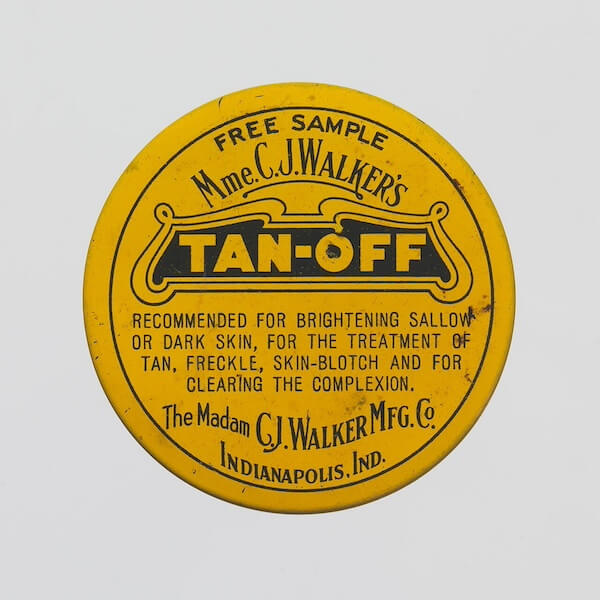

Some skin-lightening creams and hair-straightening methods of the era were used by people who hoped to be perceived as less threatening, more respectable, or more employable. This was not about vanity. It was about navigating a country that punished Blackness.
Madam C.J. Walker was vocal that her work was about hair health, style, and hygiene, not shifting identity. She rejected the idea that beauty meant becoming white. Her brand finally centered Black women as worthy of care, confidence, and self-investment. So while the beauty standards of the era were shaped by racism and colorism, Madam C.J.’s business model and products gave Black women power in a world that tried to strip it from them.
The Power of Her Philanthropy
Madam C.J. Walker did not separate business from activism. She used her wealth to support causes that strengthened Black communities. She donated thousands of dollars to the NAACP, the YMCA, and Black schools. She funded scholarships and anti-lynching campaigns. She supported homes for the elderly and institutions for the formerly enslaved.
She also hosted political gatherings at her home, Villa Lewaro, a stunning mansion built in New York that became a salon for Black leaders, artists, and activists. She believed wealth was not an endpoint; it was a tool.

What She Changed for Future Entrepreneurs
Madam C.J. Walker helped create a blueprint that modern entrepreneurs still follow. She built a direct sales model before social selling existed and created a national brand before mass media advertising. She trained and franchised her sales force before the rise of multi-level marketing. And most importantly, she reinvested profits into community development and centered women as business leaders.
Her company survived her death and continued operating for decades. Her daughter, A’Lelia, helped her build the brand from the start and later became a patron of the Harlem Renaissance, supporting artists like Langston Hughes and Zora Neale Hurston. Madam C.J.’s great-great-granddaughter and biographer, A’Lelia Bundles, remains committed to maintaining her legacy and is the source for much of this information.
More Little-Known Facts About Madam C.J. Walker
- She never learned to read or write fluently, but built a company worth millions.
- She traveled across the country by car and rail to train her sales force.
- She commissioned one of the first Black female photographers to document her brand.
- Her 1917 sales agent convention in Philadelphia was likely one of the first meetings of businesswomen in American history.
- Her mansion, Villa Lewaro, was designed by the first licensed Black architect in New York, Vertner Tandy.
- She was one of the first American women of any race to create a national franchise system.
Madam C.J.’s influence stretched far beyond beauty. She reshaped what was possible for Black women in business. Her life inspired books, plays, documentaries, a Barbie, and even a Netflix series starring Octavia Spencer. But the real story is the most powerful one.
**********
Discover even more Southern stories worth sharing. Follow us on Instagram!

Zoe Yarborough
Zoe is a StyleBlueprint freelance writer, Charlotte native, Washington & Lee graduate, and Nashville transplant since 2012. She teaches Pilates, helps manage recording artists, and likes to "research" Germantown's food scene.