

She Was Told She Wasn’t ‘College Material.’ Then One Bubbled-In Box Changed Everything.
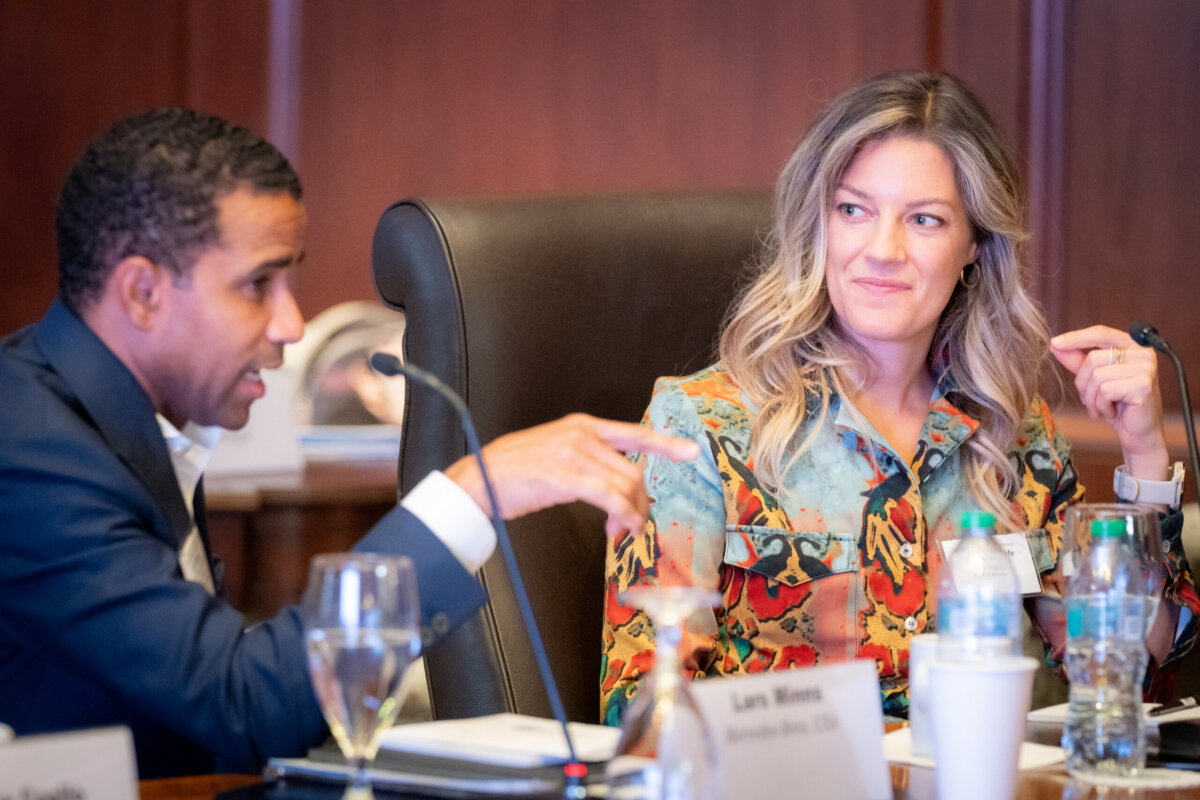
Laurel Graefe grew up in a one-stoplight Virginia town where nobody expected much of her. Then a Scantron sheet — and a scholarship her dad thought was a scam — changed everything. Image

There’s a moment in every great story where everything pivots on something small. For Laurel Graefe, BrainTrust’s new Chief Strategy Officer, it was a skipped class to take a free SAT in her “one-stoplight county in southwestern Virginia,” with a Scantron requiring four colleges to be bubbled in. One of those bubbled-in choices changed her life, setting her on a trajectory to her now-hometown of Nashville.
Where It Started
Laurel grew up in Floyd County, Virginia, the kind of place, “where you drive an hour to go on your Walmart run once a month.” It was rural, isolated, and largely disconnected from the systems of power that shape so much of American life. “The very best you could do,” she remembers, “was to not really be noticed by people in power.” This was a survival instinct shared by most of her community.
So when her high school guidance counselor told her she wasn’t “a good fit for college,” it tracked with everything she’d been told about what was possible for someone like her.
Nevertheless, she still decided to skip class one day to take the SAT for free, and, because the answer sheet required at least four colleges to be filled in, she bubbled in Agnes Scott — a name she recognized only because a beloved fifth-grade teacher, Susan Meade, had gone there. Alphabetically, it was also near the top.
She laughs, remembering when Agnes Scott called her house to offer her a scholarship. Her dad thought it was a scam. “I think there must have been some hillbilly diversity quotient they were trying to meet … I’d never been to Atlanta,” Laurel says. “I’d never lived anywhere with paved sidewalks.” This was the moment her eyes opened to a completely different experience of the world.

The Accidental Economist
Not knowing how college registration worked, Laurel ended up in a class almost no one would choose to take their first semester in college: economics. It was simply the only class left open for her to select, and it changed everything. “You can use math to help think through really tough world challenges?” she remembers realizing.
For a self-described “math girl” raised in a world where nothing else felt certain, economics offered a shared, objective process. “Math is math,” she says. “It’s not about your outlook on life in order to interpret.” Economics suddenly provided a lens for making sense of it all.
That love of rigor carried her through an internship at the Federal Reserve, “photocopying textbooks and wrapping gifts for economists’ kids,” she jokes. But it also exposed her to people who asked big questions she was really curious about.
This internship eventually turned into two decades of work in economic research and policy, culminating in her role as chief of the Nashville branch of the Federal Reserve Bank of Atlanta.
In this role, she led a team of analysts who traveled across Tennessee, listened to business owners and community leaders, and brought those lived experiences back into the room where national monetary policy is made.
But the deeper she went into the data, the more she saw the gap between it and reality. “The average number doesn’t actually represent almost anyone,” she says, “because there’s such a diversity of what life is like.” It’s a tension she’s carried since her first year at the Fed: the discomfort of watching a “one-size-fits-all narrative” that didn’t sit with what she grew up seeing and continued to encounter.

From the Fed to BrainTrust
After 20 years in public service, Laurel left the Fed just over a year ago. It was not out of disillusionment but out of conviction. “I am such a believer in public service,” she says. “I think I am one of the lone remaining believers that the public sector can be great.”
Still, she found herself craving something more direct. After years of trying to figure out how to nudge the Titanic, a massive, slow-moving system, she realized that what she really wanted to do now was “to have my hands in the clay.”
That pull led her to BrainTrust, the peer-learning community for women business owners founded by Sherry Deutschmann. For Laurel, the appeal is as much personal as it is professional. She’s watched firsthand how AI and technology have made human connection more valuable, not less. “If you look at its core, a large language model is an averaging machine,” she says, “predicting, on average, what will make someone with a similar profile happy.”
BrainTrust, by contrast, is built on the opposite premise: showing up as a specific, unaveraged human being. Women show up with real numbers and ask for real accountability. “We know so much at this point about women business owners and how their success can have this disproportionate ripple effect,” Laurel says — across families, employees, neighborhoods, and investors. Unlocking that at scale, she believes, isn’t just good for the women in the room. It’s a macroeconomic story.
Why BrainTrust is Different Now
BrainTrust recently closed a funding round that will take the model beyond individual cities and eventually reach women across the country.
For Laurel, this moment is less about growing membership numbers and more about recognizing the network effects that emerge as those numbers grow — from navigating menopause together to biotech founders comparing notes, to other founders figuring out how to pass a business on to the next generation. More people mean more niches to explore, both in life and in business. “It is so helpful to tap into this broader community that really buys into the value of showing up in a particular way together,” she explains.
She’s careful to distinguish BrainTrust from both the network-y women’s groups that skip the hard numbers and the traditional business-rigor groups that require million-dollar-plus revenues to join. These spaces, by the nature of who owns million-dollar businesses, tend to be dominated by men. BrainTrust’s bet is that supporting women at an earlier stage is exactly what gets them there and beyond. “This is about building real wealth and power in this country,” she says.
October 2nd will mark Laurel’s first BrainTrustLive, an in-person, full-day event dedicated to women business owners who discuss the hardest moments – from failures to their lowest points, and how they got through them to be in the seat they are today. True to form, she’s already planning to grab a front-row seat. “I’ve spent my whole life hoping one day to be back in a classroom,” she says, “and there are no teachers like people who are sharing their lived experiences.” And these are the exact conversations that BrainTrustLive is known for.
LIGHTNING ROUND
Current book recommendation? The Value of Everything by Mariana Mazzucato. It’s a reread, and “a nerdy one.”
Last best meal in town? Bad Idea, in East Nashville. “Everything about it feels like they designed it just to lure me at 5 p.m., right after work.”
Hidden gem for out-of-towners? “While I typically skip Broadway, I do suggest that everyone hit Nashville’s karaoke bars.” She specifically calls out Lipstick Lounge, in her East Nashville neighborhood, as “a true delight.”
What’s one piece of advice you’ve learned to lean into? “Both are true.” This is a phrase a friend of hers often writes down to remind Laurel, a black-and-white thinker, that sitting with multiple valid truths, rather than ranking them, is both her biggest struggle and what lights the path forward.
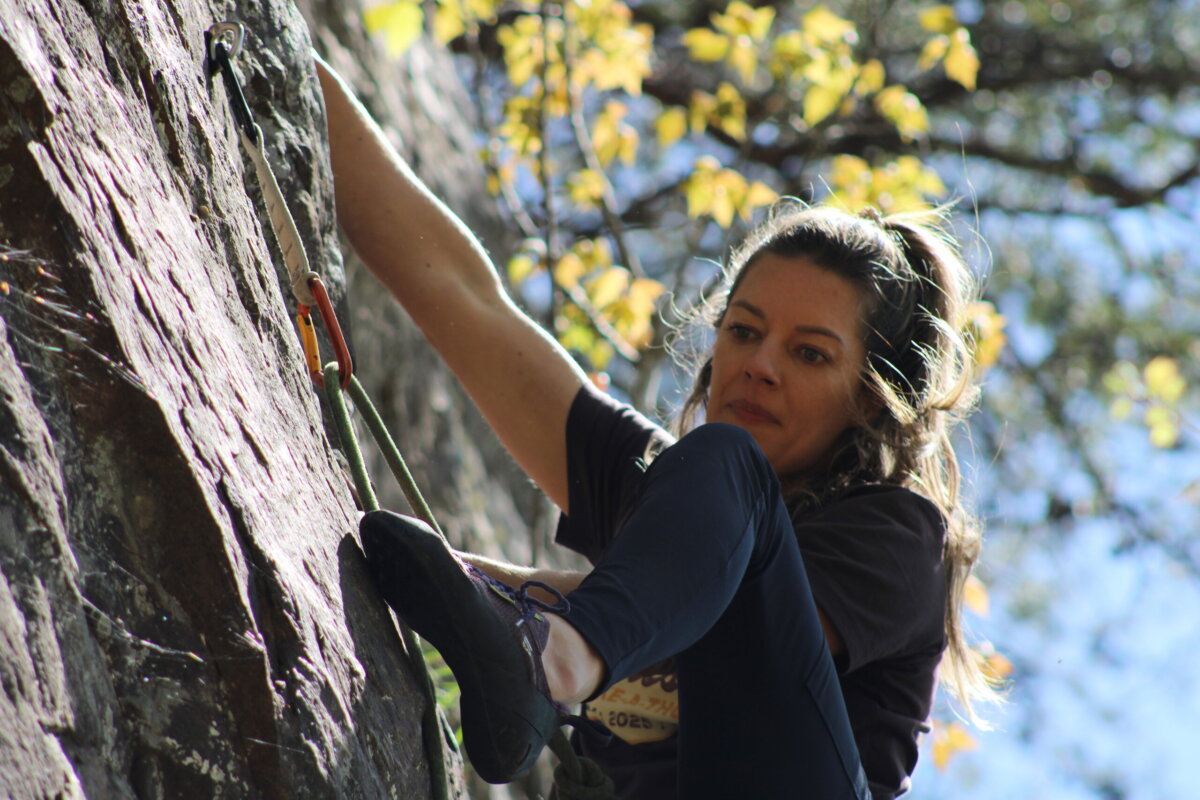
What is your Bucket list trip? After a long pause, she offers Sardinia, which she has already booked for her first trip to Italy. It’s a rock climbing trip along the island’s limestone sea cliffs. “You usually have to choose between a great vacation spot and a great rock climbing spot,” she says. “I’m hopeful I’m going to hit the jackpot with both.”
A mentor you’re grateful for? Susan Meade, her fifth-grade teacher, the same teacher whose alma mater led a young Laurel to bubble in Agnes Scott on a Scantron sheet all those years ago. “She saw a possibility within me,” Laurel says, “that it took me many years to see myself.”
StyleBlueprint is proudly partnering with BrainTrustLive to spread the word about this incredible conference in Nashville. To learn more, see ourbraintrust.org/braintrustlive for ticket information.
This article contains product affiliate links (book on Amazon). We may receive a commission if you make a purchase after clicking on one of these links.
**********
For more inspiring stories, visit our FACES archives!

Liza Graves
As CEO of StyleBlueprint, Liza also regularly writes for SB. Most of her writing is now found in the recipe archives as cooking is her stress relief!