The world of art is constantly changing, and it encompasses a plethora of mediums. Here are three Kentucky artists who are making waves in their local art scenes.
The art world in Kentucky is constantly changing, and it encompasses a plethora of mediums — each unique and special. Here, we’re introducing you to three Kentucky artists who each practice completely different — and completely awe-inspiring — types of art. From acrylic paintings and jewelry to bespoke corsets to furniture crafted from willow saplings, each of their works is original, handmade and created in the Bluegrass State. Meet the Kentucky Crafted Artists behind these three mediums and explore their art.
We are grateful to all our sponsors:
3 Kentucky Artists You NEED to Know
Alisha Martin, The Bad Button Bespoke Corsets
Frankfort, KY
Alisha Martin’s classwork in forensic anthropology and archaeology provided her with a vast amount of knowledge in anatomy. After switching gears to obtain her master’s degree in museology, she never guessed that her job at the Kentucky Historical Society — which consisted of working with costume and textile collections — would lead to what is now a full-time business creating corsets.
“Most people have no idea that corsetry as an art form [still exists],” she says, explaining her path to creating corsets for a living was a result of “sewing since I was knee-high to a grasshopper” and coming across antique corsets during her work with the historical society. “I basically went home after work every day and screwed up a lot trying to get things right. At the time, there was nobody in Kentucky making corsets but me. I come from an artistic background as well — my mother is a painter, but I always looked at textiles less as a thing to clothe ourselves with … but [more as] a canvas. So, I took all of this knowledge I had of how to fit people and how I could fit corsets on a modern body.”
Alisha spent six years creating corsets for herself before finally turning her craft into a career with The Bad Button Bespoke Corsets. “[Corsets] have gotten to be very much more in the public eye, but there has always been a market for it,” she says. Her clients consist of everyone from theater and burlesque performers to Civil War reenactors and brides.
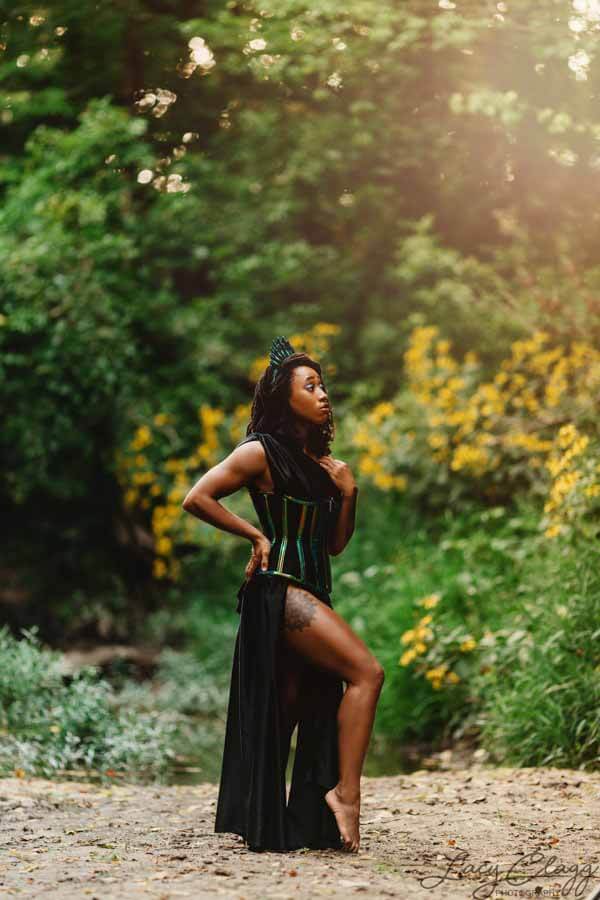
PinAfter working with costumes and textile collections at the Kentucky Historical Society, Alisha Martin was inspired to start The Bad Button Bespoke Corsets, where she creates corsets for modern bodies.
“All different clients require different things for their corsets,” Alisha explains, but the base of each corset is the same. “Corsets are made with a material called coutil … it’s been around for several hundred years at this point, and it was invented specifically for making corsets because it has almost no stretch to it … That’s what you want — you want the pattern to be what changes the body. It’s not the materials.” She imports her coutil from the same company that has been making it since the 1860s. Her second mandatory material, steel, comes from New York. “My poor mail guy hates me because I order it by the pound,” she laughs, “and I buy like 300 pounds at a time.” Aside from coutil and steel, each corset is embellished with other elements, including silk, cotton, feathers, rhinestones, and lace.
“Corsetry is just as much sculptural as it is anything else,” Alisha says, adding that how long it takes to make each one varies widely. Creating a ready-to-wear piece can take a full eight-hour workday, whereas a really big art piece, she says, can take up to six months. “The average time that I tell people is about four to six weeks, and that enables us to do some fittings in between and give me a little bit of wiggle room,” she says. “It really just depends on the amount of embellishment and craziness and things you want to do.”
RELATED: 3 Southern Artists We Love: Kristin Llamas, Emily Hunton & Erika RobertsPinWhile each client has different needs for their corset, Alisha only changes the patterns, using the same materials to create each piece — coutil and steel. Image: Lacy ClaggPinSome corsets can take up to six months to make, but the result is absolutely stunning. Image: Lacy Clagg
Justin Roberts, Walk the Willow
Murray, KY
From aspiring chef to furniture maker, Justin Roberts’ journey started with a documentary. “I had come home depressed one New Year’s Eve,” he recalls. “I had caught a documentary that’s also a book by Michael Pollan, called The Botany of Desire. It’s basically the human relationship between plants and animals. Something in me sparked whenever I [saw] this, and I had the idea of going into nature and finding something that I could turn into something that people would desire.”
A few months later, Justin had the idea to create an Easter basket for his daughter out of willow saplings. “I taught myself how to build her basket, and after Easter, we would plant the basket and turn it back into a tree.” Willow, he explains, will grow again once planted back into the ground.
Soon after, Justin was put in touch with the Murray Art Guild, who referred him to George Beard, a man who had been creating willow furniture for decades. “He was in his 80s and had been building willow furniture for 50 years,” Justin says. “They gave me his address, and I went and knocked on his door. We chatted for four hours, and within four months, I had convinced my wife that we should move in with this fellow, and we did. It was one of the best decisions that we ever made.”
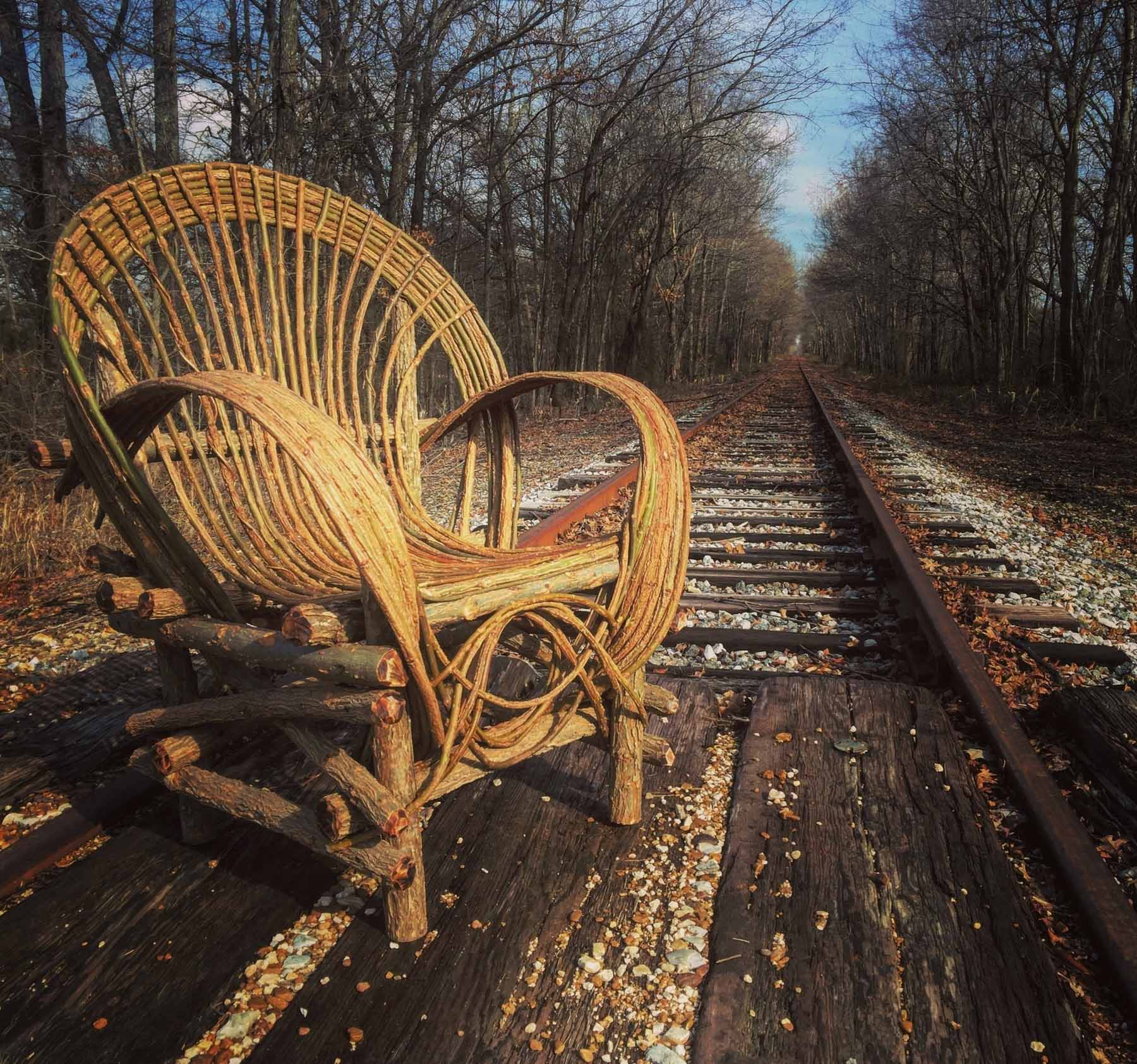
PinAfter watching a documentary, Justin Roberts was inspired to create something people would desire. The result? Breathtaking furniture made from willow saplings.
Thanks to a grant from the Kentucky Arts Council, Justin was able to quit his job as a cook and focus on furniture. “We lived with George for about four years,” he says, “traveling back and forth across the state of Kentucky, selling and showcasing the willow furniture. And that’s how it started. I’ve been playing with sticks for a living for eight years or more now.”
Justin simply forages willow from various areas around Kentucky, as his craft doesn’t require much else. “You can literally make a chair with just a hammer, some nails, and a set of clippers or a handsaw,” he explains. “What appealed to me the most was how renewable [willow] is and how you could cut the same plant, and it would grow back and multiply. You could cut the same plant for 26 to 28 years.”
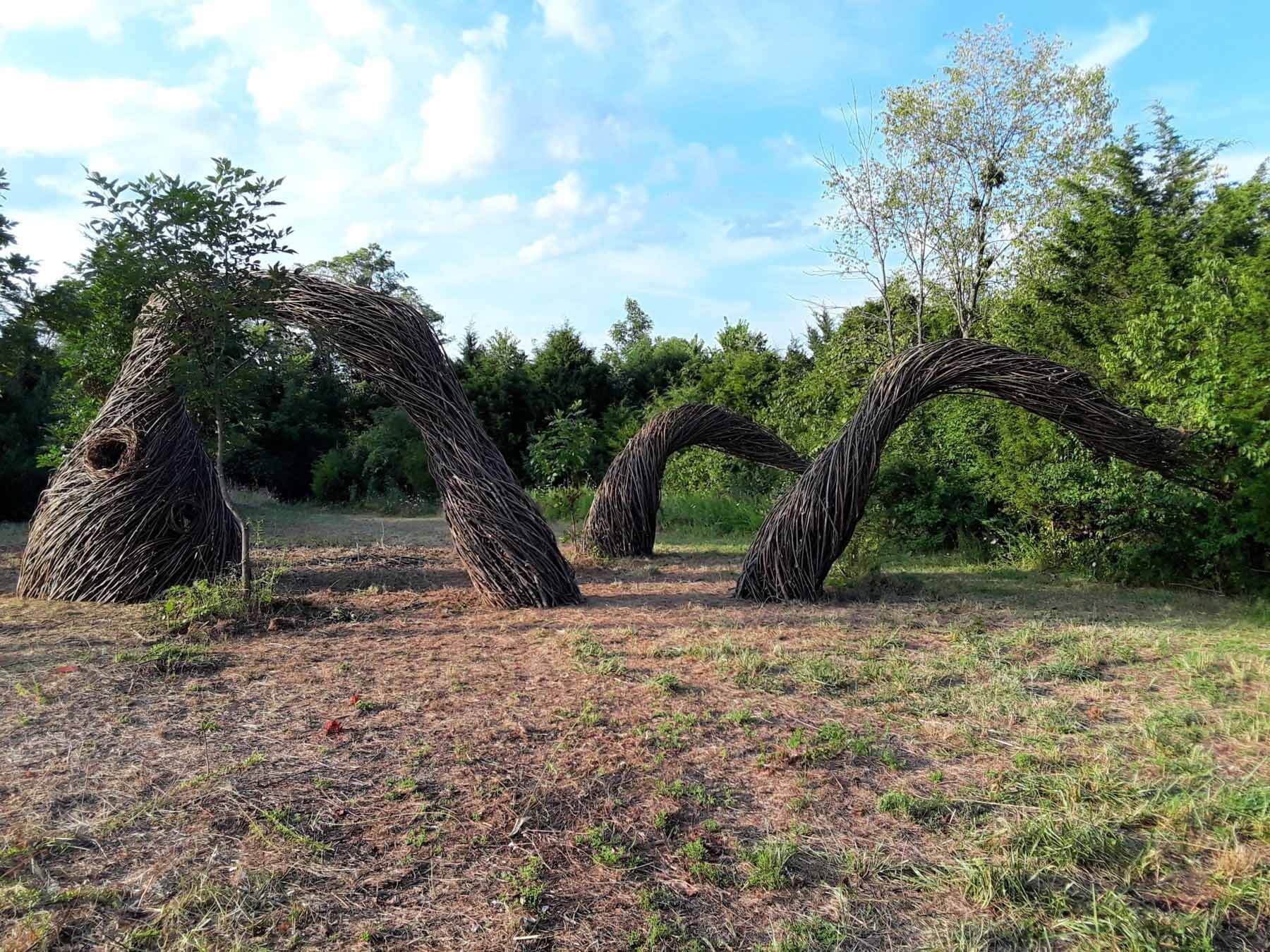
PinJustin’s art expands beyond furniture. “Sounds of a Whippoorwill – Josephine” is currently on display at the Josephine Sculpture Park in Frankfort, KY.PinJustin’s art is equal parts beautiful and functional.
We are grateful to all our sponsors:
Though he still builds commissioned furniture pieces, Justin is currently focusing more on structural projects in the community, one of which is an installation for the International Museum of the Horse in Lexington. “With every large installation, we now work with poets and musicians in raising awareness about important issues within the communities that we work with … social injustice and things of that nature.”
His wife, Shannon Davis-Roberts, is the co-founder of the nonprofit New South Arts Initiative, which strives to support and grow bio and cultural diversity in the South via art and arts-based activities. Justin hopes he will soon be able to get back to the learning opportunities they were focusing on through the initiative pre-pandemic.
“We were going to be partnering with the Kentucky Arts Council to teach willow furniture [making] to [people in] rehab facilities, [as well as to] class-D felons across the state of Kentucky to try to help inspire them and give them the tools they needed to be a maker,” he explains, “and in return, try to help keep a folk art alive.”
PinJustin’s work even adorns yards!
Lakshmi Sriraman
Lexington, KY
Lakshmi Sriraman was a performing artist for many years but didn’t begin painting until later in life. “I was a management consultant for a long time,” she says. “Then after my son was born, I wanted to get back to my art. That’s when I took up dancing more seriously as a profession.”
She was focused on performing art for a while when a workshop got her started with paint. “I went to a rock painting workshop … I came home … and I just couldn’t stop doing mandala paintings,” she exclaims. “It was like I was taken with it so much that I completely lost myself in that for a while. Then I started thinking, What if I made this into more abstract art? So, that’s how I just played with it, and now I have my own style of how I use dots in my work.”
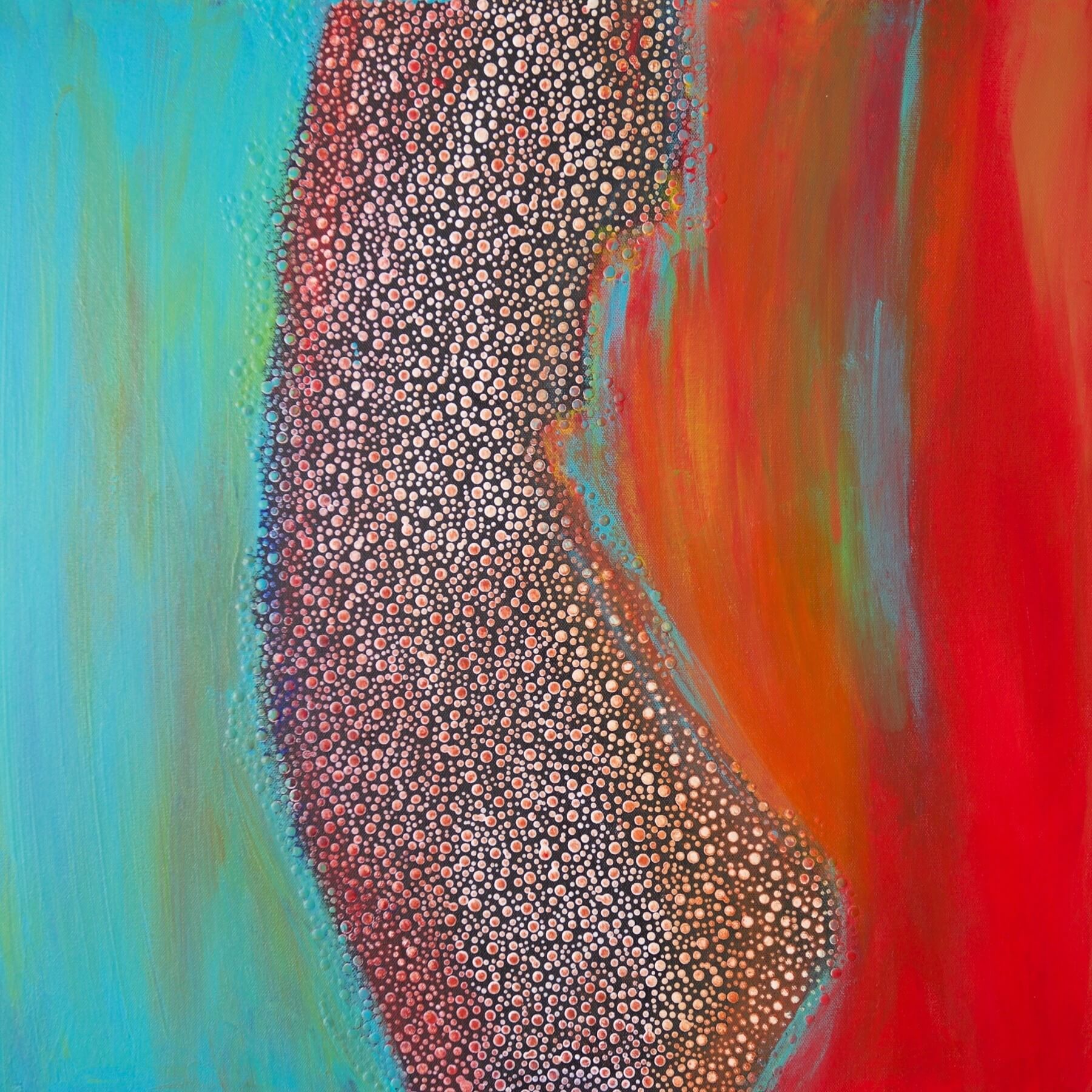
PinThis piece titled “One Step At A Time…” shows just how much detail and attention Lakshmi Sriraman puts into her art.
Combining layers of glaze as well as dots of varying sizes placed in abstract ways, Lakshmi creates acrylic paintings that have an almost three-dimensional look. “I’m self-taught,” she says. “All of my work, I think, comes from making mistakes. What I think is a mistake becomes a new way of doing something. That’s pretty much my approach to painting.”
Though her missteps often lead to new methods, Lakshmi’s intentions behind each piece remain the same. “I like to keep who I’m painting for, what I’m creating, in my mind,” she explains. “So, each dot [in] my dotted work, I call them prayer dots. Because each dot is a prayer. When I paint, I’m not listening to any music or anything. I’m mostly working in silence because it’s also my spiritual practice. I stay with every dot, and every dot I infuse with an intent of joy or whatever it is that I’m working on with that piece specifically.”
PinLakshmi explains that her art is often a result of mistakes: “What I think is a mistake becomes a new way of doing something. That’s pretty much my approach to painting.” Pictured here is a piece called “Loud Whispers.”
We are grateful to all our sponsors:
RELATED: 5 Southern Art Forms Making a Comeback
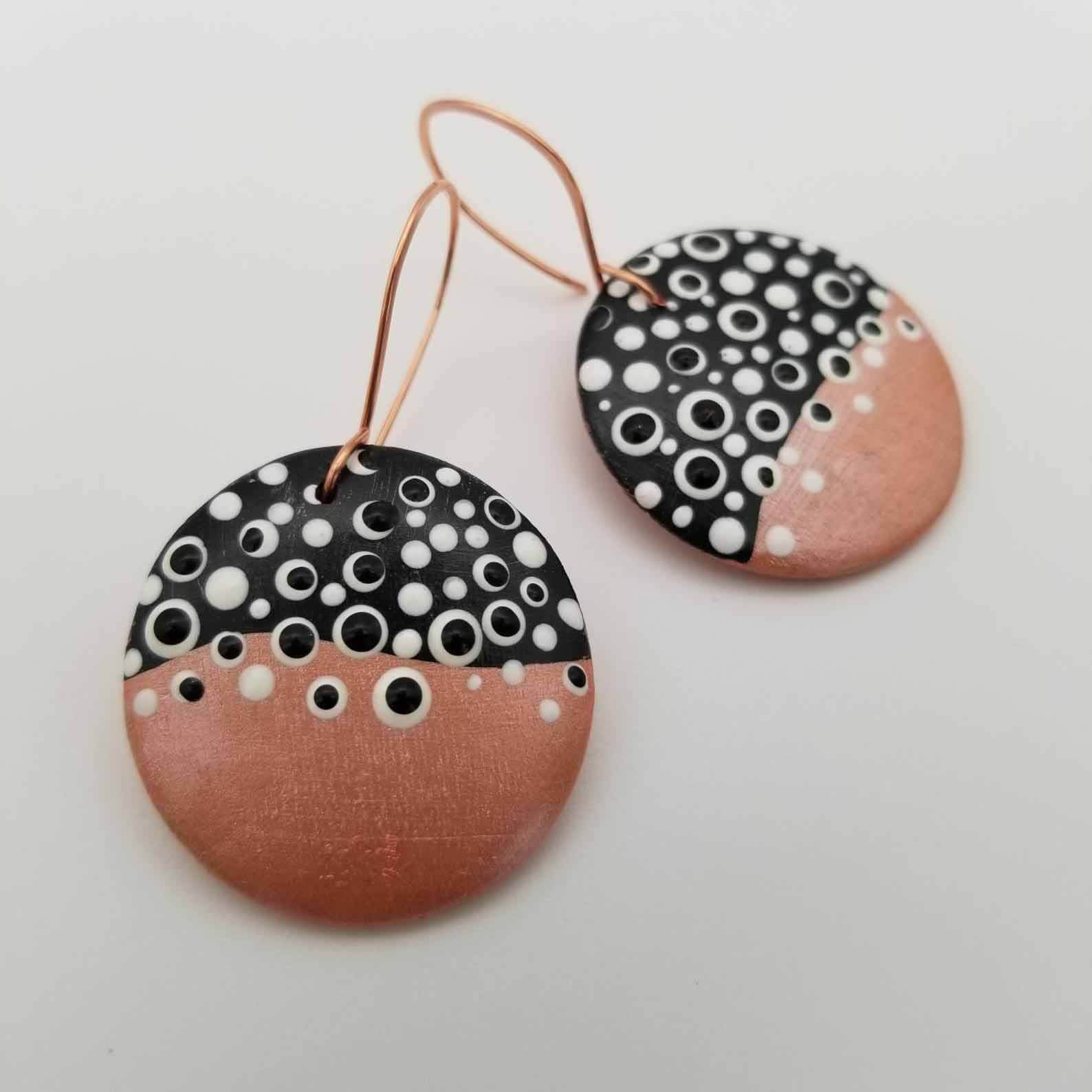
In addition to acrylic paintings, this past August, Lakshmi began expanding her work to jewelry. “My works are all prayer dots,” she says. “It’s a way I pray; I connect with a larger intent. With the earrings … whoever chooses to wear it, it’s close to their body. It becomes a part of their energy … these earrings whisper into the person who is wearing them that they’re loved, that they’re beautiful, that they’re powerful — all the things that I would like to affirm to people to function at their highest and best. So that way, my earrings become my way of sending energetical messages to people.”
While Lakshmi’s earrings focus on bringing affirmations to the wearer, her larger pieces are focused more on accessibility. “Art and social justice is a very important intersection for me,” she says. “All of my work right now is focused toward how do we make art accessible … how do we use art to build communities, and how do we create an equitable, inclusive experience for everybody with art? That’s something that I’m actively working on.”
PinMore recently, Lakshmi also began creating earrings. She hopes they bring positive affirmations to whoever wears them. Image: EtsyTo explore more art by Kentucky Crafted Artists, visit artistdirectory.ky.gov.All photos submitted by respective artists unless otherwise noted.
Originally from Hawaii, Lennie Omalza is a Louisville-based freelance writer of over 18 years. Lennie is a yoga-loving foodie who travels as often as she can and enjoys writing about food, homes, and weddings. You can find more of Lennie's work at Eater, Hawaii Home & Remodeling, and The Louisville Courier-Journal.
Our unofficial motto at StyleBlueprint is "Be kind. Do good." We encourage this to be the basis for all comments on our articles. Provide feedback that adds to the story. Some controversy or disagreements are part of any good dialogue between friends, but anything that tears down or belittles others is subject to disapproval or removal. Thank you for being a member of the StyleBlueprint community! View our Community Guidelines.