

Your Gut Already Makes Its Own Ozempic — Here’s How to Boost It!
A Registered Dietitian shares how to boost your body's production of the active hormone found in weight-loss drugs like Ozempic — no injections, waitlists, or high price tags required. Image: iStock

Unless you’ve been living completely off the grid, you’ve probably heard of medications like Ozempic. You likely have a few friends or family members taking it (and maybe even that one friend who swears it’s “just Pilates”). But that active ingredient everyone’s talking about — GLP-1 — is not actually a drug. It’s a hormone your body produces naturally. And like most things in your body, you have considerably more influence over it than those supplement ads would have you believe. It starts, as so many good things do, with what’s on your plate and the everyday habits that support your gut health.
What Is GLP-1, Actually?
GLP-1 (or glucagon-like peptide-1) is released by specialized cells (called L-cells) in your gut as a response to food. It tells your pancreas to release insulin, tells your brain when you’re full, slows digestion to a civilized pace, and generally acts like the calm, competent adult in the hormonal room. The injectable medications work by mimicking and prolonging these effects.
Higher and more sustained GLP-1 activity is associated with better blood sugar regulation, reduced appetite, and lower cardiovascular risk. To trigger it naturally, dietary fiber, protein, and certain fats are among the main characters, with your gut microbiome playing a major supporting role.

The Foods Your L-Cells Are Waiting For
Before we get to the grocery list, a brief note on expectations: eating more avocado is not going to replicate the effects of a weekly injection. What it will do is give your body’s baseline GLP-1 activity a helping hand, set your metabolism up for success, and quite possibly make you feel like you have your life together.
Oats & Barley: These contain a special kind of fiber called beta-glucan. When it hits your gut, it turns into a thick gel that slows digestion and directly signals your body to release GLP-1. For maximum benefits, stick with steel-cut or rolled oats — flavored instant packets are too processed to give you the same effect.
Legumes: Lentils, chickpeas, and black beans are the superstars of metabolic health. They are packed with “resistant starch” that acts like premium fuel for your gut bacteria, which in turn coaxes your body to release more GLP-1. You can also get this starch from green bananas, or cooked and cooled rice and potatoes. (Yes, leftover potatoes can actually have benefits. This may be the best nutrition news since dark chocolate got its PR makeover.)
Eggs & Lean Protein: For one of the most reliable GLP-1 triggers, you can’t beat dietary protein. High-quality protein at breakfast is the easiest lever most people don’t pull.
Avocado & Olive Oil: Healthy fats slow gastric emptying, which prolongs GLP-1 exposure and keeps you feeling full longer. Olive oil drizzled on roasted vegetables is doing some pretty heavy lifting here — metabolically speaking.
Berries & Dark Fruit: Blueberries, raspberries, and pomegranates are loaded with antioxidants (polyphenols) that feed specific strains of gut bacteria responsible for higher GLP-1 output. This is a rare moment when your gut and brain are playing nice and cooperating. You should reward them accordingly!
Cruciferous Vegetables: The fermentable fiber found in broccoli, Brussels sprouts, and cauliflower acts like a direct trigger, signaling your gut to boost your GLP-1. For the best results, roast them until they’re slightly crispy. That’s when they’re at their best.
Green Tea: This contains a powerful antioxidant (EGCG), which acts like a yellow light, slowing your body’s breakdown of GLP-1 and extending its active life in your bloodstream. Bonus: It is also an excellent substitute for that third cup of coffee. Your cortisol levels will thank you.
Fermented Foods: Kefir, yogurt with live cultures, kimchi, and sauerkraut can be game-changers for your gut. Why? Because a diverse gut microbiome keeps your GLP-1 firing on all cylinders. You are, metabolically speaking, what your bacteria eat.
Dietitian’s note: The foods above are most effective when eaten together and consistently, not when consumed in a heroic single-meal “GLP-1 boost” strategy. A breakfast of oats, berries, and a spoonful of Greek yogurt is doing the work at a systems level. Metabolic nutrition is a long game, not a cleanse.
The Gut Microbiome: Your Most Underappreciated Employee
Here’s the part of the GLP-1 conversation that doesn’t get enough airtime: your gut bacteria are running the show. A large part of your natural GLP-1 isn’t triggered by the food itself, but by what your microbiome does with it. When your bacteria break down fiber, they produce compounds called short-chain fatty acids. Think of these as the natural trigger for your “I’m full” hormone.
This means that a diet rich in diverse fermentable fibers doesn’t just provide a one-and-done metabolic fix. It continuously rebuilds the bacterial ecosystem and keeps the GLP-1 production signal running strong. It’s the difference between buying flowers and planting a garden. One looks better on Instagram; one actually sustains itself.
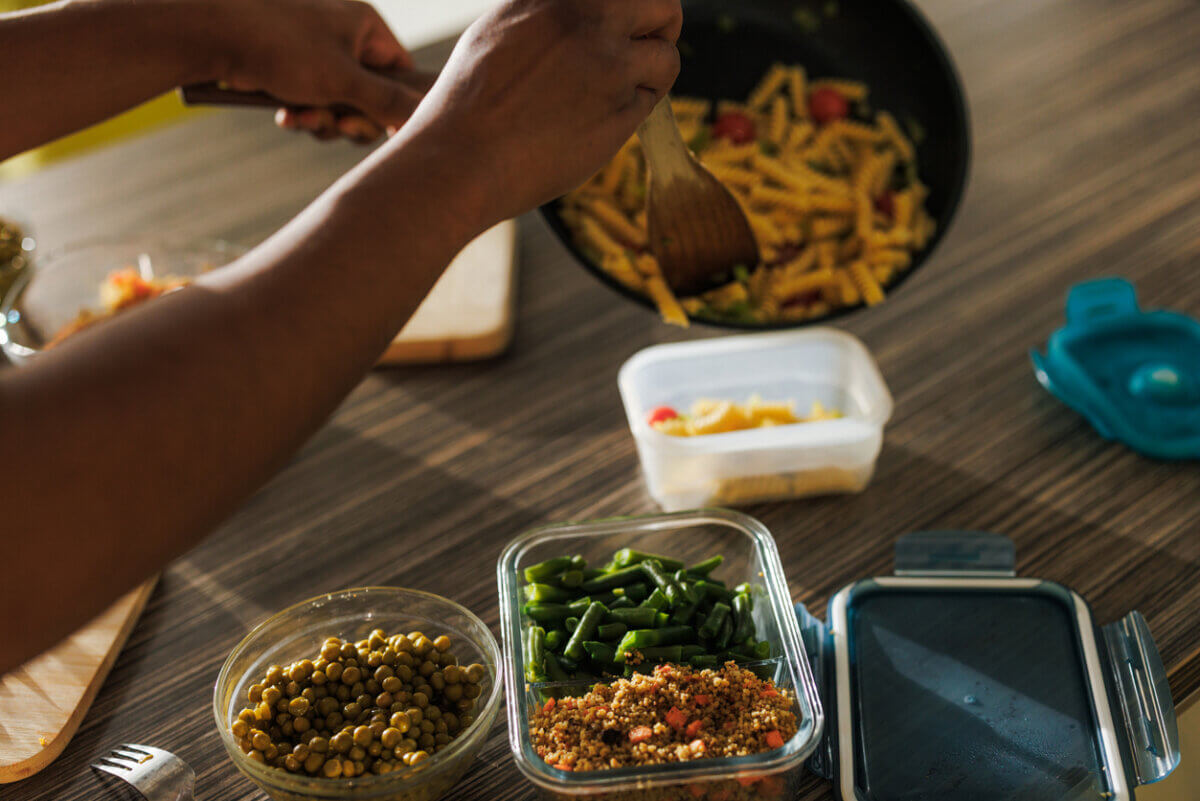
A Day of Eating to Boost Your GLP-1
Not a meal plan. Not a protocol. Just a pattern that consistently supports what your gut is already trying to do.
Breakfast: Steel-cut oats with blueberries, a spoonful of almond butter, and a side of two eggs. You are giving your L-cells protein, beta-glucan, and polyphenols before 9 am. This is not a small thing.
Mid-morning: Matcha or green tea, ideally without six pumps of vanilla syrup. The EGCG is doing real work here. Let it.
Lunch: A big salad with lentils, chicken, roasted vegetables, olive oil, and something fermented — a little kimchi, a scoop of Greek yogurt on the side. Fiber, fat, protein, probiotics — the four horsemen of satiety.
Afternoon: If you need a snack, make it count. Greek yogurt with walnuts and raspberries. Full-fat kefir. A piece of good dark chocolate with an apple. You’re feeding the microbiome between meals, not just killing time.
Dinner: Salmon or another fatty fish with roasted Brussels sprouts and a side of barley, quinoa, or roasted sweet potatoes. Add a drizzle of tahini for fun. Omega-3s support the gut lining. The cruciferous vegetables provide butyrate precursors. The whole thing takes 30 minutes and costs less than your last workout class.
What Actively Suppresses GLP-1 (Spoiler: You Already Know)
I would be remiss not to mention the “brakes” when discussing the “accelerator.” Ultra-processed foods — the ones engineered to be hyper-palatable, low in fiber, and absorbed before they ever reach the L-cells in your lower gut — curb the natural GLP-1 secretion. They bypass the signaling system entirely. Your gut doesn’t even get the chance to send the message.
High-sugar beverages, refined carbs eaten without fiber or protein, and diets low in diversity don’t just fail to stimulate GLP-1 — they degrade the bacterial ecosystem that produces it over time. This is not a lecture. It is just science.
The honest caveat: If you have been prescribed a GLP-1 receptor agonist by your physician for type 2 diabetes, obesity, or cardiovascular risk, this article is not an argument to stop taking it. These are evidence-based medications with meaningful clinical outcomes. This is about supporting the same biological pathway through food, which works best as a foundation, not a replacement for medical care.
The Bottom Line, Without the Usual Hedging
You cannot out-eat a GLP-1 injection. What you can do is eat in a way that consistently supports one of your body’s most important metabolic signaling systems — the one that regulates hunger, blood sugar, and energy in an integrated, elegant loop that pharmaceutical companies have spent billions of dollars trying to replicate.
The foods that do this best are not exotic, expensive, or difficult to find. They are, with some irony, the foods that have been in every legitimate nutrition recommendation for the past thirty years: vegetables, legumes, whole grains, quality protein, healthy fats, fermented foods, and fruit. The GLP-1 research doesn’t overturn that consensus. It just finally gives us the explanation — which, for those of us who appreciate knowing why, is a satisfying development.
Feed your gut well. Your L-cells will handle the rest.
**********
For the best “me moment” of your day — subscribe to StyleBlueprint’s daily emails!

Emmeline Huddleston Mercer
Emmeline is a Registered Dietitian (RD, RDN, LDN) based in Nashville, TN. She's passionate about educating folks on nutrition so they can live their lives to the fullest.