

Eating for Longevity: What Actually Adds Life to Your Years
The secret to eating for longevity may be a lot simpler than you think. Here’s what a Registered Dietitian wants you to know! Image: iStock
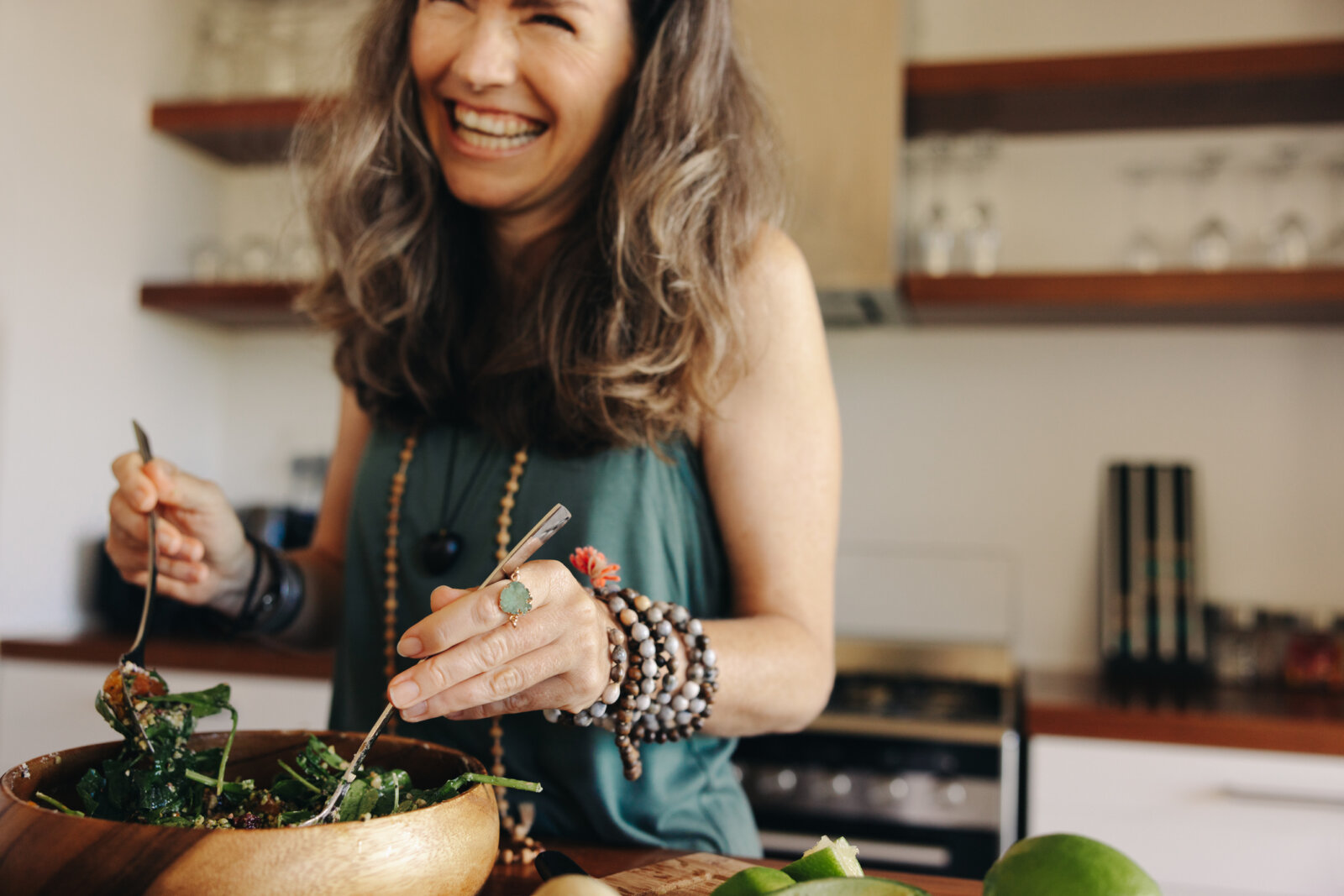
Today’s article comes to us from Registered Dietitian and Certified Diabetes Educator Emmeline Huddleston, RD, LD, CDCES.
**********
If you’ve ever Googled “foods that help you live longer,” you’ve probably been given a familiar cast of characters: blueberries, salmon, olive oil, leafy greens, nuts, beans — all excellent choices.
But here’s the thing: longevity isn’t about finding one magical food. There is no single berry, supplement, smoothie, or $14 powder that can outsmart an otherwise unbalanced diet. Eating for longevity is about how you eat most of the time.
As a Registered Dietitian and Certified Diabetes Care and Education Specialist, I think about longevity nutrition as an investment strategy. You are making small deposits every day into your body’s health.
The Blue Zones Aren’t Magic. They’re Just Consistent.
You might have heard of the “Blue Zones” — the five regions in the world (Okinawa, Sardinia, Nicoya, Ikaria, and Loma Linda) where people routinely live past the age of 90 with remarkably low rates of chronic disease. The tempting takeaway is “eat exactly what they eat.” The more useful takeaway is why it works: these are diets built almost entirely around plants, legumes, whole grains, and modest portions of everything else.
Nobody in Sardinia is counting macros. They’re just all eating a lot of beans, which brings me to my first recommendation:
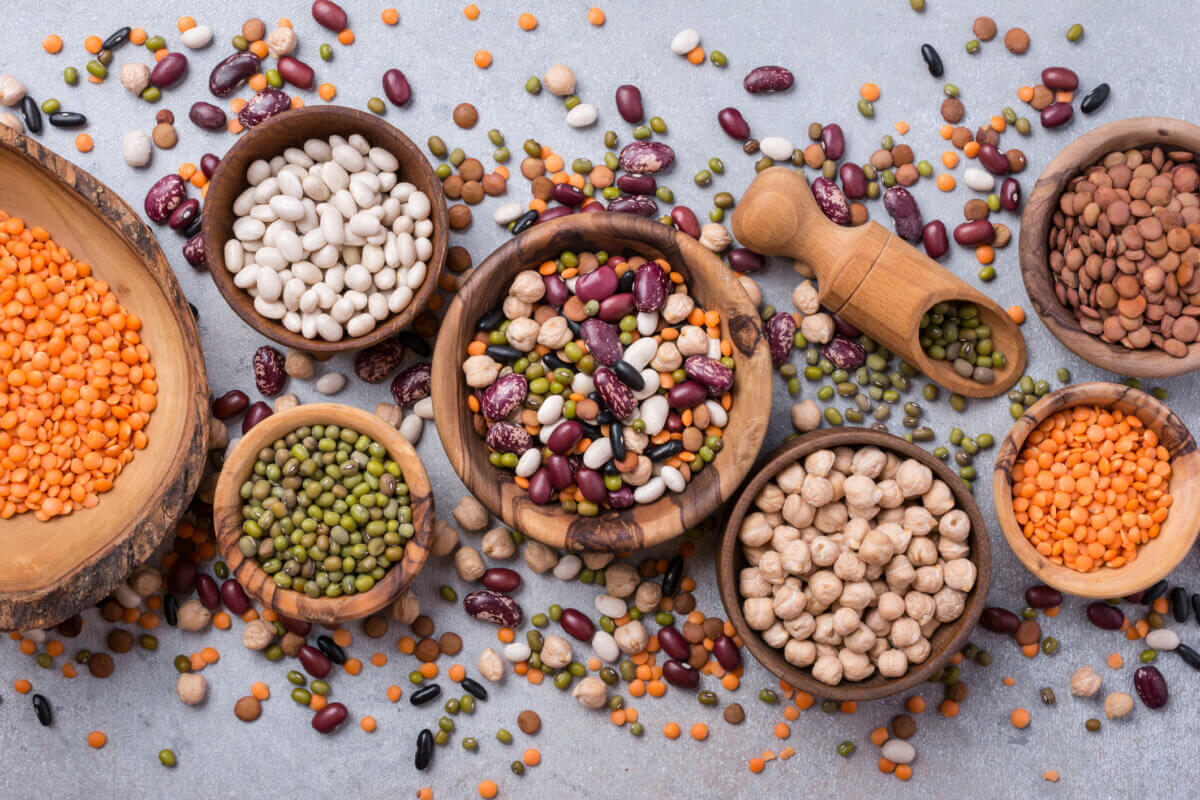
Eat more legumes than you think you need to. Beans, lentils, and chickpeas are the single most consistent dietary predictor across every Blue Zone. They’re fiber and plant protein in one package.
Fiber is doing more for your long-term health than almost anything else on this list by feeding your gut microbiome, steadying your blood sugar, and quietly lowering your risk of heart disease and certain cancers. Aim for at least half a cup most days. Your gut bacteria will thank you later.
Protein: The Nutrient Women Over 30 Are Chronically Under-Eating
Here’s where things can get a little soapbox-y. Starting in your 30s, you begin losing muscle mass, and it only gets worse during perimenopause and beyond as estrogen declines. Muscle isn’t just for looks or strength. It actively helps control your blood sugar, strengthens your bones, and is the secret to staying healthy and independent as you age.
To protect this asset, nutrition alone isn’t enough — you must pair your protein intake with intentional movement. The longevity trifecta is simple: combine adequate energy, sufficient protein, and consistent resistance training. Thankfully, you don’t need to spend hours in the gym. Resistance training can be as simple as lifting dumbbells, doing bodyweight exercises, or practicing Pilates.
As for diet, most women are simply not eating enough protein to meet their current needs. Research increasingly supports higher intakes than the standard recommendation, especially when paired with resistance training — think somewhere in the range of 1.2 to 1.6 grams per kilogram of body weight per day, spread across meals rather than back-loaded at dinner.
Practically, this looks like:
- Finishing the protein on your plate before the carbs (Ideally fiber first, then protein, then carbs).
- Eating Greek yogurt with nuts and hemp seeds or cottage cheese with fruit instead of a granola bar.
- Adding a protein source, such as eggs or a protein-packed smoothie, to breakfast.

Blood Sugar Stability Is About More Than Diabetes
You don’t need diabetes to benefit from steadier blood sugar. Chronic glucose spikes and crashes are linked to inflammation, energy crashes, cravings, and increased risk of insulin resistance, cardiovascular disease, and cognitive decline over time. Some longevity researchers now consider metabolic health a better predictor of healthy aging than cholesterol numbers alone.
The good news: you don’t need a continuous glucose monitor and a spreadsheet to manage this (unless that’s your thing, no judgment). A few reliable habits do most of the work:
- Never eat a naked carb, AKA never eat carbs alone. Pair them with protein, fat, or fiber to blunt the spike. Think apple plus almond butter, bagel plus cream cheese and salmon, or pasta with chicken, spinach, and olive oil.
- Move after meals. A 10-minute walk after eating measurably lowers post-meal glucose spikes. This is one of the most under-hyped, evidence-backed tools available, and it’s free!
- Don’t fear fat. Olive oil, nuts, and avocado slow digestion and improve satiety — and the Mediterranean diet’s fat-forward approach has some of the strongest longevity data of any eating pattern studied.
Fiber: Unglamorous, Undefeated
If I could get one nutrient trending on social media, it would be fiber. It might not sound as sexy as collagen powder, but it is directly linked to lower all-cause mortality — meaning people who eat more fiber tend to live longer, full stop. Most women fall far short of the recommended 25 to 30 grams per day, which should be the bare minimum.
The fix isn’t a supplement. It’s fruit and vegetables, whole grains, beans, and nuts showing up consistently rather than occasionally on your plate. Frozen vegetables and canned beans count. This is not a purity test.
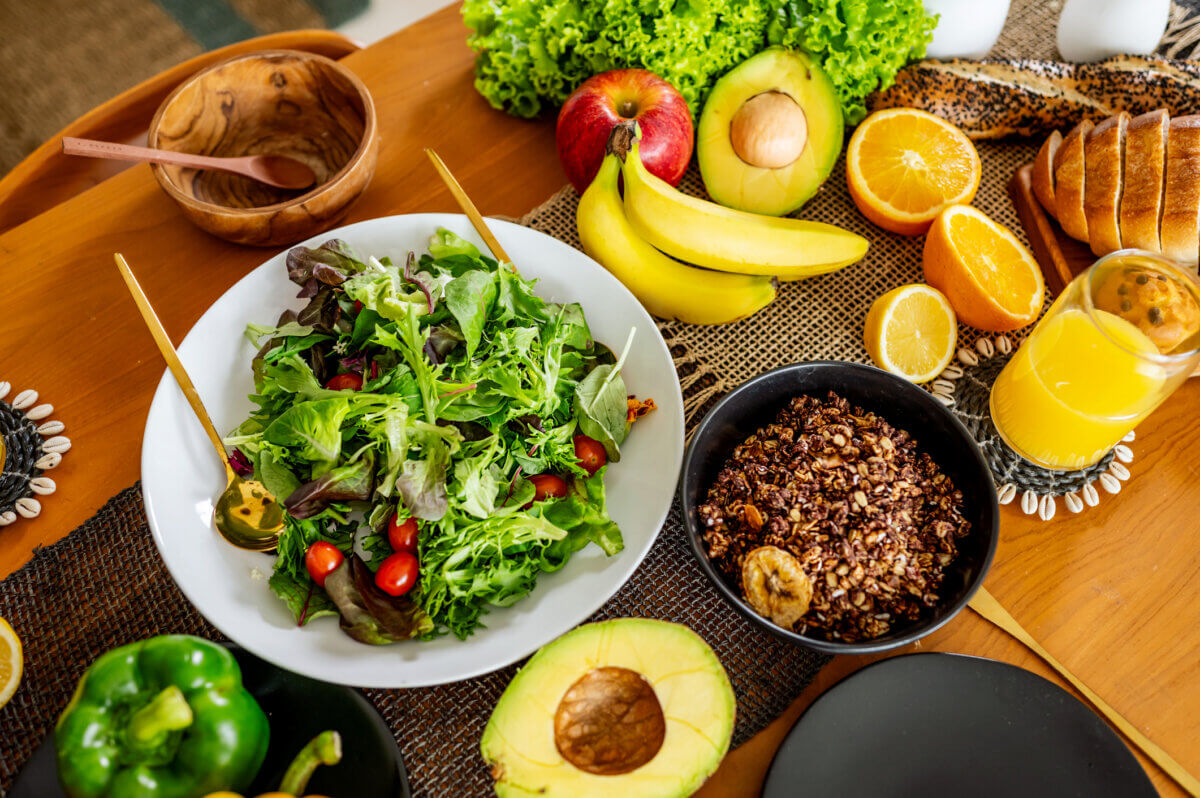
Here are some quick tips to add more fiber at every meal:
- Add berries to Greek yogurt.
- Put chia or ground flaxseed into oatmeal.
- Choose beans or lentils several times a week.
- Snack on nuts and fruit; they make a great pair.
- Swap refined grains for whole grains or lentil-based pasta.
- Add vegetables to pasta, eggs, soups, and sandwiches.
Eating for Every Decade
Here’s the part nobody tells you when you’re young: your nutritional needs don’t stay put. They shift, decade by decade, largely in step with your hormones. Eating the same way at 45 that you did at 25 isn’t going to cut it. Here’s the cheat sheet:
Your 30s: Build the foundation. Think of this decade like depositing into a retirement account, where the currency is bone and muscle. You typically reach peak bone mass around age 30, making this your last real window to build the density you’ll draw on for the rest of your life. Muscle loss also quietly begins around now, at roughly 1% per year.
This is the time to prioritize calcium- and vitamin D-rich foods, start or step up the resistance training, and make it a habit to add protein at every meal. If you’re still menstruating, keep an eye on iron, too.
Your 40s: Expect some plot twists. Perimenopause often starts in your 40s, sometimes a decade before menopause itself, bringing fluctuating estrogen that can affect insulin sensitivity, sleep, and mood, often before a single hot flash shows up. This is when blood sugar stability becomes a genuine priority.
Lean harder into fiber and protein, keep strength training non-negotiable, and consider magnesium-rich foods (leafy greens, pumpkin seeds, dark chocolate — you’re welcome) to support sleep and mood as hormones fluctuate.
Your 50s and beyond: Protect what you’ve built. Menopause arrives, on average, around 51, and the drop in estrogen that follows is significant: bone loss accelerates for the first several years post-menopause, and cardiovascular risk begins climbing.
This is the decade to get serious about calcium, vitamin D, and vitamin K2 for bone health. It’s time to push protein needs even higher, and to prioritize omega-3s for heart and brain health. B12 absorption can also decline with age, so it’s worth having your levels checked.
The throughline across all three decades? Nothing here is a dramatic overhaul. It’s the same core habits of protein, fiber, plants, and movement, with the dial turned up as your body’s needs change. You’re not starting over every decade. You’re recalibrating.
What About Alcohol, Sugar, and All the Fun Stuff?
I won’t pretend wine is secretly good for you — that research hasn’t aged well, and current evidence suggests that no alcohol is truly “protective.” That said, I’m not suggesting you give up your favorite glass of wine or chocolate chip cookie.
Longevity research consistently shows that rigid, joyless eating patterns don’t stick, and stress about food has its own health costs. The goal is a diet you can sustain for decades, not one you white-knuckle through for six weeks.
Moderation isn’t a cop-out; it’s the actual evidence-based answer. A sustainable approach is to make minimally processed foods the foundation of your diet while leaving room for the foods you enjoy. Think 80% nourishing foods and 20% foods simply because they’re delicious.
What matters is that your diet is healthy enough to support you and flexible enough to enjoy living. Honestly, longevity isn’t much fun if you spend your years obsessing over whether you were “good” today.
The Real Takeaway
If you remember nothing else: eat more plants and legumes than you currently do, prioritize protein at every meal, move your body after you eat, and stop treating fat and fiber like enemies. None of this requires a $200 supplement stack. It requires showing up to your plate, most days, without perfection.
Longevity isn’t built in a single smoothie. It’s built in the thousands of ordinary meals in between — the ones nobody’s taking a photo of.
**********
For your new favorite “me moment” of the day, subscribe to StyleBlueprint!

Emmeline Huddleston Mercer
Emmeline is a Registered Dietitian (RD, RDN, LDN) based in Nashville, TN. She's passionate about educating folks on nutrition so they can live their lives to the fullest.