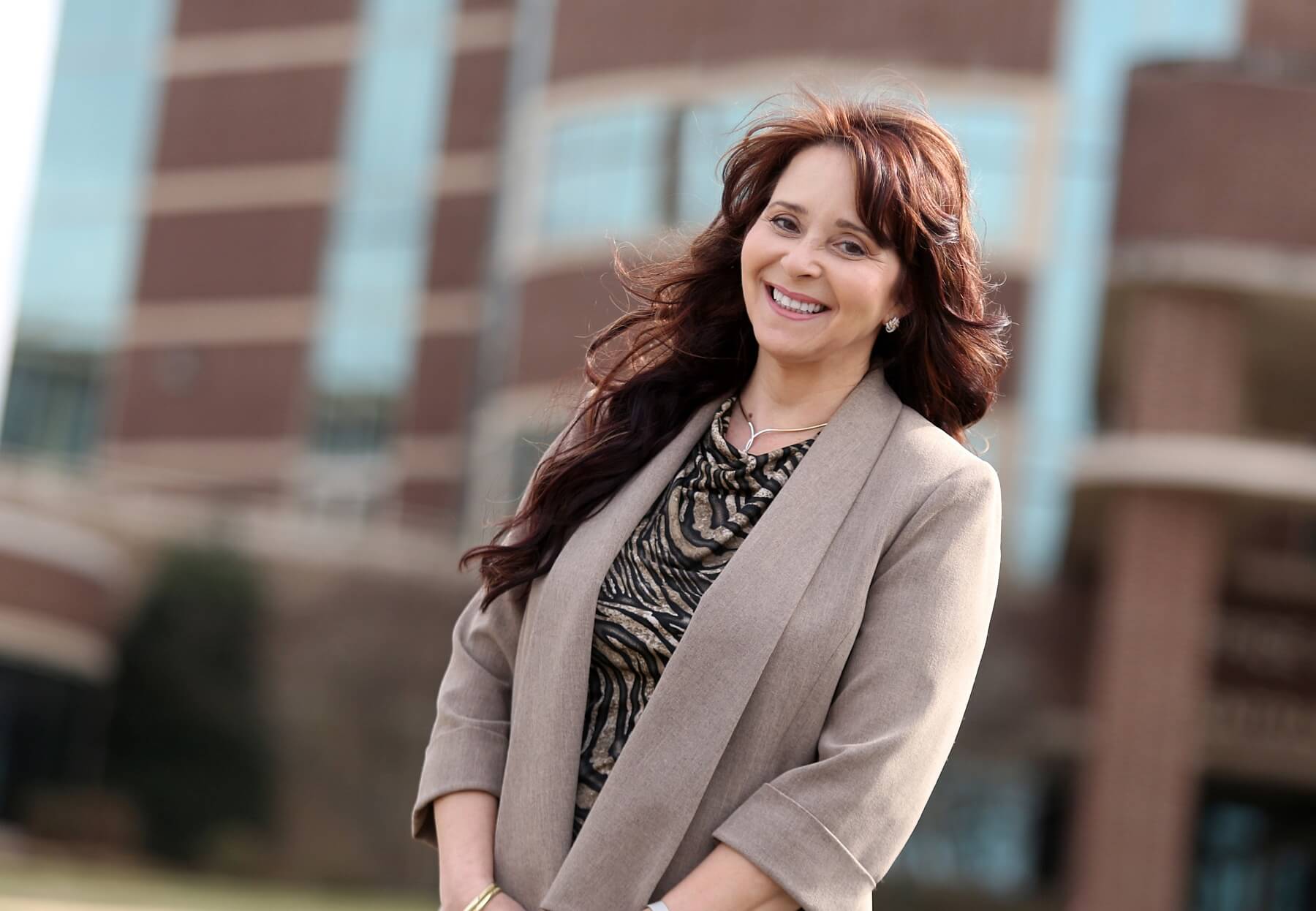
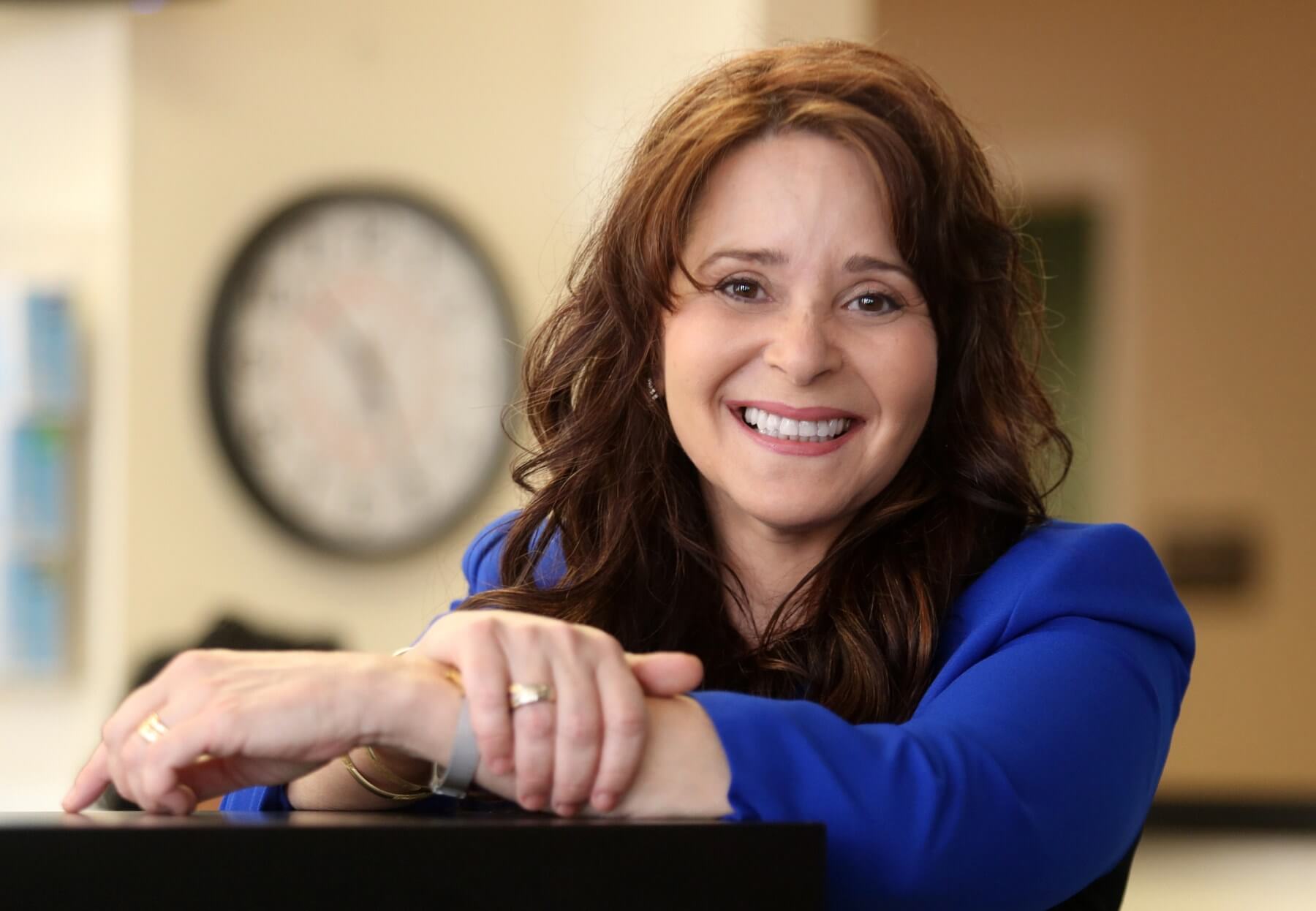
This Romania-born doctor went to medical school in her home country and did her psychiatric residency in Israel. Today, Dr. Taly Drimer-Kagan serves as the Medical Director of the Senior Life Unit at TriStar Skyline Madison. Get to know our newest FACE of TriStar.
Six months after geriatric psychiatrist Dr. Taly Drimer-Kagan moved to Nashville to work at TriStar Skyline Madison, hospital administrators asked if she’d be interested in reopening the facility’s geriatric psychiatry or senior life unit. The facility, which began accepting patients again about a year and a half ago, closed several years earlier because the hospital couldn’t find a doctor to run it. After all, Taly points out, there are only about 1,700 geriatric psychiatrists in the United States. Fortunately for TriStar Skyline Madison, it’s a field about which Taly is extremely passionate. The Romania-born doctor, who went to medical school in her home country and did her psychiatric residency in Israel, initially came to the United States because her Israeli-born husband wanted to get his Ph.D. in chemistry. But when she decided she’d like to practice here, she had to jump through multiple hoops. She did a second residency at UT Southwestern in Dallas and a geriatric fellowship at Duke. Finally, when she was ready and able to join the workforce, she found TriStar Skyline Madison, and she and her husband picked up and moved again. Today, TriStar Skyline Madison’s 14-bed senior life unit is in good hands with our newest FACE of TriStar, the warm and caring Dr. Taly Drimer-Kagan. She sat down with us to talk (in her lovely Romanian accent) about her responsibilities, the challenges associated with her work and what keeps her going day after day.PinDr. Taly Drimer-Kagan is our newest FACE of TriStar.
What made you want to be a psychiatrist?
There’s always a story. For me, it was my grandmother, who one day overdosed on pills, when I was 10 or so. When I saw her, I got very scared of course. I don’t remember whether the phone wasn’t working or if I just panicked and that’s why I didn’t call an ambulance, but I knew that in our apartment block there was a doctor, so I went there and rang the doorbell. The daughter of the physician answered the door, and I said, “Something is wrong with my grandmother. Can you ask your mom to come with me downstairs ?” But the daughter said, “I don’t think she’ll come. She’s tired.” But I insisted. When her mom, the physician, finally came to the door, she just said that she was on call last night and would not come downstairs. Fortunately, the story had a happy ending. I went back to my grandma and gave her some water, and she threw up the pills. But for me, I just couldn’t believe how that physician acted. Some people go into medicine because of a good interaction they had with a physician — somebody that they want to be like, a doctor who they want to copy. For me, it was the opposite. I said, “I want to be a physician, but not like that one.”
How did you get interested in the geriatric population?
When I did my psychiatric residency in Israel, I worked with Holocaust survivors, and it was one of the most profound experiences. You are talking to them, and they are in their 80s, and they are speaking about it like it was yesterday. It is so vivid and so alive. The survivor’s guilt is so deep in there, and you cannot change their memories, but you can listen, and you can see that you make a difference. With dementia patients, there’s no cure for dementia, but you can treat the behavioral symptoms — things like delusions, hallucinations, aggression, anxiety … and it’s important to treat those symptoms, because these symptoms, and not the memory loss, are the main reason families can’t take care of the patient at home. Patients are not sent to nursing homes because they lose their memory, but because their families get overwhelmed by all the other symptoms. So if we can treat these symptoms, and that means the families are less overwhelmed and that the person can live at home for longer, it’s better for everyone.
PinDr. Taly Drimer-Kagan is the Medical Director of the Senior Life Unit at TriStar Skyline Madison.
What do you like about what you do?
I like when we find solutions and when we answer all the questions for the families. I like when the patients are leaving with a smile or when the families are asking me if I have an outpatient practice. But we don’t need recognition, so even if we don’t get that feedback, I’m satisfied if I know that we tried everything for a patient, and we didn’t miss something. We did everything we could. Maybe sometimes it’s hard for the team because I push and push, but I’m lucky to work with people who share the same passion to find a solution.
What is your role at TriStar Skyline Madison?
I am the Medical Director of the Senior Life Unit. We have patients here younger than 65 who suffer from dementia. Those 65 and older suffer from depression, bipolar disorder, schizophrenia or other disorders. My role is seeing patients and overseeing our team. Taking care of this population is difficult, so it is not a one-person job. The care team includes the unit therapist, discharge planner, pharmacists and nurses.
Pin“When I did my psychiatric residency in Israel, I worked with Holocaust survivors, and it was one of the most profound experiences,” says Taly. “You are talking to them, and they are in their 80s, and they are speaking about it like it was yesterday.”
You mentioned that there are only about 1,700 geriatric psychiatrists in the United States. Why is this number so low?
I suppose after you are done with residency, you are ready to work. Most people have a lot of loans to pay for medical school and their undergraduate education. They want to be done, and they want to get paid. Four years of psychiatry is enough, unless you really want to learn more. Many doctors graduate, and they go into private practice. They think it’s probably not worth another year of education [for a geriatric fellowship] because there is a huge need for psychiatry anyway. Treating the geriatric population is also more challenging and cases are more complex, which is not for everybody.
What do you do when you’re not working? How do you like to de-stress?
In the spring, I like to garden. In Texas, I had 74 roses, and I miss them. We’ve been in Nashville for two years, so I’m trying to make a nice yard. I like gardening, I like hiking and, of course, family. My husband works from home doing research for universities, and this is good because my youngest son is 16, so we need to keep an eye on him. My oldest son will start medical school in the fall.
PinIn her free time, Taly enjoys hiking and gardening.
Do you have any mental health advice for the geriatric population or for their family members?
What’s good for your heart is good for your brain. It’s so important to exercise and be engaged and social. This is a huge thing, trying to have friends. I know it’s difficult because people start to lose friends and spouses, but it’s important to try as much as possible to have someone you can talk to, to have social interaction. Stay active. Even if you are doing crossword puzzles and reading and learning something, maybe a new language. I always ask, “Is there anything you’ve never had time in your life to do that you would like to learn?” It’s a protective factor for cognitive decline, and it’s so important.
Thank you, Taly, for providing insight into your specialty. Learn more about the services offered at TriStar Skyline Madison at tristarskylinemadison.com.FACES of TriStar is sponsored by TriStar Health. Photography by Grannis Photography.
Our unofficial motto at StyleBlueprint is "Be kind. Do good." We encourage this to be the basis for all comments on our articles. Provide feedback that adds to the story. Some controversy or disagreements are part of any good dialogue between friends, but anything that tears down or belittles others is subject to disapproval or removal. Thank you for being a member of the StyleBlueprint community! View our Community Guidelines.