Beverly Erdreich has never been one to color inside the lines. This unconventional (and impeccably dressed) Southern artist dishes about a career in abstract art and why she's always done things her own way. You have GOT to meet this FACE of Birmingham!
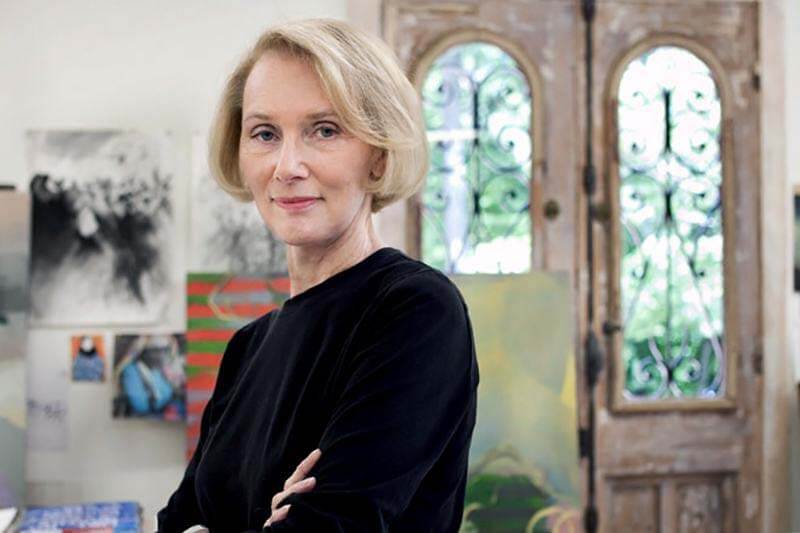
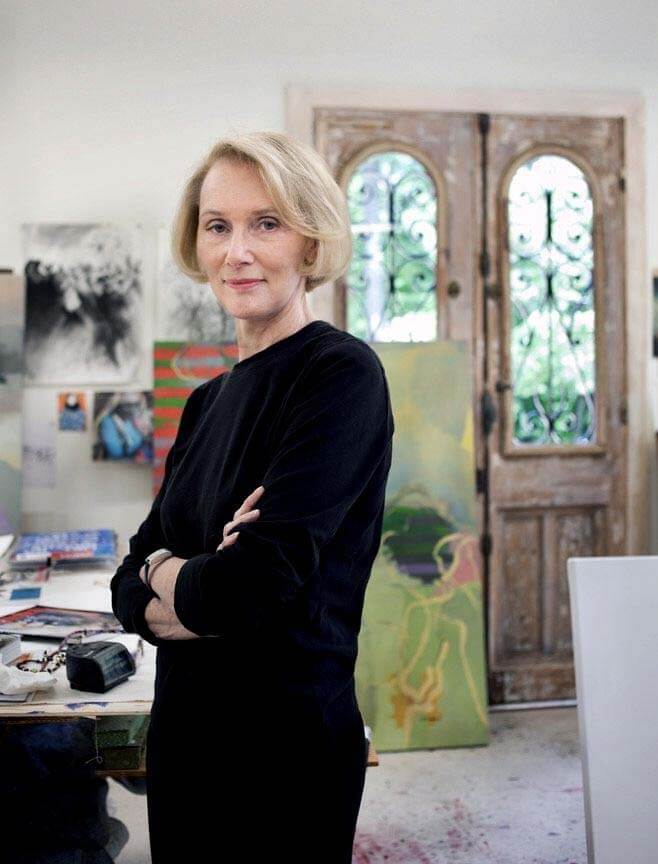
The moment Beverly Erdreich answered my first phone call, I was enveloped by her Southern drawl, calm and deliberate demeanor, and a feeling of wanting to write down every single thing she said. She has a way of making you feel like you’re the only person in the world when she’s speaking with you. Beverly has never been one for following conventions. She poured herself into art from a young age and continued to create on her own terms throughout her life, instilling in her own children a sense of curiosity and profound appreciation for visual expression. During school, Beverly fell in love with a guy from Birmingham, married him in 1961, and moved there to start a life and career. Birmingham at that time was not exactly a burgeoning art incubator for young creatives, but Beverly learned from every nook and cranny of life, and she has a lot to show for it — through her pieces hanging in galleries and museums nationwide, her family and their own creative pursuits, and her sharp, witty spirit. At the end of our nearly 80-minute conversation, I left bursting with excitement to introduce everyone to our newest FACE of Birmingham, Beverly Erdreich.PinBeverly Erdreich shares about her craft and her zest for life, travel, and everything but the ordinary. Image: Jerry Siegel
We are grateful to all our sponsors:
Did you always want to be an artist?
I have always made art. It may not have been art when I was really young, but I was always creating things. There’s the artist child in every class. Valentine’s Day boxes, school bulletin boards, the newspaper, homecoming floats, dance decorations … I was always in charge of all of that. I was always putting things together … construction paper, twigs, and other things outside. I taught myself how to have an idea and then how to execute it.
When I was about 14 and still living in Dothan, there was one notable artist named Frances Watson. I took classes with her for about a year. Then I continued my art education at Newcomb College — part of Tulane in New Orleans. I was an art history major, not an art major. When I graduated and moved to Birmingham in the ’60s, only one studio offered classes, The Little House on Linden. Then the museum started offering them eventually. I stayed in class for a long time, mainly because I didn’t have a studio space of my own at that time. I feared that if I ever left art, I would get distracted and never go back. I met so many people, so many artists, and I found myself in many wonderful situations. My first show was in 1969 at the art gallery where I had been taking lessons.
What did you start to paint?
My early work was representational and figurative imagery work. A lot of landscapes, still lifes, drawings of dancers. It was all over the charts, and I was experimenting and learning. I didn’t really know the direction I wanted to go at that point. I was influenced by artists I admired and learned about in school. It wasn’t until later that I started painting abstract. The great bulk of my work has been abstract.
PinBeverly loves to travel and visit other artist communities like Santa Fe, NM, and the funkiest little town in the country, Marfa, TX (pictured).
Where do you glean inspiration for a new project or collection?
When working abstractly, I don’t like to start from something. I don’t like to look at photography or a landscape or an object. I don’t want a jumping-off point. I like to figure it out as I go, and that’s what excites me about painting abstractly. If I go off of an interesting photograph, as soon as I get it on the canvas, I’m bored with it. I feel like I am reproducing it. I like to work intuitively and start with a line or a color or a shape. Once I have one thing on the canvas, I have created a problem that I have to resolve. What am I going to do with this, and where is it going to go?
I don’t care what it is — I couldn’t spill a paint bucket on it. That’s why I have never liked commissions. Because the person always has an image in mind. I really don’t know what the end product will be and I don’t want to know — I want to discover and uncover it as I go along.
Have you ever painted any portraits for family or friends? I’m sure they ask you!
When my daughter was about 4 years old, I wanted to do her portrait. I told her she couldn’t look at it, and that she had to sit still. During one break, my daughter peeked at the painting and said, “Mommy, I think for your age, you’re doing pretty well!” Portrait painting is fraught with a lot of problems. Everyone has their own image of themselves. And then the portrait painter is pitted against all the people who will see the painting — their family members and friends, they all have their own ideas of what someone looks like — correct or not.
PinCan You Pick Up Where You Left Off? (diptych, 70×84) by Beverly Erdreich for a 2019 show at Canary Gallery in Birmingham.
When you married and started a family, did that alter the path your art career would take?
Well, it limited the amount of time I spent making art when I was a young bride and mother. My kids never resented the time I spent doing that. They’re wonderfully supportive, and my husband and I feel very lucky there because I feel that many female artists don’t have that. They get discouraged without a network of support. Both of my kids are creative in very different ways. My daughter is a corporate art consultant in Boston. Being the daughter of an artist, I think she has a lot of empathy for the creative process. Our son is a film producer in New York City. And I have three granddaughters. When they visit, one of their favorite things is to come into the studio with me and make art. That’s been great fun seeing them grow into creative children. What they do with it remains to be seen. (laughing)
RELATED: Chloe Tyler: The Artist You Heard About Here First
Do you ever feel you’re truly done with a piece?
Yes. I can’t leave things in my studio. If it stays there long enough, I will see a red I don’t like the shade of, and I’ll change the whole thing. If there is nothing I can do more to reconcile the problem I began with and make the painting better, it’s done. Knowing when to stop takes a lot of maturity, I think.
PinWhen I asked Beverly what piece or collection she’s most proud of, she said, “Artists tend to like the last thing they did. It’s the freshest. It’s the thing you’re most attached to.”
Anything you wish you knew when you started out or had done differently?
I wish I had more information on how to present myself as a professional. My mom would say, “Beverly, you don’t toot your own horn.” Girls were so modest about their accomplishments. When I started out, it was hard for me to tell everyone how wonderful I was and how worthy my art was. I think I sadly lacked in that.
What’s a common misconception about art or collecting art that bugs you?
I think the dumbest thing in the world is to buy art for investment. It’s throwing a dart into the woods. I love collecting art and having a house full of art. Most of my art in my house is other people’s because I learn more from others’ art than I do from my own. I can’t think of anything more depressing than being in an empty room. My mother was the same way — it’s in my DNA — and I passed the mania down to my children. I think people shouldn’t fall into the trap of buying what’s fashionable. Many of my friends find the art in my house puzzling and insane. I buy it for myself, not for them. My husband and I now forgo anniversary and birthday gifts, and we go buy a piece of art together instead. But we’re running out of wall space.
What’s something you’ve created that surprises people?
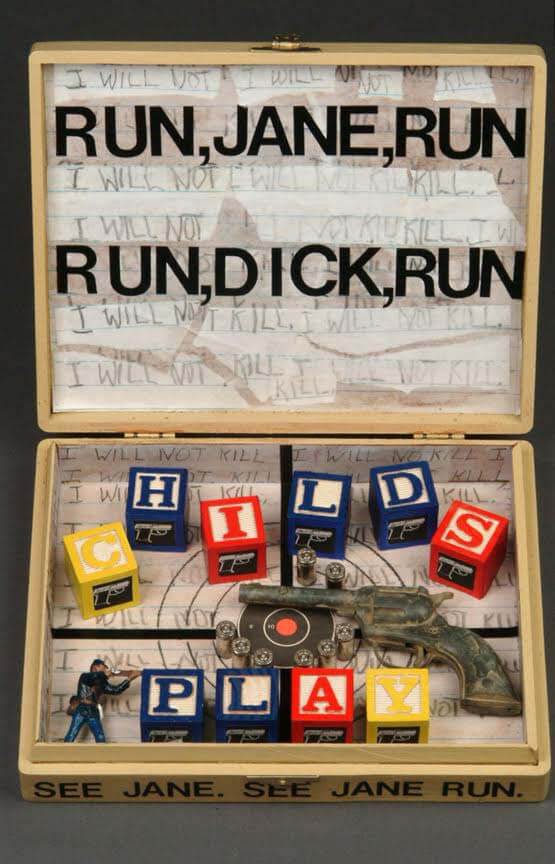
I had never dealt with politics and social problems in my art, but about 10 years ago, I realized there were many things festering in my mind that I felt the need to create. I called them Metaphor Boxes. I transformed cigar boxes. It was a series of 15. It took me many years to complete because it involved a lot of found objects. I felt standing alone they didn’t make the same statement they made collectively.
When I showed those boxes to people, they were shocked. My paintings have been very lyrical and full of color. As an artist, I’m not sure I knew that side of myself. I had to take a year off after that, and I wrote a children’s book. I wrote it for my granddaughters. It’s a book about accepting diversity. It was a way to get away from that series and also I didn’t know what I wanted to do next.
PinHere’s the outside of one of Beverly’s Metaphor Box pieces in a series where each confronted a different social issue. This one speaks to the Columbine shootings.PinWhat’s inside sits in stark contrast to the outside, evoking a sense of surprise, sadness, and introspection.
It’s common knowledge that you have fabulous style. Tell me a little bit about your wardrobe. Is it another form of art to you?
My mother had a lot of class in the way she dressed. She always looked nice. Back then, women had real pride in the way they looked no matter where they were going. I never wanted to dress or look like everyone else. When something gets fashionable, I start to dislike it. It’s like an overdose. I like individual things. I’m attracted to things that could be considered a costume. Sometimes I had to shake my head and say “no.”
I think our best friend is a good mirror, especially as we get older. Sometimes I see someone and wonder if they have a mirror. I’ve always thought it was funny when someone suggests something in a store and says, “This looks just like you!” No one can be that in sync with your taste. For me, the fun of buying something is going out there and finding it. I like to shop when we travel.
Where can we find you in Birmingham when you’re not painting?
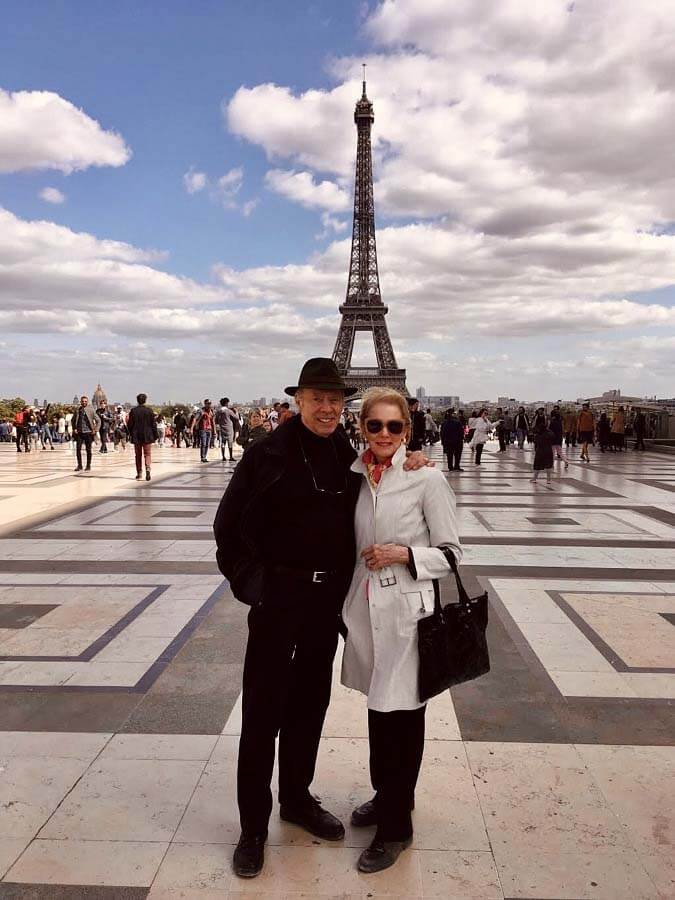
Stanley and I love our local restaurants in Birmingham. We have a neighborhood restaurant called Food Bar, which we love. We frequent Boston and New York. And my favorite place in the whole wide world is Paris.
PinBeverly and her husband during a trip to their favorite spot on the map: Paris!
We are grateful to all our sponsors:
If you could get drinks with any artist — living or dead — who would be and why?
Louise Bourgeois. I don’t even know if I’d want to talk. I would just want to listen to her fascinating life. She couldn’t be contained. Back then, artists were typically categorized into one genre. She never fit into one … much like Picasso. She was all over the place if she wanted to be and needed to be.
RELATED: How One Woman Brightens Hospitals Through Art
What’s the best piece of advice you’ve received and from whom?
Art-wise, it was from another artist named Jennifer Bartlett. I did a workshop with her in Santa Fe, NM. “If you’re timid with yourself and with your materials, you’ll always be an amateur,” she said. The other piece is from a guy who became a buddy of mine at the gym. He’s a World War II veteran. He comes to the gym with his walker. He just turned 98, and on his birthday, I heard him say, “You cannot let the limitations of age restrict you.” I think that’s just as appropriate for my teenage granddaughters as it is for me. I thought maybe that is the smartest thing I had ever heard anyone say.
Aside from family, friends and faith, name three things you can’t live without?
Art, travel and good food and wine (is that one or two?!)
Thank you, Beverly. All photography was provided unless otherwise noted. See Beverly’s art online at Canary Gallery, here.
**********
Get to know more inspirational FACES of Birmingham HERE!
Zoe is a StyleBlueprint freelance writer, Charlotte native, Washington & Lee graduate, and Nashville transplant since 2012. She teaches Pilates, helps manage recording artists, and likes to "research" Germantown's food scene.
Our unofficial motto at StyleBlueprint is "Be kind. Do good." We encourage this to be the basis for all comments on our articles. Provide feedback that adds to the story. Some controversy or disagreements are part of any good dialogue between friends, but anything that tears down or belittles others is subject to disapproval or removal. Thank you for being a member of the StyleBlueprint community! View our Community Guidelines.