5 Nashville Disasters That Changed the City Forever
Nashville may be the "It" city, but it's had some major disasters along the way, before it was "the" place to live, that have helped shape us into very much a part of this Volunteer State.
We look back at five defining Nashville disasters that hit this city between 1916 to 2010. Each, in their own unique way, shaped the city that we have today. While there are plenty of others disasters that have plagued Music City, especially tornadoes, for today’s article we wanted to focus on just five over this 94 year span, with the most recent one here being the Great Flood of 2010. As each of these disasters occurred before Nashville was “It City USA”, many people who live here today may not even know about what this city has been through.
5 Nashville Disasters That Changed the City, from 1916 to 2010
SB Note: This article was first published in 2016 and was updated on July 18, 2022.
Nashville’s Great Fire: March 22, 1916
On March 22, 1916, a fire broke out in what was, at the time, the wealthiest area of Nashville, the Edgefield neighborhood located in East Nashville. The fire, aided by 50 mph winds, burned a two mile-by-two-block section of this neighborhood and either damaged or destroyed 648 buildings in less than five hours. Notable buildings destroyed included the Edgefield Baptist Church, Woodland Street Presbyterian Church, St. Columbia’s Church and School, Warner School and Little Sisters of the Poor. Some 3,000 Nashville residents were immediately homeless. (source, source)
PinLittle Sisters of the Poor (which provided housing for anyone over 60 who was destitute and of any religious background) Image: Samuel Anderson Weakley Paper at the TSLAPinThirty-five blocks were devastated in Nashville on March 22, 1916. The fire was contained after four-and-a-half hours. Image: gregsegroves.blogspot.comPinAt the corner of Russell and South Eighth streets today | Note the brick sidewalks and architecture.
The fire was started by a boy playing with a ball of yarn. The yarn caught fire and he threw it into a vacant lot just before noon. The dry grass caught fire, and 35 city blocks were destroyed before the fire could be put out, which didn’t happen until around 4:30 p.m. that same day. The Nashville Fire Chief telegraphed every city within hundreds of miles pleading for men and fire engines to help out. The neighbors formed water bucket lines to help stop the fire, and the National Guard was even called upon to help with the fire, relief efforts and to help prevent looting. (source) Property damage exceeded $1.5 million.
Today, homes on Russell, Fatherland, Woodland and surrounding streets represent what once made up the much larger neighborhood of Edgefield, now called Historic Edgefield.
For more information on The Great Fire of Nashville, including just how that ball of yarn caught on fire, see our article dedicated to it here.
We are grateful to all our sponsors:
The Great Train Wreck at Richland Creek: July 9, 1918
The worst train wreck in United States history occurred on the tracks behind the present-day Saint Thomas West, near White Bridge Road. Anyone who walks the Richland Creek Greenway can read the historical marker that narrates the day when two passenger trains, operated by the Nashville, Chattanooga and St. Louis Railway, collided head-on at Dutchman’s Curve, going 50 mph. One-hundred-one lives were lost and an additional 171 people were injured. An investigation into the crash pointed to the wooden cars adding to the casualties, and that steel cars were a safer option. This accelerated the switch from wooden cars to steel cars across America. (source)
PinThe walk on the Richland Creek Greenway is beautiful, but don’t miss out on the history! At the end of the bridge over the creek, nearest to McCabe Golf Course, is this historical marker. Go read it there and soak in the history. According to this marker, the crash was heard from miles around and more than 50,000 people came to see the wreckage.
David Allan Coe sang “The Great Nashville Railroad Disaster (A True Story)” on his 1980 album, “I’ve Got Something to Say.” The song was written by Bobby Braddock and Rafe VanHoy and told the story of this disaster. You can see a video with the lyrics written out here (it does a good job telling the story of this wreck):
For more information on this train wreck, including how blacks and whites came together on this day, see our article dedicated to this tragedy here.
We are grateful to all our sponsors:
The March 14, 1933 Tornado
Another natural disaster that had a huge impact on the residents and landscape of Nashville was a tornado on March 14, 1933. For East Nashville, after suffering the fire a mere 17 years prior, it was devastating.
PinA collage of photos from the National Weather Service showing the damage of the 1933 Nashville tornado.
A record-breaking 80-degree day was met with a quick moving cold front that brought dangerous storms in the early evening hours. The F3 tornado started off near The Nations neighborhood at Charlotte Pike and 51st Avenue and traveled down Charlotte, past the State Capitol and then intensified with much of the damage occurring from Public Square and eastward. As the tornado crossed the Cumberland River, its path widened from 200 to 400 yards and then hit East Nashville, spreading to 600 to 800 yards wide, and then moved into Donelson with devastating force. The tornado re-formed and hit Lebanon minutes later. Eleven people died as a direct result of the tornado and heavy damage was sustained by more than 1,400 homes and buildings. Property damage exceeded $2 million. (source)
To read more about the Tornado of 1933, and this resilient community, see our article here.
We are grateful to all our sponsors:
The April 16, 1998 Tornado
The morning of April 16, 1998, tornado warnings started coming over the radio. It was highly unusual how many tornado warnings were issued that day. In fact, 13 tornadoes hit Middle Tennessee. Anyone with a radio was jaded by the time the F3 tornado hit downtown Nashville at 3:30 p.m. This tornado originated near the intersection of Charlotte Pike and 46th Avenue (and yes, if you just read about the tornado of 1933, it’s remarkable that both of these tornadoes traveled similar paths). The tornado path headed right into downtown, crossed the Cumberland River and picked up steam as it hit East Nashville and moved on to Donelson. The tornado left 35 buildings in downtown structurally unsound and damaged more than 300 homes and businesses in East Nashville, including devastating historic Saint Ann’s Episcopal Church. As you don’t usually hear about a tornado hitting a city’s downtown area, this one got plenty of news coverage. Residents of the time remember turning on the TV to CBS, NewsChannel 5, and being mesmerized by Chris Clark, the Channel 5 anchor, writing with Sharpie on white poster board to update viewers on live TV, as the tornado had knocked out the station’s audio feed.
As someone caught in this tornado, I can say that it didn’t have the classic funnel twister look. It was almost a mile wide and looked like a wall of dark clouds, from ground to sky, coming straight at you. I was listening to NPR in my car and they mentioned a possible tornado at the airport. Then the station went dead. I realized that the wall of clouds coming was the tornado and a decision had to be made: abandon my car or keep driving. Then, an interstate sign flew through the air and missed my windshield by inches. Decision made. I pulled into the car dealership parking lot next to me on Broadway and hurried inside. I rode out the storm with the employees all huddled in the basement.
There was one fatality attributed to this tornado. Vanderbilt’s ROTC was having a picnic at Centennial Park when the tornado hit and a tree fell on one student which resulted in his death on May 4. Nashville residents and Vanderbilt students lined up to give blood in the aftermath of the tornado. East Nashville neighbors came out in full force to support each other and collection jars were seen in many locally owned businesses to raise money for neighbors who lost their homes. But the fact that the tornado was coming and no one at Centennial Park knew (remember, this was before smartphones) was part of the cry for a city-wide alarm system which is why today, when we are under tornado warnings, 93 sirens are blaring. (source, source)
The Epic Flood of 2010, May 1-2
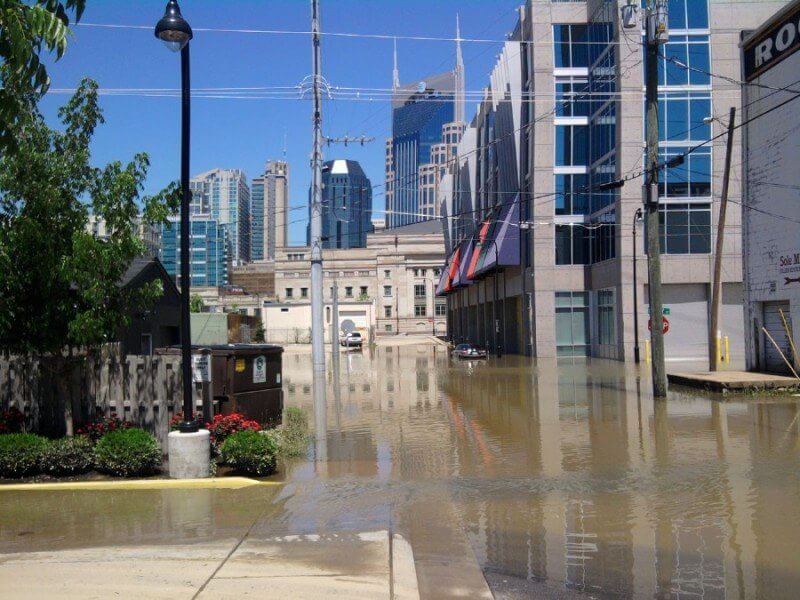
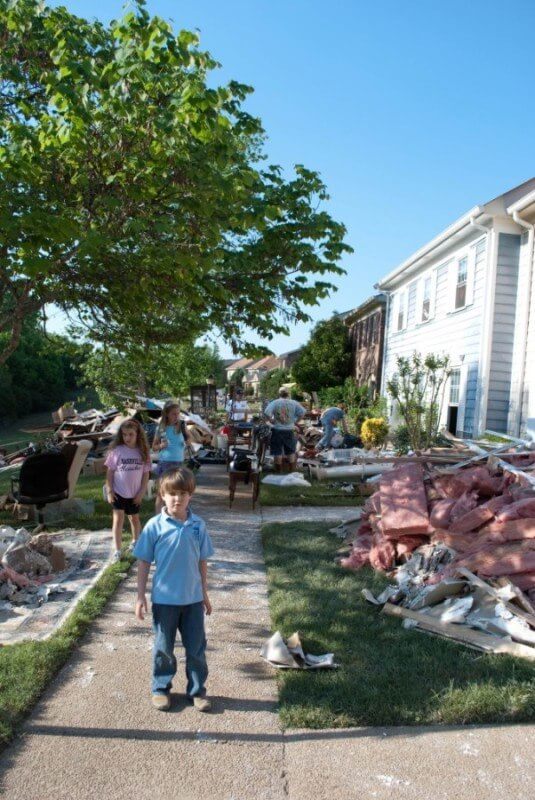
This flood was one no one could have predicted and had less than a .1 percent chance of occurring. A weather system stalled over our region and parts of Nashville received more than 17 inches of rain within 48 hours. The flood was devastating to not only Nashville, but to Western and Middle Tennessee. Fifteen weather observation sites had rainfall totals that exceeded the most rain observed during Hurricane Katrina. Twenty-six people lost their lives in Tennessee and Kentucky, including 11 in Nashville. The city came to a standstill as the Cumberland River crested at 6 p.m. May 3 at 51.86 feet. The waters climbed up to Fourth Avenue (an uphill journey). Many Nashville landmarks were heavily damaged and entire neighborhoods were under water. It seemed that all of Nashville pitched in to help and the sentiment “We are Nashville” spawned bumper stickers and T-shirts and was proudly on display in this blog post by Section 303 (well worth the read or reread) Most of this was lost to the national news, as our flood occurred during the same weekend as the Times Square Bomber, which sucked up all air time across all cable networks. (source)
PinOutside the Encore condominiums on Fourth Avenue, south of Broadway | Image: Nashville Public RadioPinHere’s a photo from River Plantation in Nashville’s Bellevue neighborhood. Every home here had all of their belongings on the sidewalk, and as you can see, drywall and insulation had been removed, as well. Image: from StyleBlueprint’s article An American Dream is Flooded, not DrownedThe Tennessean has a great photo gallery highlighting images of the flood juxtaposed with images from two years ago. It’s worth a look: tennessean.com.
Many point to this event as the first time they saw a real need for social media for local, Nashville of-the-moment news. Twitter and Facebook exploded with updates (Facebook at the time was sorted by the most current update, similarly to how Twitter continues to be populated).
Eleven thousand homes and buildings were damaged or destroyed. Ten thousand people were left without homes, either temporarily or permanently. There was more than $2 billion in private property damage and public infrastructure damage. (source)
I don’t think you will find a person who lived in Nashville in May 2010 who either wasn’t personally affected or didn’t spend the next month volunteering. The city came together in this time of need in an incredible way.
In summary
What each of these disasters has imprinted on this city is the desire of Nashvillians to help out and persevere. This is a city which supports each other and even in the face of extreme hardship, perseveres. Nashville has long been known for its collaborative spirit and will to lend a hand, proven time and time again as these disasters showcase here.
We have more in-depth articles on three of these historic Nashville disasters:
Our unofficial motto at StyleBlueprint is "Be kind. Do good." We encourage this to be the basis for all comments on our articles. Provide feedback that adds to the story. Some controversy or disagreements are part of any good dialogue between friends, but anything that tears down or belittles others is subject to disapproval or removal. Thank you for being a member of the StyleBlueprint community! View our Community Guidelines.