10 More Britishisms We Love
You lot loved Grammar Guru's first batch, so here are 10 more clever Britishisms to incorporate into everyday conversation. Image: iStock
The first installment of clever Britishisms wasn’t enough, so it’s time for round two! I’m more convinced than ever that our English friends are running linguistic circles around us. Let’s adopt a few of these into everyday chatter. Here are 10 more efficient, expressive, and cheeky ways to make your point like a Brit.
Cheeky
“Cheeky” is the ultimate British way to say someone or something is being a bit of a troublemaker; a scallywag. But in a way that’s more silly than scolding. The word officially popped up in the mid-19th century out of the older slang “cheek,” which meant “insolence” or having the nerve to say something bold. Like “giving lip,” but instead, you’re “giving cheek.”
It’s widely employed in the U.K. to imply playful mischief, like if a toddler sneaks an extra biscuit (cookie), that’s cheeky. Or a group of mates (friends) might order one more cheeky pint after they should probably call it a night. It’s indulgent or boundary-pushing.
Example: “He flashed me a cheeky grin before taking the last slice of pizza.”
Meant to _____
This is my mom’s favorite Britishism, and one that I adore, too. In the U.K., people are not “supposed to” do things; they’re “meant to.” The distinction is subtle but important. While “supposed to” carries a rulebook tone and sounds clunky, “meant to” is softer and suggests intention. It’s more human and just lovelier, as are many of the best Britishisms.
It feels less like a reprimand and more like a gentle admission. In the South, where phrasing matters and tone can smooth any message, I’d love for this to replace the sterner “supposed to.”
Example: “We were meant to get here around seven o’clock, but traffic was horrible.”
Sod off/Sodding
The word “sod” has been floating around Britain since at least the 1500s, originally referring to a clump of earth or turf. Over time, it became a colloquial term for someone, often tinged with pity or annoyance. By the 20th century, “sod off” had settled into everyday speech as a brisk way of telling someone to go away, similar to “bugger off,” another fabulous British saying.
Similarly, the adjective “sodding” developed as an intensifier, much like “bloody”, to add emphasis without full profanity. In the U.S., where our options tend to swing between sugary politeness and full hostility, this lands in the middle. It’s sharp, expressive, and oddly satisfying to say out loud.
Example: “If this sodding pollen doesn’t calm down soon, I’m staying inside until summer.”
Example: “I’m about to tell the driver of that double-parked car to sod off.”
A wee _____
I’d be remiss if I didn’t include a few Scottishisms, as my dear Aunt Jane is from there and my cousins are always sprinkling them into their vocab. “Wee” — simply meaning “small” — has been used since at least the 15th century. Over time, it became one of the most endearing modifiers in the English-speaking world.
In Scotland and Northern Ireland, especially, it attaches itself to nearly anything. A wee cup. A wee break. A wee bit of rain. “Wee” softens things and lowers the stakes. It makes everything sound manageable and cozy. That is a tone we could use more of here.
Example: “You’ll be ok, it’s just a wee bump.”
Knickers in a twist
“Knickers” entered British vocabulary in the 1800s, inspired by the name Knickerbocker from Washington Irving’s writings. In the U.K., it simply means undergarments. The phrase “knickers in a twist” appeared in the mid-20th century and refers to someone becoming unnecessarily upset or flustered. This is objectively better than the American version, involving panties.
Example: “Don’t get your knickers in a twist over the guest list.”
Knob
The word “knob” started as a more vulgar and, let’s say, anatomical British word, but it shifted to a mildly insulting term for someone being foolish, inconsiderate, or irritating. It’s not high-level slander. It is closer to calling someone a doofus or a jerk, but with more edge and jest.
The appeal here is the efficiency of a quickly delivered message that feels cheeky rather than aggressive. Especially in the South, where humor often softens critique, this would fit right in as a half-serious warning with a wink.
Example: “Stop being a knob and come help me unload the groceries.”
Cuppa
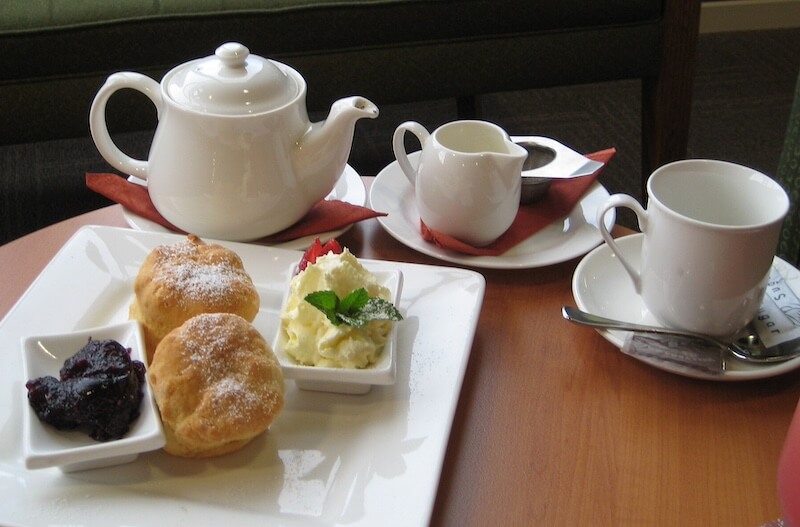
This is one of those famously British catch-all phrases that is so much more than it is. It’s like a universal social lubricant or a hug in a mug that unites all Brits. A cuppa could mean a cup of anything, but it’s almost always tea. Offering a cuppa is a shorthand for hospitality. It’s an invitation to sit down, have a “chinwag” (read below!), and take a break from the world.
Example: “Let’s have a proper cuppa before we head out.”
Chinwag
This is the most adorable way to say “chat” I’ve ever heard. Emerging in the 19th century, chinwag refers to literally wagging your chin while talking. It’s an animated conversation between friends, not stale small talk. It’s hard to dislike a word that sounds this cheerful. Americans say “chat,” “catch up,” “talk,” but “chinwag” suggests time taken, stories shared, maybe a cuppa something is involved.
Example: “Let’s have a quick chinwag before you leave!”
You lot
Just as many British friends have adapted “y’all” into their vernacular, I think we could take up “you lot.” Since the word “you” in English can be either one person or fifty, Brits add “lot” to make it crystal clear they are talking to everyone in the room. The tone sits in a funny middle ground. While it’s often used affectionately between friends and family (“Are you lot coming to the pub?”), it can also sound slightly dismissive or bossy (“Quiet down, you lot!”).
Example: “If you lot don’t get to the tailgate soon, all the drinks will be gone.”
Bollocks
“Bollocks” dates back to Old English and originally referred to, again, anatomy. By the 17th century, it had evolved into slang for nonsense or something worthless. The beauty of the word is its versatility and how fun it is to throw around.
It can mean a mistake, as in “I’ve made a complete bollocks of it.” It can mean rubbish, as in “That’s absolute bollocks.” And in a great British plot twist, “the dog’s bollocks” actually means top-notch or the absolute best.
Example: “You’re telling me that’s the best barbecue in town? Bollocks.”
Do you have a favorite Britishism or Scottishism we missed? Head over to Instagram and let us know!
**********
Brush up on all of our Grammar Guru episodes in the archives HERE!

Zoe Yarborough
Zoe is a StyleBlueprint freelance writer, Charlotte native, Washington & Lee graduate, and Nashville transplant since 2012. She teaches Pilates, helps manage recording artists, and likes to "research" Germantown's food scene.