
Grammar Guru: 12 Clever “Britishisms” to Adopt
Sprinkle in some British terminology and watch your daily dialogue get instantly cheekier. Here are 12 fun Britishisms to incorporate into your conversations! Image: ChatGPT

It’s been a while, my friends. Over a year, in fact, since this Grammar Guru took a long-weekend jaunt to London for a little babymoon, and even longer since I’ve released a new Grammar Guru installment. Today’s is a nod to British vernacular. The simplest everyday phrases sound infinitely more charming when delivered with a British twist.
While Americans have perfected our own brand of expressive language, the Brits have an enviable knack for making mundane moments feel delightful. So, in the spirit of cultural exchange (and adding a little extra flourish to our vocab), here are a dozen fun Britishisms to adopt into your everyday conversations!
Queue
Most know a queue is a line, but I love the verb form as well: The act of lining up. Whether we like it or not, Americans line up everywhere; we might as well sound a little more elegant and orderly doing it. This term originates from the Old French cue, meaning “tail.” The line is literally a tail of people.
This word instantly makes standing in line feel less chaotic. I wish we could adopt both the word and the politeness that is inherent in the British queuing mentality.
Example: “The queue for Santa at the mall moved quickly today.”
“Pop In” or “Pop ‘Round” [to a place]
This is a very British way of saying “drop by casually,” or “take a quick look inside.” You’ll hear this a lot in terms of “popping around to the shops” on a slow weekend. It can mean you’re meandering sans agenda, or maybe you’re ticking off a few errands and will see where the day leads. It’s unhurried, fun, and carries a sense of curiosity.
We could all benefit from friendlier, more spontaneous community culture in the U.S., don’t you think?
Example: “We’ll pop ’round to your place after we pop into the farmers’ market”
Holiday
Across the pond, a “holiday” isn’t just when banks are closed or during December festivities. It’s any break from regular life, especially travel. While Americans take “vacation,” Brits go “on holiday,” which instantly feels more celebratory and well-deserved.
Will adopting the vocabulary help us achieve their work-life balance, too? One can only hope. This word connotes more joy and cheer than just a mere absence from work.
Example: “We’re going on holiday to Africa for a month next year.”
Brilliant
Brits deploy “brilliant” the way Americans say “awesome,” but with a touch more sparkle. It always makes me think of Hugh Grant in Love Actually, to whom everything was brilliant. It literally means “shining brightly,” and you can feel that boost of brightness when someone uses it to praise a plan, a person, or a small win. It’s enthusiastic without being over the top, and the perfect midrange compliment we could use more of.
Next time your friend remembers their rain jacket, or your kid actually eats a vegetable, give them the full British cheer: Absolutely brilliant.
Example: “Can we switch the reservation from four to six people? Brilliant, thank you!”
Bits and Bobs
I adore this way of saying “odds and ends” or “miscellaneous things.” It can refer to physical items in a drawer or a shop, or to items on the day’s to-do list. I’m someone who keeps bits and bobs in random places throughout my house, no matter how organized I try to be. And “junk drawer stuff” just doesn’t sound as cute.
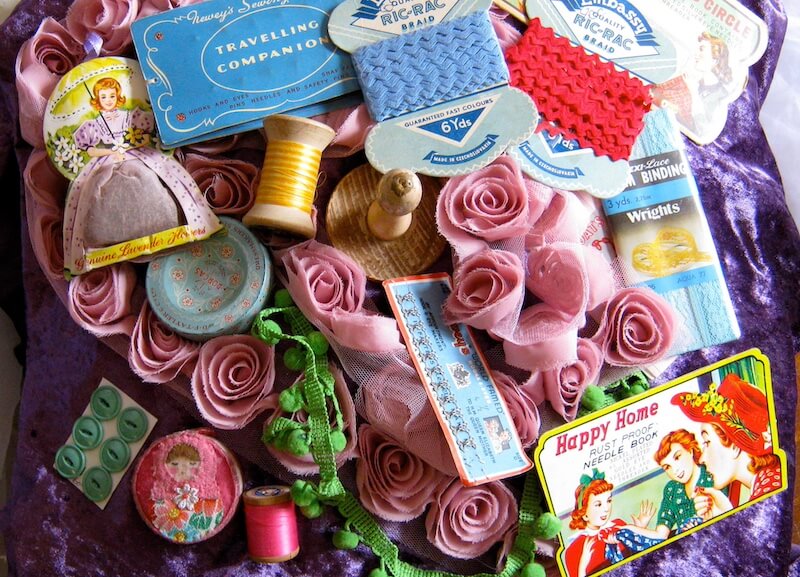
And you know those magical local shops we love that seem to have everything? This is what they sell.
Example: “Her store always has fantastic bits and bobs I get for hostess gifts.”
Fancy
The verb, not the adjective we use in American English. It means to like or want something. Brits use it to refer to things as trivial as an ice cream cone or as important as your friend’s new work crush. It’s flirtier and more fun than “want” or “like.” “Do you fancy a coffee?” feels smooth and low-pressure.
Example: “I fancy a nap, then an espresso martini.”
And Bob’s Your Uncle
This cheerful British phrase pops up at the end of instructions or explanations to say, “And that’s all there is to it!” It’s the UK equivalent of “Easy peasy” or “Voila!” The origin story goes back to the 1880s when British Prime Minister Robert “Bob” Cecil appointed his nephew to major government posts. This little bit of nepotism made success seem effortlessly guaranteed.
Today, Brits drop it into everyday situations. It adds lightness to even the simplest tasks. In America, we could use more whimsical ta-da moments like that.
Example: “Just heat up the leftovers, top with cheese, and Bob’s your uncle!”
Chuffed
This means delightedly pleased, perhaps in a way that is humbly unexpected or mixed with a bit of pride. We don’t have a word that captures this type of happiness quite as neatly, though “tickled” is close. The word likely stems from early 20th-century British slang meaning “to swell with satisfaction,” which feels just right. “I’m chuffed you came to visit” conveys more warmth than a simple “happy.”
It’s a wonderful way to celebrate the everyday wins: a perfect biscuit (or cookie), a kid finally sleeping through the night, or nailing a parallel park.
Example: “They upgraded our seats to first class — I’m absolutely chuffed!”
Gutted
Flip the emotional coin, and you get the Britishism “gutted.” This is a word for deep disappointment that hits straight in the stomach. Think: your favorite restaurant is permanently closing, or your SEC team loses late-season in overtime. Brits use it casually to describe heartbreak, both small and large.
It’s grittier than “bummed” and more honest than “sad.” With one word, you feel the loss. And sometimes that’s exactly what language should do.
Example: “We missed our connection by five minutes. Absolutely gutted.”
[Something] Went Pear-Shaped
When something “goes pear-shaped,” it means a situation has taken an unexpected — and usually unfortunate — turn. The phrase likely emerged in mid-20th-century British Royal Air Force slang, where failed aerial maneuvers would bulge off-course into a pear shape rather than staying neat and round.
Today, it’s used for everything from dinner plans to politics. It’s a vivid, good-humored alternative to “went off the rails.”
Example: “We tried to DIY the wallpaper, but it went pear-shaped.”
Knackered
This means completely exhausted. A bone-deep fatigue. The origin is likely from old slang about worn-out horses at the knacker’s yard (grim but memorable). We honestly don’t have a proper way to explain this level of tiredness in American English.
Using “exhausted” can get exhaustive. And let’s be honest, we’re all exhausted. But “knackered” is saved for braved-the-mall-on-a-Saturday-in-mid-December tired. Capiche?
Example: “The kids have been out of school for a week, and I’m completely knackered.”

Higgledy-Piggledy
This is a charming way to say something’s all messed up or all wrong. This one is part of a long tradition of English-language “rhyming-reduplication” or “double dactyl” expressions (like “willy-nilly,” “itsy-bitsy,” “nitty-gritty,” “helter-skelter,” “hocus-pocus,” “mish-mash,” etc.)
The likely original imagery evokes a heap of pigs as a metaphor for disorder or mess, since pigs herded together tend to cluster randomly and chaotically.
Example: “Our weekend plans got all higgledy-piggledy because of the snowstorm.”
Cheers! (In British English, that means “thank you!”)
**********
Did I miss your favorite Britishism? Send us a message (and give us a follow) on Instagram!

Zoe Yarborough
Zoe is a StyleBlueprint freelance writer, Charlotte native, Washington & Lee graduate, and Nashville transplant since 2012. She teaches Pilates, helps manage recording artists, and likes to "research" Germantown's food scene.
4 thoughts on “Grammar Guru: 12 Clever “Britishisms” to Adopt”
Leave a Comment
Our unofficial motto at StyleBlueprint is "Be kind. Do good." We encourage this to be the basis for all comments on our articles. Provide feedback that adds to the story. Some controversy or disagreements are part of any good dialogue between friends, but anything that tears down or belittles others is subject to disapproval or removal. Thank you for being a member of the StyleBlueprint community! View our Community Guidelines.
You must log in to post a comment.


Fun article! So now I know the origin of chuffedplay.com and their bags and games for kids
Yes! We all learned so much with this Grammar Guru article! Thanks for reading and letting us know:)
Ah, such a fun and refreshing article (I love all the Grammar Guru content, as a writing professor). Makes me want to re-read something by Bill Bryson. Thanks a bunch!
Thank you for reading! We’re glad our “Grammar Guru” is back as well!