

The Beloved Louisville Pottery Brand Your Grandma Collected Is Making a Comeback
Louisville’s beloved Hadley Pottery nearly disappeared. Now, the 86-year-old brand is finding new life without leaving its hand-painted roots behind. Image: Hadley Pottery
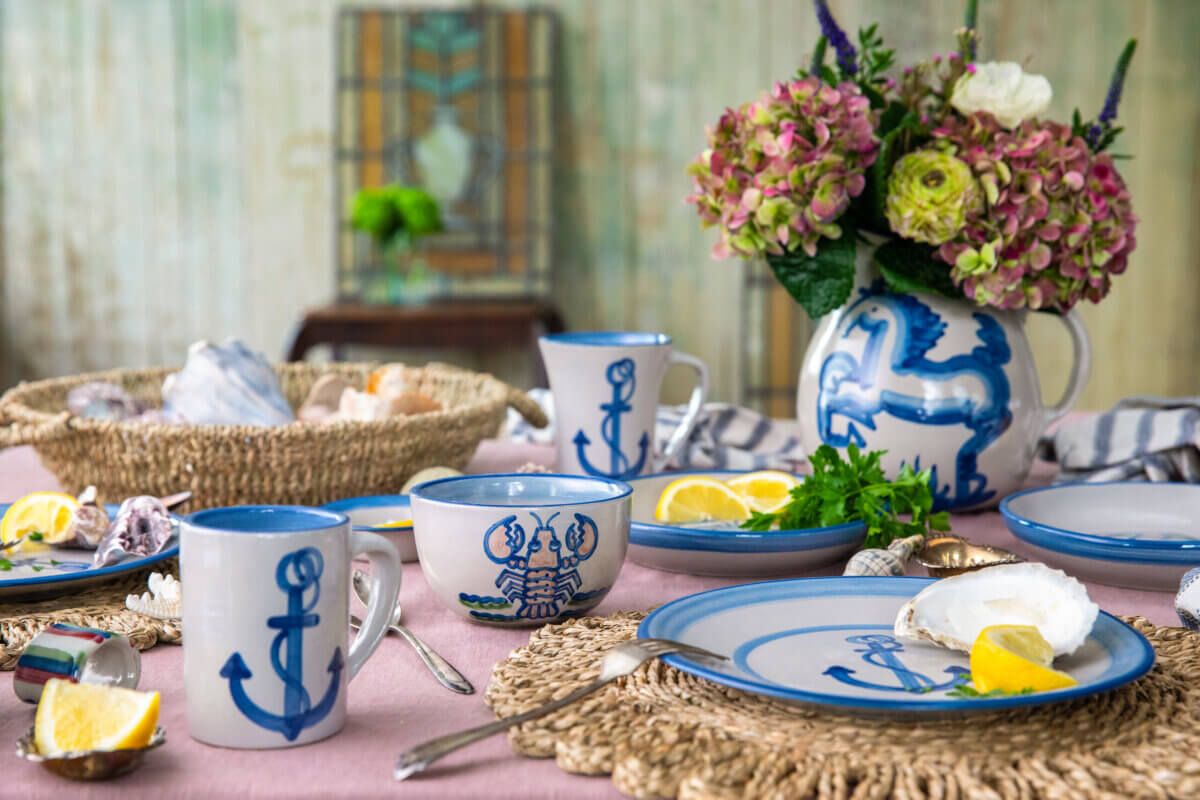
It’s a warm, sunny fall afternoon in a bright, cozy shop, tucked in a 19th-century Butchertown factory. The space is filled with the sound of creaking wooden floors and the satisfying clink of sturdy earthenware set “just so” on rustic farmhouse-style tables. The shelves bring to mind grandma’s china cabinet, stacked with plates, bowls, and mugs featuring folksy farm scenes, coastal motifs, and … Wait. Is that a painted bidet in the fireplace? Welcome to Hadley Pottery, the beloved 86-year-old Louisville ceramics brand that has graced dinner tables around the country for generations.
Building a Beloved Brand
A true Louisville original, Hadley Pottery was founded by Mary Alice Hadley in the 1930s. Originally from Terre Haute, Indiana, Mary Alice was the daughter of a ceramics manufacturer and began making mugs and bowls as a child.
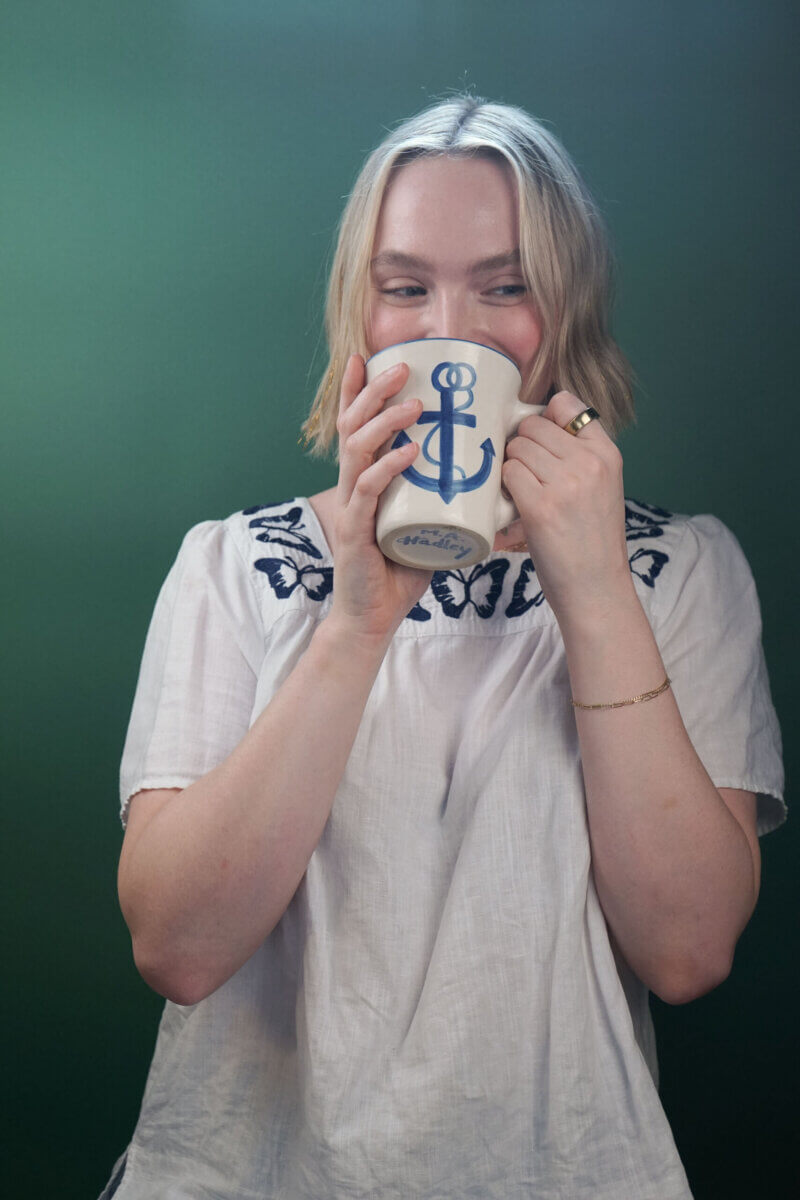
After marrying Louisville native George Hadley, Mary Alice settled with her new husband in his hometown, and the couple frequently entertained guests on their houseboat. Unable to find a line of dishware sturdy enough to withstand the wear and tear of life on the Ohio River, Mary Alice created her own and painted them with a simple nautical flag design.
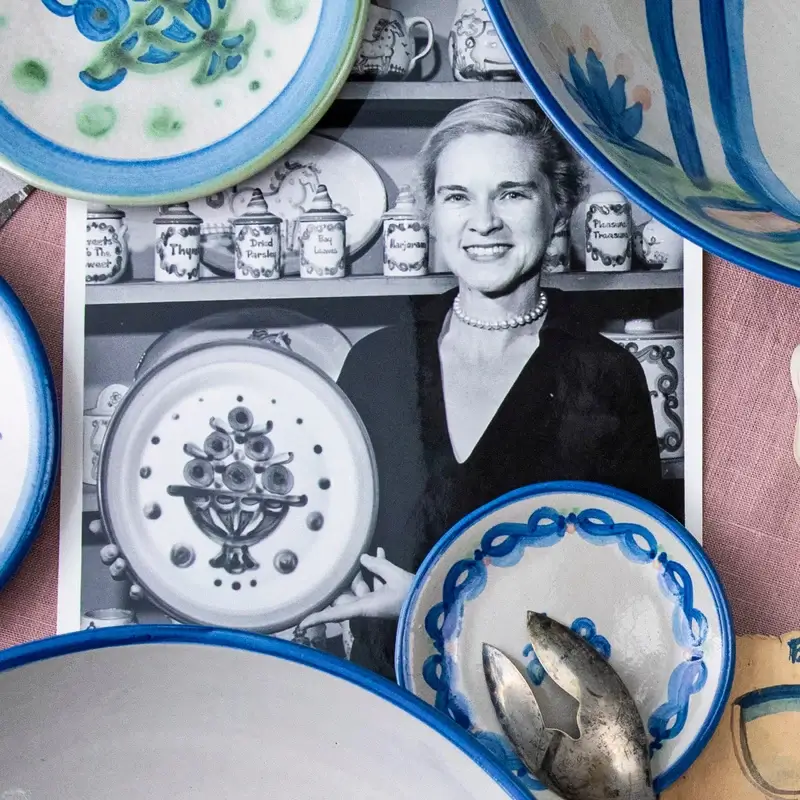
Soon, friends began placing orders for their own dishes, and in 1945, the Hadleys bought the Butchertown factory where the pieces are still produced today. Word spread, and soon her idyllic coastal and farm designs were a staple in wedding registries from coast to coast and carried on the shelves of retailers like Bloomingdale’s.
In 1953, her Brown Fleck pattern earned Mary Alice a Good Design Award from the Museum of Modern Art in New York. Today, vintage Hadley Pottery can be seen in permanent collections at the Speed Art Museum, Rose-Hulman Institute of Technology, MoMA, and the Smithsonian.
From Near-Closure to New Life
Sadly, Mary Alice passed away suddenly in 1965 after a brief battle with cancer, while still in the height of her creative career. George continued to run the business until 1979, when it was purchased by Kenneth Moore, who in turn sold it to Jerry Day (whose family had been involved in the business for four generations). But as the iconic brand approached its ninth decade, its popularity began to fade. In 2022, Hadley Pottery announced plans to close its doors.
Fate intervened when Louisville businessman and philanthropist Brook Smith received a call from his mother, who was distraught over the closure. Recalling fond memories of visiting the Story Avenue shop as a child, Brook jumped at the chance to acquire both the business and the land surrounding it.
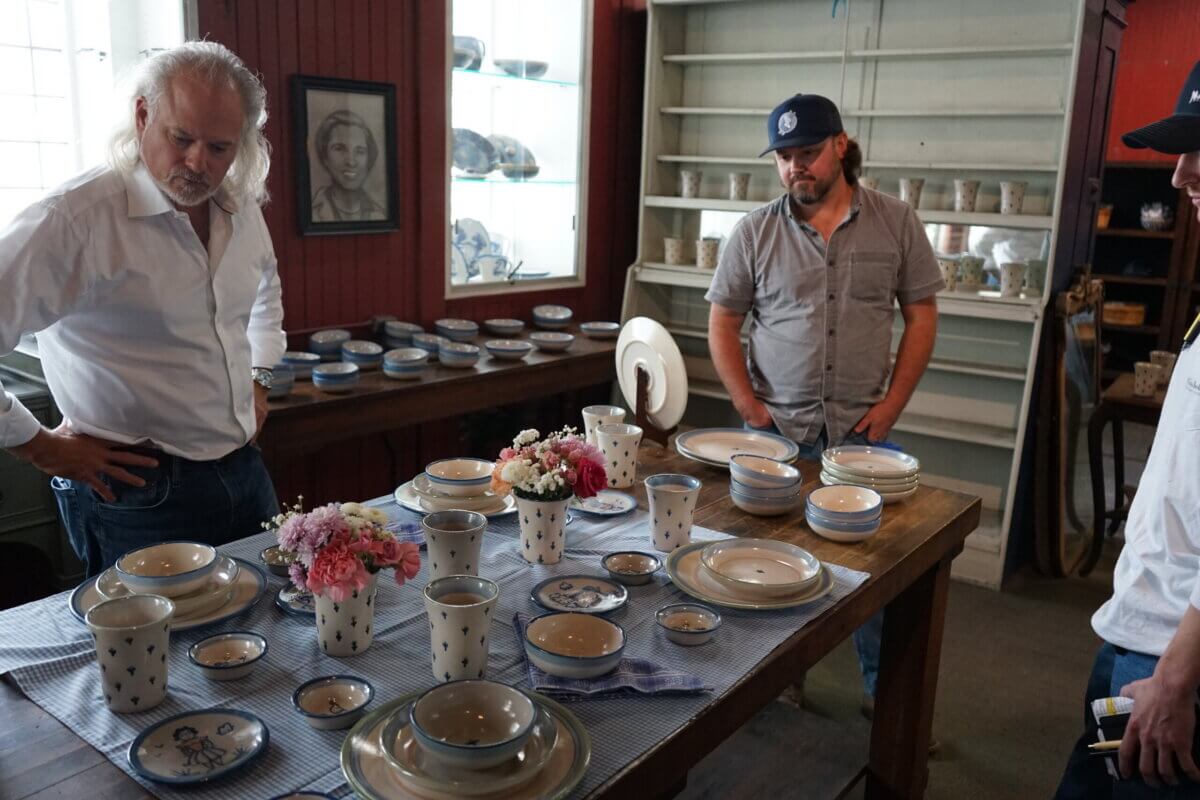
Though Brook was committed to saving and restoring the historic brand, some classic designs had fallen out of fashion. Couples were no longer adding personalized matching dishes to their wedding registries, preferring more practical items instead. Brook knew that he needed to find a way to preserve the beloved brand history while catapulting it into the future.
Because of the deep, emotional connection so many fans feel for the brand, General Manager Taylor Stone admits that it was no small feat.
“There’s a lot of imposter syndrome,” says Taylor of carrying the Hadley torch. “You have to keep the sacred parts of the brand alive, because it means so much to so many people. But also, it almost went away. It’s a balancing act.”
Hand-Painted Heritage
Fortunately, Mary Alice left plenty of inspiration behind. Her brushstrokes are all over the Story Avenue factory, revealing more wit and artistic depth than the quaint, folk-inspired patterns that made her famous.
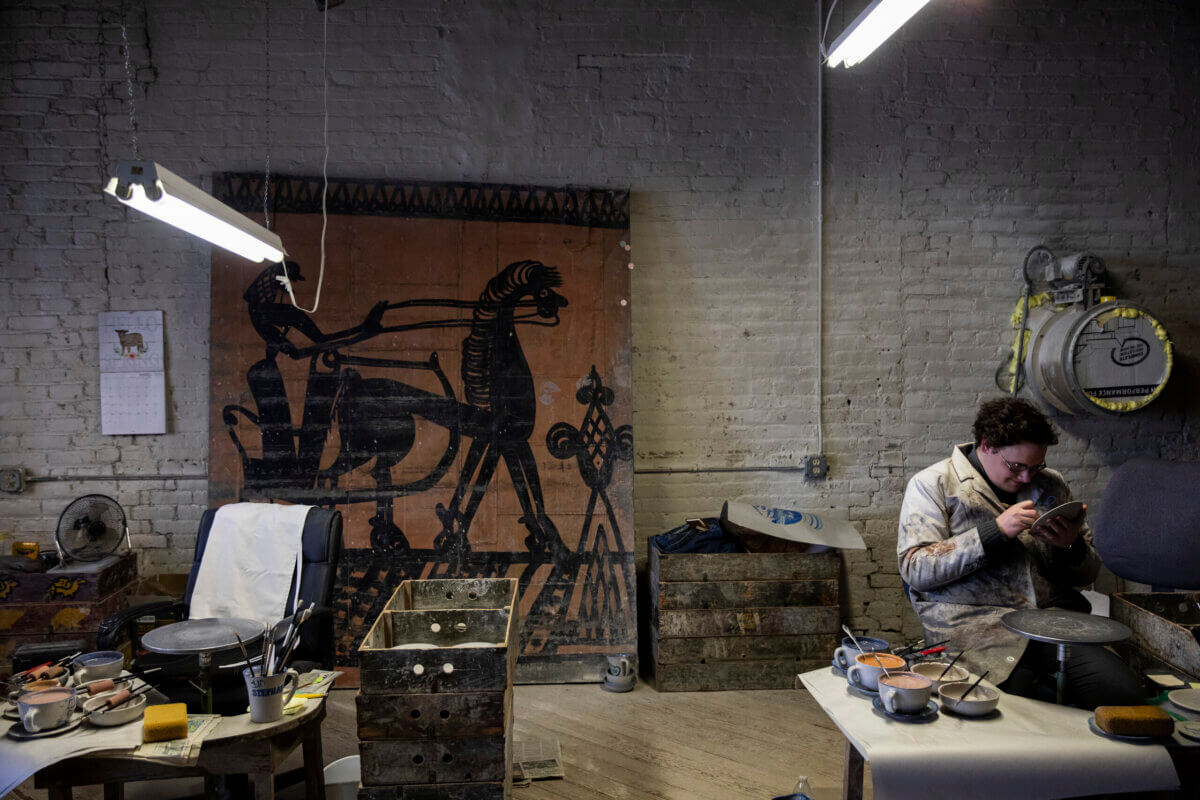
Large murals that evoke mid-century artists such as Pablo Picasso and Marc Chagall grace the walls, while a tall gray ceramic floor lamp made from kitchen items stands by the showroom fireplace. The showroom also houses the aforementioned ceramic bidet, painted with its cheery, indigo patterns.
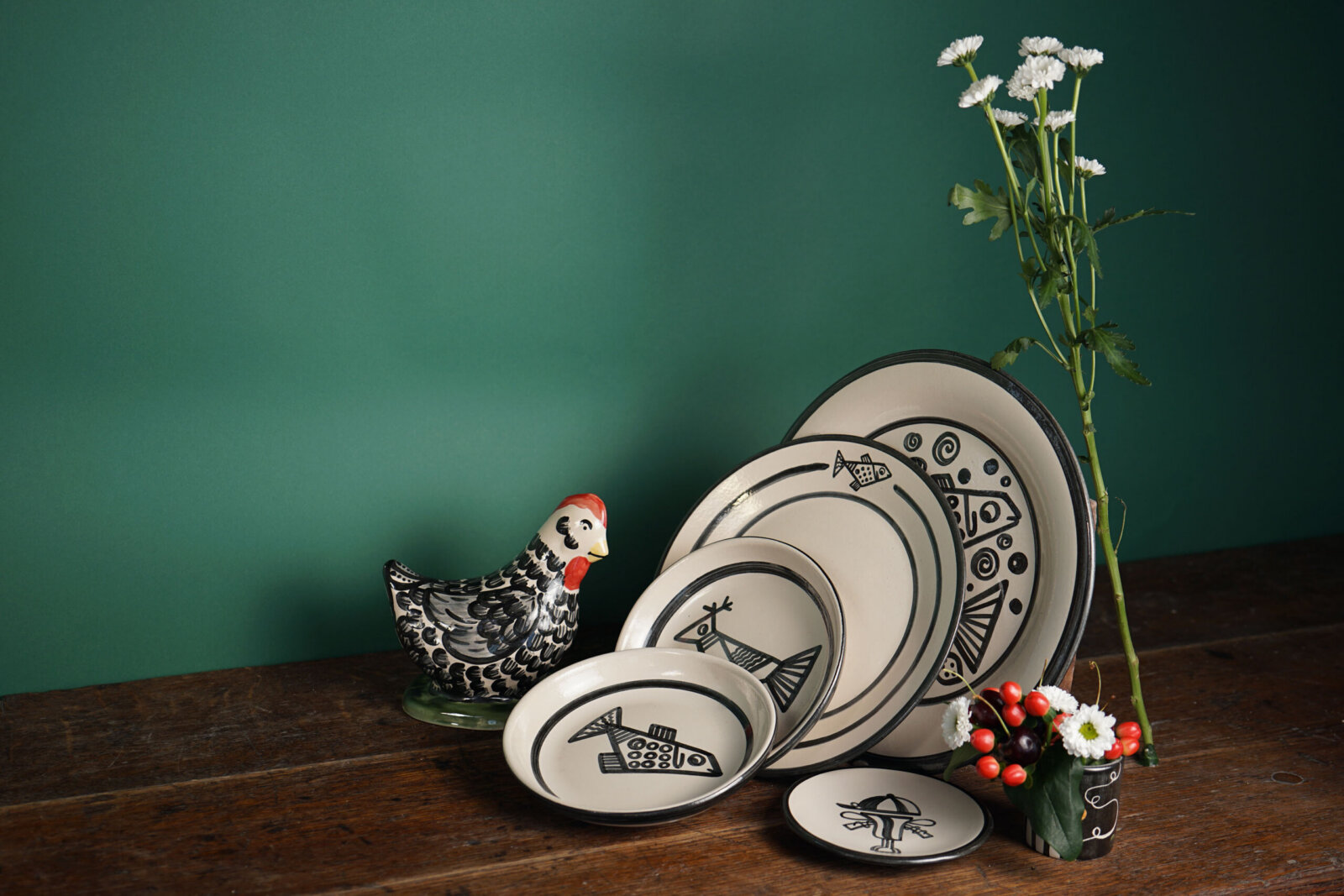
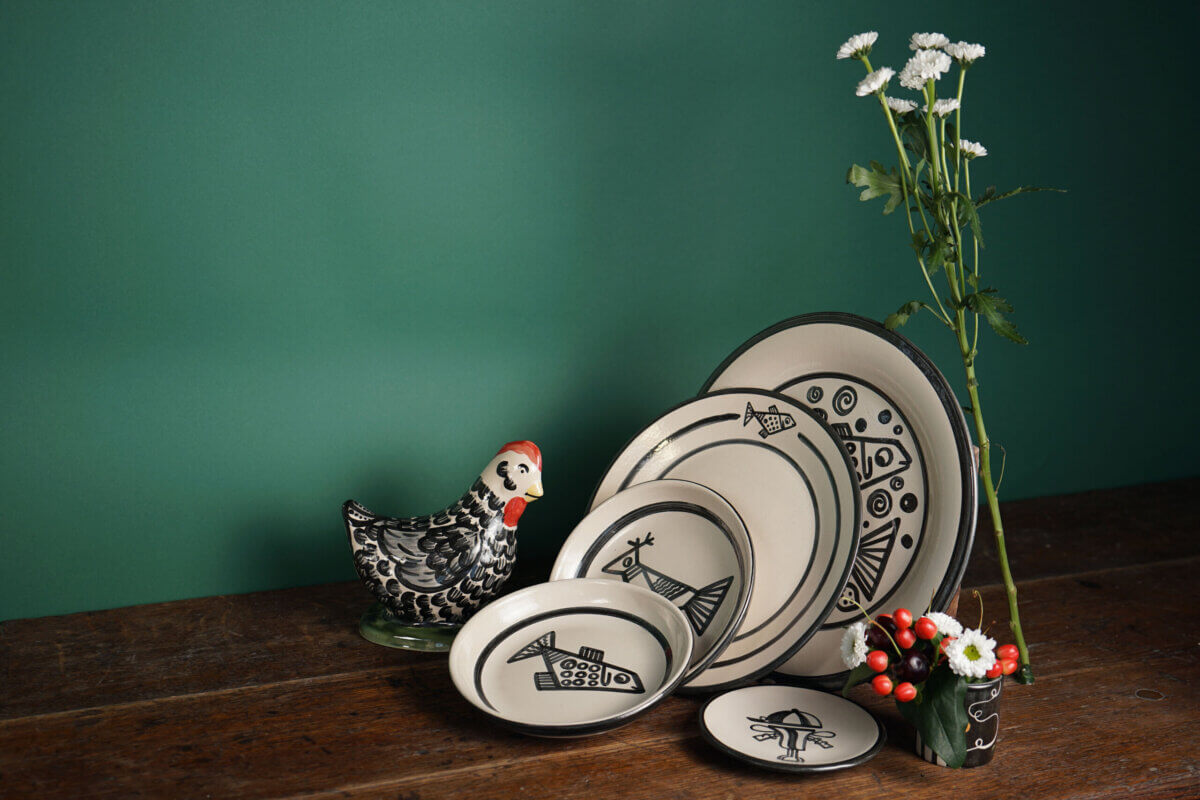
And then there are the thousands of sketches and ceramic pieces Mary Alice created that never entered production during her lifetime, such as the Fish & Fowl Collection, a spare, cubist take on her traditional country designs.
With so much inspiration to choose from, but no direct descendants and very few of her peers still living, Stone and his team constantly ask themselves, “What Would Mary Alice Do?” The obvious answer is that she would preserve the production process.
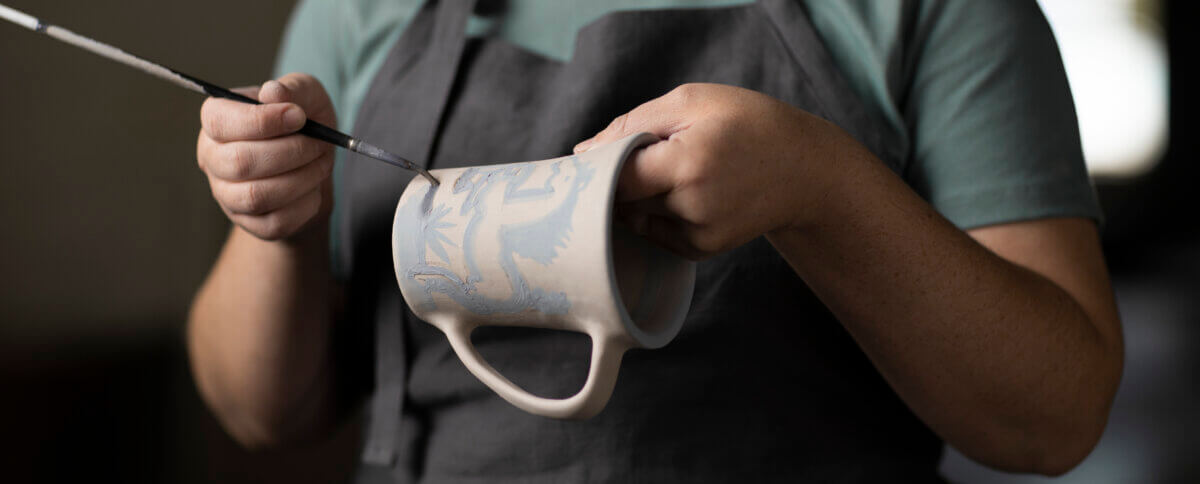
Each one of the nearly 35,000 pieces is lovingly hand-painted by nine artists. Although brand manager Olivia Ross concedes that using stamps or sponges might increase productivity, it would also chip away at the authenticity.
“We’re still doing things the old-fashioned way,” she says. “There’s definitely a world in which we could produce everything overseas, and it would be much cheaper, but that’s not who we are and who we want to be.”
Olivia says the brand has gotten an unintended boost from the backlash of “AI slop” and the current philosophy of maximizing efficiency at all costs. “There’s increasing demand for more intentional, slow living,” she says, noting the popularity of homesteading and cottage core style.
Classic designs such as “Blue Horse” and “Bouquet” remain bestsellers, while loyal followers jump at the chance to add seasonal pieces to their collection each year. The brand’s resurgence has also sparked the return of some tried-and-true favorites.
The personalized dinner and lunch plates ($180 and $149, respectively), a go-to bridal shower gift for decades, were re-released in spring 2025, and this month marks the return of the oval address plates.
A Forward Looking Legacy
As for what’s next for Hadley Pottery, the future couldn’t be brighter. Renovations began this summer to update and restore the aging factory, which will consolidate production to adjacent floors, improving efficiency and also paving the way for classes and tours.
The brand is exploring a limited number of collaborations that reimagine Mary Alice’s iconic style on housewares, including tea towels, designed by artist Julia Allisson Cost, candles sourced from Maddox & Rose, and a selection of stickers, notecards, and T-shirts emblazoned with best-selling designs.
The challenge, as always, is to ensure that every item that bears Mary Alice’s name lives up to her forward-looking sense of style and impeccable taste. “It’s bigger than any one person. We all feel really lucky to be a part of it,” says Taylor. “We think Mary Alice would be proud.”
**********
For your daily dose of StyleBlueprint sent straight to your inbox every morning, click HERE!

Beth Clayton
For over 20 years, Beth Clayton has either been working in a newsroom or pitching one. A natural storyteller and word nerd from the moment she could pick up a pencil, she earned her journalism degree from Butler University and spent the next decade as a writer, reporter, and editor. She now lives in Louisville, KY with her husband, three kids, and a very bad dog, and loves immersing herself in old lady hobbies such as houseplants and macrame.