There’s an “F” word in the English language that many people are reluctant to use, and it’s not what you’re thinking. This word’s current purpose has outgrown its history, and we’ve got some stats and stories about a polarizing term that most of us embrace — knowingly or unknowingly.
The word feminist is innately biased, and many people have pushed for a new term for feminism (like equalism or genderism). People who loudly or quietly call themselves feminists today aim to reclaim and reshape this word into a movement everyone feels comfortable supporting. And while many are embracing it, many are still confused by it. Beyoncé struts on stage with the word FEMINIST illuminated behind her and she told Elle, “I put the definition of feminist in my song [“Flawless”] and on my tour, not for propaganda or to proclaim to the world that I’m a feminist, but to give clarity to the true meaning. I’m not really sure people know or understand what a feminist is, but it’s very simple. It’s someone who believes in equal rights for men and women. I don’t understand the negative connotation of the word, or why it should exclude the opposite sex.”
This word conjures up a spectrum of meanings. To most young people today, the word simply means “treating all people with respect and as equals.” To their grandparents, however, this word is often conflated with the intense feminist movement from the ‘60s associated and — rightly or wrongly — with divisiveness and man-hate. As the women’s rights movement aged and changed in the United States, so did the word. Feminism at its core can be understood and defined as gender equality. Feminists hope to remove artificial generalizations society creates for people of all genders. Hard to argue with, right? Then why this strange dichotomy of people denouncing the word “feminist” while supporting its basic definition?
“I’m not a feminist or anything. But, I do think women should be paid and treated equally.” — Recently stated by a 40-something friend.
But don’t just take it from us. The stats on this are staggering. A 2018 GenFoward survey found that 62% of women in the US said they don’t identify as a feminist, but they believe in equal rights and equality. Just 22% identified as a feminist. Our 40-something friend isn’t the only one who wants to distance herself from the outdated connotation of the up-in-arms, man-hating feminist.
It’s important to remember that less than a century ago, women couldn’t vote. It took far too long for women to be able to participate in our democratic process, to be able to own property, to have custody of their own children, to keep their wages … the list goes on. In the 1970s, married women could not get birth control without the written consent of their husbands. A little louder for the people in the back … this was in the ’70s. Gender constructs and rules were ingrained for so long, mayhem broke loose when women started to challenge what was assumed and accepted.
PinThis collection of absolutely outlandish anti-suffrage propaganda illustrates how dangerous our thinking can be when “oh, it’s just been that way forever.” Image: collectorsweekly.com
After a massive uptick in interest in the word, Merriam-Webster deemed “feminism” the word of the year in 2017. This points to the human tendency to grapple with concepts and institutions we sometimes take for granted until we’re forced to examine their complexities. Feminism started with women’s rights, but today it encapsulates so much more than rights under the law. It’s about removing and equalizing privileges for all people in all aspects of life.
“Feminism does not presume women are BETTER than men. Rather, feminism calls on the unique perspective of women to affect change for all people in the hopes that we can all coexist with equality and love for one another.” — Mayim Bialik, actor, neuroscientist, mother, author
We are getting there, very slowly and somewhat surely, if you consider the progress in lessening the gender wage gap, the U.S. Department of Labor’s recognizing the benefits of paternity leave, and the growing percentage of women in elective office (though the South generally lags behind in that last category). If the U.S. continues to work to remove gender biases, we can lead as an example for countries who very decidedly cannot (Saudi Arabia just declared feminism a form of extremism, and only last year granted women the right to drive).
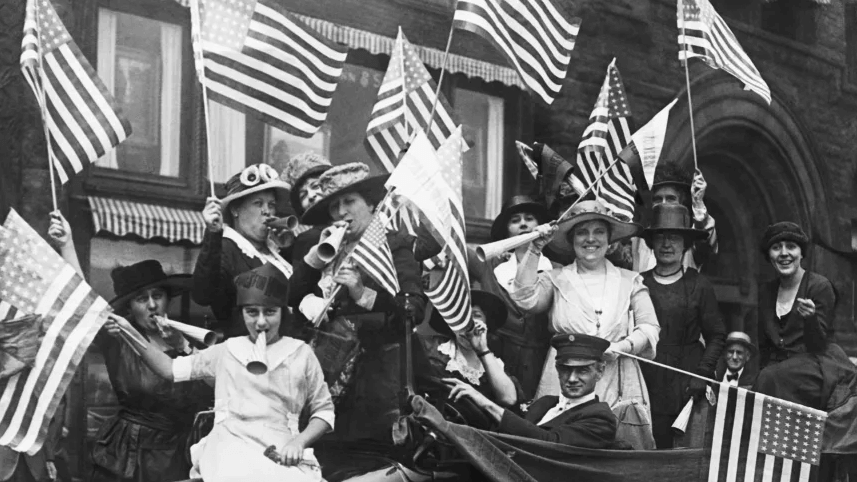
PinSuffragettes celebrate their victory after the passing of the 19th Amendment. Image: Bettmann Archive | Getty Images
But even after suffrage and the fight against institutionalized gender biases, both women and men still face massive inconsistencies in the workplace, government, home and the broader spectrum of human experiences. Like the difference in the way a woman candidate for a job is responded to as opposed to a male with the same résumé. Or the fact that we tend to see certain gender-neutral words as more masculine or feminine. Or a female doctor being wrongly called a nurse. Or the way we socialize men to not show fear or sadness, to provide financially more than emotionally. Both active and passive bias contribute to this inequality that harms both men and women.
We decided to do some research of our own and ask people throughout the South — of different ages, backgrounds and professions — their thoughts about what the “F” word means to them. We invite you to read these musings, to click the links referenced below this article, and to share your own thoughts with us.
We are grateful to all our sponsors:
Mary Blake Graves, 20
Full-time student
Hometown: Nashville, TN; Current city: Columbia, SC
“Having gone to an all-girls high school (Harpeth Hall) and coming from a long line of strong and independent women, the word feminist was (and still is) something I saw as a positive — something to strive for — as it meant to support all women and work towards an equal standing with men in the world. Once I got to college, however, I realized that people didn’t always see being a feminist as a good thing, and some even thought that, because I was a sorority girl from the South, I wasn’t one at all. Hearing ‘I really didn’t think you would be a feminist’ from my RA was when I truly realized that the idea of feminist that I had been raised with was not the definition that a lot of people believed. For me, it is an act of feminism to show up to my college classes every single day and work towards a degree in a male-dominated field like accounting, or wear my ‘Since 1920’ shirt on election day and go vote. Being a feminist means I want to work for women’s equality, and I won’t take my privileges — such as the right to vote and the right to attend college — for granted.”
PinMary Blake proudly rocks her Since 1920 tee that celebrates (almost) 100 years of voting rights for women. And it’s available on SB Shop! Image: submitted
“I use the word feminist to describe myself and don’t know why it continues to be a dirty word in the South. I connect with French feminism way more than American which focuses more on ‘equality’ between women and men and an attitude/misconception that women would be just like men if given a chance. This has the unintended consequence of forcing women to fit into male paradigms and continuing to devalue their more ‘womanly’ contributions. French feminism’s slogan is vive la difference, which means ‘celebrate the uniqueness.’ It centers on women feeling empowered to be who and what they are, to feel strong, powerful and sexy, to know their contribution to society matters a great deal, no matter what form it takes.”
PinA “very French” portrait of Marcelle Guilbeau, who believes in celebrating femininity, not stifling it. Image: Mikaela Hamilton
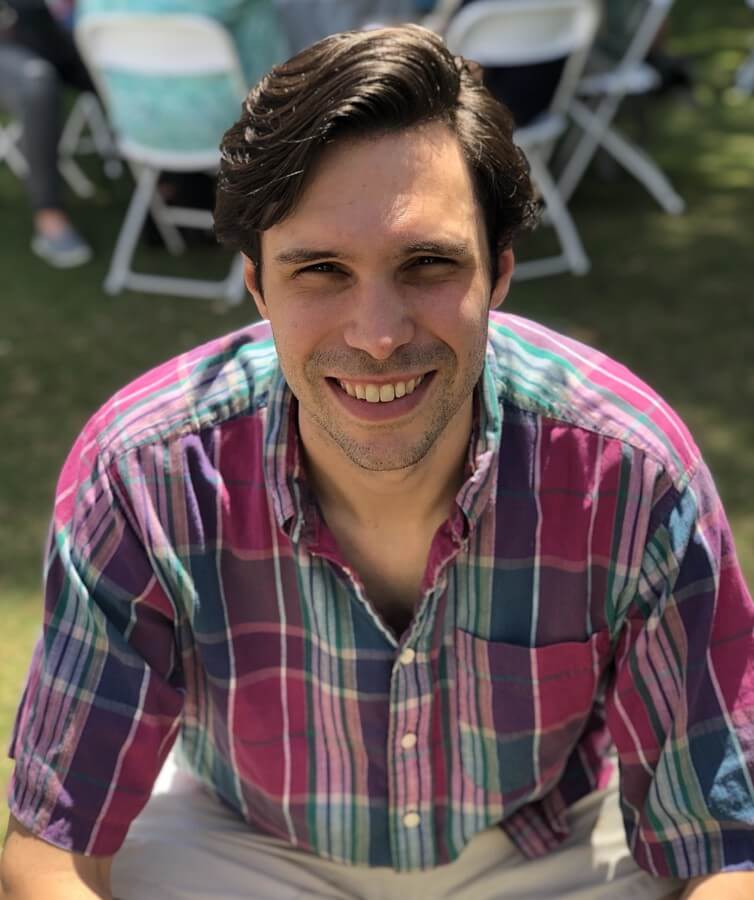
“In the medical world, we have seen much progress with respect to the feminist movement. About 50% of the faculty and residents in my program are women, and more than 50% of my graduating medical school class were women (the first ever at UAB). Unfortunately, the numbers aren’t everything. Every day, my female colleagues face sexist remarks. While some are blatant, more often, these are subtle, unintentionally bigoted comments such as mistaking a resident for a nurse (wrongly, often assumed to be a female profession) or deferring to the judgment of a male health professional even if they happen to be far less qualified. This comes from patients, hospital staff and even attending physicians. It’s an issue that I’m sure is not unique to the medical field, but it is unmistakably a part of it. I think a more conscious group effort should be placed to avoid these situations now, with the hope that in the future no conscious effort will be needed, and equality will simply come naturally. While we have clearly made strides, we simply aren’t there yet.”
PinJesse still sees gender bias and inequality in the medical world despite the even spread of women and men doctors in his group. Image: submitted
We are grateful to all our sponsors:
Dee Patel
Managing Director of The Hermitage Hotel
Hometown: Coventry, England; Current city: Nashville, TN
“Much like focusing on big-picture goals in my work, I focus on feminism in very much the same way. To me, feminism is about equality, and I make a personal effort to show my daughter and son that equality is the ultimate for which we strive. There is nothing more powerful than being a feminist and knowing that our place in the world is that of a trailblazer — a modern-day suffragist. The 2020 Centennial celebration of 100 years of women’s right to vote, which culminates at The Hermitage Hotel, speaks to equal rights then … and equal rights now. This anniversary honors the lesson and victory for equality. Every woman has power, and every woman has a responsibility to exercise that power.”
RELATED: Meet the First Female Managing Director of The Hermitage HotelPinDee Patel stands beside Nashville’s Centennial Park monument that honors the five women present during the final ratification of the 19th Amendment in 1920: Anne Dallas Dudley of Nashville; Abby Crawford Milton of Chattanooga; J. Frankie Pierce of Nashville; Sue Shelton White of Jackson; and Carrie Chapman Catt, the national suffrage leader who came to Nashville to direct pro-suffragists from the Hermitage Hotel. Image: submitted
Dia Cirillo, 49
Founder & principal of Spring Consulting, LLC
Hometown: Chicago, IL; Current city: Murfreesboro, TN
“Growing up Gen X in Chicago, where I graduated from the Chicago Public Schools and went on to a Fulbright Scholarship and University Fellowship at NYU, I initially did not think the word feminist applied to me — primarily because of the opportunities I was able to access. Over time, even as I served in the Illinois Governor’s Office, I came to realize the term feminist did apply to me. All we need to do is take a look at the number of women CEOs, the discrepancy in pay between men and women doing the same work, or even the number of women in the legislature, and understand that there is still work to do. That’s why I am a member of and volunteer with the AAUW network in Tennessee, which has been working for more than a century to advance gender equity for women and girls. Simply, a feminist is someone who recognizes the equality and dignity of all people, no matter their gender, race, religion, sexual orientation, etc. ‘feminism is for everyone,’ as bell hooks once said.”
RELATED: Southern Voices: She Should Run (and So Should YOU!)PinDia’s consulting practice engages stakeholders to address some of our most pressing issues using the tools of collaboration and results-based planning. She is a director on the board of AAUW, and the immediate past president of AAUW Murfreesboro and AAUW of Tennessee. She also founded the Middle Tennessee Fund for Women and Girls. Image: submitted
Martha Rampton, director of the Center for Gender Equity at Pacific University, says it well: “…millennials’ articulation of themselves as “feminists” is their own: not a hand-me-down from grandma. The beauty of [this] wave is that there is a place in it for all — together.” Feminism today is about breaking molds so that we no longer feel the need to carve ourselves away to fit into one. We shouldn’t shush a word because its historical connotation makes us uncomfortable. It’s that discomfort that got us where we are, and it’s these conversations that will ignite even more progress. Progress that is good for everyone, not just for women. This “f” word itself can mean a million things. Its core definition, however, is something we can all stand behind, picket sign in hand or not.
Sources: harvardpolitics.com, usnews.com, cawp.rutgers.edu, time.com, pacificu.edu, fortune.com, towardsdatascience.com, collectorsweekly.com, unwomen.org
**********
For the best of the South — straight to your inbox! — subscribe to our newsletter HERE!
Zoe is a StyleBlueprint freelance writer, Charlotte native, Washington & Lee graduate, and Nashville transplant since 2012. She teaches Pilates, helps manage recording artists, and likes to "research" Germantown's food scene.
Our unofficial motto at StyleBlueprint is "Be kind. Do good." We encourage this to be the basis for all comments on our articles. Provide feedback that adds to the story. Some controversy or disagreements are part of any good dialogue between friends, but anything that tears down or belittles others is subject to disapproval or removal. Thank you for being a member of the StyleBlueprint community! View our Community Guidelines.