Meet Bailey Mazik of the Louisville Slugger Museum and Factory
Meet the woman (yes, woman!) who is curating the best of baseball's history for the Louisville Slugger Museum, an iconic and world-renowned landmark. Welcome Bailey Mazik as our newest FACE of Louisville.
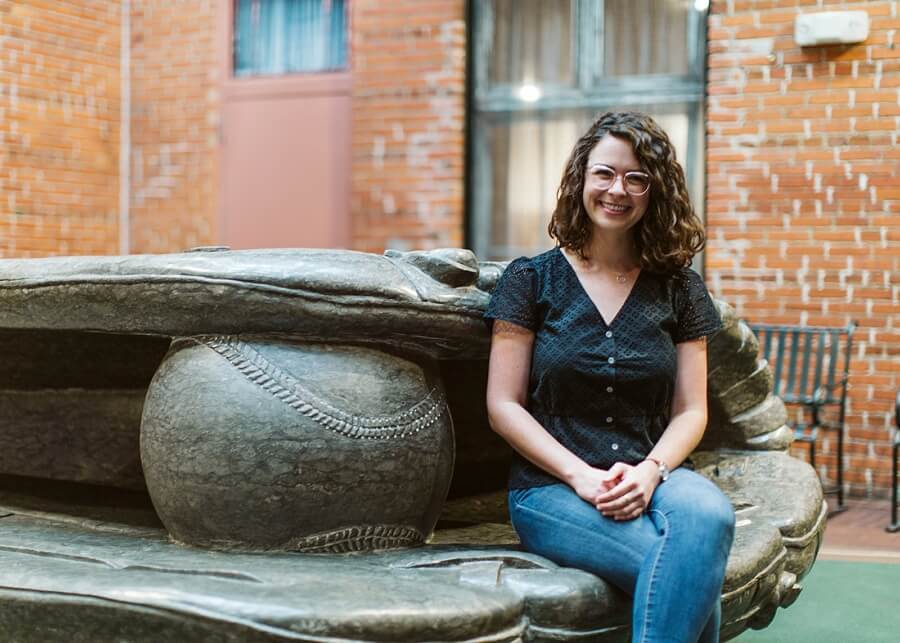
Although baseball has been around for well over a century, women haven’t been recognized as widely as men have when it comes to their participation in this sport. Yet women have played a significant role in America’s pastime throughout the years. Bloomer Girls baseball teams sprung up across the country in the late 1800s, challenging semi-pro and minor-league men’s teams — often beating them. The All-American Girls Professional Baseball League got its start in 1943 and lasted until the mid-’50s. Then there are women like Bailey Mazik. Although she’s not a player, she works daily to preserve baseball history.Bailey is the curatorial specialist at the Louisville Slugger Museum and Factory, owned by Hillerich & Bradsby Co., a position she’s held for the past three years. She began as a rookie six years ago, interning at the museum for 18 months before working her way up through the ranks until she made it into the big league. Let’s take our seat, grab some Cracker Jacks, and find out more about our all-star player, Bailey Mazik, this week’s FACE of Louisville.PinWe are so excited to have Bailey as our FACE of Louisville this week!
We are grateful to all our sponsors:
What is your background and what did you study in school?
I’m from Columbus, Ohio, and I did my undergrad work at Ohio State University. I double-majored in strategic communications and the history of art. I started out in strategic communications, then in my sophomore year, I started working as a student assistant in the history of art department. It was so amazing because a whole new world opened up to me.
What brought you to Louisville?
I wanted to do my master’s program at the University of Louisville to study critical and curatorial studies. There weren’t many specific curatorial masters programs in the country at that time. I knew I didn’t want to go straight to getting my Ph.D. I wanted to get my master’s first. I considered going to Washington, D.C., to George Mason University, but this was closer to home, and that was an important factor.
We are grateful to all our sponsors:
What contributed to your interest in history?
I grew up going to museums and historic places, like battlefields and forts. A lot of that had to do with my dad. My dad is a sponge — he just can’t learn enough, he can’t talk to enough people, and he just doesn’t sit still. He wants to soak up as much as he can.
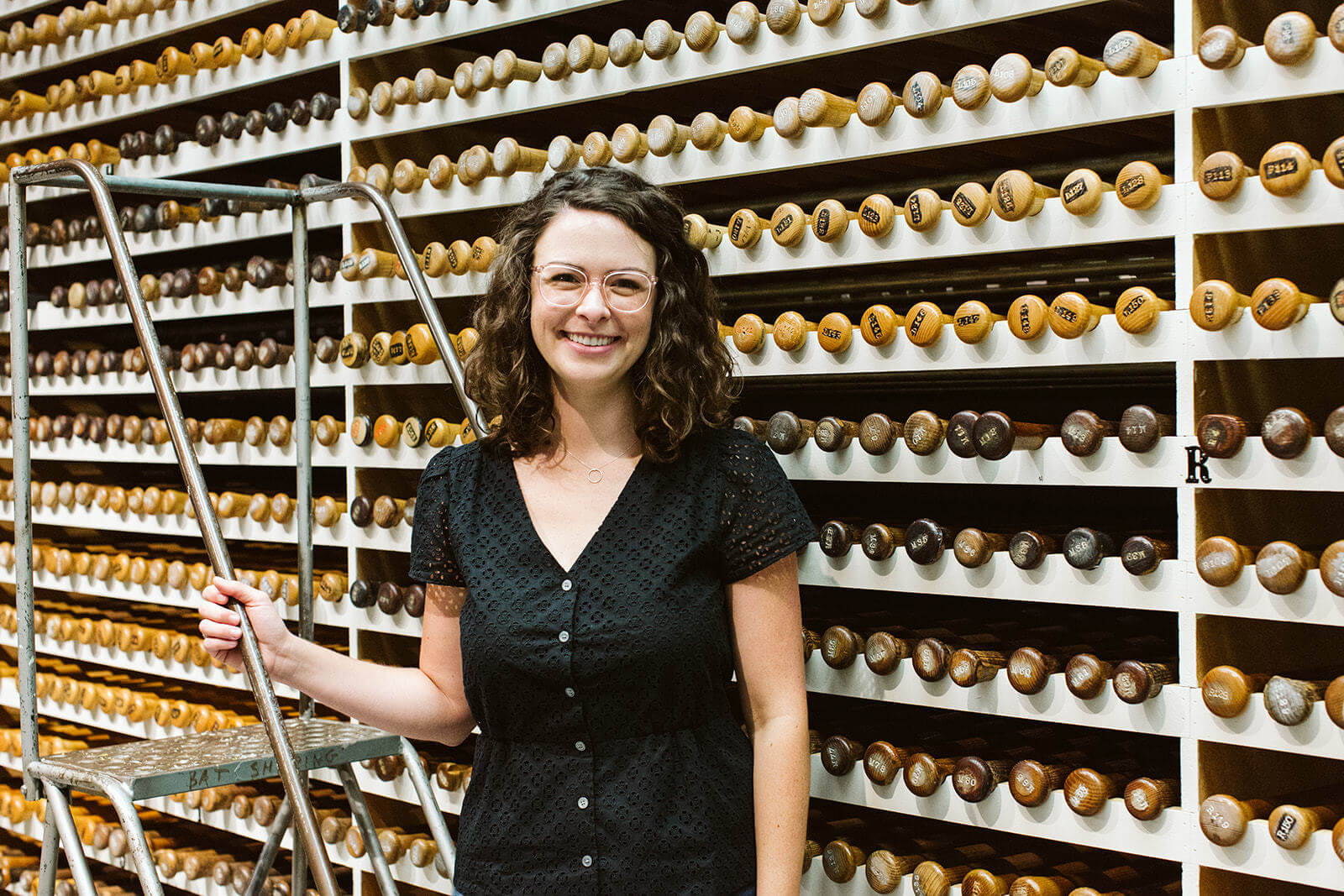
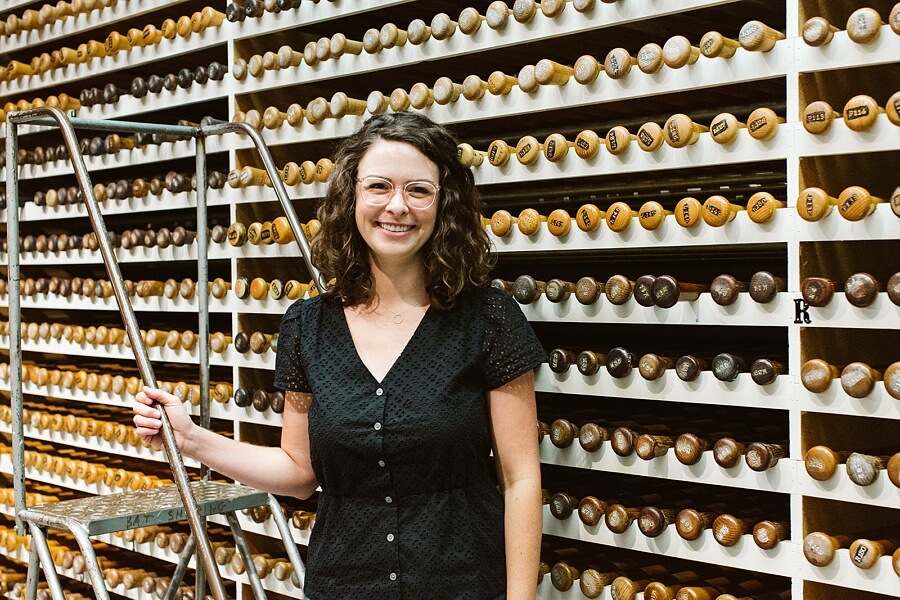
PinBailey, pictured in the bat vault of the Louisville Slugger Museum, is the museum’s curatorial specialist.
Are there any specific museums that are special to you?
The Columbus Museum of Art means a lot to me. We’d visit it when I was growing up, my aunt got married there, and I interned there in my undergrad. My dad is from Pittsburgh, so we’d go to museums there, like the Carnegie system. I’ve been to the Museum of Modern Art in New York, and while we were there I cried a few times. I’d studied these works of art for so many years, and then to actually see them was very powerful.
What was your progression from intern to the position you hold today?
I did two nine-month internships while in grad school, and after I was done with school I worked at the museum part-time. I held the positions of curatorial assistant, museum collections specialist and now the position of curatorial specialist.
We are grateful to all our sponsors:
What does your position entail?
Right now I’m overseeing our archives and collection of artifacts. That means I process and catalog incoming archival material, including documents and photographs. I organize them, I do research on them, and I make sure they’re properly marked and stored and cared for. For example, we have our “Hold a Piece of History,” exhibit, where there’s a game-used bat, used by either a prominent All-Star or Hall of Fame player. We’re constantly swapping them out to make sure they don’t get too much use. We’re on the lookout for bats that would fit in that exhibit.
PinHer favorite restaurants in town in Havana Rumba and Royal’s restaurant!
What do you enjoy about working at the museum?
Through my part-time roles, I was constantly learning about general museum/curatorial work and management, but over time I’ve increasingly taken on more responsibility. I’ve been able to propose original projects and successfully execute them. One of the coolest collaborations was with the Louisville Orchestra. I’ve also given talks about the Bloomer Girls. I’ve always been inspired by women’s history. The history I work with here is mostly men’s history, so I’m always looking for ways to bring some diversity into that conversation. This idea came from a book I read called Bloomer Girls: Women Baseball Pioneers.
I wear a lot of different hats, and I like the variety of work. I do pretty in-depth archival research into players, their order records, their contracts, that sort of thing, but then I can come down to the museum floor and show a family member of a player around and take them into places like our bat vault. My work can be pretty nose to the grindstone, but then I can talk to people and make it personal for them.
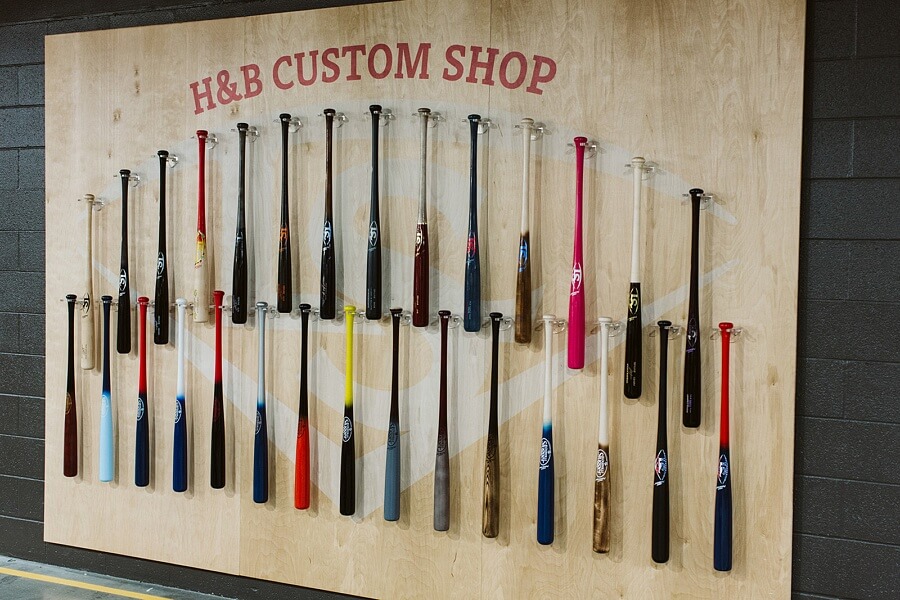
PinThese are some of the custom sluggers shown at the Slugger Museum and Factory!
Switching gears, if you weren’t working at the Slugger Museum what type of job would you like to do?
I would be a florist in a heartbeat because I love flowers. I love making my own arrangements.
Do you have any favorite places where you like to hang out?
I like going to Cherokee Park. There are so many different places to explore there. You can take a blanket and set up a picnic, or you can go mountain biking through the trails. There’s a paved loop, and I’ll go walking on that with my friends sometimes.
Do you have any favorite restaurants?
I love Havana Rumba and Royal’s Restaurant.
Is there anything people would be surprised to learn about you?
When I was younger I really considered becoming a butcher. I was always really picky about my meat, and I thought if I were a butcher I could really control the cuts of meat I was served.
Pin“Be a thermostat, not a thermometer.” – advice from Bailey’s dad!
What piece of advice do you treasure, and who is it from?
The best advice I’ve gotten comes from my dad, and it’s: “Be a thermostat, not a thermometer. Control yourself and control the situation as much as you can — don’t let the situation control you.”
Besides faith, family and friends, what are three things you can’t live without?
My cat Leo, the Reminders list-making app on my phone, and popcorn
Thank you, Bailey. And thanks to Gretchen Bell for the beautiful photos.
**********
Subscribe to StyleBlueprint to read more amazing profiles of women in our community! Click here!
Our unofficial motto at StyleBlueprint is "Be kind. Do good." We encourage this to be the basis for all comments on our articles. Provide feedback that adds to the story. Some controversy or disagreements are part of any good dialogue between friends, but anything that tears down or belittles others is subject to disapproval or removal. Thank you for being a member of the StyleBlueprint community! View our Community Guidelines.