

Your Updated UV Guide: How (and How NOT) to Get Glowing, Healthy Skin
In honor of UV Safety Month, we turned to the team at Total Dermatology for their expertise on tanning bed risks and safer ways to get that summer glow. Image: iStock

For decades, the medical community has worked tirelessly to pull back the curtain on the darker realities of chasing a so-called healthy glow. Despite those efforts, younger generations are once again embracing “natural tanning” — UV tanning rather than spray tans or self-tanners — as part of their aesthetic routines. While the trend includes both outdoor tanning and indoor UV exposure, dermatologists say the renewed popularity of tanning beds is especially concerning. It’s time for a serious tanning bed talk, so we reached out to the board-certified dermatologists at Total Dermatology for their take on the return of indoor tanning. Their message is clear: Tanning bed risks last long after the glow fades.

First Things First: A Quick Guide to Skin Cancers
Before we get into tanning beds, here’s a quick refresher on skin cancer. Understanding the different types helps explain why dermatologists are so concerned about renewed interest in natural tanning in general, and indoor tanning specifically. There are three main types: basal cell carcinoma (the most common in the U.S.), squamous cell carcinoma, and melanoma. Basal cell and squamous cell carcinomas are collectively known as nonmelanoma skin cancers.
“Nonmelanoma skin cancers commonly present as a pink or skin-colored bump or patch that never completely heals and may occasionally bleed,” explains Dr. Rajini Murthy. “They are more commonly found on sun-exposed areas such as the head, neck, ears, or arms, but may occur anywhere on the body.”
Melanoma, while less common than nonmelanoma skin cancers, is generally more aggressive. “Melanoma is considered the most serious form of skin cancer because it has more of a tendency to spread throughout the body,” Dr. Murthy adds. “Melanoma typically presents as a new dark mole or may occur in a pre-existing mole that has changed.”
Skin Cancers Are on the Rise in Younger Patients
As natural tanning is back in vogue among younger generations, cancer diagnoses among this same age group have been on the upswing. “We’re seeing more skin cancers diagnosed in younger adults than many people realize. While increased skin awareness and earlier detection play a role, excessive UV exposure, whether from the sun or indoor tanning, is still one of the biggest drivers,” Dr. Callie Hill tells us.

Dr. Michele Hill adds that younger generations are turning to tanning beds for myriad reasons, but none of them are worth the threat they pose to your skin and overall health. “One of the biggest reasons is due to social media platforms like TikTok glorifying dark tans and promoting base tans while discouraging evidence-based sun protection,” she says. “Unfortunately, especially when people are young, aesthetics sometimes outweigh long-term health concerns.”
Cultural influences like high-profile celebrities openly using tanning beds certainly don’t help either. “It sends a message that it must be safe, but no one is immune to the cumulative damage of UV radiation,” says Dr. Michele Hill.
The timing of this conversation is especially important. As July marks UV Safety Month and recent changes have kept tanning bed regulations in the spotlight, dermatologists say now is the time to revisit the risks of indoor tanning.
To further complicate the message young people are getting about tanning bed use, the FDA withdrew a proposed rule earlier this year that would have prohibited all American minors from using tanning beds. This leaves the current state-by-state patchwork of regulations in place.
Indoor tanning is regulated to varying degrees across the South, with Texas and Louisiana completely banning tanning bed use for minors, while other states prohibit use for minors aged 14 through 16. In Southern states where indoor tanning is allowed for minors, written parental consent is required.
Debunking Tanning Myths
This recycled trend of achieving that perfect sun-kissed glow has led to the resurfacing of many long-debunked myths about “safe” tanning practices. One common myth Dr. Murthy wants to set straight is the base-tan theory.
“The ‘base-tan’ theory, which suggests that having a base tan protects against sun damage, is absolutely false,” she says. “A base tan will not protect against sunburns and the development of skin cancer. In fact, each tanning exposure increases the risk of developing skin cancer and is a reflection of UV-induced damage to the skin.” That means going to the tanning bed ahead of a beach trip, for example, does nothing to protect your skin. Instead, it guarantees skin damage.

Another tanning bed myth that encourages increased use among younger people is that indoor tanning helps clear up acne. “It’s absolutely not a good idea,” says Dr. Michele Hill. “The initial benefit seen in acne after UV exposure is very short-lived. The acne will come right back without the right treatment, and the long-term damage done to the skin is not worth it!”
She adds that there are far better — and safer — acne treatments available today that provide long-term solutions rather than long-term damage.
So, if the health risks seem so obvious, why do people keep coming back to indoor tanning? Dermatologists say part of the answer may be biological. Unfortunately, the idea of a “tanner’s high” sounds like a myth, but it’s actually true. “UV exposure triggers the body to release endorphins, resulting in a ‘tanner’s high,’ which reinforces the behavior,” Dr. Michele Hill warns. Tanning can feel good, so people continue to do it without fully considering the downsides.
The Truth about Tanning Beds
The experts do not mince words about tanning bed risks. “Tanning beds are known carcinogens, or cancer-causing agents,” says Dr. Murthy. “Similar to the associated risk between tobacco use and lung cancer, exposure to ultraviolet light from tanning beds has been directly linked to the risk of development of both nonmelanoma and melanoma skin cancers.”
And she has the evidence to prove it: “Studies have shown that indoor tanning increases the risk of developing squamous cell carcinoma and basal cell carcinoma by 58% and 24%, respectively. Tanning bed use before the age of 20 is especially dangerous, as it may increase the risk of melanoma by 47%.”
This increased risk among younger users is what makes the recent uptick in tanning among Gen Z so concerning. “UV radiation causes genetic damage in skin cells that compounds over time,” Dr. Michele Hill explains. “The younger the patient, the higher the risk of developing a serious skin cancer later in life. Early initial damage gives more time for a cancer to develop and spread.”
This is the message young people don’t seem to be getting. “Younger patients are surprised to learn the UV damage from their teens and 20s can show up years later as skin cancer,” says Dr. Callie Hill.
This is also where parental influence comes in. Because many tanning habits begin in adolescence, parents still have an important role to play. “Parents can help by modeling good sun protection habits, encouraging sunscreen use, and discussing why appearance-based pressures shouldn’t outweigh long-term health,” Dr. Stephanie Ives advises.
If the health consequences won’t dissuade tanners, the Total Dermatology team hopes the negative effects tanning has on their appearance will. “If the cancer risks weren’t worrisome enough, tanning beds accelerate premature skin aging, causing wrinkles, dark spots, and decreased skin elasticity,” Dr. Callie Hill tells us. “The bottom line is: Avoid the tanning bed. Your skin will thank you, both now and for decades to come.”
The Real Secret for Beautiful, Youthful, Glowing Skin
Despite the undeniable downsides of tanning, achieving a bronzed look isn’t all bad news.
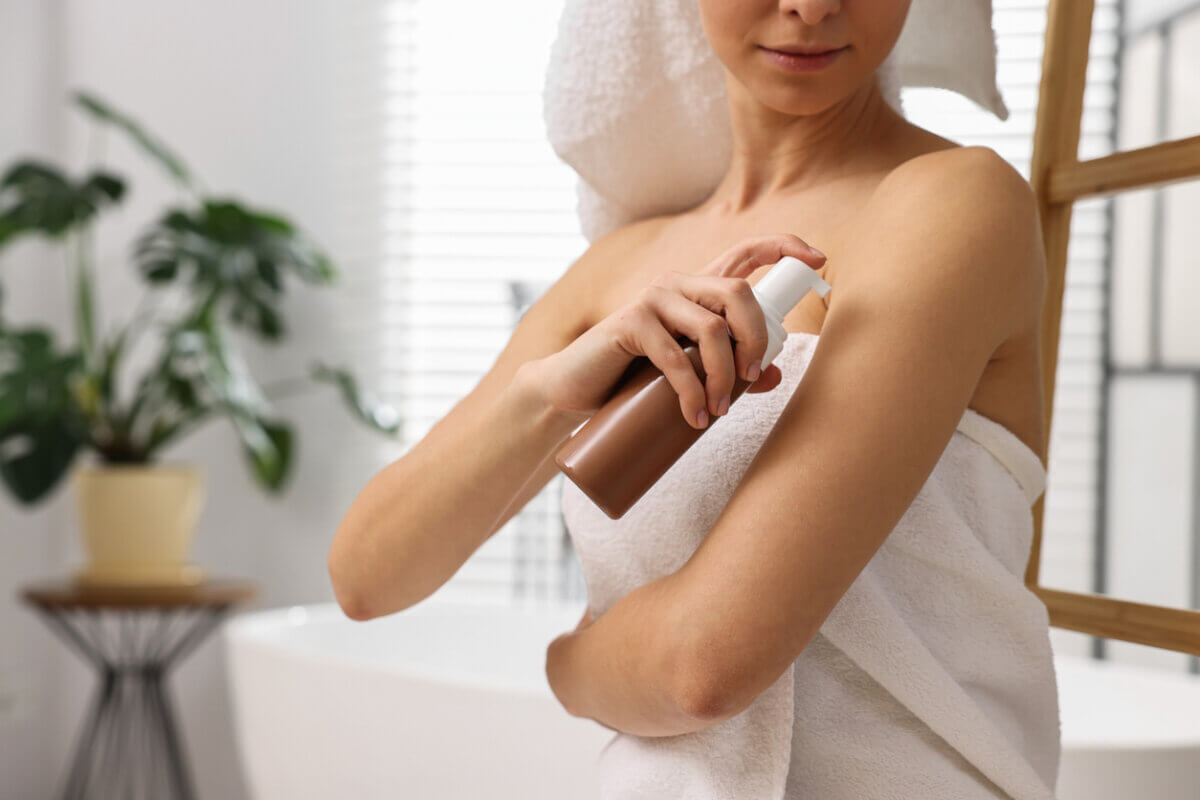
“In today’s beauty market, the options for lotions, mousses, sprays, and professional spray tans are endless and can provide natural-looking color without exposing your skin to harmful UV radiation,” says Dr. Callie Hill. “I recommend pairing a sunless tan with daily broad-spectrum SPF 30 or higher sunscreen. You can achieve a healthy glow while keeping your skin radiant and reducing your long-term risk of skin cancer and premature skin aging.”
However, not all sunless tanning alternatives are considered safe. “Don’t use peptides, such as Melanotan, to aid in the development of a tan,” Dr. Ives warns. “These are not FDA-approved, and their risks are largely unknown.”
That said, Dr. Murthy encourages readers to recognize that early detection and treatment of all forms of skin cancer are essential to keeping your skin looking its best and protecting it for the long haul. “It’s very important to see a board-certified dermatologist to have any new or changing skin lesions examined, or to have a routine skin examination based on any risk factors,” she says.
Perhaps the best news of all is that skin cancer is one of the most preventable cancers, and the very same things that will dramatically reduce risks also happen to be what keep skin beautiful.
“If your goal is to keep your skin looking youthful and healthy, protecting it from UV exposure is one of the best things you can do. Daily sunscreen, sun-protective clothing, and avoiding tanning beds help preserve collagen and elastin — reducing discoloration, fine lines, and loss of skin youthfulness over time,” Dr. Callie Hill explains. “Healthy skin never goes out of style, and protecting it today is one of the best investments you can make in how your skin looks and feels for decades to come.”
Total Dermatology offers four locations throughout the Birmingham area:
- 1927 1st Avenue North, Suite 200, Birmingham, AL 35203
- 4913 Deerfoot Pkwy, Trussville, AL 35173
- 931 Sharit Ave, Gardendale, AL 35071
- 4760 Eastern Valley Rd Ste 102, McCalla, AL 35111
To learn more, visit totalskinandbeauty.com.
This article is sponsored by Total Dermatology.

Katie Leigh Matthews
A Birmingham native, Katie is a lifelong waterfall chaser and is passionate about the outdoors. She also loves connecting with remarkable women in the Birmingham community and bringing their stories to life. Katie has been writing professionally for over six years; you can find more of her work at Moms.com and Islands.com.