Put ’Em Back! This Retail Brand is Restoring Ecosystems One Oyster at a Time
Founded in a James Island shed, Toadfish has grown into a national brand with one mission: Put ’Em Back. Every knife, rod, and shrimp tool sold helps restore oyster reefs, filtering millions of gallons of water and keeping coastal ecosystems alive. Image: Toadfish
A single oyster can filter 50 gallons of water per day. Multiply that by the 300,000 square feet of oyster reefs replanted by Toadfish, and you get a staggering 82 million gallons of water cleaned daily. That’s the power behind the Charleston-based retail brand’s rallying cry: “Put ‘Em Back.”
PinCasey Davidson, with his wife and kids, stands in front of a Toadfish oyster restoration project. That pile you see? Oyster shells — and lots of them — are going back into the water for baby oysters to attach to and flourish. Image: Toadfish
Founded by Casey Davidson in a James Island backyard shed, Toadfish has grown from a farmers’ market table piled with oyster knives into a national brand with a nonprofit arm funding restoration projects in eight coastal states. Along the way, Casey and his team have proven that a business built on conservation doesn’t just work — it thrives.
We are grateful to all our sponsors:
The Beginning: From Backyard Shed to Big Impact
“I started this brand in 2016 in my backyard shed on James Island,” Casey recalls. “My first product was oyster knives. The idea was to replant oyster beds.”
Armed with oysters from his cousin’s farm in Beaufort, he began shucking at Charleston farmers’ markets, selling knives, and donating proceeds to South Carolina’s SCORE oyster restoration program. That grassroots model set the tone for everything to come.
“From the start, Toadfish was the vehicle to really spread awareness of how important oysters are as a keystone species,” Davidson says. “I think the oyster is the answer to many of our problems. The more oysters we can plant, the cleaner and healthier our ecosystems.”
PinToday, Toadfish has donated more than half a million dollars to restoration efforts, scaled to 30 employees, and continues to design products with purpose. Image: Toadfish
We are grateful to all our sponsors:
Why Oysters Matter
Oysters aren’t just a delicacy; they’re ecosystem engineers. Casey is quick to list their superpowers: “They filter water. They provide habitat for over a hundred different marine species. And they prevent erosion by protecting marsh grasses from wave energy.”
PinVolunteers work with the Toadfish team on a newly planted reef that will protect marsh grasses and filter tidal waters. Image: Toadfish
But despite their importance, oysters face severe threats. In places like the Chesapeake Bay, wild oysters are so depleted that restoration requires hatcheries to “seed” old shells with oyster spat before reefs can be replanted.
“There are no natural breeding oysters left,” Casey explains. “Oyster habitat loss ripples through the entire food chain — you see it in declining crab and striped bass populations.”
Even in South Carolina, home to some of the nation’s healthiest native oyster beds, harvesting far outpaces replanting. “We harvest 120,000 bushels a year and only replant 40,000,” Casey warns. “If you map that out 25 years from now, we’re also in trouble.”
Getting Muddy: Toadfish’s Efforts in the Water
When it comes to picking and organizing his restoration endeavors, Casey gets right down to the nitty-gritty himself. “It’s pretty cool because I can put a pin on a map and say, ‘Here’s an acre of oysters we replanted that’s going to filter water for 25 years,’” Davidson says. “It feels good to get muddy, put your hands on it, and know it’s there.”
Toadfish’s projects span both coasts: offshore reef building, clam scatterings in Florida, cobia releases in South Carolina, and even funding for abalone restoration in California. Casey says the company likes “physical projects” where results are visible, measurable, and lasting.
PinUnlike some organizations focused on lobbying or research, Toadfish leans into tangible, hands-on restoration. Image: Toadfish
We are grateful to all our sponsors:
Education: From Oyster Roasts to Classrooms
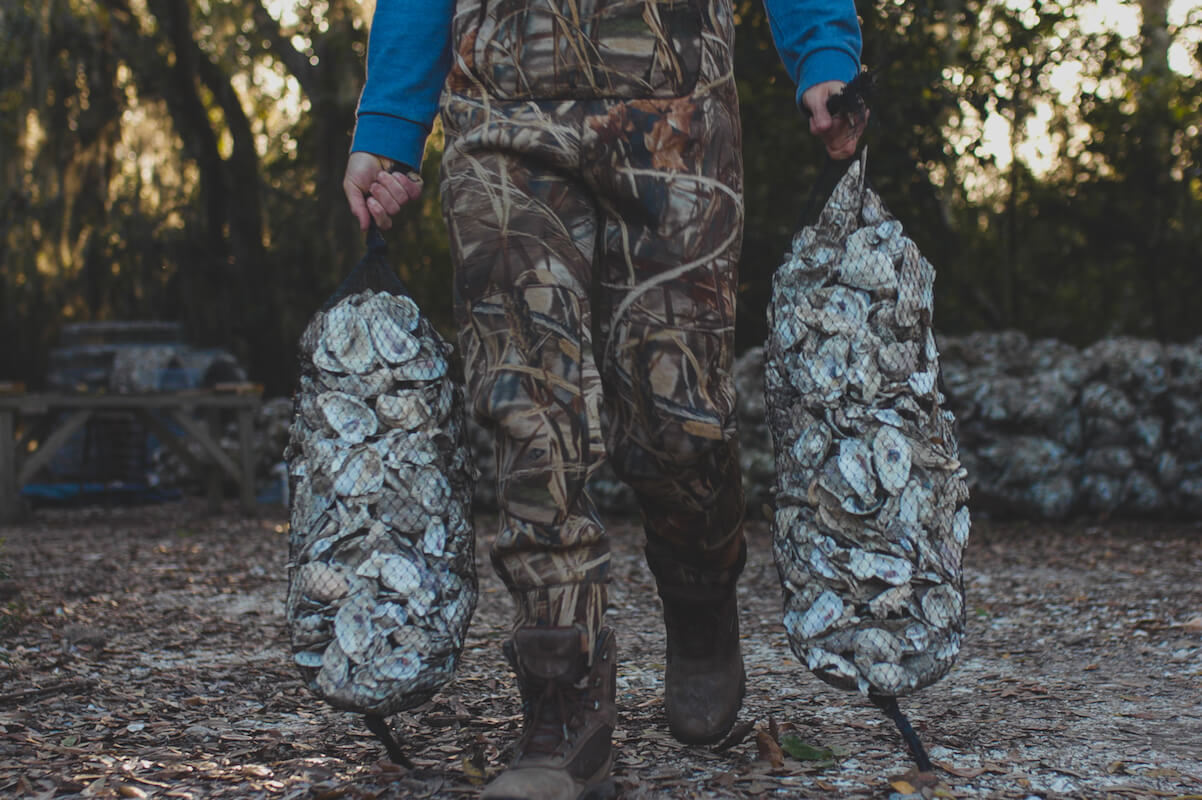
Casey admits one of the biggest hurdles is awareness. Shells from oyster roasts and restaurants often end up in landfills or driveways, rather than back in the water where they belong. “Those old shells are exactly what baby oysters need,” he explains. Next time you’re at an oyster roast, he urges, be the person making sure the shells are collected and recycled.
To change that, Toadfish has outfitted dozens of restaurants in multiple coastal states with branded buckets and recycling bins. Volunteers collect shells for quarantine and eventual reef rebuilding. “Our tagline, Put ‘Em Back, is really about getting oyster shells out of the trash and back into the environment,” he says.
Education also happens in Charleston classrooms. Casey sets up aquariums with live oysters to show kids their filtering power. “They’ll see cloudy water in the morning, and by lunchtime it’s crystal clear,” he says. “Those little moments create conservationists.”
PinBeyond connecting conservationists of all ages to the oyster issue, Toadfish has funded marsh grass restoration paddleboards, millions of hatchery fish, and even seagrass research. Image: Toadfish
A Retail Brand With Purpose
Toadfish’s retail arm is where conservation meets commerce. From the original Put ‘Em Back oyster knife to the cult-favorite Frogmore Shrimp Cleaner, every product is tied to the mission.
“We probably sell more shrimp cleaners than anybody in the world,” Casey laughs. “It’s such a niche thing, but we own it.” Fishing gear, collapsible fillet knives, abalone chef sets, and innovative seafood serveware now round out Casey’s growing catalog.
“The cool thing is, people know this rod or this knife isn’t just a product,” Casey says. “It’s a product with a purpose.”
PinThat purpose-driven approach has put Toadfish in stores, kitchens, and tackle boxes across the country. Casey’s goal? “To be able to put the essentials in every coastal home.” Image: Toadfish
Flagship Toadfish Celebrations
For Casey, community connection is as important as conservation. Toadfish hosts two major events each year: a fishing tournament (September 7 through 13 of this year) and Shellabration, the annual fundraiser on Bowen’s Island that returns for the fourth year on November 9.
“Last year we raised $50,000,” Casey says proudly. “It’s grown into an amazing event — hot restaurants like 167 Raw and The Darling, and other chefs serve up delicious small plates. Oyster farmers, musicians, and the whole community really come together. It’s a blast, and it funds real restoration.”
The Bigger Picture
Outside the office, Casey’s life mirrors Toadfish’s ethos. He and his family spend their days fishing, hunting for shark teeth on Morris Island, and paddling the tidal creeks of James Island. “We caught a dozen blue crabs the other night and made crab cakes,” he says. “It was the perfect day.”
PinCasey shows off the new Toadfish seafood bowl — an innovative way to skip the soggy melted ice. Image: Toadfish
If there’s one misconception Casey wants to squash, it’s that oyster farming is harmful. “Farm-raised oysters actually filter the water and have a positive environmental impact,” he says, pointing out that most farm-raised operations do recycle shells. “It’s the only farmed protein you can eat that helps the ecosystem. I’d urge people to eat more oysters — especially farm-raised ones.”
For him, the equation is simple: business + conservation + community = impact. “I think the oyster is the answer,” Casey repeats. “If we keep putting ’em back, everything else — crabs, fish, clean water — falls into place.”
Zoe is a StyleBlueprint freelance writer, Charlotte native, Washington & Lee graduate, and Nashville transplant since 2012. She teaches Pilates, helps manage recording artists, and likes to "research" Germantown's food scene.
Our unofficial motto at StyleBlueprint is "Be kind. Do good." We encourage this to be the basis for all comments on our articles. Provide feedback that adds to the story. Some controversy or disagreements are part of any good dialogue between friends, but anything that tears down or belittles others is subject to disapproval or removal. Thank you for being a member of the StyleBlueprint community! View our Community Guidelines.