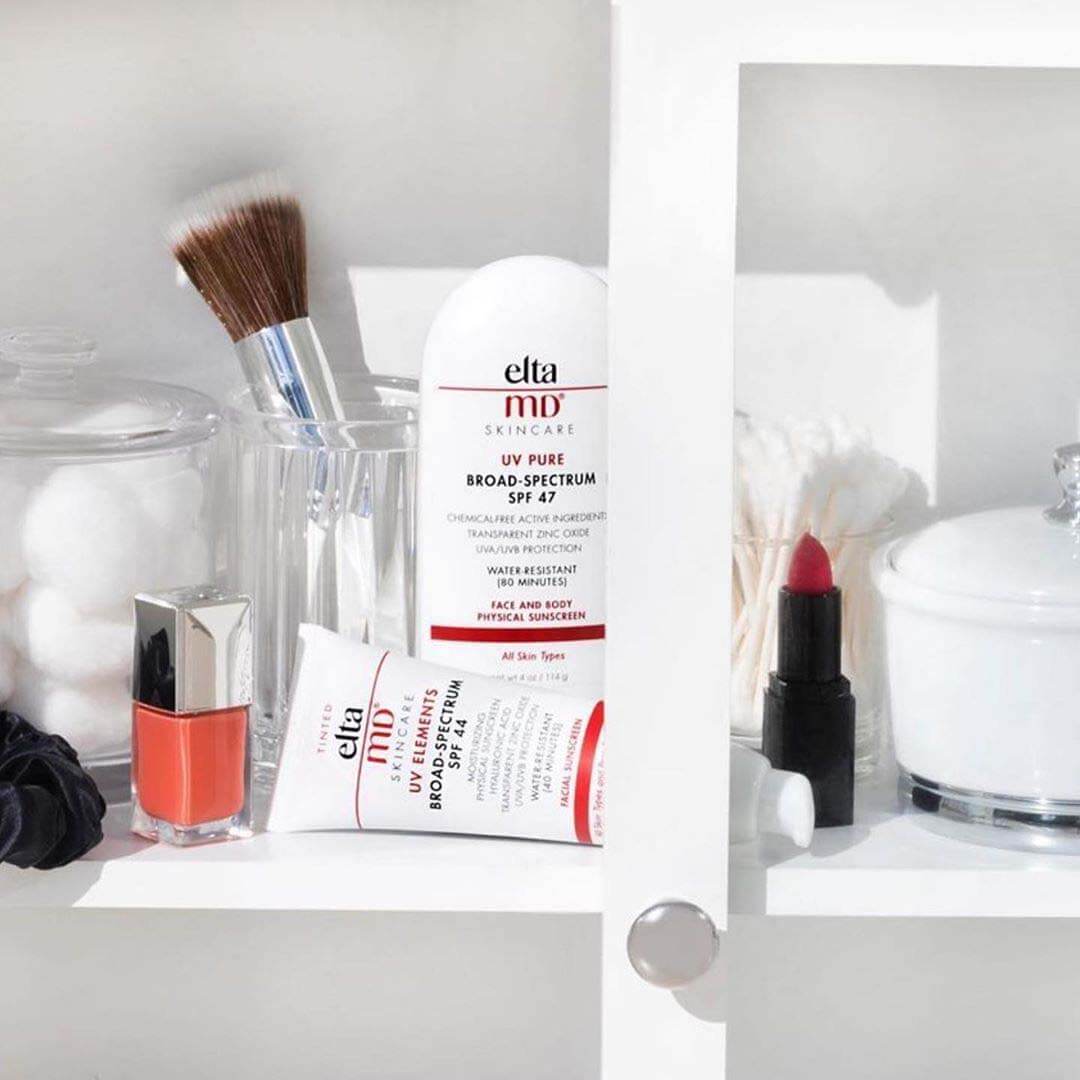
When it comes to skincare, there’s so much information out there that it’s often tough to separate fact from fiction. Is makeup with SPF equivalent to sunscreen? Can greasy foods make us break out? With summer in full swing, with its temperature changes and the potential for sun damage, don’t let rumors dictate your skincare routine. Here, local experts weigh in on some of the most common skincare myths and share the facts to set the record straight.
PinClearing up these summer skin myths means less worry and more fun in the sun!
We are grateful to all our sponsors:
Myth: Applying sunscreen in the morning means all-day protection.
TRUTH: While including sunscreen in your morning routine is a summer must, you should bring it along in your purse or beach bag because, as a rule of thumb, it should be reapplied every 50 to 80 minutes — especially when you’re spending a lot of time outside or in the water. Annelise Carey, a licensed aesthetician and medical assistant at Image Surgical Arts, warns that maintaining that all-day application isn’t always easy. “For those of us who choose to wear makeup, it can be challenging to keep it applied,” she says. If you’re looking for recommendations on the best way to retain coverage while protecting against UVB and UVA rays, she recommends ZO Skin Health’s Sunscreen + Powder Broad-Spectrum SPF 40, which comes in three different shades and lends itself to all skin types.
Myth: You should stop using retinol for the summer.
TRUTH: A product that diminishes fine lines, wrinkles and age spots, retinol is a common go-to for those of us who hope to regain that youthful radiance. But rumors run rampant that the product causes sun sensitivity. Jemma Hurst, RN, BSN, at Woods Aesthetics, says retinol can actually be a powerful tool if you’ve consistently been using it and you also use daily SPF. Retinol encourages cellular turnover and works to unclog pores from sunscreen and sweat. So as long as you consistently reapply SPF every 50 to 80 minutes when you’re actively in the sun, retinol can remain a part of your skincare routine throughout the summer.
We are grateful to all our sponsors:
Myth: Eating greasy foods will make you break out.
TRUTH: If a hamburger and French fries are on tonight’s dinner menu, don’t fret the impact they may have on your skin. Laurie Hays, BA, RN, owner and co-director of the Facial Rejuvenation Center, explains, “The old logic was that because oily skin tends to be more prone to imperfections, eating greasy foods will worsen your skin’s oil problems. In reality, oil in your diet doesn’t equate to a higher production of sebum, which is your skin’s natural oil.” But while onion rings and chocolate may not be setting you up for a breakout, it’s important to remember certain foods can trigger hormonal responses that may negatively impact your skin. The hormones responsible for skin-cell growth and the production of natural oils can be affected by spikes in insulin, which can be caused by eating refined sugars, grains and simple carbs. For those who are particularly sensitive, even dairy can cause inflammation.
Myth: “Beauty sleep” is only real in fairytales.
TRUTH: There’s simply no replacement for a solid night’s sleep. You might notice the immediate effects of a long night when you wake up with dark circles and puffy eyes, but the damage of sleep deprivation extends far beneath the surface. Laurie says, “Sleeping in until noon on Saturdays will not erase your crow’s feet or banish your smile lines. But a growing amount of research suggests consistently getting a good night’s sleep will do wonders for your skin long term.” Perhaps more importantly, not getting enough sleep can have damaging effects on your skin. While you sleep, your body goes into repair mode, ridding itself of toxins and working to eliminate old cells and generate new ones. A lack of sleep wreaks all kinds of havoc, taking away prime collagen-production time, which makes your skin age faster. It also increases the stress hormones that lead to acne and keeps your face from getting the blood flow needed for that healthy, summery glow we’re all striving for.
PinGetting enough rest has health benefits beyond your wildest dreams!
We are grateful to all our sponsors:
Myth: Organic “all-natural skincare” is better than medical-grade skincare.
TRUTH: There are some wonderful organic products on the market, but just because something is labeled as “organic” doesn’t necessarily mean it’s safer or more effective than medical-grade or non-organic products. Don Griffin, M.D., of Nashville Cosmetic Surgery, points out that alcohol, tobacco, acids and some poisons are organic, but that doesn’t mean they’re healthy for you or your skin. Though medical-grade ingredients may not technically be considered “organic,” they’ve endured safety and efficiency testing, and there are years of scientific research behind them. And while there’s a lot to be said for removing unnecessary coloring and preservatives, many organic products lack the active ingredients that provide the most benefit.
Myth: Facial treatments aren’t good for sun-kissed skin.
TRUTH: While it’s true laser treatments aren’t ideal for skin that has been exposed to the sun, aesthetic clinician Rondee Jones, of Woods Aesthetics, says there are still plenty of results-driven treatments that are summer-friendly. “Microneedling is our favorite summer treatment,” she offers. “It boosts collagen, exfoliates, and diminishes the appearance of fine lines and wrinkles.”
Myth: The more complicated your routine is, the better the results will be.
TRUTH: With skincare, less is often more. Dermatologist Anna Land, M.D., of REN Dermatology and Laser Center, says, “Multiple-step routines, and layering several products on your face morning and night, are often no more effective than a simple one- or two-step routine. They can even have undesired consequences.”
In fact, some skincare products wind up being redundant, serve no purpose, or counteract with one another. “The idea that ‘more is better’ can lead to over-exfoliation, dryness and irritation of the skin with no clear benefit,” continues Dr. Land. “Starting slow and allowing your skin to adapt to a new regimen over time is often a more effective approach.”
Myth: Hot showers are good for you.
TRUTH: There’s nothing better than taking a long, hot shower after a jump in the pool, but prolonged contact with hot water may not be the best move for your skin. Lukewarm water is the route to go, whether you’re showering or washing your face, as hot water can strip the skin of essential oils and moisture. Laurie, of the Facial Rejuvenation Center, offers us a bonus tip, suggesting the application of face moisturizer and body lotion to damp skin, which helps lock in hydration.
Myth: Eight glasses of water will keep me from having dry skin.
TRUTH: Proper hydration is vital to your overall health and body function, especially during the scorching summer months, but there are no precise data to suggest you’ll prevent dry skin by drinking eight glasses of water per day. “In fact, most dry skin is not related to overall dehydration, unless in severe cases,” explains Dr. Land. While water is essential for cellular function, there are a lot of other factors and environmental triggers that contribute to dry skin, including harsh cleansers, the aforementioned prolonged hot showers, and heavily chlorinated water.
With that said, Dr. Griffin of Nashville Cosmetic Surgery cautions us to guard against dehydration in general, saying, “When skin is dehydrated, it creates more oil to make up for the missing water, which can cause breakouts, irritation and dry patches. The outermost layer of your skin can also lose elasticity.”
Myth: Wearing face makeup with SPF is equivalent to wearing sunscreen.
TRUTH: Nothing can beat a good broad-spectrum sunscreen, especially one with adequate physical protection such as zinc oxide or titanium dioxide. Dr. Griffin sums it up, saying, “The cheapest anti-aging product that you can have in your cosmetic bag is a good sunscreen.”
Since the sun can cause irreversible damage on the skin, and so many of us are searching for the most effective way to apply it, many cosmetics companies have taken to building foundations that include SPF. But does that offer enough protection? Annelise from Image Surgical tells us that’s not the case, saying, “You would have to apply six or seven layers of your makeup to achieve enough UV skin protection!”
Part of the trouble lies in our understanding of the SPF numbering system, which still confuses many of us. We often think that the higher the SPF, the more protective the product, but it’s more complicated than that. “Everyone keys in on SPF when talking about sunscreens, but it is actually one of the least important factors in picking one,” explains Dr. Griffin. “SPF is a number that indicates how much longer you can stay in the sun without burning. While that’s good, it has nothing to do with protecting your skin from the UV damage that causes skin cancer.”
PinThe majority of makeup foundations with SPF cannot substitute sunscreen, so make sure you’re using products that adequately protect your skin. Image: REN DermatologyTake these truths and ensure your skin is protected this summer — and all-year-round!
Jenna von Oy Bratcher is StyleBlueprint's Editorial Operations Manager and Lead Content Editor. The East Coast native moved to Nashville almost two decades ago, by way of Los Angeles. She is a lover of dogs, strong coffee, traveling, and exploring the local restaurant scene bite by bite.
Our unofficial motto at StyleBlueprint is "Be kind. Do good." We encourage this to be the basis for all comments on our articles. Provide feedback that adds to the story. Some controversy or disagreements are part of any good dialogue between friends, but anything that tears down or belittles others is subject to disapproval or removal. Thank you for being a member of the StyleBlueprint community! View our Community Guidelines.