Strong Over Skinny: 7 Ways Weight Training Changes Women’s Lives
Forget “toning.” Here’s what strength training actually does for your body, and why it matters more with every birthday. Image: iStock
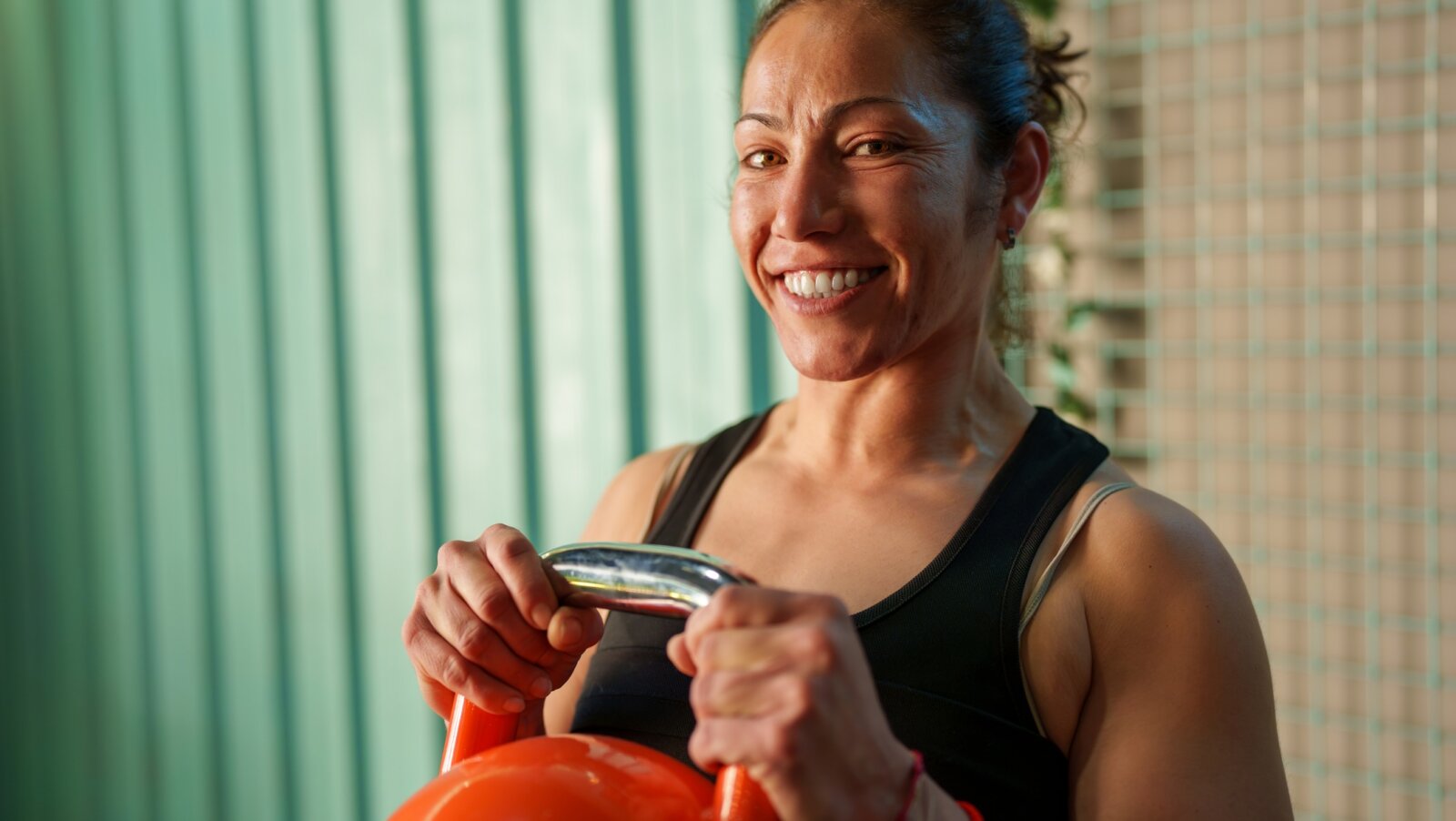
For decades, women were handed the same fitness playbook: grab the cute pink three-pounders, log your miles on the elliptical, and whatever you do, steer clear of the barbell. The goal was always smaller … a smaller waist, a smaller number on the scale, a smaller footprint in the world.
But the science has moved on. Katie Malone, RD, LDN, with Diana Health, calls strength training for women “one of the most underappreciated forms of preventive healthcare.” Consider this your invitation to head to the weight rack.
1. It protects your bones and muscles throughout menopause
When estrogen dips during perimenopause and menopause, our body’s natural bone-building process takes a hit. You may also notice declines in lean mass, strength, and muscle quality during this stage of life. Lifting weights gives both your bones and muscles a reason to adapt and stay strong: progressive resistance maintains or builds muscle, while the pull of muscle against bone helps stimulate bone remodeling.
While intensity, progression, and consistency matter, you don’t need to overthink it. As Katie reminds us, “The goal is not to out-exercise estrogen loss — it is to provide a strong, consistent signal that muscle and bone are still very much needed.”
2. It’s a metabolic and heart-health power move
Keeping skeletal muscle active helps your body manage blood-sugar regulation and use insulin effectively. In other words, it can help you avoid that 3 p.m. crash. Resistance training can also improve blood pressure, joint stability, balance, and mental health — all while cutting your risk of cardiovascular disease, diabetes, and premature death.
3. It builds “physical reserve”
Picture hauling groceries up a flight (or two!) of stairs, popping up off the floor after playing with the grandkids, or catching yourself mid-stumble. “The benefit I find most compelling is that strength creates physical reserve,” Katie says.
Better strength and stability translate to a lower risk of falls and fractures down the road — a message that’s taken decades for women to really grasp. Katie notes that part of the reason for the disconnect is that women have been sold strength training as a way to change how their bodies look rather than how they function. She explains that the greater value of lifting lies in “expanding what bodies can do, enjoy, and withstand.”

4. It works at any age. Yes, even after 65.
“While losing strength with age is common, it is not a fixed destiny,” Katie says. She points to research showing that resistance training improves muscle strength and physical function in older adults, and can actively spark new muscle growth even past age 65. In fact, older women often see relative strength gains that match — and sometimes outpace — those of older men. Translation: it’s never too late to start reaping the rewards.
5. It makes GLP-1 weight loss better
GLP-1 medications are everywhere right now — right along with the worry that they “melt muscle.” The reality is more encouraging. While any significant weight loss involves some loss of lean tissue, studies — including a 2024 review in Diabetes, Obesity and Metabolism and a 2025 joint advisory in the American Journal of Clinical Nutrition — show that the majority of weight lost on GLP-1 therapy is body fat.
Because lean-mass measurements track more than just skeletal muscle, Katie says the “muscle melting” myth is misleading. Her playbook for patients is simple: progressive resistance training two to three times a week, paired with protein spread throughout the day (aiming for 25 to 30 grams per meal, depending on your needs).
“GLP-1 medication may make weight loss more biologically achievable, but nutrition and strength training help shape the quality of that weight loss,” she says.
6. Myth buster: It won’t make you “bulky”
The fear that strength training will make you “bulky” goes back to decades of marketing that sold thinness as the goal. Women were encouraged to lift only light weights, lest they start to look “unfeminine.” Physiologically, Katie says that women and men can see similar relative increases in muscle size from resistance training. However, women generally start with less total muscle, so their absolute gains tend to be smaller.
But a highly muscular physique doesn’t happen by accident. It is the result of purposeful, progressive training over time, combined with volume, adequate nutrition, recovery, and individual responsiveness.
As a 2017 meta-analysis in the Journal of Sports Sciences highlights, building significant muscle size requires a dedicated, dose-response commitment that looks very different from lifting a few times a week for everyday health and strength.
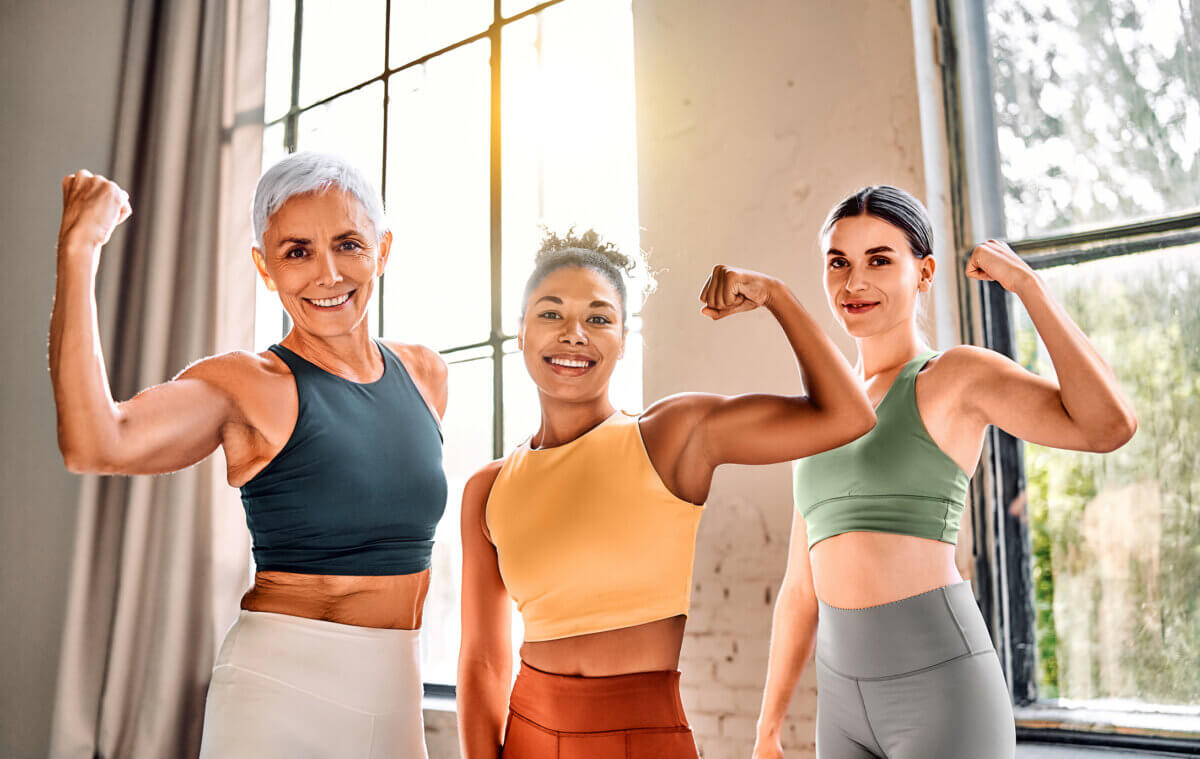
7. Strength training torches calories, too
When it comes to sheer calorie burn in a single workout, cardio is king, with cycling burning roughly 441 calories to squatting’s 269, according to one matched study. But muscle keeps working long after you leave the gym.
A 2020 meta-analysis in the Journal of Sports Sciences found that resistance training bumps up your resting metabolic rate (the calories you burn just by existing) by about 96 calories a day — a benefit cardio does not provide.
Plus, lifting may also protect muscle while you’re trying to lose weight. In a 2008 trial, premenopausal women who strength-trained during a weight-loss phase were able to preserve their fat-free mass and resting metabolism — unlike those who did cardio alone.
In other words, a pound lost isn’t always a pound of fat — you could be losing valuable muscle. That’s why the best plan isn’t an either/or … it’s a yes/and. The best plan pairs cardio and weights for maximum results.
THE BOTTOM LINE
Let’s retire the idea that the goal is to take up less space. “Women deserve goals bigger than becoming physically smaller,” Katie says. Start with two to three strength-training sessions a week, gradually increase the weight, eat enough protein, and give it time. After all, “we are training for the lives we want to keep living.”
**********
For the best “me moment” of your day, subscribe to StyleBlueprint’s daily emails!

Jackie Gutierrez-Jones
Jackie Gutierrez-Jones is an award-winning lifestyle journalist who has covered food, drink, and travel for local and national publications for over 15 years. She currently resides in Nashville with her husband, daughter, and three very human-like doodles who share an insatiable appetite for cheesy beef treats and pets.