Cheese as a career. It exists, and it's fascinating. We unpack the unique culinary profession of the cheesemonger, speak to a few leading mongers in the South and address a common cheese misconception. Say cheese! Image: Caroline Allison
Cheese isn’t just a dairy product. It’s an art form, a party necessity, a key ingredient in our favorite recipes, a perfect companion to a delicious glass of wine. While most of us are familiar with asking local wine merchants or restaurant sommeliers questions about wine — like how to best store a Bordeaux or which crisp white pairs nicely with the swordfish — what about cheese? There are people whose job is to help us buy and enjoy cheese. These people are both formally educated and self-taught through years of tasting cheese and ripening their palate. These people are called cheesemongers.
Cheesemongers are the sommeliers of cheese. They’re expertly versed in cheese groups and characteristics. They know the offerings in their shops intimately and can help you select cheese based on flavor preference, party plans or seasonal standouts. There are more than 12,000 cheeses (and that number is growing) in the world today, so why don’t we stop staring blankly at the grocery store cheese fridge and head to an artisanal shop to speak with a true hero: the cheesemonger. We spoke to two Southern mongers about their current favorite cheeses, the best parts of the job and resources for those with blooming cheese passions.
PinA monger at Orrman’s Cheese in Charlotte, NC, weighs a beautiful block with a marbled rind. Image: Zoe Yarborough
We are grateful to all our sponsors:
Qualities of a Quality Cheesemonger
We, the customers and vehement cheese lovers, might not know what we like in a cheese. Or maybe we know what we don’t like and can articulate that easier. A good cheesemonger understands that the customer likely doesn’t know much about the complex, bewildering world of cheese. Most good mongers are approachable and will offer samples to assess each customer’s taste preferences. Asking what customers know they like or what characteristics they’re looking for will provide the clues that will guide the cheesemonger’s recommendations.
The cheesemonger’s job is akin to a sort of food therapist, but there is also a lot of science to it. Cheeses need to be stored at controlled temperatures and properly wrapped so they can mature and be enjoyed at peak condition without over-ripening or drying out. A skilled cheesemonger buys cheese based on quality and current condition, often opting for younger cheeses that will mature and gain value with age and proper TLC. This is why many mongers tell us to try before you buy. You may generally know a cheese, but you might not know the history of the wheel in front of you. Let the monger guide you.
PinMany small shops, like Ormann’s, have hand-written toppers with tasting notes and other pertinent information about each cheese. Image: Zoe Yarborough
In addition to carrying local (which we are all for!) and domestic cheeses, a good cheesemonger typically has a substantial international collection as well. Variety is important, and an accomplished monger carries cheeses from all families and will be able to help you find a cheese for a specific recipe or to be paired with other elements of your meal or party. Tell the monger what food and beverages you plan to serve with the cheese, what time of day will they be served and any other details of your soirée. Maybe you even extend an invite to your cheesemonger — that’s up to you.
Bringing NYC Cheese Training to the Carolinas
Rachel Klebaur is the owner and cheesemonger of Orrman’s Cheese Shop in Charlotte, NC. She attended the French Culinary Institute (now known as the International Culinary Center) in New York City. “There was no formal training in cheese offered at the school, and since I had an interest in cheese, I got a part-time job at Murray’s Cheese while attending classes,” Rachel tells us. “After years working in retail shops in NYC and as the cheese buyer for a distributor in Miami, I felt I had enough experience and had built meaningful relationships with cheesemakers and importers to try opening a shop of my own.” The timing coinciding perfectly with the opening of a new multi-use, food-centric 7th Street Public Market.
PinRachel stands proudly in the original Orrman’s shop in Charlotte, NC, that boasts a small-but-mighty food menu and a huge selection of cheese. Image: Kyo H Nam Photography
Rachel’s favorite part of her job is introducing people to new cheeses. “For example, someone may come in looking for Havarti, but when I give them a taste of Appalachian from Meadow Creek Dairy, they fall in love with the creamy, buttery notes and leave the shop having tasted something new and with a wedge that supports a Southern cheesemaker,” she says.
We asked Rachel for a common cheese misconception, and we’re thrilled with her answer: “That cheese is unhealthy. It’s true that some people should limit their intake, but cheese is packed with protein and good fats and vitamins. Cheese made from pasture-raised animals has lots of flavor — a little goes a long way.”
Rachel’s current favorites? Field of Creams from Prodigal Farm. “This is a goat’s milk cheese with a bloomy rind that is dusted with rosemary, juniper and chili flakes,” she says. “It has a savoriness that I love.” Rachel is also currently “in love with” Fredonia from Sequatchie Cove Creamery, saying, “It is a new blue in their line up and is just so nicely balanced. The paste is buttery yet fudgy, and the flavor is fresh buttermilk and umami mushroomy flavors all at the same time.”
We’re putting Rachel on speed dial. Pop into the shop next time you’re in Charlotte, or call them at (980) 226-3025!
PinHayley Mockler (behind the counter at Orrman’s) is a young, hopeful monger who’s been working in cheese for two years and loves to read everything she can on the topic. Her current favorite book:The Science of Cheese by Michael Tunick. Image: Zoe Yarborough
A Tennessee Cheese Pioneer
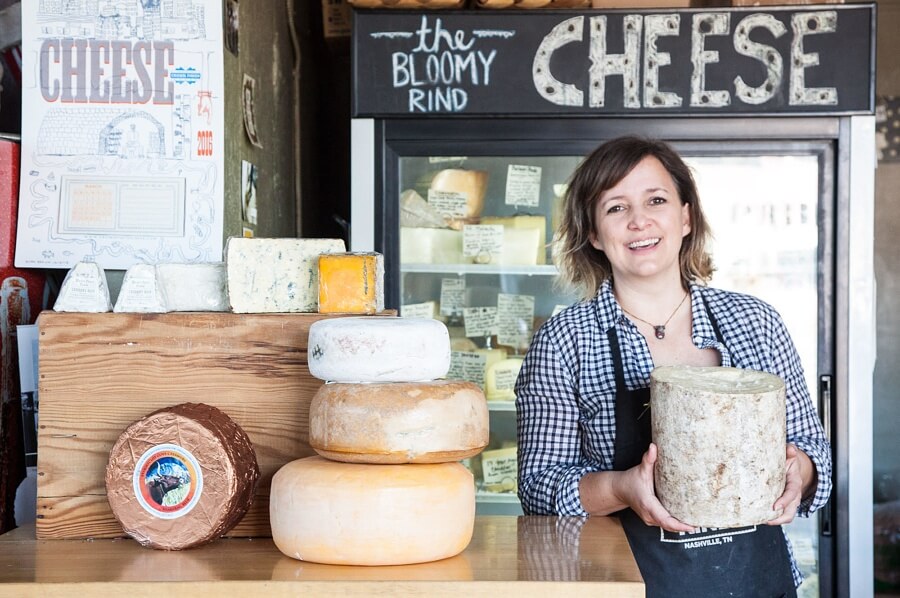
Nashville, TN-based monger and owner of The Bloomy Rind Kathleen Cotter has championed sustainable, artisanal cheese in Tennessee for more than a decade. After she lost her human resources job during the recession, Kathleen started researching the artisanal cheese movement in the United States. She saw a glaring void in regional and domestic cheeses in Nashville restaurants and grocery stores, and she sought to change that. “I started outsourcing handcrafted cheeses from small producers and selling them at the Nashville Farmers’ Market,” she says.
Her cheese education began at Murray’s Cheese Boot Camp in New York City, a cheesemaking weekend workshop in Vermont, and cheese conferences (yes, there are such things!). “I also read books on cheese and mongering and began visited cheesemakers and cheese shops as often as possible,” she says. Eventually, Kathleen’s dream of opening a cut-to-order cheese counter came to fruition. In the past couple of years, The Bloomy Rind has expanded to monger for chefs, supplying cheese and charcuterie to many of Nashville’s best restaurants.
PinKathleen says, “The best part of learning about cheese is you must taste a lot of cheese, which I did — and continue to do!” Image: Caroline AllisonRELATED: Kathleen Cotter: FACES of Nashville
Her favorite aspect of the cheesemonger job? “Cheese makes people smile. It gives me great joy when I introduce someone to a fantastic cheese, they take a bite, and their eyes light up. Sometimes there’s even a little cheese happy dance that follows — that’s when I know my job is done.”
When we asked Kathleen what her current cheese obsessions were, we were met with “This is forever the most difficult question for a cheesemonger who loves ALL the cheese!” But if she were making a cheese plate today, she would include:
Trillium — triple cream butter bomb from Tulip Tree Creamery in Indianapolis, IN
Coppinger — Morbier-meets-Raclette, full of umami, locally made at Sequatchie Cove Creamery near Chattanooga, TN
Pecorino Wiscono — longer aged sheep milk cheese that hits all the notes: nutty, crystally, caramel-y and sharp
Cayuga Blue — unique goat milk blue cheese with a lovely balance of earthy blue and brightness, from Lively Run in New York
Visit Kathleen next time you’re in Nashville, or give the shop a ring at (615) 429-9648.
PinKathleen loves to visit the makers she buys from. Here she’s hanging with some baby goats at Noble Springs Dairy. Image: Caroline Allison
“I want to be a cheesemonger. What now?”
There are many resources and worthwhile pursuits for self-education if you’re really into cheese. First off, read some books! Anything by Max McCalman (America’s leading cheese expert) would be a good start. Hayley at Orrman’s also suggests “Cheese Sex Death,” an online column written by a young monger in Chicago. Secondly, make friends with a local cheesemonger and get to know your local cheesemakers. This seems obvious, but you can learn so much from people who surround themselves with cheese every day. Pick a local shop or a gourmet store over a big grocer. Ask to taste the cheeses that you read about or ask the monger what they’re loving that particular day.
RELATED: How to Create the Perfect Cheese Board (It’s Easier Than You Think!)
Finally, take a class. Interactive culinary courses and experiences are growing rapidly, and cheese is no exception. Murray’s in New York City lands at the top of the list for formal cheese education, and there’s an array of offerings at The Cheese School of San Francisco. A quick Google search might show you a local shop that offers classes, pairing events or tastings. You can also make a trip right to the source. Wisconsin, California and Vermont are the biggest producers in the United States, but local makers are on the rise all over. Diehards can make the Vermont Cheese Trail pilgrimage or navigate Wisconsin’s Cheese Map — there’s even a Western North Carolina Cheese Trail.
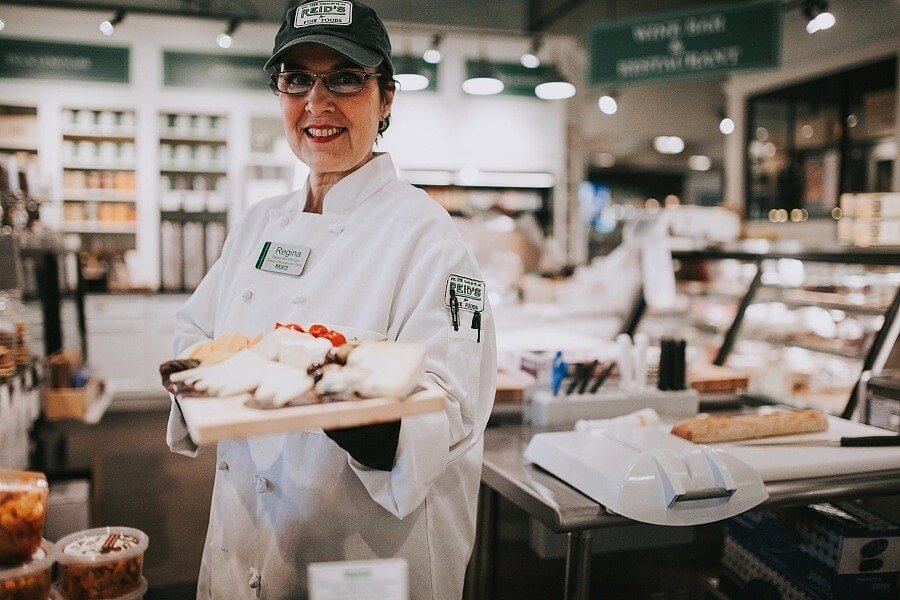
PinRegina Healy runs the cheese department at Reid’s Fine Foods in Charlotte, NC. People like Regina at your local food shops can offer a wealth of knowledge. Image: Avonne Photography
We are grateful to all our sponsors:
Many states host annual cheese festivals and you can likely find tastings, events or tours through local cheese shops. Just call up a cheesemonger and ask! The American Cheese Society‘s website is a trove of resources and a great place to find a cheese educator near you.
Cheers to cheesemongers and their very important work.
**********
For your daily dose of StyleBlueprint sent straight to your inbox every morning, click HERE!
Zoe is a StyleBlueprint freelance writer, Charlotte native, Washington & Lee graduate, and Nashville transplant since 2012. She teaches Pilates, helps manage recording artists, and likes to "research" Germantown's food scene.
Our unofficial motto at StyleBlueprint is "Be kind. Do good." We encourage this to be the basis for all comments on our articles. Provide feedback that adds to the story. Some controversy or disagreements are part of any good dialogue between friends, but anything that tears down or belittles others is subject to disapproval or removal. Thank you for being a member of the StyleBlueprint community! View our Community Guidelines.