
Southern Artist Spotlight: Emily Morgan Brown
She's always known that her life's work would be that of an artist. Today, Emily Morgan Brown is fulfilling her dream, creating beautiful botanical-inspired art. Meet this creative Southern artist, and find out how you can win a piece of her work.

Emily Morgan Brown may have been selling her work since she was in high school, but she was an artist long before then. “I’ve been drawing ever since I could hold a pencil,” she says. “Honestly, anything else in my life — I’m not good at. But I can take what’s in my head and put it on paper.”
Emily’s customer base started growing when she was in her teens, but it took years for her to reach a point where her passion was also her career. “It was never full-time,” she explains. “I didn’t have enough commissions to make it full-time.”
She worked as a graphic designer, painting portraits whenever she could — and then she had twins. “[With] my graphic design job, I couldn’t obviously pay for twins and daycare at the time,” she says. “So, I stayed home, and I was doing portraits just while they were napping or I [whenever I had] childcare. Then, slowly but surely, I had childcare [more often] and [could create] more art as demand grew.”

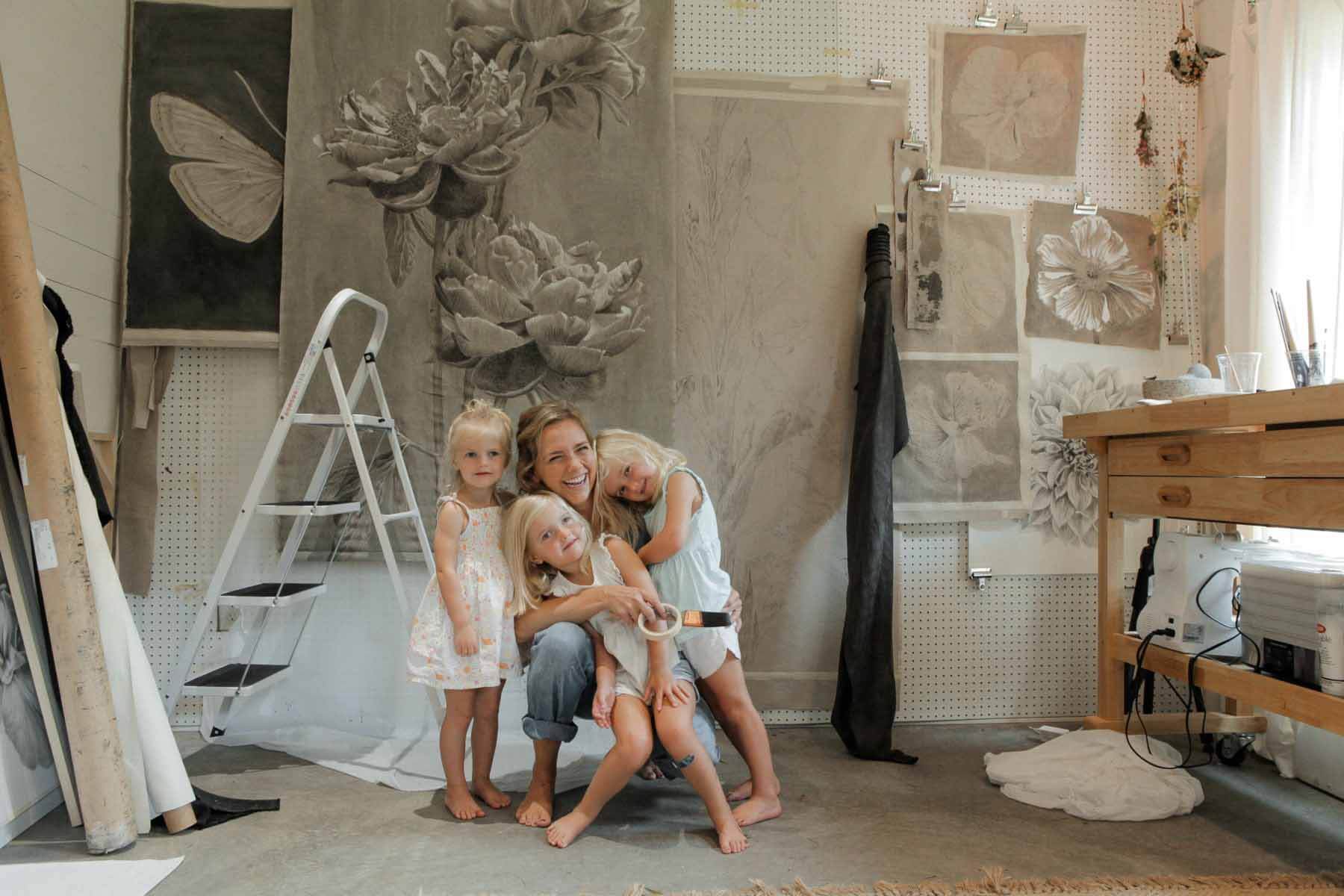
More requests were coming in, but as a young mother of two infants, Emily found it difficult to get her work shown anywhere. “With babies, you can’t … pack all your art in a van and go to different art shows in different cities,” she says. “Thankfully, there was another option.” That option was Instagram, the rapidly growing social media platform that had launched just a few years before her daughters were born. “I found an audience on Instagram, and it’s just been great since then; lots of eyeballs on [my work] all the time.”
Soon after she built her social media following, Emily decided to move on from portraits. “I knew that I wanted something else,” she recalls. “And … I think, when we were new to Instagram and new to being bombarded with beautiful pictures all of the time, [it was] hard to figure out where you fit. So, I decided to just cut it off [and] go back to what originally really inspired me.”
That initial inspiration, she says, was her love of art history and medieval art — particularly the early renaissance. “I just loved the way they made their paint,” she explains. “They made their paint out of things that were readily available; they didn’t have an art supply store to go to. So, I started with making paint how they made paint … and I didn’t start out knowing that I would hit what I was looking for … I was just playing with it.”


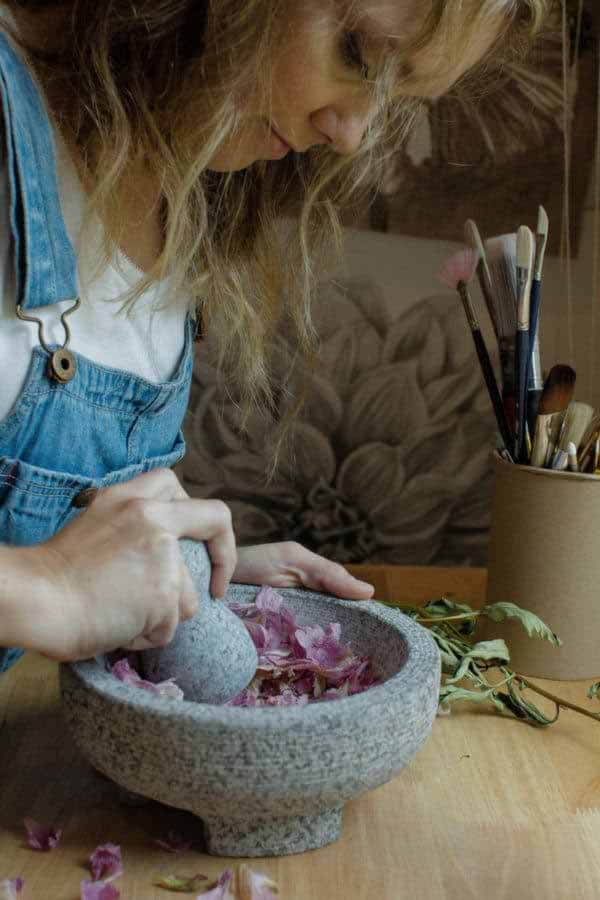
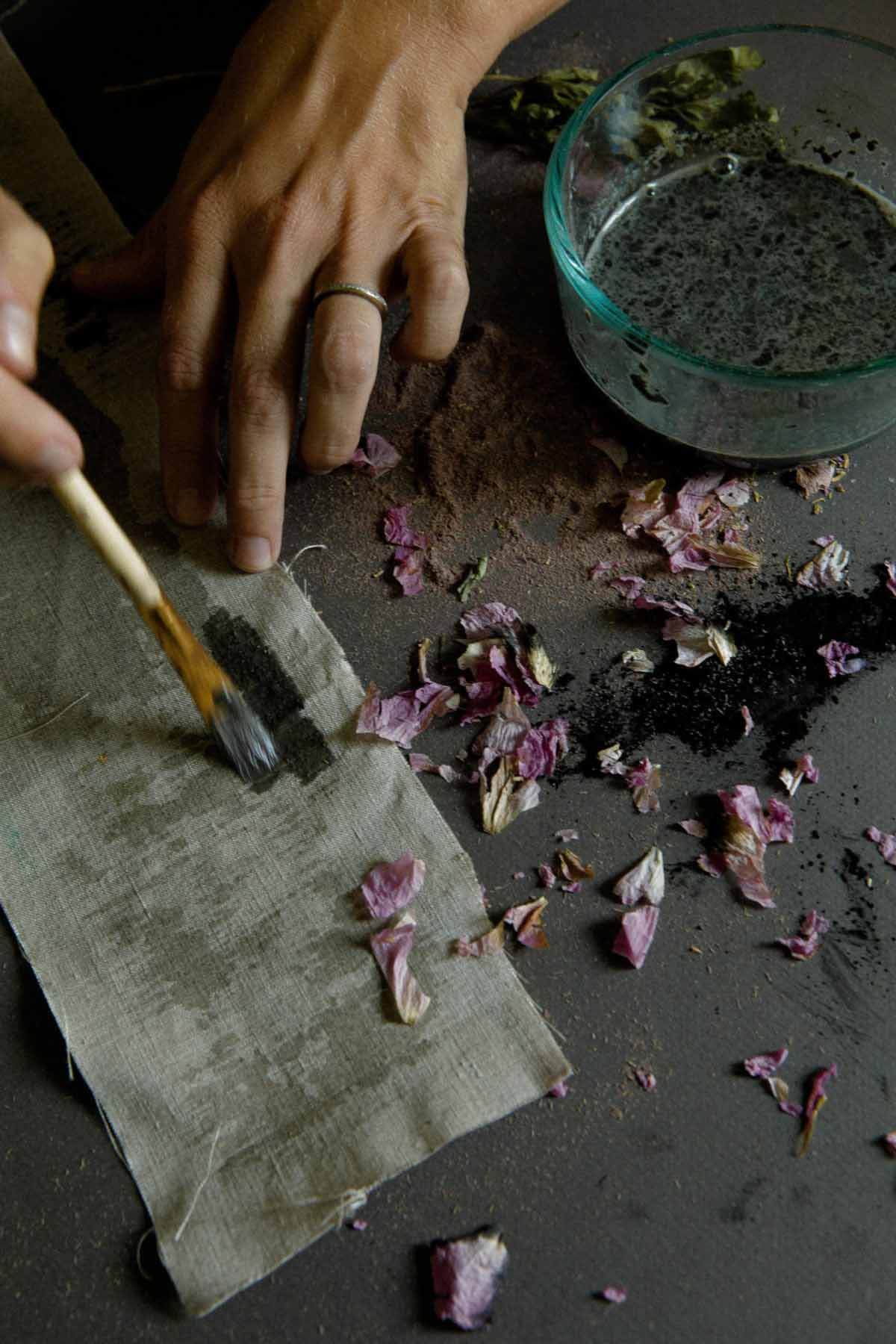
Emily’s experimentation paid off; in her current work, which is primarily botanicals, she often incorporates some of her specially created, homemade paint. “Before oil paint was invented,” she explains, “they used what was called egg tempera. It’s egg yolk, distilled water, and pigment. The original idea of [using egg tempera came to me] when I was taking these pictures of these beautiful flowers that I had. The flowers would just die in my studio because I felt this weird connection to them; I couldn’t throw them away, or compost them, or do anything with them. It made me sad.”
Unable to dispose of the dried-up blooms, Emily found a way to give them new life. “I took the actual flower,” she says, “made sure it was totally dehydrated, ground it up, and then [mixed it]. So, my pigment was the flower, and I used egg yolk and water to make the emulsion for the paint.” Emily then used the flower-based paint on the painting of the flower itself. “The background [of the painting] had the flower actually physically in it,” she explains. “It ties me back to early renaissance medieval art.”
Flower-based paint is used in select pieces, but all of Emily’s tapestry work is created with Belgian linen, charcoal pencils, and white acrylic paint; and, though she has a gallery, she focuses primarily on commissions, which she crafts from her backyard studio in Birmingham. “I love commissions,” she says, “mostly because my work is so large scale that a commission is just better because [clients] can tell me exactly [what] they need.”
Oftentimes, she adds, customers will have seen one of her tapestries and want something similar; or there’s a particular flower that holds special meaning for them, and they’re interested in acquiring a customized piece. “[The flowers] usually do have meaning to them,” she says. “I’ve been doing a lot of magnolias because I think that really resonates with people. I think a lot of people have magnolia trees and the smell of magnolia in their memories from childhood, and just life. Magnolia just really resonates with people … and they’re in my memories, too.”
Over the years, Emily has painted a wide range of botanicals, from magnolias and cosmos to peonies and anemones. “I think details of botanicals are just so interesting, especially blown up really big,” she says. “Things we don’t notice every day is what I’m really interested in. The wrinkles in a petal are so interesting to me. And I feel like it’s really just grounding and relaxing to [have that in your home].”
After a customer has described the type of flora they want on their tapestry, Emily then creates a computer-generated composition of the artwork. Once the client approves the composition, she can get started. “I work on each piece for probably about a week,” she says, adding that she is currently booked into 2022. “I’m totally booked until next year. I just can’t even describe how it doesn’t even feel real; it doesn’t even feel like it’s me … I’ve known that for my whole life, that this is exactly what I was going to do … It really is my dream job, so I’m very grateful.”
Check out Emily’s work at emilymorganbrown.com.
All photography by Joanna Ballentine.

Lennie Omalza
Originally from Hawaii, Lennie Omalza is a Louisville-based freelance writer of over 18 years. Lennie is a yoga-loving foodie who travels as often as she can and enjoys writing about food, homes, and weddings. You can find more of Lennie's work at Eater, Hawaii Home & Remodeling, and The Louisville Courier-Journal.