

A Sixth-Generation Home: Malvern House
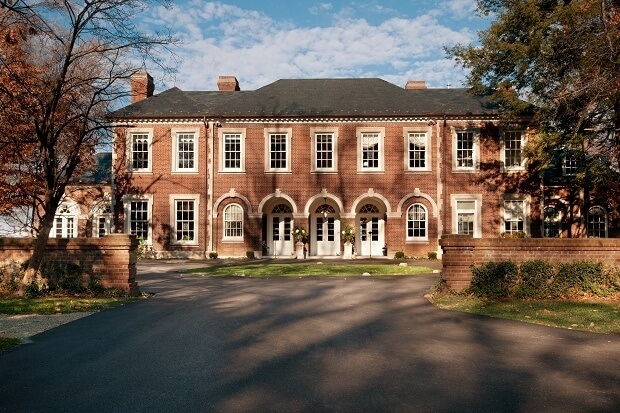
Malvern House has been home to six generations of family since the early 1900s. Designed by the same designer behind The Breakers and the Rockefellers' Hudson River Valley Estate, with landscapes done by Frederick Law Olmstead, this is a jewel and a historic treasure.

HISTORY
The land for the Malvern House was acquired by George Gaulbert, the great-great-grandfather of current resident Babs Rodes Robinson (Lee’s wife). Gaulbert, a Louisville businessman, acquired the property in the 1890s. He was the founder of the Peaslee-Gaulbert Corporation, one of the largest paint manufacturers in the country, inventors of ready-mix paint. This company is credited with helping to rebuild the South after reconstruction by enabling people to paint their own homes. Originally, the piece of property stretched from Brownsboro Road to the Ohio River. (Eventually, a large portion of it was sold to create Interstate 71.) It totaled three square miles, which at the time was one-tenth of Jefferson County. George and Hattie Gaulbert did not build a house on the property. Their only child, Carrie Gaulbert Cox and her husband, local businessman Attilla Cox, Jr., actually built Malvern House. They hired Frederick Law Olmsted, designer of Central Park in Manhattan and all of Louisville’s park system, to design the landscaping. They then hired famed New York architect Ogden Codman, Jr., to design their house. Codman had previously designed The Breakers, owned by Cornelius Vanderbilt II, and Kykuit, owned by John D. Rockefeller, Jr. Codman’s work on Malvern House for the Cox family would be the only project he ever did in Kentucky. Codman completed his design of the house in 1914, but the house was not finished until 1922.A Family Tree of Women
A brief family history shows the generations who lived in Malvern House.- Hattie and George Gaulbert purchased the land where Malvern would be located. They had one daughter, Carrie Gaulbert.
- Carrie Gaulbert married Attilla Cox, Jr., and they had one daughter, Harriet Cox.
- Harriet Cox married John V. Collis. They lived at Malvern House, raising their three daughters. Harriet remained at Malvern until her death in 1992, the same year she sold Malvern to a non-family member, Helen Combs (ex-wife of former Kentucky governor Bert Combs).
- Barbara Collis (youngest daughter of Harriet and John Collis) married Joe Rodes, and they had two daughters: Babs and Mary (now deceased). Barbara and Joe Rodes lived across the hill from Malvern, and raised their daughters there.
- Babs Rodes Robinson is the current resident of Malvern, since 2007, with her husband Lee Robinson and their three sons.

BLENDING THE OLD AND THE NEW
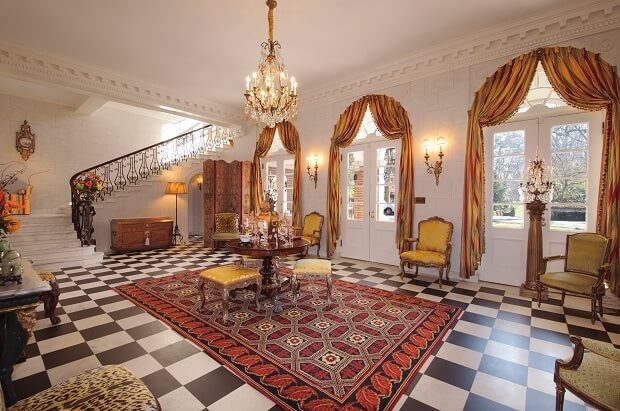
The original architect of the home, Ogden Codman, Jr., was best known for a treatise that he co-wrote with famous author Edith Wharton. Published in 1897, the treatise, entitled The Decoration of Houses, outlined specific rules for the proper planning and finishing of interior residential spaces. All of these elements are put into play in the design of the Malvern House.Front Doors and Front Hall
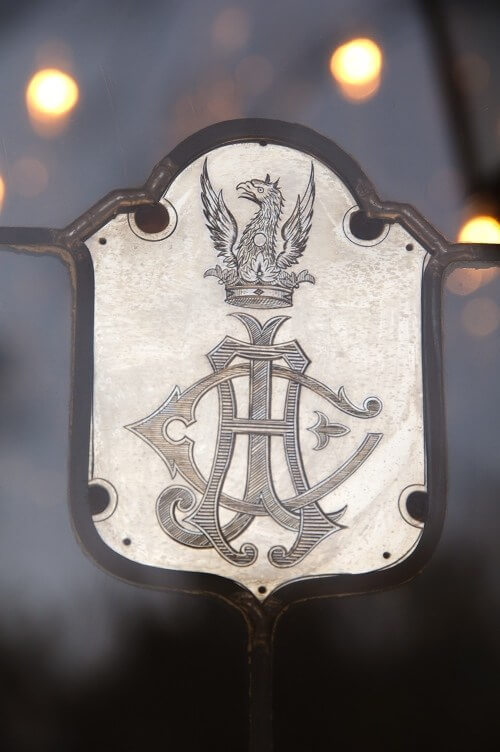
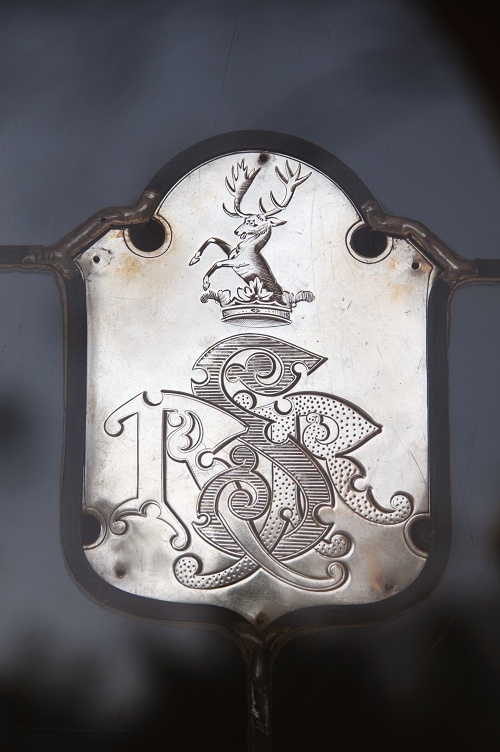
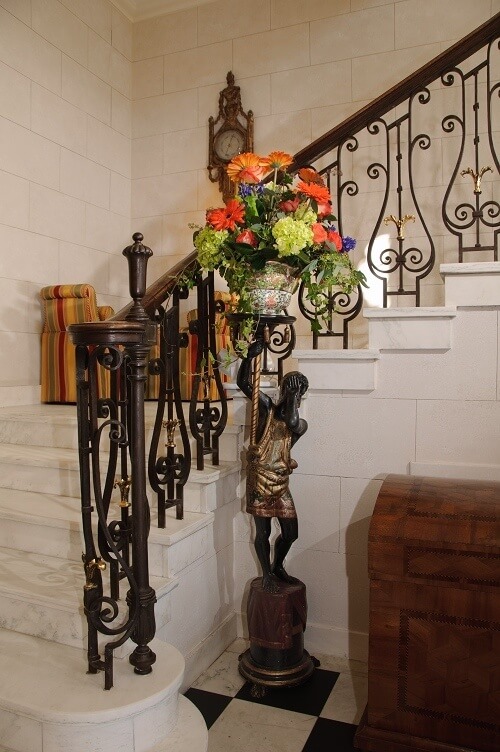
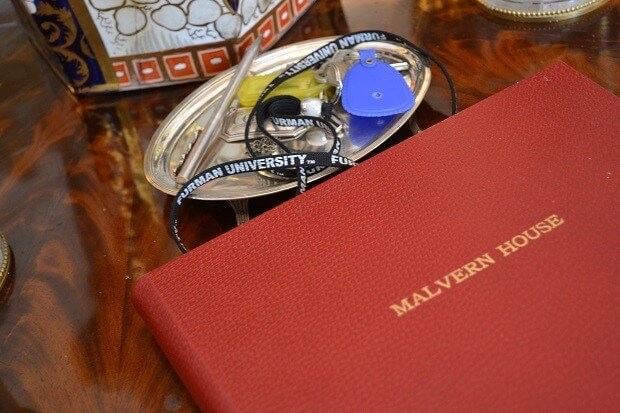
The designer preferred French doors, placing them throughout the house as the front doors, terrace doors and interior doors. There are two engraved silver plates, one in the center of each front door window: the left plate has the crest of the Attilla Cox family, and the right has the crest of the Lee W. Robinson family.
Separate Men’s and Ladies’ Bathrooms
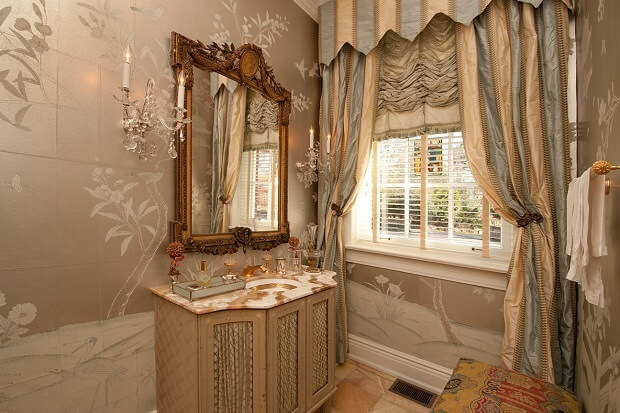
Codman designed not one but two separate bathrooms on the first floor, similar to a private club. There is a specific bathroom for ladies and a separate bathroom for gentlemen. Below is the ladies’ bathroom, complete with a sit-down vanity, mirrored panels and a chandelier. Lee added the current furniture and silver leaf wallpaper.
The Living Room
The living room, though paneled in dark wood, enjoys the beautiful north light. It is also known as the “morning room,” as it gets the morning light each day. It looks out to the north with views of the river.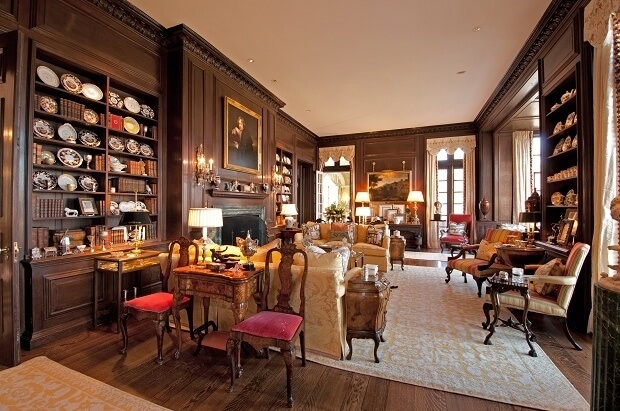


The Library
This is the most used room in the house. It has Lee and Babs’ favorite chairs, with Lee’s desk in the back and the big television at the other end of the room, hidden away in an antique armoire. This room is paneled as well, using wood from an old English estate. The entire room was disassembled in England and moved piece by piece into Malvern House.


The Music Room
This room was formerly a screened-in porch when Babs and Lee moved into the house. Lee enclosed the space and added a piano, turning it into a stunning room that’s filled with light.

The Dining Room
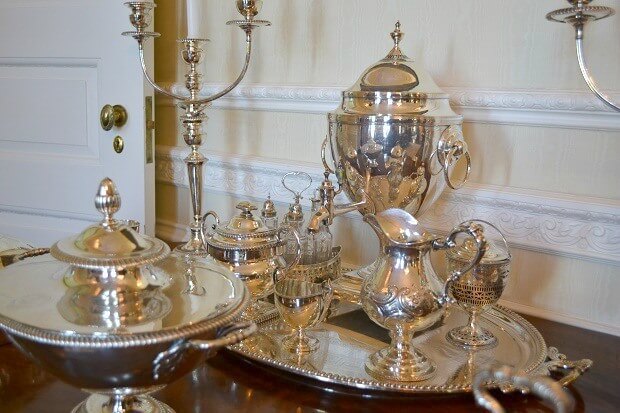
The dining room has some of the original wallpaper and a fine silk shantung fabric used throughout the room. Much of their furniture has been in the home for generations. A silver service that belonged to Babs’ grandmother is used and is now on display after being traditionally kept locked in a special vault resembling a cage, located off the kitchen.
The Kitchen
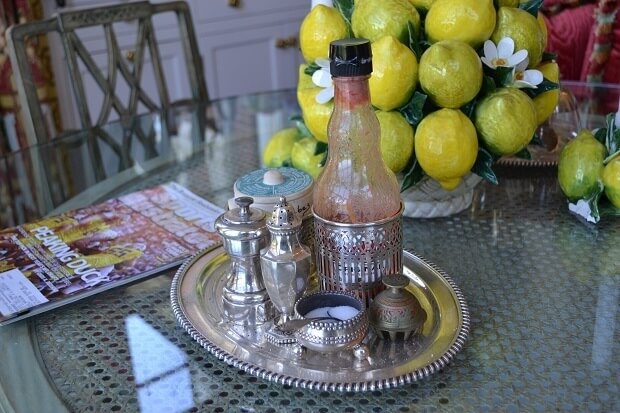
The home’s original kitchen was like many of the time: a small, utilitarian room only used by servants. Lee turned the old kitchen into a butler’s pantry, bar and utility room. He reconfigured the space to add a more modern kitchen with two working islands and a breakfast nook near the windows.


The Backyard
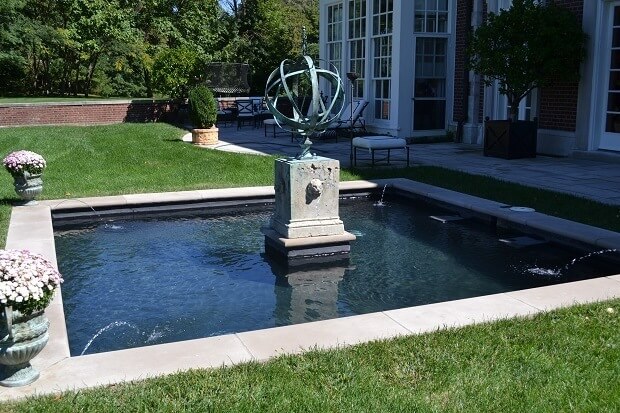
The yard is filled with magnificent gardens, designed by Olmsted and recently profiled by Garden & Gun. Here are a few exterior shots of the house and the views looking over the Ohio River.


One thought on “A Sixth-Generation Home: Malvern House”
Leave a Comment
Our unofficial motto at StyleBlueprint is "Be kind. Do good." We encourage this to be the basis for all comments on our articles. Provide feedback that adds to the story. Some controversy or disagreements are part of any good dialogue between friends, but anything that tears down or belittles others is subject to disapproval or removal. Thank you for being a member of the StyleBlueprint community! View our Community Guidelines.
You must log in to post a comment.




Just a marvelous setting!! Everything looked perfect.