She is a human trafficking survivor who's sharing her experience in a new film showing this Thursday only. Get to know this resilient woman, find out how to spot potential trafficking and learn her suggestion for how to bring this industry down. Meet Lexie Smith!
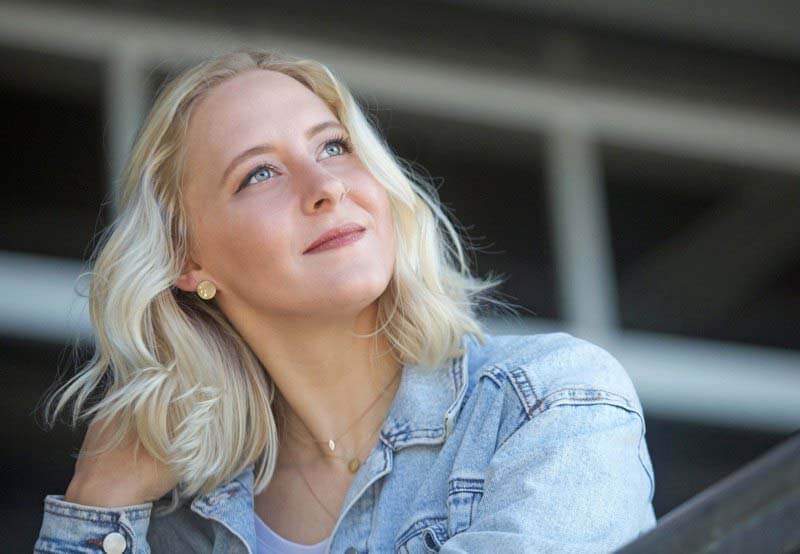
Lexie Smith grew up in a middle-class family in the suburbs of Chicago. She went to a private Christian elementary school, and as she says, “We were a pretty normal, tight-knit family that was at church any time the doors were open.” Lexie is also a survivor of human trafficking, a $150 billion-a-year industry, with 71% of trafficking victims being women and children. (source)January is Human Trafficking Awareness Month, and later this week, on January 23, 2020, the film Blind Eyes Opened is being shown nationwide for one night only in order to shine a light on this international epidemic. We had the honor of speaking with Lexie, who now lives in Nashville, about her own experience as a trafficking and exploitation victim. She opened our eyes to common grooming tactics traffickers use, current trafficking trends to watch out for and what she thinks is the answer to ending human trafficking once and for all.Meet Lexie Smith, our amazing, inspiring and unbelievably resilient FACE of the South, who proves that while bad things do indeed happen to “good” families, life can still be beautiful.PinLexie Smith was raised in the Chicago suburbs before moving to Nashville 15 years ago. She survived sexual abuse and later human trafficking, and today, she’s using her voice to open others’ eyes to this epidemic so that no one else has to endure what she went through.
You were sexually exploited as a child. How old were you when this began, and who was the person who exploited you?
I’m very close to my grandmother, so most weekends and throughout the summer I’d be at her house. She has always taken in teenagers in her community who don’t really have a family or anyone looking out for them. When I was 8 or 9, she started taking in this boy who lived a couple of doors down. His mom wasn’t part of the picture, and his dad was an alcoholic and never home, so [this boy] would often be over for dinner. She didn’t really monitor his access to me and our activities. Often, she’d be upstairs making dinner or cleaning, and he and I would be downstairs in the basement. She thought we were playing video games, but it turned into more than that. I was about 9 or 10 years old by the time this all started happening.
How old was he?
He was 15 or 16, and that went on for about a year. Before this happened, I was sexually abused by some of my cousins until they moved away. So I had a backdrop of trauma coming into the situation. It’s pretty common that predators can sniff out that vulnerability in people, and you end up being in the wrong place at the wrong time all the time.
He was what we call a recruiter. He started the grooming process with me. There was one night that he raped me and told me that if I said anything, he would do the same thing to my younger sister. So from that point on, I was gripped with fear and wanted to do anything I could to prevent her from experiencing what I was going through.
We are grateful to all our sponsors:
RELATED: Human Trafficking in Green Hills
How did things escalate?
Anytime he wanted me to come to his house, he would tell me to pretend like I was riding my bike around the neighborhood, which was a pretty normal activity. When it turned into trafficking and an actual transaction happened, it was an older friend of his. He had me give his friend a lap dance for $50, and then he offered for his friend to have sex with me for $100. I was 10 years old. That started things off — where it turned from sexual abuse into trafficking. From there, he had me come over other times and filmed himself and his friends raping me, and they made a tape of it.
The things they did to me were influenced by pornography and what was going on in pop culture. After the tape was made and everything was over, he tossed me in the bathroom to clean myself up, and he gave me this big hug and said, “You’re going to make me so much money!”
How long did this go on, and how was it discovered?
That is the hardest part of my story because it wasn’t [discovered]. When I was about 13 years old, once I hit puberty, the men who had been purchasing me were no longer interested because they were pedophiles. Once I started becoming a woman, I wasn’t what they were looking for anymore. The business dried up, and shortly after, we moved to Nashville. That kid kind of disappeared. No one knows what happened to him, and most of the men are probably dead, but a lot are still out there. They were anywhere from mid-20s to upper-60s, and most were businessmen. They would come on their lunch break, and always during the day, never at night. They all had wedding rings.
PinLexie has a degree in psychology because she wanted to help women and children like her. “Once I started my classes on trauma and abnormal psych, I had this wakeup moment. All these issues I dealt with as a part of my daily life — depression, anxiety — they weren’t normal. So I figured I should go get help,” she says. “I feel like if I was going to help anybody, I was going to have to get help first.”
What is the difference between sex trafficking and exploitation?
The difference between sex trafficking and exploitation is that you can be sexually exploited digitally and no one has physically touched your body. Human trafficking is when there is an exchange of money, and your body is given over to another person. Exploitation is more along the lines of pornography, child pornography, the production of pornography.
How has technology impacted trafficking and exploitation?
The huge thing now is that there are a lot of kids who are being exploited right in their own bedrooms while their parents are downstairs making dinner. It’s called ‘sextortion,’ and the people who prey on kids through social media basically catfish them and make them think that they’re some kid from another school in their area. They start exchanging conversation, and once it turns sexual, they start blackmailing them and saying they’re going to send everything to their parents, friends, church, or coach, and ruin their whole life. That’s a huge part of sex trade now.
PinLexie credits her relationship with the Lord as well as her church home for helping her survive and thrive. “Having a place like [my church] to unpack my stuff and ask the hard questions was essential for me to move forward,” she says.
What is your response to people who ask how your family didn’t realize, or how the neighbors didn’t notice?
Things got arranged based on when I was at my grandmother’s house, which was pretty often. He had some way of communicating with his clientele that I was available, and I’d go to the highest bidder. I was told by him that if a car pulled up, to come over. I was never gone for more than 30 minutes, and it was never car after car after car. It was maybe two people at most a day.
Looking back, were there opportunities to bring this to an end later that were missed by others?
Definitely. The obvious big thing was my family being naive in how they allowed people to have access to me and having the perspective of “that doesn’t happen to people like us.” Everyone thinks that bad things happen on the other side of the tracks. It happens everywhere all the time. So the biggest thing was my community thinking they were above crime and trauma happening to them.
The other thing is looking back, my mom and I have done training on human trafficking and have shared both of our perspectives. When she shared her perspective of what she had seen as a mother, I was sick all the time or complaining of being sick. A lot of times, trauma shows up in physical symptoms, but there won’t be a biological reason for it. So I had stomach aches all the time, and I was constantly being sent home from school. I was diagnosed with ADHD, but they were actually dissociative symptoms from trauma, so I wasn’t able to focus in class because my poor little brain was trying to process what had happened to me over the weekend.
Pin“After I told everyone what had happened, the thing everyone said was, ‘I had a feeling, and I didn’t trust it, and I’m sorry.’ So if there’s a situation that seems dangerous, trust your gut. That’s the biggest thing,” Lexie says.
We are grateful to all our sponsors:
Tell me about Blind Eyes Opened and what that experience was like.
A lot of people understand human trafficking in a way that isn’t really true, but the filmmakers did a great job in honoring everyone’s story how it really happened without dramatizing it more or sensationalizing it, which tends to happen a lot in media. If you Google ‘sex trafficking,’ you’ll see pictures of people with tape on their mouths or handcuffs or they’re roped up. The reality is that a majority of the victims are walking among us, and the chains are on their minds, not their bodies. I think they did a really good job of portraying that and hopefully helping people understand that better.
For me, getting to share my story and show people that just because something bad happened to you, but your life isn’t over … that really feels like redemption and makes all the hard and awful stuff worth it.
PinPictured are four of the six women who survived human trafficking and are featured in Blind Eyes Opened. They are (clockwise from top left): Dr. Brook Parker-Bello, Ph.D., of Tampa, FL; Niki Cross of Raleigh, NC; Lexie; and Rebekah Charleston of Dallas, TX. Images: Submitted
What do you think is the answer to ending sex trafficking?
The big underbelly for the whole industry is pornography and how pornography has infiltrated the whole media system. So if you think about any popular songs being played today and what kids are listening to as their brains are developing their outlook on the world and on women and men and relationships, and it’s talking about exploitation and violence; frankly, they’re being brainwashed before they’re ever approached by a predator.
In lots of cases, when a predator will approach a kid online, they’ll say, “Hey, I saw you liked this video by this artist — would you ever be interested in doing anything like that? Would you want to be in a video?” It’s such a part of pop culture that it doesn’t even raise a red flag. They’re like, “Absolutely! I want to be famous!” It is just so widely accepted by society that people don’t realize how dangerous it really is and that the people are pretty much never a producer from Hollywood discovering you on Instagram. I think people can wake up to that and be more aware of what their kids are viewing and allowing to influence their mind — that will make a difference.
What are some signs that may indicate a person is being trafficked?
It’s going to look different depending on how old the person is. If we’re talking young adults and teenagers, a lot of times you’ll see a shift in how they carry themselves. They may be an outwardly confident person and suddenly they start shrinking back. Or, it may be the opposite — they may be a really shy person, and all of a sudden they get this boost of confidence. A lot of traffickers, part of their grooming or recruitment is giving gifts. So if someone suddenly has a lot of designer bags or that person is all of a sudden done up all the time … traffickers think of that person as a product that needs to be sold, so they want that product to look pretty.
PinLexie’s is one of six stories shared in Blind Eyes Opened, which is being shown for one night only in select theaters. Click HERE to find a showing near you.
If someone is being trafficked and they read this, what is the most important message you want them to receive?
No matter what has happened to you, YOU get to decide what defines you and the kind of life you want to have. It’s possible — no matter what — to have a beautiful life.
RELATED: Meet Derri Smith of End Slavery Tennessee
What’s the best piece of advice you have ever received?
My first therapist was at the school I attended. I filled my life with lots of activities — I tried to bury my trauma, and the biggest thing he told me was, “Lexie you can do a lot of really good things, but you may never do a single God thing or great thing if you’re constantly caught up in just doing lots of little good things.” That helped me to figure out what my real purpose is and to chase after those bigger things instead of getting caught up in the distracting little things.
Aside from faith, family and friends, what are three things you can’t live without?
Dark chocolate, dogs and tacos
Thank you, Lexie, for sharing an intimate look at your experience and kudos to you for speaking out. And thank you to Leila Grossman for the beautiful photos of Lexie, shot at The Belonging Co.To learn more about Blind Eyes Opened, including showtimes and ticket information, click HERE. And if you suspect someone is being trafficked, call the human trafficking hotline at (888) 373-7888.
***********
Meet more amazing FACES in our archives. Click HERE and prepare to be inspired!
Ashley is a StyleBlueprint contributor who was born and raised in the South. She loves hiking, travel, photography, and spending time with family and friends.
Our unofficial motto at StyleBlueprint is "Be kind. Do good." We encourage this to be the basis for all comments on our articles. Provide feedback that adds to the story. Some controversy or disagreements are part of any good dialogue between friends, but anything that tears down or belittles others is subject to disapproval or removal. Thank you for being a member of the StyleBlueprint community! View our Community Guidelines.