
Laura Stanley: FACES of Atlanta
As Executive Director of the Foundation for Mitochondrial Medicine, Laura Stanley's determination inspires enthusiasm for all those striving to catch a cure.

Laura Stanley built an impressive career as a leadership strategist and senior-level human resource executive working for large international corporations. When a family health mystery kept her sleuthing for more information, she let her personal passion guide her towards a big career change. In 2010, Laura became the Executive Director of the Foundation for Mitochondrial Medicine, and her determination inspires enthusiasm for all those striving to catch a cure.

How long have you lived in Atlanta and what brought you here?
I have lived her for about 20 years now. I’m originally from Tuscaloosa, AL, and came to Atlanta via Paris, France, actually. I had been working for Georgia Pacific in their Paris office and relocated back to the corporate headquarters.
Tell us about your personal connection to mitochondrial disease.
It is, in fact, a multi-layered connection, though initially I didn’t realize that. One of my sons was diagnosed with this disease about 4 years ago, after a long journey and multiple misdiagnoses and doctors visits. The diagnosis process is not easy or straightforward. It involves neurological and genetic testing, blood, urine, spinal fluid tests and a muscle biopsy. Fortunately, we’ve evolved to a very good place and his case has turned out to be very mild. The tough thing about this disease is that no two stories are alike.
My grandfather had Parkinson’s, my grandmother had Alzheimer’s and my mother had diabetes. When I first learned about mitochondrial disease, I didn’t understand that this cellular “energy production problem” could be related, but now I’ve learned that the mitochondria are so connected to a huge list of familiar diseases. Then, when you include all my friends whose kids have autism or developmental delays, my personal connections just become innumerable. And, I bet for any of your readers, the story would be the same.
When did you feel that “call” to become involved with the Foundation for Mitochondrial Medicine?
In the early days of our struggle to a diagnosis, I often said that I was going to have to either (1) go to medical school because I wasn’t finding doctors who could give me answers or (2) start the Foundation for Mystery Diseases. At last, when we were receiving my son’s mitochondrial diagnosis, I was also transitioning out of my corporate HR role at EarthLink, several serendipitous things occurred:
- I met the wife of one of the FMM board members at the dentist office.
- She introduced me to few others also in the midst of receiving diagnoses for their children, so I didn’t feel so alone in this new world.
- I learned of FMM and offered to volunteer, though at the time FMM didn’t have staff or infrastructure to really accommodate volunteers.
Six months later, conversations ensued and, as I fondly say, “I became Chief, Cook and Bottle Washer” in January of 2010. From the introduction at the dentist office, to lunch with other mothers whose children also had the disease, things were clearly happening for a reason. 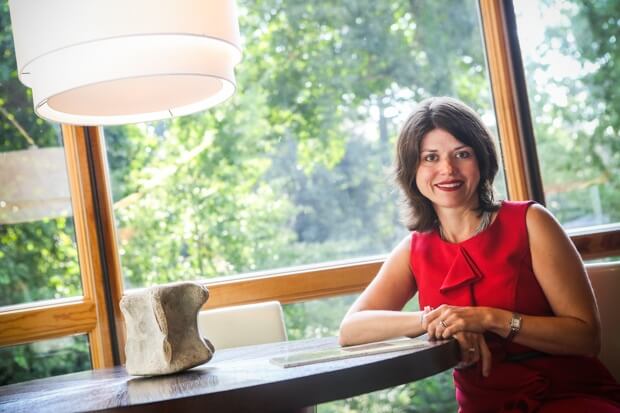
You made a huge transition from corporate leadership to non-profit. What have been the greatest challenges of that shift?
My corporate experience of relationship-building, connecting people and ideas, has been a perfect fit for the non-profit environment. On the other hand, I think some of the concepts that I took for granted in the corporate world — key performance indicators, metrics, collaboration, partnership — seemed novel as I began to interface “non-profit purebreds” and attend workshops on non-profit management. I also seem to bring a bit of refreshing, or as some might consider curious, naiveté to conversations. I am constantly saying, “what can our organizations do together — how about a joint program or promotions or even joint fundraising?” Because I didn’t grow up in non-profit, I don’t have the “we’ve always done it this way” perspective.
How have you seen the foundation grow since you’ve come onboard?
We have made dramatic progress. For all intents and purposes, FMM was in an inactive state when I stepped in. I became the first staff member and we set out to re-launch the organization: new name, new vision, new mission, priorities, tagline, logo, website—you name it. Simultaneously, we held our first awareness and fundraiser event, Hope Flies™ Catch the Cure. This effort was tirelessly led by Lane and Richard Courts and a group of others who wanted to do something for friends whose children who had recently been diagnosed with the disease. In the last three years, we have raised over $750,000, and launched Hope Flies™ regional events, and developed strong corporate and foundation partnerships. We have also funded three significant, treatment-oriented research projects testing new drug compounds and new diagnostic tools.
What’s the one thing you wish everybody in the world knew about mitochondrial disease?
Mitochondrial disease is not at all rare and obscure. It affects 1 in 2,500 and the prevalence rate is likely to continue to rise. Most importantly, mitochondrial disease is connected to so many familiar diseases: Autism, Parkinson’s, Alzheimer’s, Lou Gehrig’s, Chronic Fatigue, even Diabetes and Epilepsy. Therefore, practically all of us are personally connected to this disease.

What’s the significance of the firefly in the FMM logo?
Our firefly is special—it’s not just another pretty lightning bug. In seeking a logo, we needed to literally look no further than our own backyard. That firefly may hold an important key to understanding mitochondrial disease and studying the way cells use energy. See, in mitochondrial diseases, the body cannot make enough energy, or ATP. This lack of energy leads brain, heart and muscle, among other systems to have “power failures.” Scientists use luciferase, the substance illuminating the firefly’s tail, to study cell energy production. Information gathered from luciferase research has the potential for use in a broad array of applications, including drug discovery, patient diagnoses, treatment and disease monitoring. So, this little firefly guides us toward treatment, hope and positivity… natural inspiration for our mission.
If you could wake up tomorrow with superpowers, right out of a comic book, what would you want them to be?
This question actually comes up in my house fairly frequently, especially since my six-year-old is often assigning us superhero roles. I think the “super strength” I desire is not the kind to leap tall buildings in a single bound, but a kind of X-ray vision to find treatments and cures for the mitochondrial-related diseases.

What are your “go-to” crisis management techniques and personal stress relievers?
TLC from friends — whether it’s dinner with my “Bless Your Heart” mothers group to a phone chat with my roommates from college, I am re-energized from those who are in my corner. An occasional massage and some retail therapy also provide good fixes.
When you have friends visit Atlanta, what are your recommendations? Where do you take them?
My husband is from France, so every year we have French visitors. There is nothing like the Stone Mountain Laser Show and a classic dog from the Varsity to make their American experience like no other! We then take others to our favorite French restaurant, in Buckhead, Anis.
What book do you most often recommend to people? Or what’s on your personal “Must-Read” list?
The former head of HR at EarthLink had our entire team read How Full is Your Bucket by Tom Rath and Donald Clifton. It describes a straightforward, simple principle applicable to all aspects of life, and I love that people practice. There is even a kids’ version that I have given to our elementary school counselor. At home we are frequently saying around the dinner table, “Whose bucket did you fill today?” Who filled your bucket?” Otherwise, I have my book club to keep me up to date on interesting current reads and I’ll occasionally read en français, just to keep my French in practice.
Other than faith, family, and friends, what are three things you couldn’t live without?
Not sure that anything else really matters, maybe one of the FMM recyclable Firefly tote bags.
Chocolate is never a bad thing.

Laura, thank you for sharing your story and educating us about the work of the Foundation for Mitochondrial Medicine. For more information about the foundation, visit mitochondrialdiseases.org.
Our gorgeous photos come through the lens of Catrina Maxwell of CatMax Photography. Thanks, Cat!

