
Janet Ivey of “Janet’s Planet”: FACES of the South
Janet Ivey is nothing if not driven. And passionate. And unbelievably enthusiastic about science. Today she shares her inspiration, her top eclipse tips and the best piece of advice she’s ever been given.

There’s more to Janet Ivey than meets the eye. At first glance, you may recognize her as the host of Nashville Public Television’s interstitial series “Janet’s Planet,” educational programming covering everything from health and nutrition to science and safety. But that’s merely scratching the surface. This Covington, Tennessee native (“Home to Isaac Hayes and the Charms Blow Pop,” Janet says) now calls Music City home, having graduated from Belmont College (now University) with a degree in music and performance. Today, Janet’s resume includes countless awards, including 12 Emmys! She’s also a TEDx speaker, an ambassador and spokesperson for the Children’s Television Network, an actress (complete with her own IMDB page), a member of the National Space Society Board of Governors (alongside notable names like Buzz Aldrin, Tom Hanks, Hugh Downs and Lance Bass), and she was recently appointed the “Solar Eclipse Expert” by Nashville’s News 2. In 2018, she can add “author” to her bio, when her book Unconventional Mother is released just in time for Mother’s Day. “It’s a kind of alternative Mother’s Day gift for those of us, whether by choice, consequence or circumstance, who never had children of our own but have a unique way of mothering and nurturing in this world,” Janet says.
If you’re looking for a little light reading, you can check out her complete bio here, but for now, we consider it a distinct honor to introduce you to this passionate woman whose main goal in life is to “contribute to a science-literate society where we are naturally curious like we were when we were children.” Welcome Janet Ivey, today’s FACE of the South!
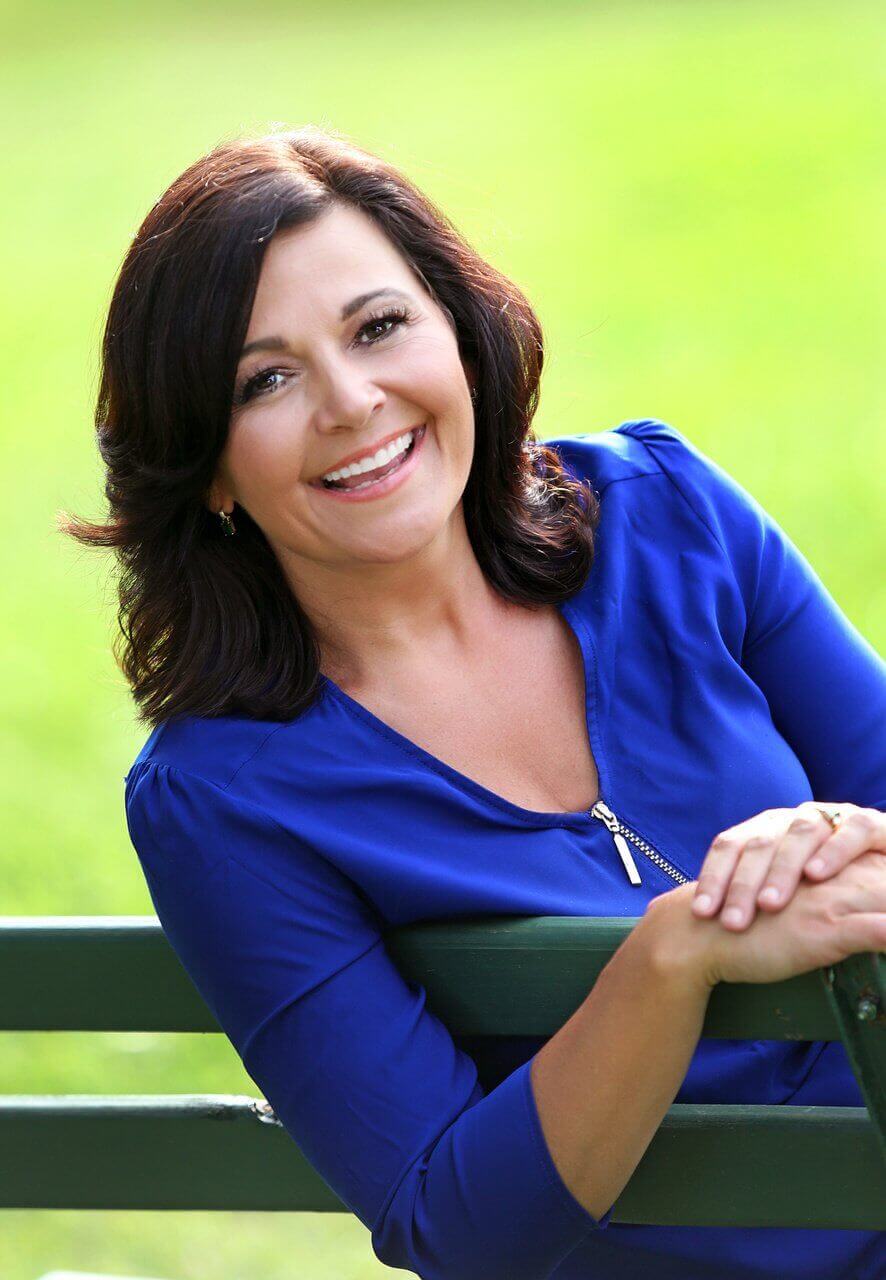
Where did your love of science originate?
I fell in love with the solar system in fifth grade when I was 10 years old. My teacher was Ernestine Yarbrough. She was a magnificent teacher! She had a star party in the fall of 1978, and I thought it was so cool to look through her telescope. In spring of that school year, we went over the solar system, and she assigned everyone a planet — my planet was Saturn.
Did you get a degree in science?
No, I was interested in all things science, but I love the arts. I came to Belmont and majored in music and performance. I worked at Opryland and got hired for a kids’ show called Opryland Kids’ Club. That’s when I fell in love with working with and for children — performing for them and educating them through live theater. When the park closed, I thought How do I keep doing this?
And how did you keep doing it?
I wanted to find a niche for myself, and everybody had always called me “Interplanet Janet,” and so I looked around and the only people communicating science at that time were Bill Nye and Beakman’s World, but there weren’t any women doing it. I went into Nashville Public Television. The VP had just moved here from Boston, but I couldn’t get a meeting [with her]. I found out she loved Newman’s organic chocolate, so I decorated her desk in Newman’s chocolate, and I got a meeting! She told me they didn’t have the budget for a full show, but I could do interstitials. I had to raise the money, so I did an ask for underwriting and got $1,600. I used that to do three interstitials, and the next year, we won our first regional Emmy.

Today, you still produce and star in “Janet’s Planet,” you do up to 60 speaking engagements for children each year and you speak on panels and at conferences all over the world. How did you wind up doing all of this?
The only reason it’s me instead of someone else is because I kept showing up and saying yes. I staked my claim and have been lucky enough to find my way to my deep gladness.
Alright, so tell us about the eclipse. Why is this such a big deal?
There hasn’t been a total solar eclipse of the continental United States since 1918. There hasn’t been one in Nashville since 1478, and there won’t be one again until 2566. There’s a 65- to 70-mile-wide swath that goes from Oregon to South Carolina, and there are 47 million within a day’s driving distance of the path of totality. It will likely go in the record books as the most widely viewed solar eclipse in history because of accessibility [for viewers].
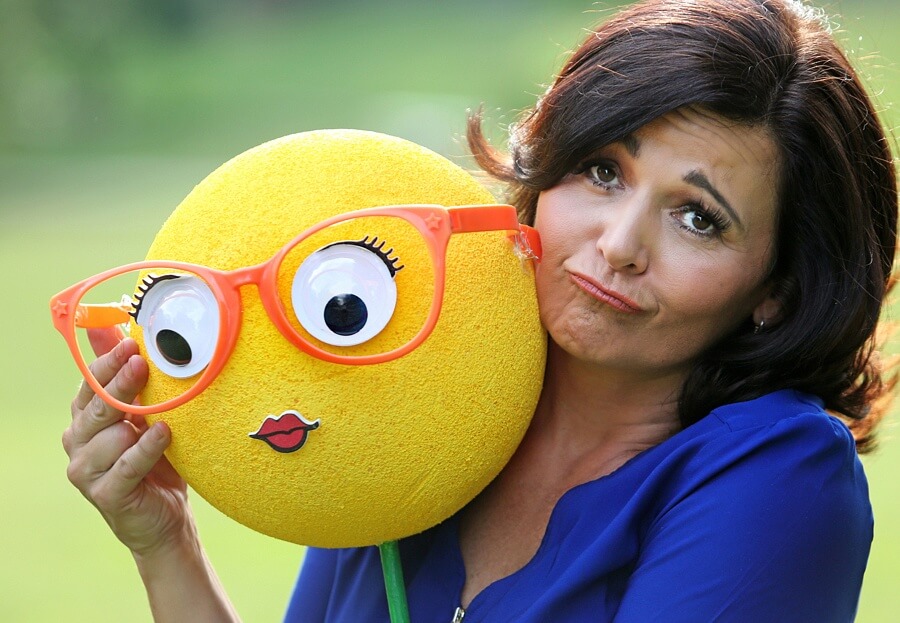
Are there ways to watch the eclipse if you don’t have glasses?
Yes. During partial phase, you need protection. You can use a pinhole projector or colander, even a Ritz cracker. Stand with your back to the sun, and use them to project onto white paper or the concrete, and you can watch what’s happening without staring at the sun. During totality (when the sun is completely blocked), it’s totally safe to look at the sun.
Do you need a special filter to take pictures of the eclipse, or can you just use your regular camera or phone?
You don’t want to look through a camera or your iPhone without proper solar filters, but you can take pictures during totality. I say, leave the photography to the pros — the best of the world’s photographers are gonna be out there with solar filters and getting pictures. Put down the phone or camera, breathe in the beauty of our universe at work — there will be plenty of photos online. Stand and be amazed as you stare up looking at what appears to be the eye of the cosmos. These two minutes are gonna feel like eight seconds, so don’t waste time trying to get your best picture.
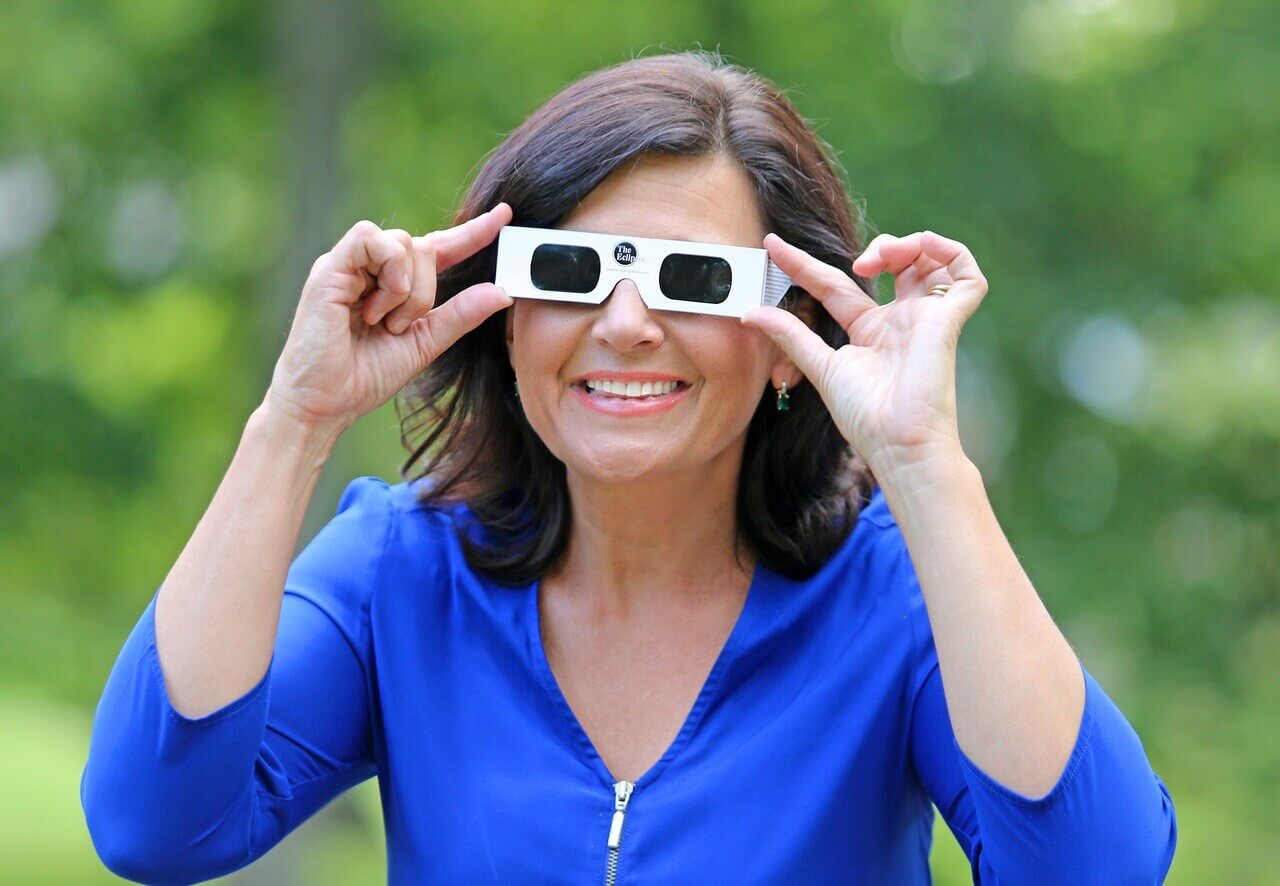
Describe what the eclipse will feel like — when will we begin to see or feel the effects? And what will they be?
The partial starts at 11:58 a.m. It will probably be closer to 12:45 p.m. or 1 p.m. before you start to notice the colors are weird. You may think Huh. Look how sharp the shadows are! It will feel like a storm is brewing. As totality approaches, things will begin to get strange. The animals will start acting funny. The birds will flock to their nests and stop chirping. The temperature will drop 10 to 15 degrees. The clouds may part. The hair on your neck will raise, and your heart will quicken because this isn’t what’s normal. It’s not supposed to be dark in the middle of the afternoon. All around the horizon, there will be a strange yellow-orange glow — the sky will be slate grey. Mercury and Venus will be up and to the right of the sun, and Jupiter will be down on the far left. You might see constellations. And then, as the moon begins to move off the sun, we may get a false dawn — roosters may crow and birds may begin to sing their morning songs again. This isn’t just a science event, this is a human event.
What happens if it’s cloudy on August 21?
If it’s cloudy, it will still go dark in the middle of the day. It won’t be as cool, but it will still go dark.

What’s the most important thing people need to know about the eclipse?
For some of us this may be the only total solar eclipse we ever see, so when you stand in the umbral shadow, watching the moon pass between Earth and the sun, causing the day to go dark, revel in the knowledge that you are witnessing one of the most unusual and spectacular events in the cosmos.
But the most important thing is to protect your eyes during the partial phase of the total solar eclipse because your retinas don’t have pain sensors — and as the moon blocks more and more of the sun’s light, your curiosity might override your common sense, and you could end up staring at the sun for longer than normal [without feeling pain], and you could experience blurry vision or macular burns if you stare during the partial phase of the eclipse without proper eye protection. Staring at the sun for even a short time without wearing the right eye protection can damage your retina permanently. It can even cause blindness, called solar retinopathy. So during the partial phase, wear your ISO 12312-2-rated solar eclipse glasses, make a pinhole projector, or take a colander or a spoon with notches, and you can project the sunlight onto paper or the pavement.
If you’re looking for somewhere outside of Nashville to watch the eclipse, where is the best place to head?
North of the city is best. Totality times range from 1 minute 57 seconds in Nashville to 2 minutes and 40 seconds in Gallatin. There are 140 miles of TN in the path of totality. (Check out this map for where and when to see the eclipse in your state.)

How can people prepare?
I don’t want to be a doomsday-er, but I would recommend packing some water and protein bars and having a full tank of gas if you’re traveling into or out of the city. Nashville is the largest metropolis in the path of totality, and it’s also got the trifecta of interstates 65, 24 and 40. There will be a lot of people trying to get into and out of the city, so you want to be prepared in case you’re sitting on the interstate for a while.
What do you want your legacy to be?
When I park my rocket, I pray that there are some scientists, artists, researchers, space explorers and Nobel Prize winners out there who happened to catch one glance or caught one word of what I said that sparked a life-long love of learning. I just want to know that I have contributed to a science-literate society where we are naturally curious like we were when we were children.

What’s the best piece of advice you’ve ever been given?
I was a sophomore at Belmont. I was feeling a little down — I wasn’t sure where life was taking me. Sarah Cannon came every year [to speak at Belmont], and it was the most packed chapel that we ever had. I remember she said three things: Love God, never take yourself too seriously and always be kind.
Aside from faith, family and friends, what are three things you can’t live without?
Chocolate, a child to inspire and the Astronomy Picture of the Day.
Thank you to Janet for sharing your wisdom and enthusiasm with us. And thank you to Leila Grossman of Grannis Photography for the fabulous pictures. Learn more about Janet Ivey and “Janet’s Planet” at janetsplanet.com, follow her on Twitter or like her on Facebook.
**********
Our newest FACE of TriStar, Kristin Zbozien, was diagnosed with breast cancer when she was just 32 years old — and while 25 weeks pregnant. She was proactive in her treatment, and today, she — and her daughter — are healthy! CLICK HERE to read her brave story.


Ashley Haugen
Ashley is a StyleBlueprint contributor who was born and raised in the South. She loves hiking, travel, photography, and spending time with family and friends.