
Jami Oakley: FACES of Nashville
Jami Oakley recently joined the Nashville community and dove in by finding a way to collect and recycle outgrown standard school attire for those in need. Her story is one you will want to know!

Tell us about UniCycle.
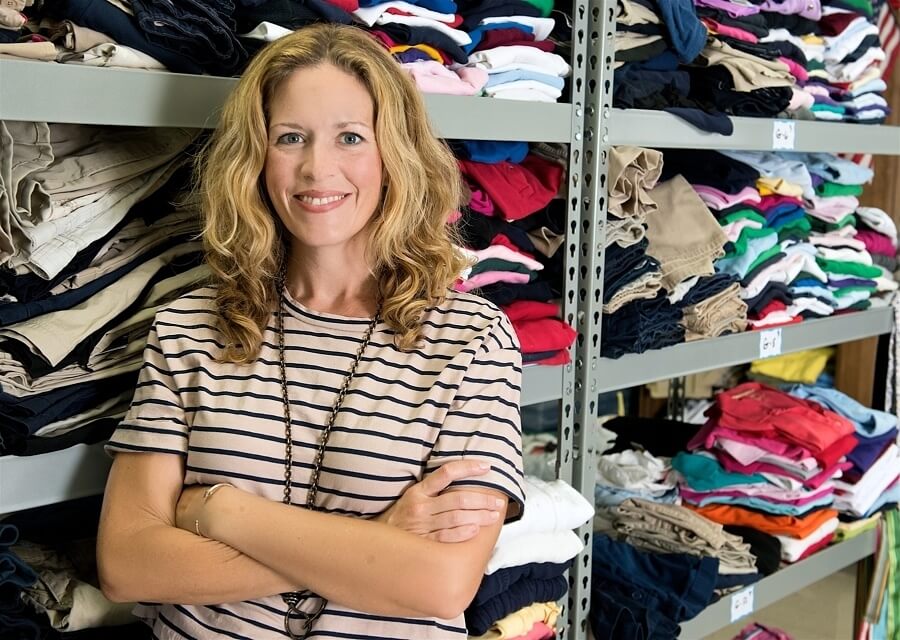
UniCycle is a school uniform recycling program that orchestrates the collection and redistribution of “outgrown, not worn-out” clothing to provide standard school attire (SSA) to Metro Nashville Public School (MNPS) students who need it. Volunteers collect clothing in participating schools, then redistribute it through a partnership with the Homeless Education Resource Office for Families in Transition (HERO), and by implementing in-school UniCycle Exchange closets. The closets are maintained by a volunteer UniCycle Coordinator at each school, and teachers and counselors can give clothes on an as-needed basis with no red tape. UniCycle basically brings the practice of sharing gently used clothing from a family or neighborhood model to a citywide model. It’s a way to take care of our most vulnerable kids, leaving school personnel and HERO more time and money to tackle the bigger issues surrounding homelessness and poverty among students and how those challenges affect their school day.How does it work?
Anyone can participate in their school’s UniCycle program, start one at a new school or create a completely new collection stream. In general, students bring their outgrown SSA items to school, and the clothing is corralled in a designated UniCycle laundry basket. Volunteers collect the baskets when full and clothes are screened (we regularly fill up a large Goodwill bin with rejects — clothing has to pass the “would I send my child to school in this?” test), cleaned, organized and sent home to students via HERO or directly back to school closets. Efficient collection and redistribution at the school level makes things quicker and easier for parents and students on both ends of the recycle stream.Do you see limited access to SSA as a commonly overlooked problem? If so, why?
Yes and no. It’s a very visible problem for students, their families and school teachers and administrators, especially in schools with a lot of families who are living at or below the poverty line. There were approximately 3,400 students last year in Nashville who experienced homelessness for some or all of the school year. Hard to fathom in such a vibrant, on-the-rise city. That said, aside from a couple of programs in place to purchase new uniforms for students, which is great, there was not a program in place for the community of MNPS families to take on the challenge and solve the problem themselves, right in their own schools. Outgrown school clothing is like a renewable resource — always regenerating due to kids constantly growing — and by putting some systems in place to capture and redistribute it, I really think we can eliminate the need in most schools without an excessive amount of effort. People generally underestimate the value of kids having clothing that makes them feel good. Kids are highly self-conscious by nature, and they are all too aware if their clothing is dirty, doesn’t fit properly or is not quite “right.” The idea of a school dress code, such as the one MNPS utilizes to eliminate competition and teasing due to attire, works well and is a great idea — unless your family is unable to afford the specific clothing items. If UniCycle can help to eliminate one obstacle to education while so many other groups focus on their efforts, we can make change happen, and the school system as a whole will improve.
What’s the most challenging part of your job?
To keep pace with what’s happened in the last two years, we need more volunteers — volunteers who are excited to take on more responsibility. We also need to think about fundraising and expanding the program by utilizing a small budget. The idea of UniCycle is that we only need volunteers and gently used clothing, and having a bit of cash flow from donations will allow us to help more kids in more ways — buying new socks and underwear, purchasing rarely donated sizes, maybe even offering scholarship funds. Figuring out how and when to grow, without overextending ourselves, has been a fun and welcome challenge. If everyone does a little, this can be done without taking over too much time of any one volunteer.How can people get involved with UniCycle or support its initiatives?
In so many ways! Mostly, I need clothing and champions! We need to keep our donation stream flowing. We need volunteers to manage that stream and give support at each school and partner location in town. Contact me and tell me what you can offer, or ask where we need help! UniCycle is also a really great way for kids to be involved in something that hits close to home for them. It’s eye-opening to let other Nashville students, from both MNPS and private schools, power collection projects.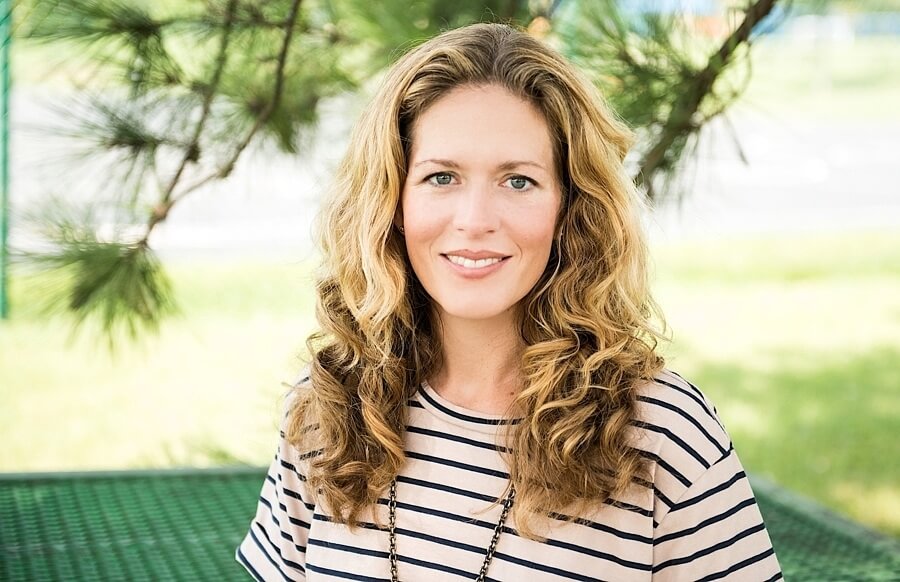
What do you love most about Nashville?
Nashville is the perfect small big city. I love running into friends and the small-town vibe that the city and Nashvillians have. In contrast, all of the big city perks are so varied and many. I feel like we are never taking full advantage of all the things available that we would love to do. We have made so many dear friends here, are so happy that our parents are here — that really makes all the difference. And, obviously, all the music!What is an important piece of advice you have been given?
One of my favorite pieces of advice is: “Don’t let perfect be the enemy of good.” Sometimes we become paralyzed and do nothing if we can’t do the best thing. Just do something and figure it out as you go — that’s what we’re doing with UniCycle. Look at all of the kids we’ve served and things we’ve learned and progress we’ve made in the last two years, and we still don’t have the plan perfectly laid out!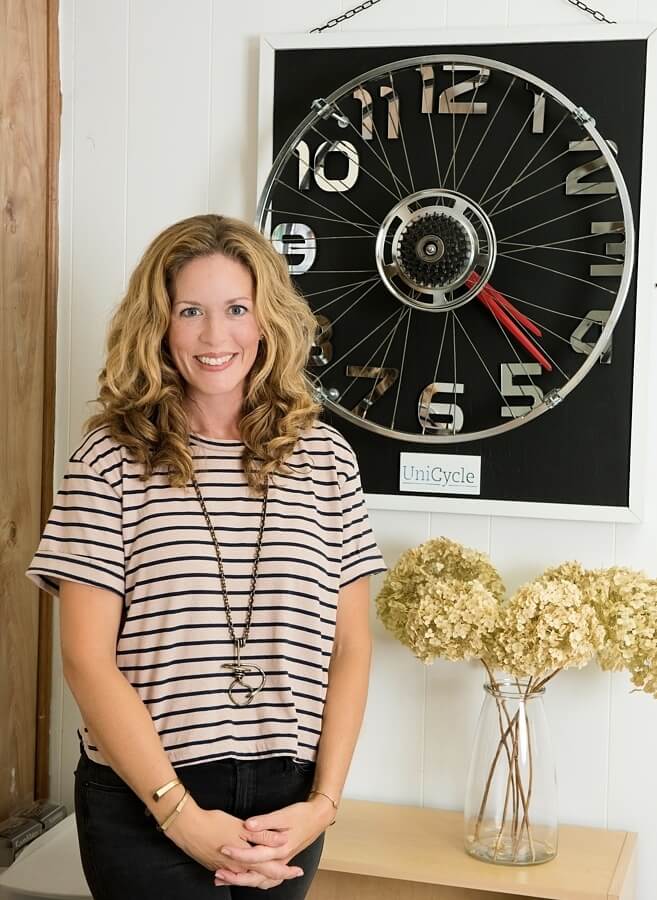
What books are on your bedside table?
Bad Feminist by Roxane Gay. My current fiction read is Do Not Become Alarmed by Maile Meloy. And for the last several months I have been slowly turning pages in How To Celebrate Everything by Jenny Rosenstrach — I love a good cookbook with interesting narrative.Excluding friends, family and faith, what are three things you can’t live without?
My morning (and afternoon) coffee, some sort of daily exercise and time to cook good food for my family. Thank you to Ashley Hylbert for the beautiful photos of Jami.********
Our newest FACE of TriStar is Linda Hall, who experienced complications from surgery, leaving her with a lengthy road to recovery. Now walking again, she credits the incredible staff at TriStar Skyline Medical Center — and her doting husband — for her tremendous progress. CLICK HERE to read her inspiring story!


Alex Hendrickson
Alex is a Southern writer known for hunting down delicious stories and traveling the world with hunger. Her passions and interests lie in food, travel, interior design and inspiring people, and her dream is to eat a dozen oysters a day.