You Won’t Believe What They Found Inside This 120-Year-Old Memphis Hotel
This 120-year-old Memphis hotel is in its stunning second act, complete with salvaged treasures, one-of-a-kind guest rooms, and a sultry basement bar with a scandalous past. Image: Patrick Brown
Some design projects begin with a blank slate. The transformation of Memphis’s Hotel Pontotoc began with the opposite: a 120-year-old building with layers of history, a collection of original features, and forgotten objects all waiting to be rediscovered and given new life.
For designer Ann Parker, owner of Parker Design Studio, and entrepreneur Joseph Lewis, who co-owns the hotel, the goal was never to erase the past and start over. Instead, they wanted to allow the rich history to remain part of the story.
The result is a polished gem filled with a cool kind of charm that is truly unique.
Love at First Sight
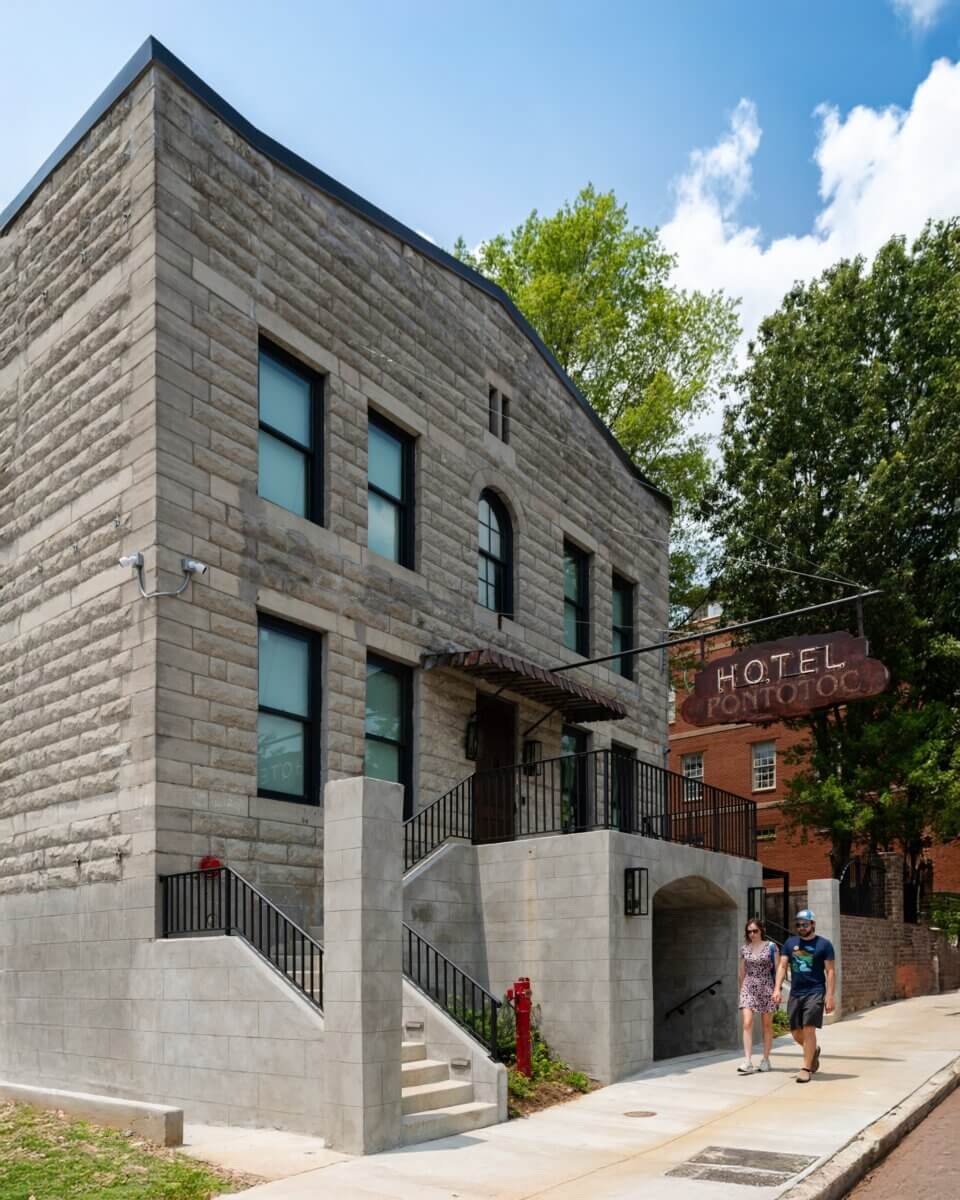
For Joseph, the building’s appeal began before he ever stepped inside. The handsome stone facade and distinctive HOTEL sign caught his attention, as did the location along a small stretch of street between Front and Main. It felt a world apart from the newer structures surrounding it.
“It looked like it should be in Europe somewhere,” he says. “We fell in love with it from the outside in.”
The building’s character and history only strengthened that connection. Rather than gutting the place, Joseph wanted to preserve as much of the original structure as possible. That meant restoring the exterior stonework, replacing windows and roofing, repairing masonry, and addressing the less-glamorous but essential work of making a century-old building sound again.
Inside, the approach was equally deliberate. Ann and Joseph worked together to determine what could be retained, what needed restoration, and how original elements could fit into the hotel’s new identity. The goal wasn’t to preserve every surface or object, but to make thoughtful choices that allowed the building’s character to shine while ensuring the finished space felt welcoming and intentional.
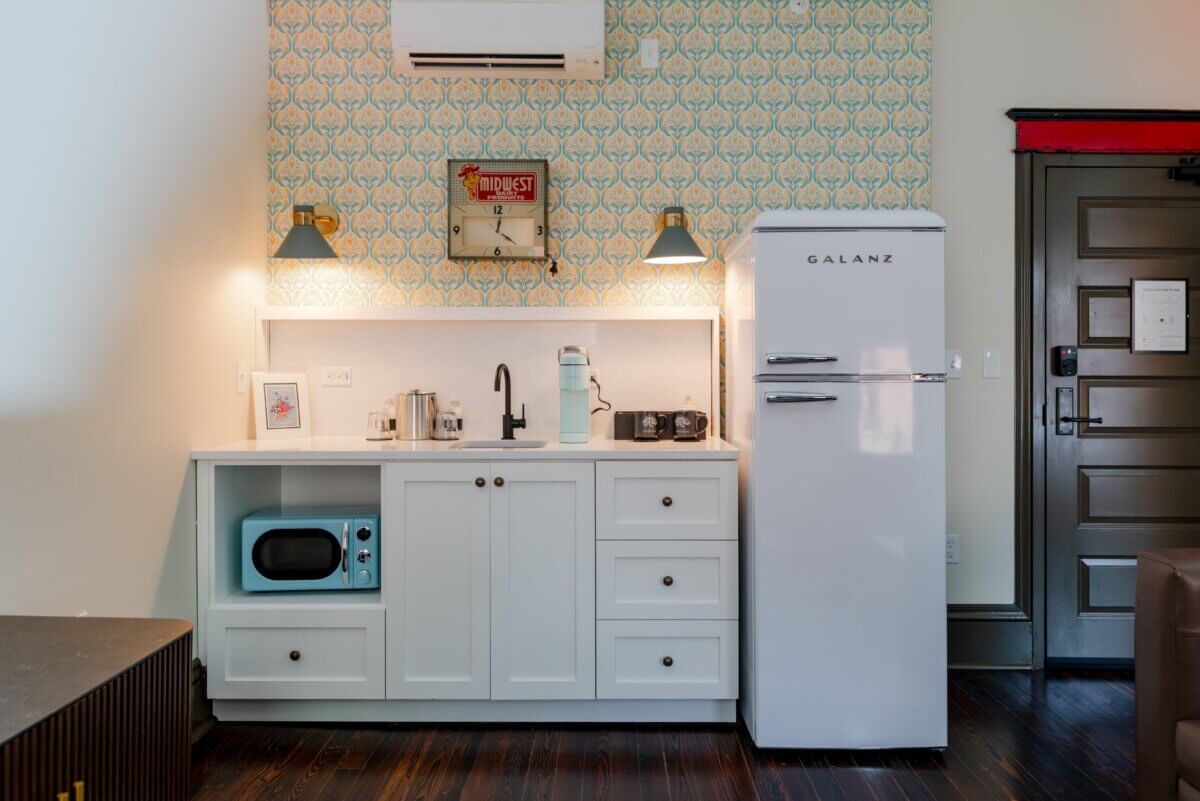
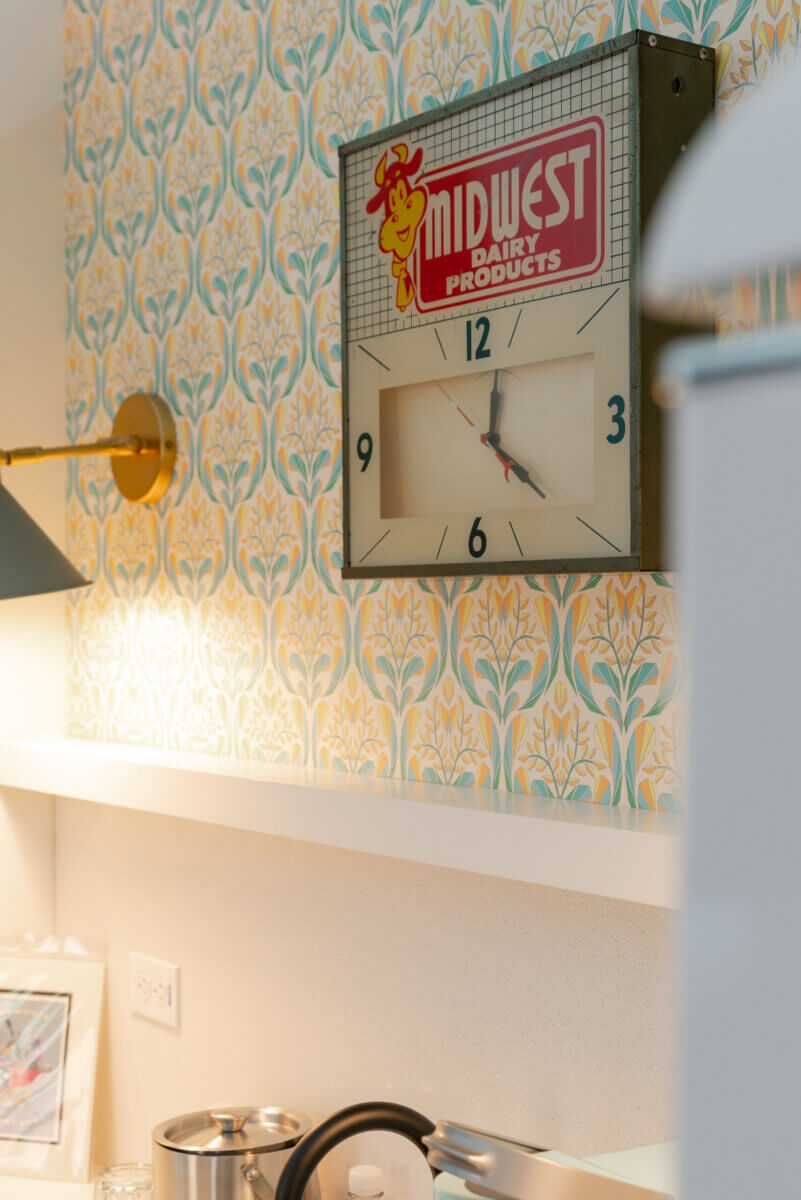
When asked about her overall design philosophy, Ann says it is pretty simple: “Our job is to facilitate our clients’ dreams, which are always different.” At Hotel Pontotoc, that meant finding a balance between honoring the building’s past and creating an inviting space for today’s modern travelers.
“At the end of the day, it needed to be a hotel — clean, interesting, and cohesive,” Ann says. “That required some balance.”
That balance is part of what makes the finished property so distinctive. It doesn’t feel like a museum, nor does it feel like a newly built hotel dressed up with vintage accessories. Its personality comes from the interplay between the old and the new.
These Walls Can Talk
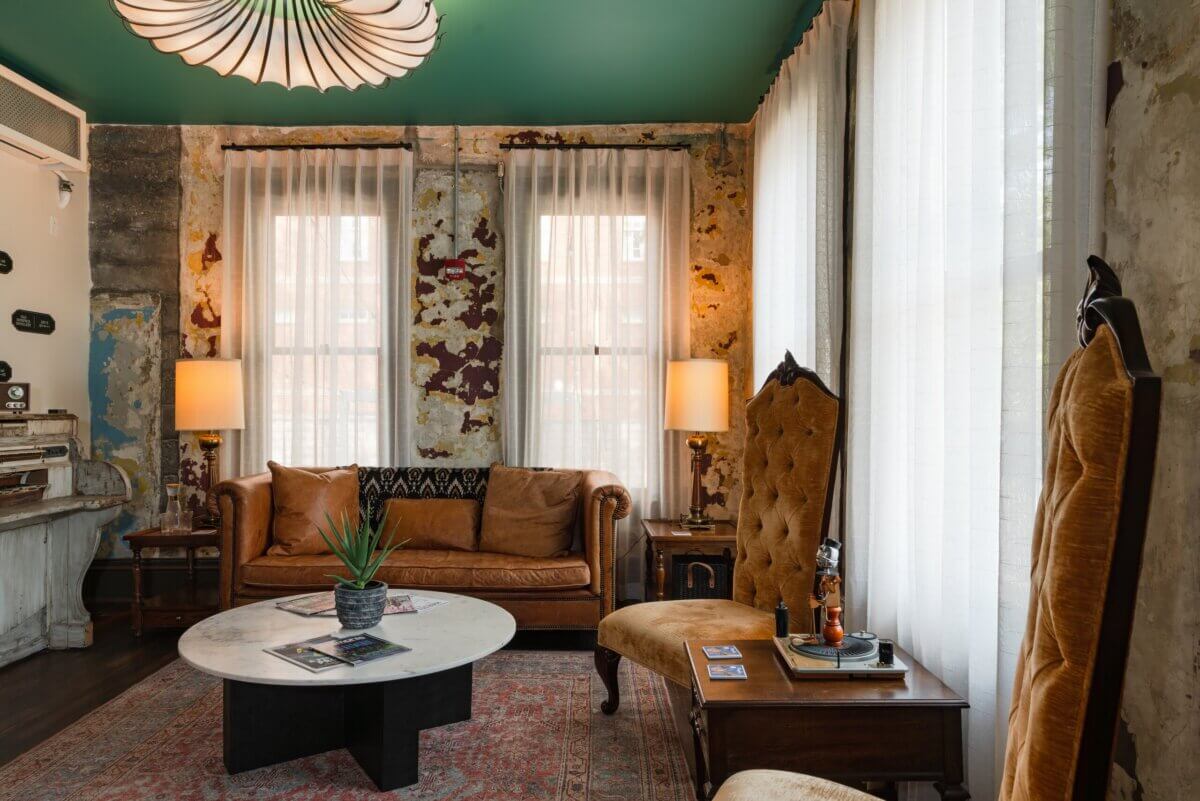
The design process was a journey of discovery. As layers of wall coverings came down, new details emerged, giving Joseph and Ann an increasingly informed understanding of the building. What began as an overwhelming renovation became a series of revelations, with each stage of the work offering new possibilities.
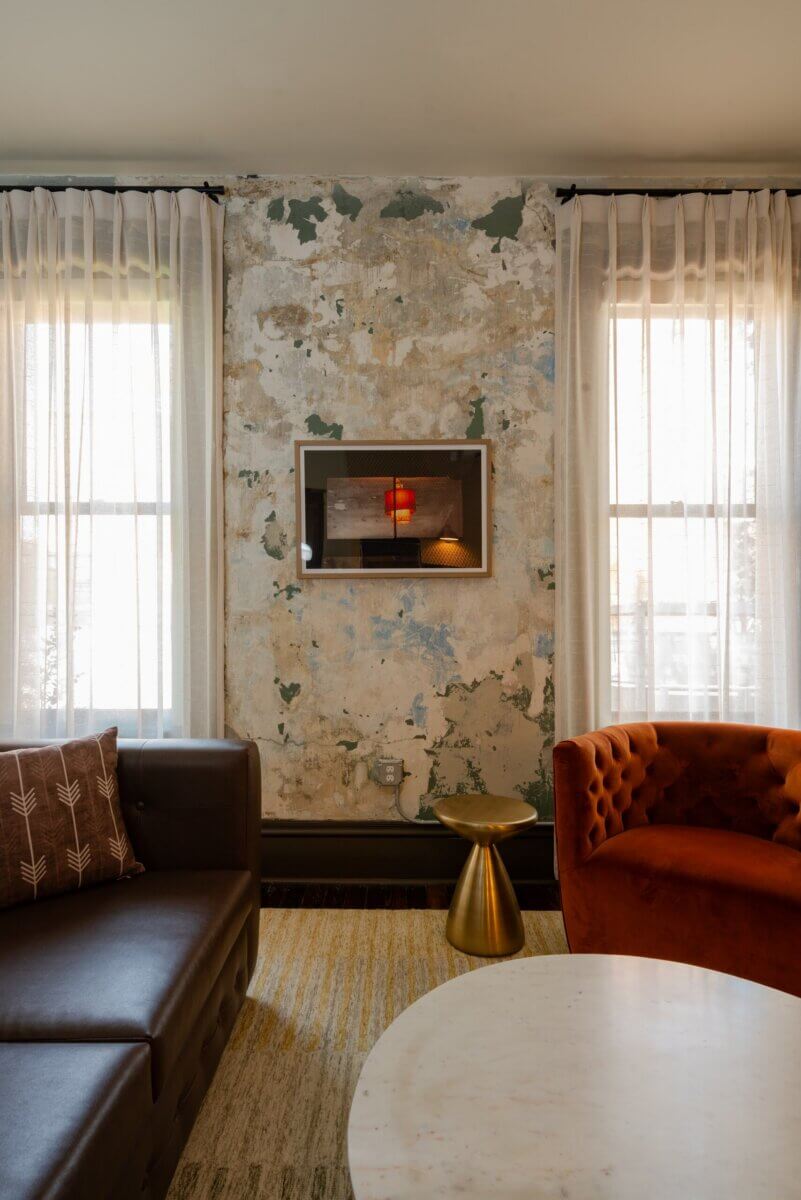
And the discoveries weren’t limited to architectural features. Among the finds were old photographs, invitations to Halloween parties held at the hotel, and even a broken pinball machine. Objects that might have been dismissed as junk became potential design elements.
The team ultimately found so much to work with that very little decorative material needed to be brought in. Original doors, hardware, heart pine floors, plaster walls, and other surviving features helped shape the interiors, while salvaged objects took on new roles.
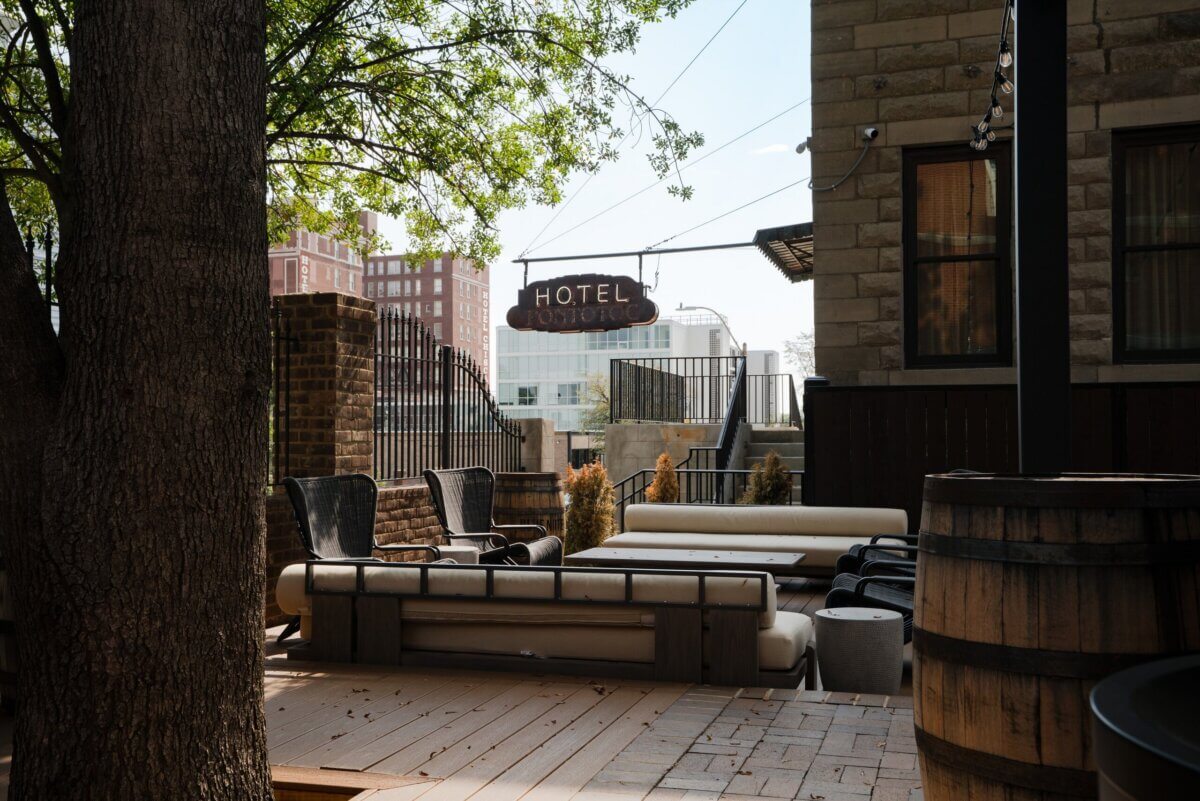
Joseph admits that he held on to some items without knowing exactly how they would be used. The original door headers, dilapidated doors, and assorted hardware were worth saving, even if their eventual purpose wasn’t immediately clear. An old organ and the top half of a door from the innkeeper’s room were among the pieces Ann and her team found ways to bring back to life — you’ll find both in the lobby!
Both say that working with what the building offered was part of the fun. Rather than imposing a predetermined look, they allowed the discoveries to inform the design.
The approach also reflects what Ann finds most rewarding about working with historic buildings: restoring them to a new level of usefulness while continuing their history and legacy.
Of course, preserving a historic building is rarely as romantic as the finished photographs might suggest. “Properly renovating, restoring, and preserving a building that’s 120 years old and was seriously neglected for decades is NOT easy,” Joseph says. “The amount of time and money spent in areas that no one sees is mind-boggling.”
But those efforts are part of the story, too. The beauty of the finished interiors rests on the painstaking work required to preserve the building itself.
Meet The Dame
One of the hotel’s most memorable spaces is The Dame, a dark and cozy bar offering a high-end cocktail experience. Located in the hotel’s basement, the name nods to the property’s history, which includes a period when the building operated as a bordello during the 1920s and 1930s.
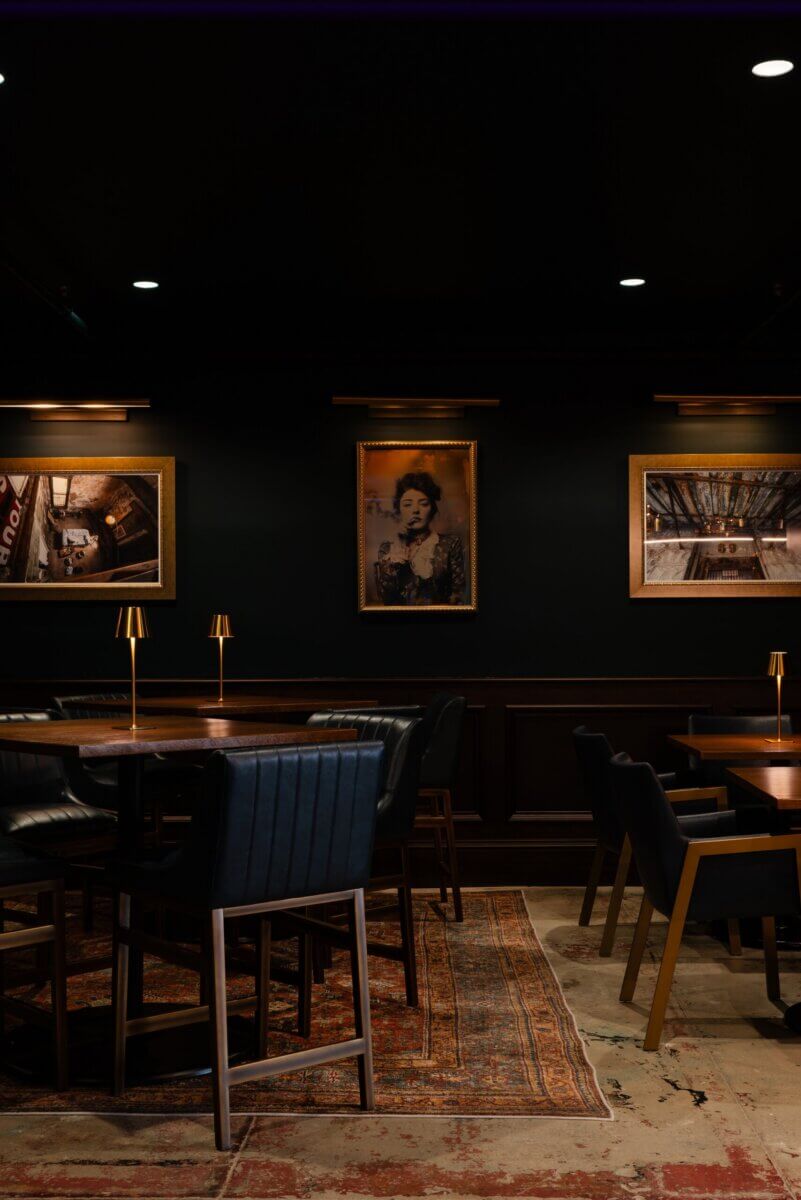
The space’s namesake is a photograph of a seductive woman who now presides over the bar. Joseph’s wife discovered the image, and although it’s unclear whether it was part of the original property, the unknown lady’s smoky, cool personality made it an irresistible fit.
“She was just too sultry and cool not to have, frame, and hang on the wall to watch over the space for us,” Joseph says.
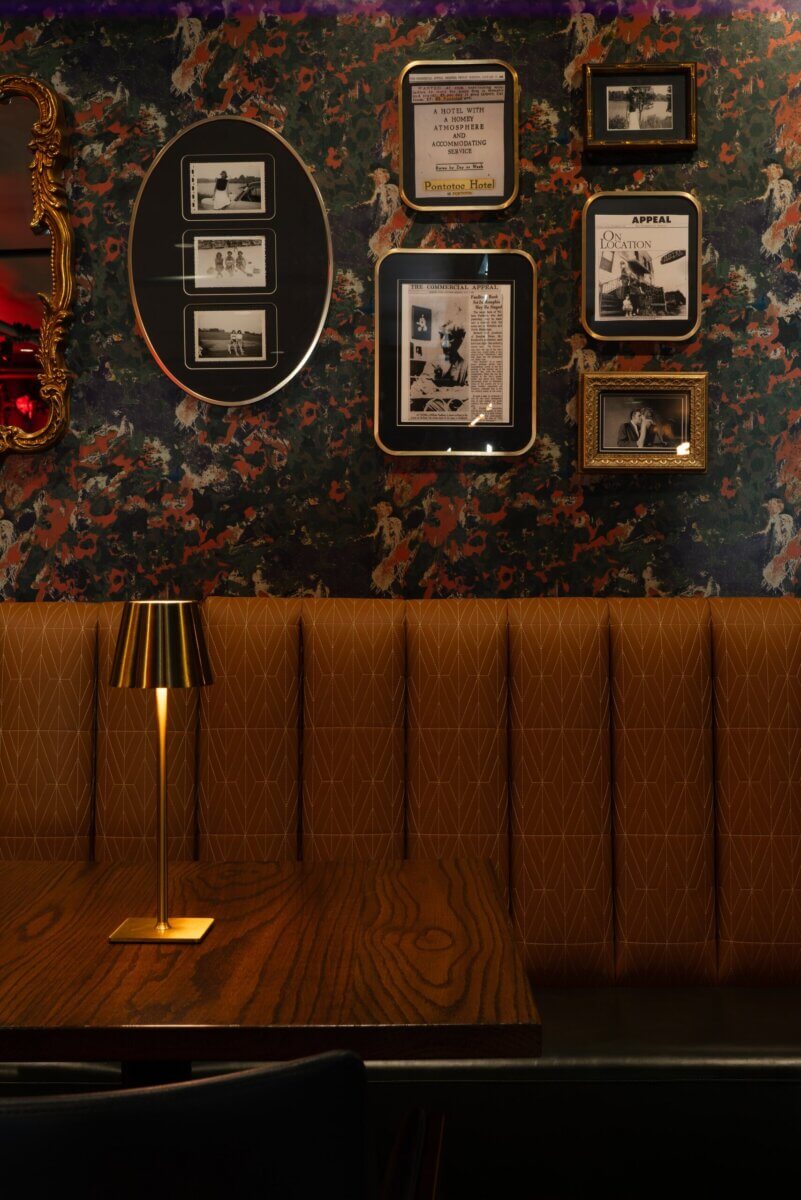
The photograph became a prime example of how the hotel’s design went beyond strict historical preservation. Not every object had to be original to the building to feel at home there. What mattered was whether it contributed to the atmosphere and the story the team wanted to tell.
No Two Rooms Are Alike
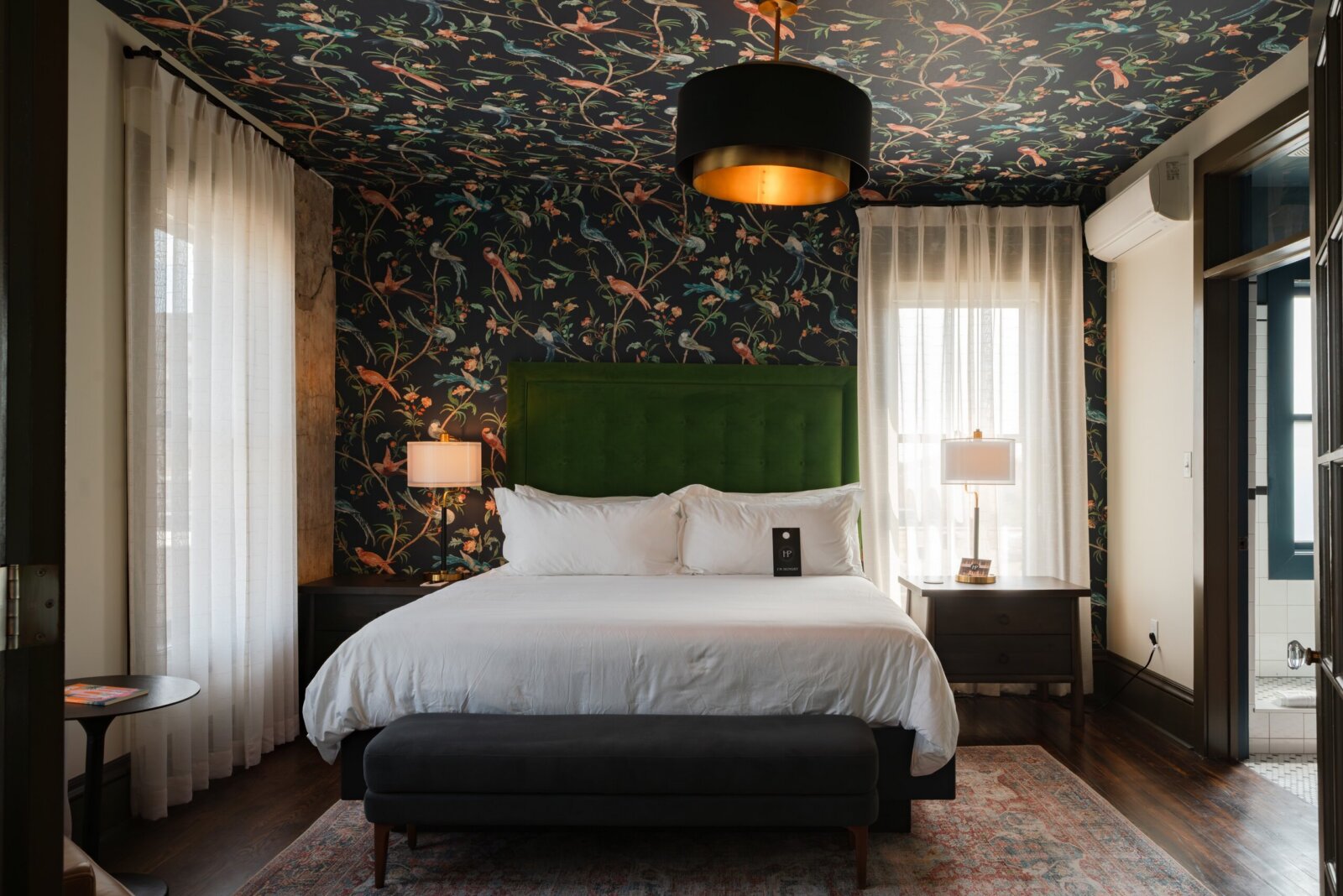
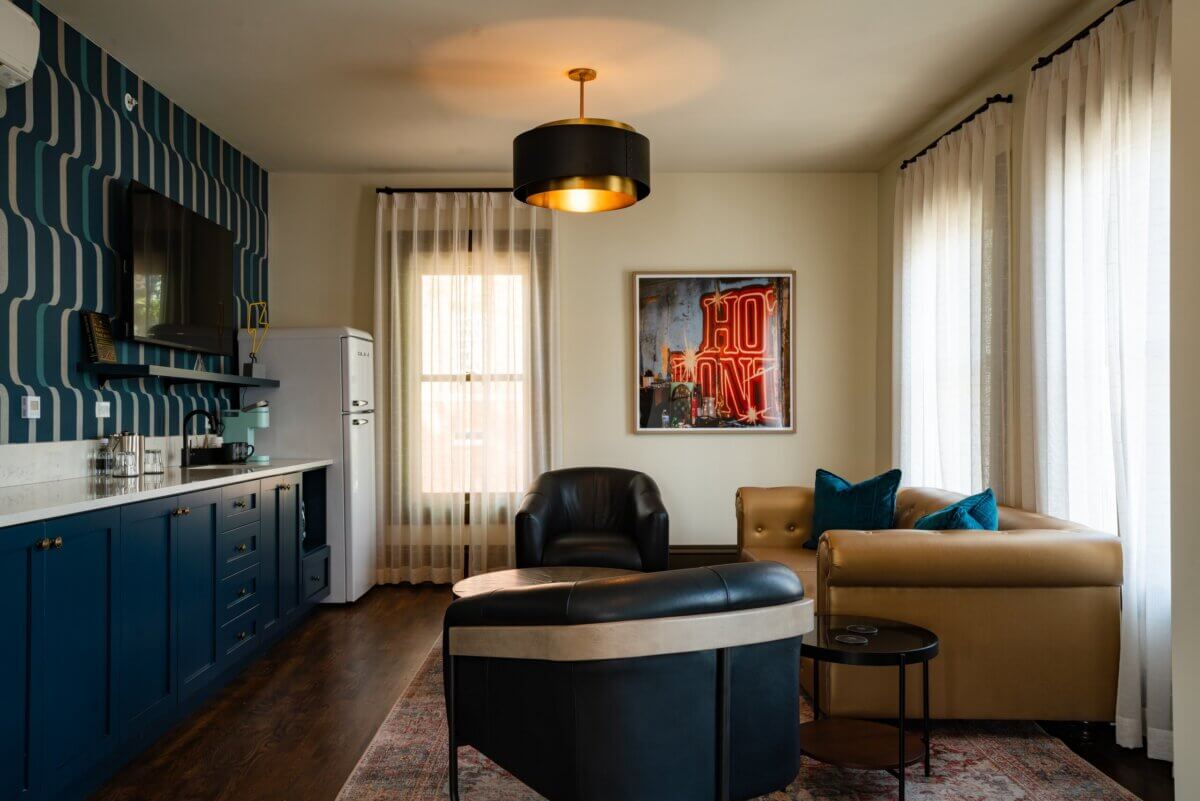
The same philosophy carries into the guest rooms, where individuality takes precedence over repetition. The team didn’t reuse wallpaper, headboards, fabrics, or color schemes from one room to the next. Each room has its own combination of materials and visual details, making the experience of staying at Hotel Pontotoc different with every visit.
That variety feels fitting for a property whose design grew out of a process of discovery rather than a standardized plan. It also gives guests a reason to return! Even repeat visitors may discover a detail they missed on an earlier visit.
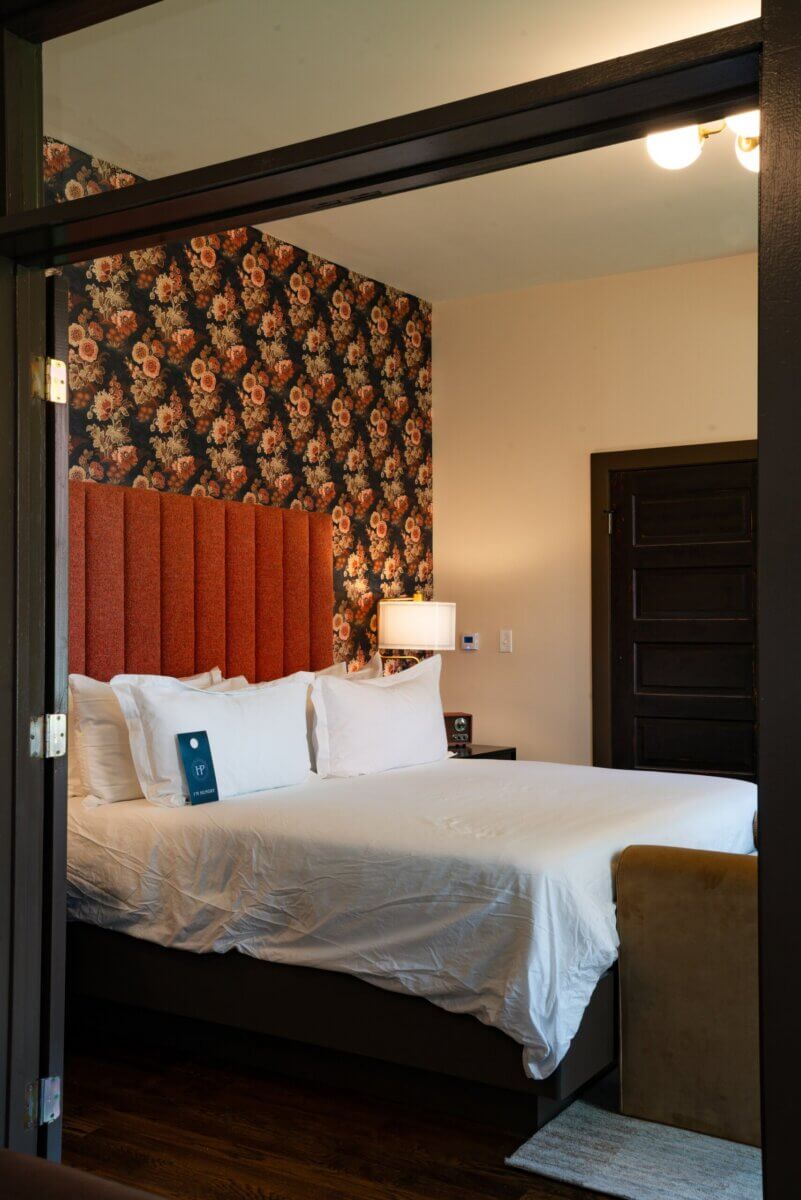
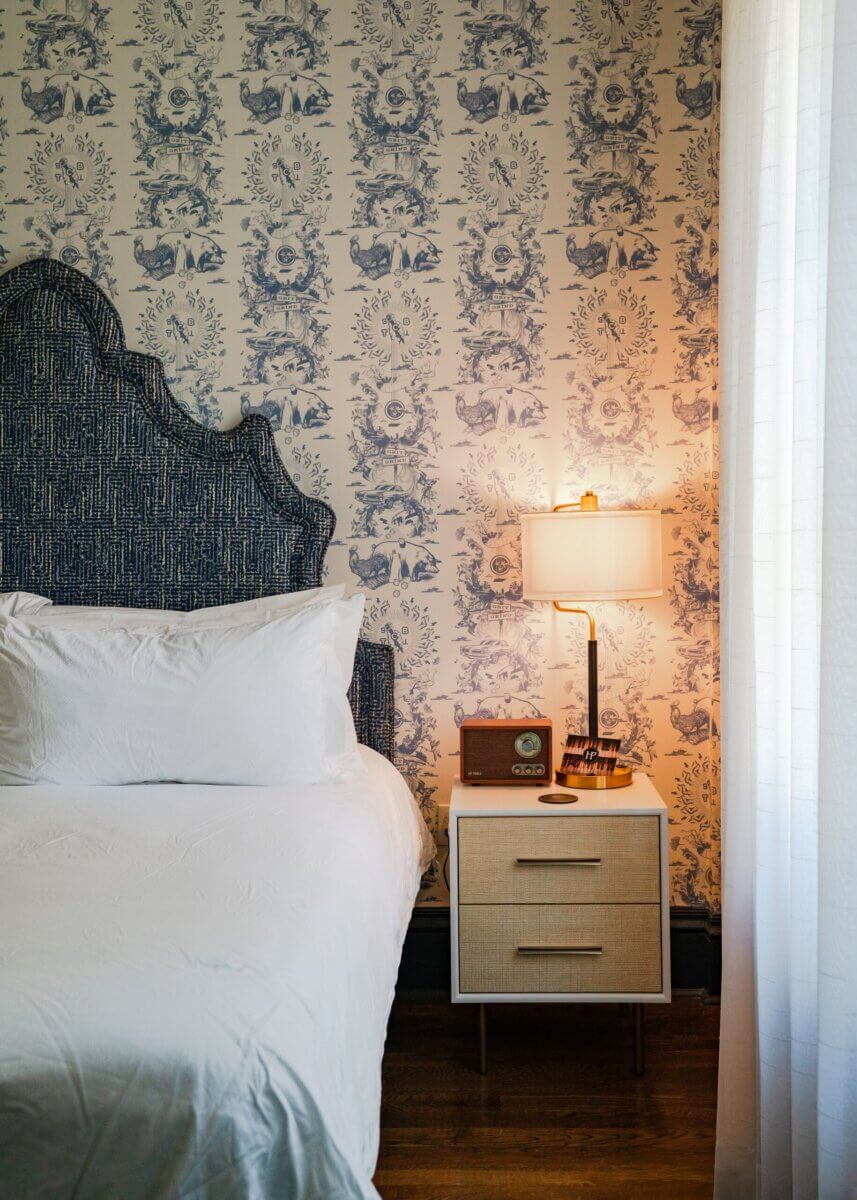
After a year in operation, Hotel Pontotoc is more than just another boutique hotel. Its character comes from a history that can’t be replicated, as well as the decisions made to preserve it.
And perhaps that’s the most compelling thing about its design. The original doors, salvaged objects, old photographs, and architectural details aren’t simply decorative touches. They’re reminders that a building’s past doesn’t have to end when its purpose changes.
Sometimes, the best way to give a place a new life is to let it keep telling its old stories.
**********
For more travel tips and tricks, visit our archives.

Gaye Swan
As a professional writer of over 20 years, Gaye is an avid traveler and enjoys highlighting food, culture, and attractions around the South. While Gaye is passionate about life in Memphis, she grew up in Meridian and is still a Mississippi girl at heart.