
This Memphis Gem Keeps History Alive with Over a MILLION Archived Photos
The Withers Collection in Memphis houses over 1.8 million images captured by Dr. Ernest C. Withers. Spanning decades of history, this incredible archive documents pivotal moments in Civil Rights, music, and sports. Image: Withers Collection
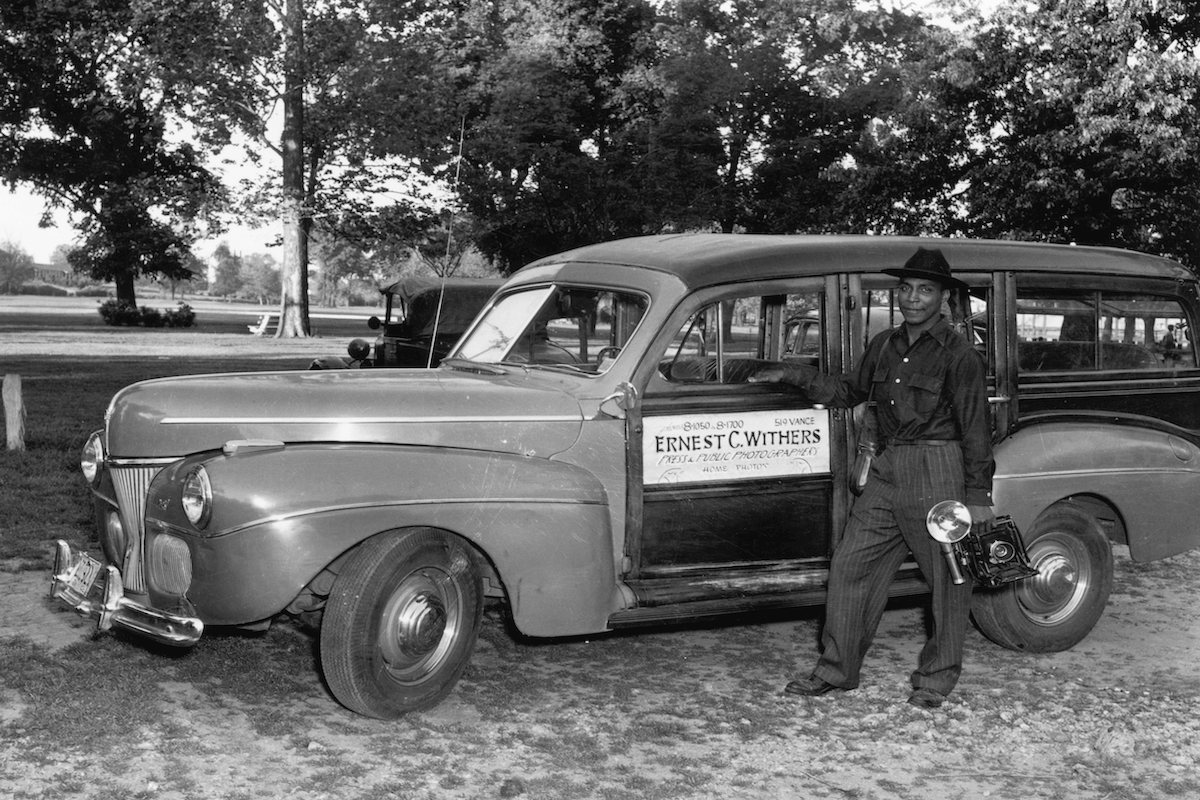
The Withers Collection in Memphis is a testament to the power of photography as both an art form and a historical archive. With over 1.8 million images documenting decades of African American history, the museum educates and inspires audiences through galleries, innovative technologies like hologram tours, and community-centered programs.
We sat down with Rosalind Withers, daughter of Dr. Ernest C. Withers, to learn more about her father’s legacy and what it’s been like to turn his image archive into a museum and gallery on Beale Street.
First, Who is Dr. Ernest Withers?
Born in 1922 in Memphis, Dr. Ernest C. Withers is recognized for his iconic photographs in Memphis and the broader South during the Civil Rights era. His collection features well-known images of musicians during Memphis’s early days of legendary blues, soul, and rock and roll.
The archive includes scenes of B.B. King, Aretha Franklin, and Sam Cooke. Dr. Withers became the official photographer for Stax Records and captured many famous musicians before their rise to fame.

Dr. Withers captured images of Civil Rights leaders such as Dr. Martin Luther King Jr. and participants in Memphis’s 1968 “I AM A MAN” sanitation strike. While traveling, he captured Dr. King riding one of the first desegregated buses in Montgomery, AL, at the end of the famed bus boycott. Dr. Withers also documented the end of the Negro Leagues in baseball, featuring negatives of Jackie Robinson and Ernie Banks.
“It was intriguing as a child, not understanding the full impact of dad’s life and his contribution to what he did every day — what he did 24 hours a day. He carried his camera with him all the time,” says Rosalind. “But for him to have amassed 1.8 million images — it is just unfathomable. It is breathtaking to recognize the value of his body of work and the contribution that he’s made to the accuracy of preserving history.”
Telling History Through Photographs
“In Memphis lies some of the original history and uniqueness of photography,” says Rosalind. “Photography is here to stay because it’s in everybody’s hands. But let’s begin by understanding how we got here and the art of photography. And you can start with our collection.”
Rosalind tells us that what is on display at the museum on Beale Street covers what her father is most noted for, which is his Civil Rights body of work. “We added the music piece because he was the official photographer for Stax for two decades. And then he also covered history being made in the African American culture in sports because the first African American family (the Martin brothers) to have owned a team and a stadium was right here in Memphis.”

In 2024, the Withers Collection partnered with Major League Baseball (MLB) to unearth some of that history. “It’s been a real honor to bring it to life,” says Rosalind. “Major League Baseball did a recalculation of the stats to incorporate the Negro League teams, and when they did the reincorporating, they found that they didn’t have any photographs of some of these negro players, and we had them.”
MLB hosted a game at Rickwood Field in Birmingham on Juneteenth to celebrate Willie Mays. The Withers Collection was a huge contributor to this event, unveiling never-before-seen photographs.
When asked why it is so important to tell history through photographs, Rosalind says, “Photographs are probably, more so back then than today, the most accurate observation of our past because they’re a frozen moment in time. They’re a snapshot of what happened.”
“The beauty of what our photography brings to the table is a series of images, which means we can capture an actual event, frame by frame, click by click.” Rosalind says, “My father’s body of work helps us to see and know what actually happened in those moments in time.”
“It is our responsibility to make sure that this history is properly recorded through what people use every day, and that’s photography. We are the history of photography as well as the history of a culture,” says Rosalind.
Preserving a Legacy
Rosalind’s father named her mother as the trustee of his archive, and she was the successor. “Unfortunately, my mother only lived eight months after my father passed away, so the responsibility came to me a lot faster than I had anticipated — than any of us had anticipated.”
When she walked into her father’s studio, dark room, and body of work, it was overwhelming. “In his own world, it was organized to his level of knowing where things were. But to us, walking into it, it just looked like a mass of stuff everywhere,” Rosalind says. “We’ve had the privilege to work with institutions and very professional experts in archives to help us organize it. We still don’t have it digitized, and the digitalization process is where we are now.”

We asked Rosalind what it is like to experience her father’s work every single day. “It gives me a sense of solidness of foundation. Having the responsibility — being a Black female in this country — I have had every challenge to preserve my father’s body of work, inside my family, and outside of our family, and this challenge comes with scars, fears, and even fights to do what’s right with his body of work.”
Rosalind continues, “The fact that I can experience and share his contribution gives me the strength to continue to do the work. It makes it very comforting to know that when I do see him again, I can tell him with my head erect, ‘Your work really mattered, and it helped in so many ways of people understanding and knowing who they are.'”
Visiting The Withers Collection
Rosalind tells us that the museum brings a wonderful presence of people — most of the time, finding it by accident. “We want people to begin to look for us, so we’re trying to partner with Memphis to help more people become aware that this history exists,” she explains.
One of the gallery highlights is the hologram tour. The Withers Collection worked on this project with Microsoft for two years and unveiled the new feature on October 15, 2024. “We call this Baba Day because it’s the anniversary of my dad’s death,” says Rosalind. “They did a hologram of me welcoming people to the museum, and they did a hologram of my father giving visitors a tour. It took my breath away.”
Rosalind tells us what it was like. “You got to see him, you got to hear him, and you got to experience firsthand what he did and why this was his location. We brought him to the 21st century, giving people a tour by him.”
You can experience this in-depth tour when you visit by asking for the hologram tour.

Talk About It Tuesday
One of the most rewarding aspects of Rosalind’s work is giving visitors a piece of their history that they didn’t know when they stepped through the door. Talk About It Tuesday is a community panel discussion on the last Tuesday of each month with a different theme for each event. “It is something the community looks forward to, and it covers history, community needs, financial literacy, and so many other topics to help strengthen our community,” says Rosalind.
You can support the efforts to digitize the archived images of Dr. Ernest C. Withers by donating to the Withers Collection here. The mission of the museum and gallery is to educate the public and preserve and share 20th-century American photographic history.
Thanks for showing us behind the scenes, Rosalind!
**********
Subscribe to StyleBlueprint for a Life of Style + Substance.

Kate Feinberg
Kate Feinberg is a professional writer based in Nashville. She has more than 14 years of freelance writing experience covering travel, wellness, and lifestyle. A certified meditation teacher, RYT-200 yoga instructor, and integrative nutrition health coach, she brings a strong wellness perspective to her work. Kate is also a marathon runner and the creator of a plant-based food blog, Chef Kate F, where she shares nourishing recipes and mindful living tips. When she’s not writing, you’ll likely find her on the golf course, exploring new destinations, or combining both with golf-focused travel. She enjoys lake life on Percy Priest Lake.