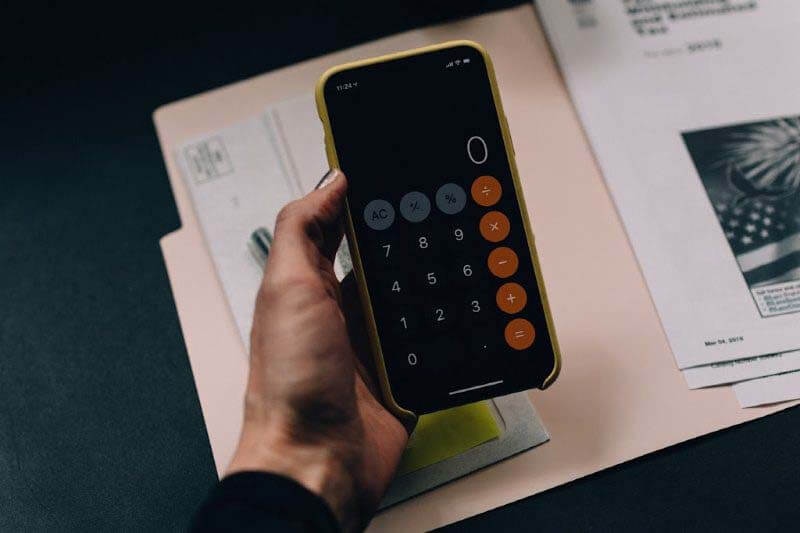
It's difficult to prepare for life's unexpected events — especially emergencies. We talked to Emily Dafferner of Reliant Investment Management to learn the basics of emergency funds.
We all know that life is full of surprises — and they’re not always good ones. Perhaps you have a tire blow out on your car, or your air conditioning goes out on the hottest day of summer. These unplanned events can sneak up with no warning, causing instant financial stress and anxiety. Emergency funds (also known as a reserve fund or cash reserve fund) serve as an insurance policy for these unexpected incidents. But if you aren’t sure when to use them or how to start saving for one, you’re in luck. We spoke with Emily Dafferner, a CERTIFIED FINANCIAL PLANNER™ at Reliant Investment Management, to learn about the importance of these types of funds. Here’s everything you need to know about emergency funds.
PinWe talked to Emily Dafferner, a CERTIFIED FINANCIAL PLANNER™ at Reliant Investment Management, to learn the basics of emergency funds.
We are grateful to all our sponsors:
What is an Emergency Fund?
Similar to how we save money for retirement, an emergency fund is a savings account set aside for life’s unexpected events that individuals cannot cover with their monthly income. Scenarios might include a job loss, an unexpected medical bill or surprise car troubles. Rather than scrambling for funds to cover those events, an emergency fund can take that weight off your shoulders.
The Benefits
One of the most significant advantages of an emergency fund is its ability to minimize debt. Emily tells us that most Americans can’t afford a surprise expense and often pay for it using a credit card. “Having that money set aside helps you pay those surprise expenses without having to run up debt on a credit card or a personal loan,” explains Emily.
Another key benefit of an emergency fund is that it prevents people from digging into a savings account meant for other needs. “Say you’re a young professional, and you’ve got your retirement account and an account where you’re intentionally saving to buy a house or a new car,” says Emily. “By having that emergency fund, you’re able to use that money as compared to having to dip into those savings you purposed for some other reason.”
As for intangible benefits, emergency funds help reduce financial stress. Simply knowing the money is there keeps stress levels down because if an unexpected event takes place, individuals have a financial cushion to fall back on. “Money is one of the leading stressors for individuals, and it’s also one of the leading stressors on marriages. If you have [money] set aside, it helps relieve that stress because you know it’s there when these surprises happen,” Emily tells us.
We are grateful to all our sponsors:
Businesses and Emergency Funds
Not only do emergency funds helps individuals and families, but they’re beneficial for businesses, too. Whether there are changes in tax laws, regulations or the economy, emergency funds for businesses are useful in multiple ways. In cases of economic downturns or recessions, these funds help businesses continue to pay their bills. We can especially see the importance of businesses having these reserve funds in the current pandemic, as many establishments were forced to temporarily close. “As businesses start to open back up, the ones that are really in the best position are the ones that had those reserve accounts, where they had cash on hand to be able to float their bills through the closures so they can open back up confidently,” Emily explains.
PinIn addition to individuals and families planning for life’s unexpected events, it’s beneficial for businesses to have emergency funds, too.
Determining How Much You Should Save
As a general rule of thumb, one-income households (whether a single person or couple) should save six months of ordinary expenses, whereas dual-income households should save three months of expenses. “The reason for the difference is that if the surprise event is job loss and you’re in a two-income household, then typically (this particular unemployment and recessionary period notwithstanding), one can replace that income within three months. Dual-income households also have another income coming in, so you’re not having to use [the emergency fund] for the full amount of your expenses,” Emily says.
It’s also important to note these are minimum recommendations, and people sometimes choose to save more than three or six months of ordinary expenses. “There are definitely folks who have higher emergency funds because that’s what they’re comfortable with — and that’s perfectly fine,” Emily tells us. “It’s whatever amount helps relieve stress.”
How to Build an Emergency Fund
When it comes to building an emergency fund, one of the first steps to take is to find the purpose to do so. Emily recommends first determining the amount of money to put into your account at the beginning of each month — whether it’s $5 or $100. “It’s going to look different for everybody in terms of how quickly you can or cannot do it, but the key is that you have to have the purpose to do it, and you have to set that money aside at the start,” Emily advises. “You’ve got to take it off the top because if you wait to save after you spent all your money, there won’t be anything left to save. If you intentionally save on the front end, then you know what you have available to spend for the rest of the month.”
As for where to keep the money, Emily says people sometimes choose to keep the funds in the same local or national bank where they have their regular checking and savings accounts. However, others may choose to keep the money at a brokerage firm in cash. Regardless of where you choose to keep your funds (as both are acceptable choices), Emily advises individuals to keep them in a place that is accessible but not too accessible: “The key is really just making sure you have that self-discipline to say, ‘Those are my emergency funds. Those are the ones I’m not going to touch unless an unexpected expense arises.’”
**********
For more amazing lifestyle tips — delivered straight to your inbox! — subscribe to our newsletter HERE!
Brianna is StyleBlueprint’s Associate Editor and Sponsored Content Manager. She is an avid fan of iced coffee and spends her free time reading romance novels.
Our unofficial motto at StyleBlueprint is "Be kind. Do good." We encourage this to be the basis for all comments on our articles. Provide feedback that adds to the story. Some controversy or disagreements are part of any good dialogue between friends, but anything that tears down or belittles others is subject to disapproval or removal. Thank you for being a member of the StyleBlueprint community! View our Community Guidelines.