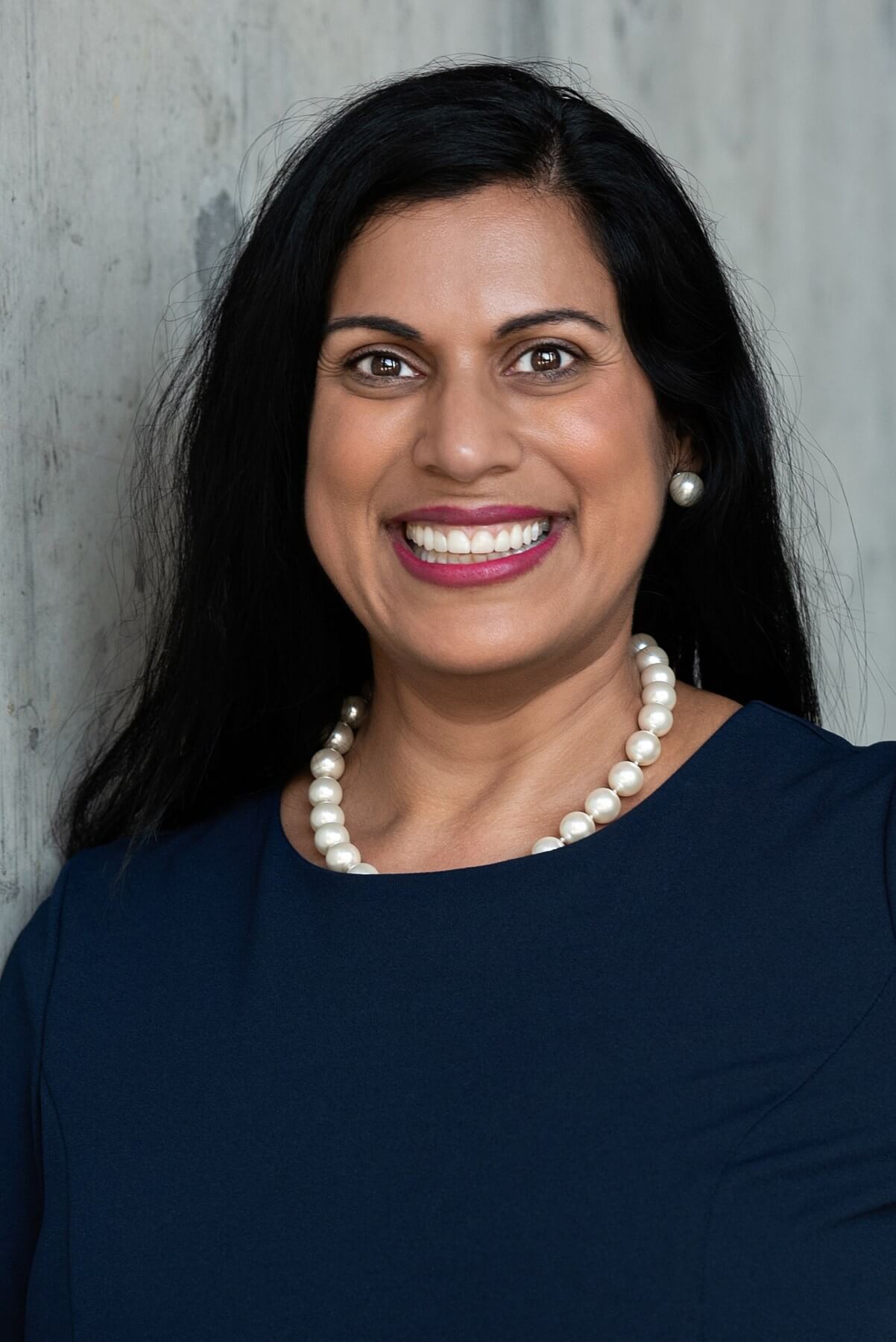
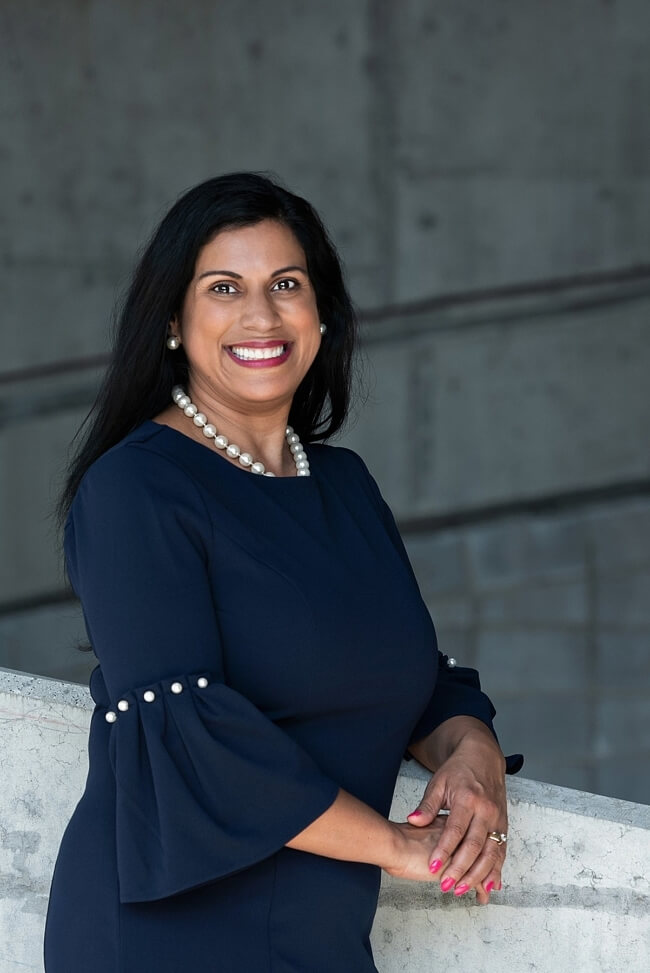
Dr. Stephanie Cooper-Lewter's inspiring story starts with being abandoned at one of Mother Teresa's orphanages. Today, she is actively and graciously making an impact on upward mobility in her city. Meet today's FACE of Charlotte!
Stephanie Cooper-Lewter doesn’t know exactly how old she is. That’s because she was abandoned on the doorstep of an Indian orphanage as an infant. She was ultimately adopted and raised by a single mom in Minnesota. Now 45 and the mother of two, she says there is no doubt her past has shaped her present. In February, she relocated from Columbia, SC to Charlotte, NC after being handpicked to head up Leading on Opportunity, a major initiative in the Queen City aimed at fixing the problem of upward mobility in Charlotte. She says where you were born shouldn’t dictate how far you go in life – and she should know. We’re excited to introduce you to today’s FACE of Charlotte, Stephanie Cooper-Lewter.PinMeet Stephanie Cooper-Lewter, today’s FACE of Charlotte!
We are grateful to all our sponsors:
You had an incredibly unique start to life. What can you tell us about that?
I don’t have any memories, but I know that I was left in a cradle on the doorstep of one of Mother Teresa’s orphanages. I don’t know who left me or why, I just know that by the time I was selected to be adopted, they started figuring out an approximate age. They guessed I was 2 years old.
I was in several different orphanages. I was finally selected for adoption, transferred to the main orphanage and stayed with an Indian foster family for 102 days and then was adopted to the U.S. I was adopted to Minnesota, and my mom was a single parent. She never married by choice.
What is Leading on Opportunity?
It’s a community-based initiative focused on looking at combining systems that are already in place and the community so that we can better serve children and families. It was an outgrowth of the Opportunity Task Force that was looking at making an impact on upward economic mobility. Leading on Opportunity was a way to implement one of the task force recommendations. We are definitely a work in progress.
PinStephanie encourages people to get out into their communities and to engage and interact with people they otherwise wouldn’t.
What do you see as the biggest challenges in Charlotte when it comes to upward mobility?
The biggest challenge is that this is not an overnight fix. It takes decades for communities to be what they are. There are a lot of policies that influence how decisions are made. It’s going to be educating people that we’re on a path to moving forward. This is a long-range conversation. The study that it came from looked at people over a 30-year span. There are so many programs doing amazing work in this space. We’re not creating programs — our role is to connect and bridge and amplify and look for gaps in the system.
What are the biggest factors when it comes to upward mobility?
They identified three social factors – early childcare and education, college and career readiness, child and family stability. Then, the segregation – race or income and social capital – which can impact your network of relationships.
RELATED: Kelly Finley, Founder of Girls Rock: FACES of CharlottePinStephanie left Columbia, SC, and came to Charlotte in order to work for Leading on Opportunity.
What can everyday people in Charlotte do to help make change?
I tell people you can begin to have conversations with people in your neighborhood, but also be intentional about learning about people and places in Charlotte you wouldn’t necessarily interact with. Go new places, find out about non-profits, and see if there are ways you can volunteer. Where you were born should not determine the opportunities you get, but what this report showed is that if you were born poor you were least likely – compared to other places – to move to the top. It just doesn’t seem fair. It’s not the American dream.
You obviously have a very personal connection to this work …
My background is in social work. I worked with families that experienced poverty. Another piece of my story is that I was a young unmarried mom, and I needed assistance to finish school. While I was in college, I needed food stamps and childcare assistance and welfare, and that enabled me to stay the course. I had my daughter the end of my sophomore year of college and that support allowed me to stay on track and in school.
But if you look at my life being in India, that was beyond my control – that happened to me. I’ve always felt like I had a bigger purpose because people gave to me. Someone believed in me as a little baby – that maybe we could find another option for her – and then as a young mom, the same thing. I often tell people that I want to be an example. There was always someone along the way helping me navigate that next step, and I also worked hard. I think sometimes the perception of people in poverty is they should work harder, and sometimes, yes, it can be that, but where they live can also influence opportunities.
Pin“I think sometimes the perception of people in poverty is they should work harder, and sometimes, yes, it can be that, but where they live can also influence opportunities,” Stephanie says.
We are grateful to all our sponsors:
What do you love about living in the South?
Oh my gosh! I love that there are not Minnesota winters. I love the spring and the fall. I love the sense of history that’s here, even though it’s a hard history in some regards. You know when you walk the streets there’s so much history to unpack and understand, and I think the South, and the Southeast, is a reflection of how our nation has evolved. We’re becoming more diverse but need to figure out how to live in a more diverse setting.
What are you most proud of?
My children for sure – that’s an easy one!
What is one regret and how did you learn from it?
I think sometimes if there’s something I would tell my younger self … In my 20s, in those really hard years, I didn’t pause as much as I needed to and pay attention to my inner voice. You’re kind of figuring out who you are and kind of navigating a bigger world and just being strong in who you are and not letting the opinions of others define you. As a single mom at a Christian university, that was hard. I had to walk on campus pregnant, and there was a lot of judgment. I learned people can assume what they want, but they don’t really know me.
PinOf all of her life’s accomplishments, her children are what Stephanie is most proud of.
What makes you laugh?
My children, my family – I just like enjoying the present, which is really hard to do. I need to take a moment and breathe things in.
What is your best piece of advice?
There’s a quote I try to live by — “Only speak words that help souls grow stronger.” I don’t know who said it, but it means whatever you speak and put out into the world, make sure it’s something that builds up those around you.
Aside from faith, family and friends, what three things can you not live without?
I have to have my comfy comforter, the internet, and I have to have photos that have captured important pieces of my life. I have to have the history. It’s important for me to have things that help me feel rooted.
Thank you so much for sharing your mission and your story, Stephanie! And thank you to Piper Warlick Photography for today’s beautiful photos!
**********
For more inspiring FACES of the South, click here!
Our unofficial motto at StyleBlueprint is "Be kind. Do good." We encourage this to be the basis for all comments on our articles. Provide feedback that adds to the story. Some controversy or disagreements are part of any good dialogue between friends, but anything that tears down or belittles others is subject to disapproval or removal. Thank you for being a member of the StyleBlueprint community! View our Community Guidelines.