

A Southern Chef’s Secret to a Cleaner Kitchen in 2026 (It’s Not What You Think)
Chris Melville honed his craft at Birmingham culinary institutions like Highland’s Bar & Grill, Hot & Hot Fish Club, and currently as Executive Chef at Dyron’s Lowcountry. For him, keeping a "clean kitchen" is a way of life. Image: iStock
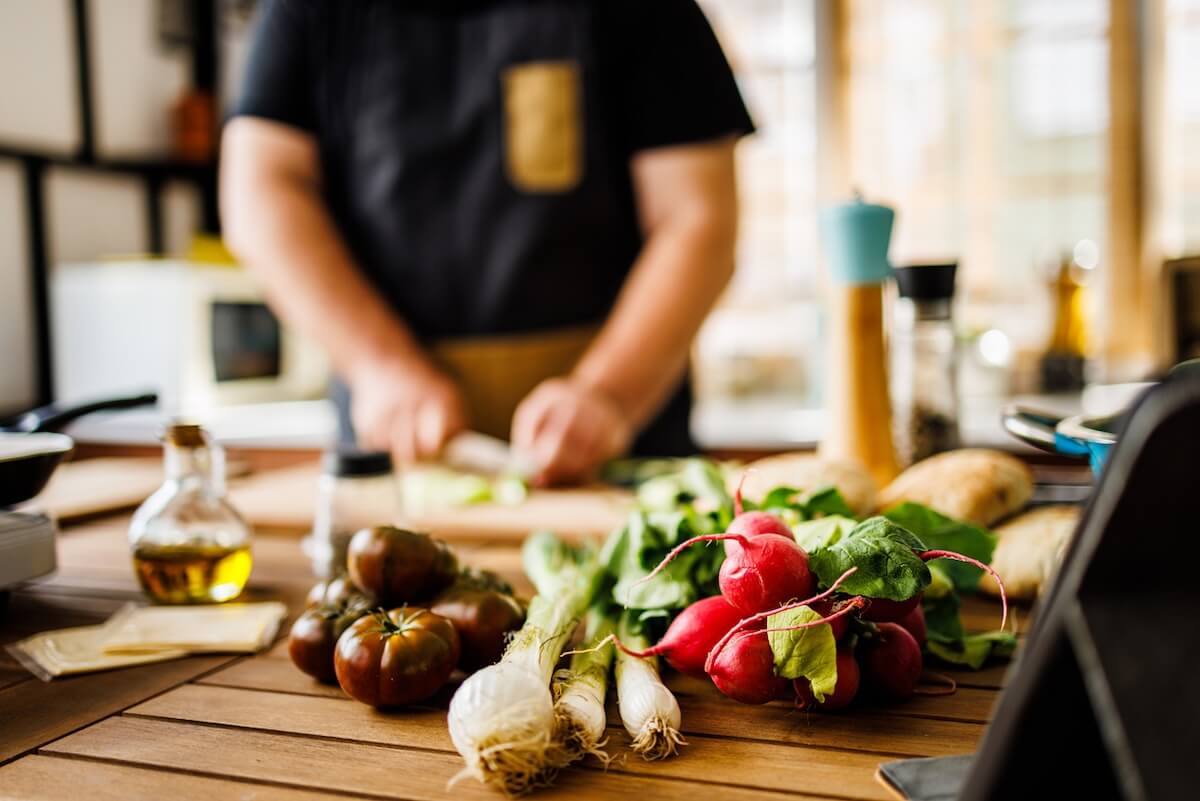
When Executive Chef Chris Melville begins his daily routine at Dyron’s Lowcountry in Birmingham, AL, the best word he can find to describe his approach is “dialogue.” Heavily influenced by classic and revolutionary food writers and cooking philosophies (many of which were introduced to him by the Godfather of Birmingham Fine Dining himself, Frank Stitt), he has long been obsessed with sourcing the best ingredients possible and trusting them to do the talking. And that philosophy doesn’t just shape what lands on the plate; it quietly informs his unexpected approach to what a “clean kitchen” really means.

For Chef Chris, a clean kitchen begins and ends with care and attention to every last detail. “It’s a form of attunement and engagement, like an open prayer,” he tells me when we sit down to talk about his process, and it’s immediately evident that he isn’t just waxing poetic. Dyron’s owner, Dyron Powell, agrees.
“We do what we do and not just because everyone else is doing it,” he says. “Chris literally does it, from the farmer all the way to the plate. You hear a lot of people say that, but you’ll see him in the farmers’ market.”
Chef Chris’s “Clean Kitchen” Philosophy
For Chef Chris, a clean kitchen isn’t just about general tidiness or even clean ingredients, but rather a transcendent cleanliness of spirit, passion, and execution, where the purest, freshest ingredients are thoughtfully and lovingly prepared.

“Clean eating” is a buzzy term these days, but for Chef Chris, it’s foundational, and he leaves no stone unturned in his quest. For example, he was an early adopter of frying with beef tallow instead of seed oils, noting that the taste alone was worth the switch.
“Beef tallow was such a game changer … it doesn’t matter if it’s a beignet, it just tastes better,” he says. He opts for wild-foraged mushrooms over farmed, glyphosate-free flour, and insists on chocolate free of heavy metals. While most of the U.S. market (upwards of 90%!) imports farmed shrimp, Chris sources chemical-free shrimp from Bayou La Batre, Alabama.
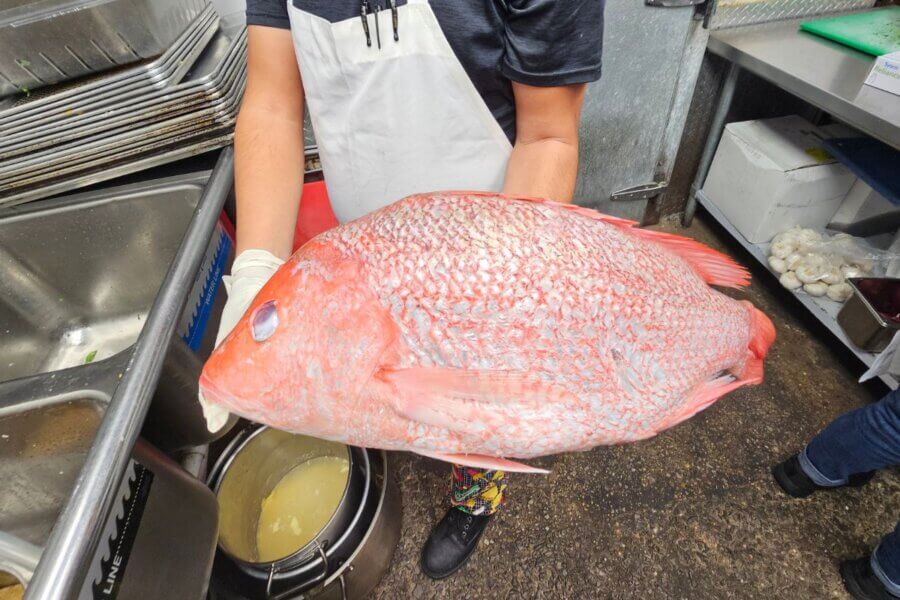
While Chef Chris could lecture on the science behind the health benefits of these ingredients, he returns to focusing on making decisions that offer the best care for his patrons. “It’s not necessarily the poison; it’s really the dose. It’s the sense of ‘a little here, a little there,’” he tells me. “We’re kind of in a sea of environmental toxins, and what can I do to mitigate that? It almost seems daunting, like there’s no way to address it all, so we just do what we can do.”
Chris acknowledges that while he aspires to run a clean-food kitchen, it’s a journey without a clear finish line. “These issues presented themselves over time, and there are always things we could be doing better,” he says, “but we’re working on it. We continue to dial it in.”
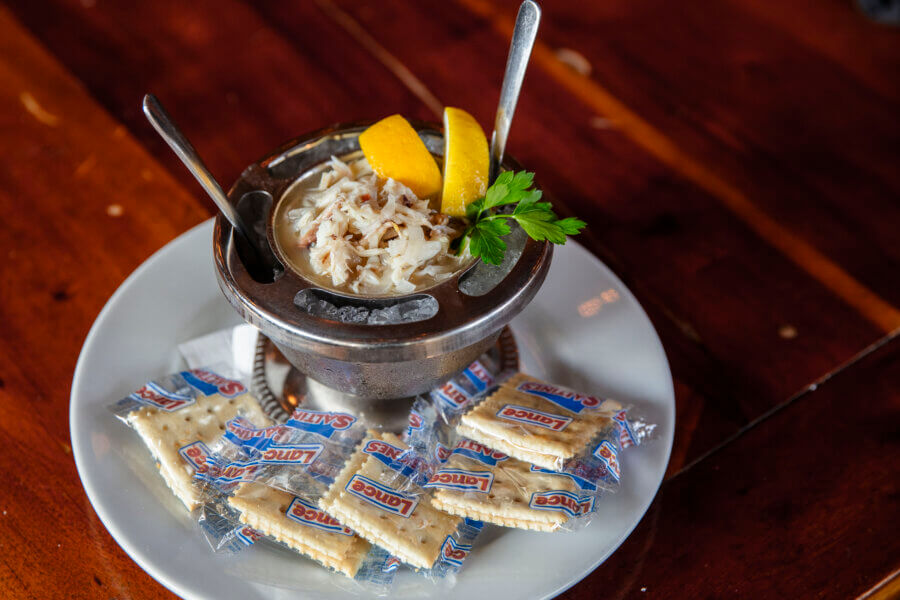
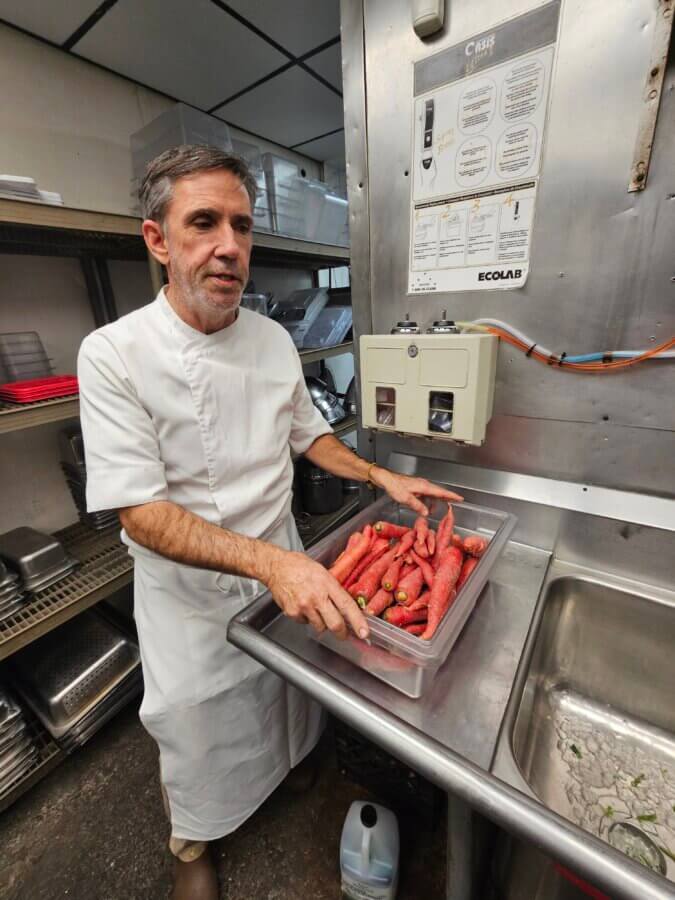
As he walks me through the bustling kitchen and names the small-scale farmers, ranchers, fisheries, and foragers that supply the carrots, mushrooms, red snapper, and chicken being prepared, I start to see the connection between the way Chef Chris runs his commercial kitchen and how I might be a better steward of my own.
He offers me a bite of a sweet red organic Kintoki carrot that he just got in from a family farm, and it’s the single best carrot I’ve ever tasted. Chef Chris is hopeful that the general public’s shift to supporting local ingredients from small farms can be the linchpin to eating healthier and more sustainably as a society.
Chef Chris’s Top Clean Kitchen Tip
When I ask Chef Chris where home cooks should start to achieve a cleaner kitchen, I brace myself for a laundry list of ingredients and cookware to purge. Instead, Chris offers a simple step to shift anyone’s approach to cooking altogether — whether you’re a culinary connoisseur or a total novice.
“Go to your [local] farmers’ market,” he advises, “and get used to the ingredients talking to you in a sense of them helping determine what you want to do.” Chef Chris encourages sourcing inspiration from the ingredients first, rather than getting frustrated by hard-to-find or out-of-season ingredients, just for the sake of following a recipe.
“It’s a lot more fun to get your inspiration from the present and being open-minded to what you see,” he says, assuring me that it only requires learning a few cooking basics to be able to let go of the rules and recipes and let the ingredients lead.
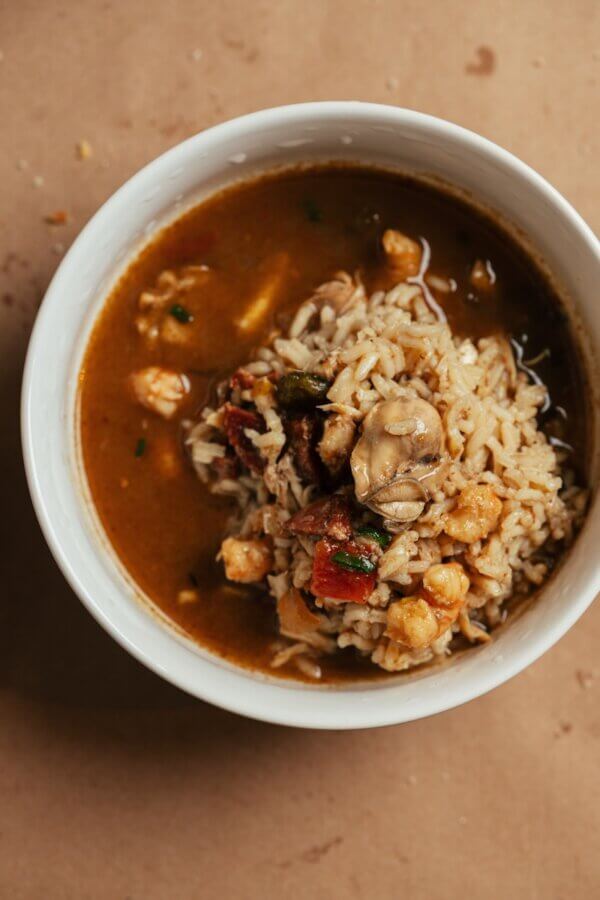
Over time, Chris says the ingredients and preparation will evolve as you discover what improvements yield higher-quality, tastier, healthier results. He gives the example of the chicken stock used in Dyron’s seafood gumbo, which has become a three-day labor of love.
Beyond the perfunctory roasted chicken back and vegetables, he reinforces the stock with extra collagen by adding chicken feet, and then re-simmers it with new chicken bones and feet for a second night.
The next day, he simmers the stock a third time in flounder or snapper bones, resulting in three rich layers of flavor for the gumbo. Finally, he combines the stock with a ‘chocolate’ roux, named for its deep brown hue, made with equal parts butter and duck fat. When I ask about the reason behind the ratio, the answer is simple: “Duck fat is delicious,” Chef Chris says with a grin.
He took a similar approach when he overhauled Dyron’s biscuit recipe, which resulted in higher costs and a more involved process, but yielded a better, healthier biscuit.
He evaluated every step of the recipe (from the nonstick pan spray to the recipe’s call for Crisco and conventional flour) and sought out alternatives. He replaced the pan spray and Crisco with butter, along with pork lard from a small producer that uses pasture-raised, heritage breeds with no growth hormones or antibiotics.
These changes, along with glyphosate-free flour, have been a step in the right direction for Chris, and they highlight the best tip he has for cleaning up your own kitchen cupboards. “It’s a process of reducing things down to the irreducible components, and making sure each is the best single component you can find for everything you do,” he explains.

While Chef Chris concedes that pursuing a cleaner kitchen often comes at a higher price point and necessitates more effort, he sees it as an act of preemptive self-care. “You can either pay the farmer or the pharmacist,” he reasons.
Elevated Hosting Starts with a Cleaner Kitchen
Chef Chris seals the lesson with one final example, tailored perfectly for someone like me: a writer who moonlights as a humble at-home family cook. As he describes the process of making an authentic risotto, carefully attributing the method to Pino Luongo’s A Tuscan in the Kitchen, his words bring his philosophy into focus, revealing clean cooking as something practiced moment by moment.
“You have to start slowly, you have to be patient. You have to be attentive. You’re coaxing the flavors. It’s a continual process, and you have to be engaged with it throughout the whole time,” he says. “And then you can enjoy it; it’s fun.”
Ultimately, Chef Chris says, elevating the dining experience (whether at Dyron’s or around your own dining table) is about pouring all the love and energy you can into offering a “clean” atmosphere to support genuine connection with one another.
“You’re arriving at this place where everyone’s sitting around the table, and the rest of the world has faded away. All of your worries and everything going on in your life are abated for that time. You have a respite,” Chris says. “And if we do our parts, I think we give the best advantage for that.”
This article contains product affiliate links. We may receive a commission if you make a purchase after clicking on one of these links.
**********
For a daily dose of Style + Substance, subscribe to StyleBlueprint!

Katie Leigh Matthews
A Birmingham native, Katie is a lifelong waterfall chaser and is passionate about the outdoors. She also loves connecting with remarkable women in the Birmingham community and bringing their stories to life. Katie has been writing professionally for over six years; you can find more of her work at Moms.com and Islands.com.