Two Birmingham Nurses to Celebrate
For Brooke Routon and Jazzlind Cunningham, their own experiences as Children's of Alabama patients led them to pursue nursing careers and return to the very place that took such great care of them. Read their inspiring stories.
sponsored content
September is Childhood Cancer Awareness Month, and itβs also Sickle Cell Awareness Month. At Childrenβs of Alabama, however, these illnesses are priorities all year long. And for nurses Brooke Routon and Jazzlind Cunningham, treating children with cancer and sickle cell disease isnβt just a job, itβs personal.
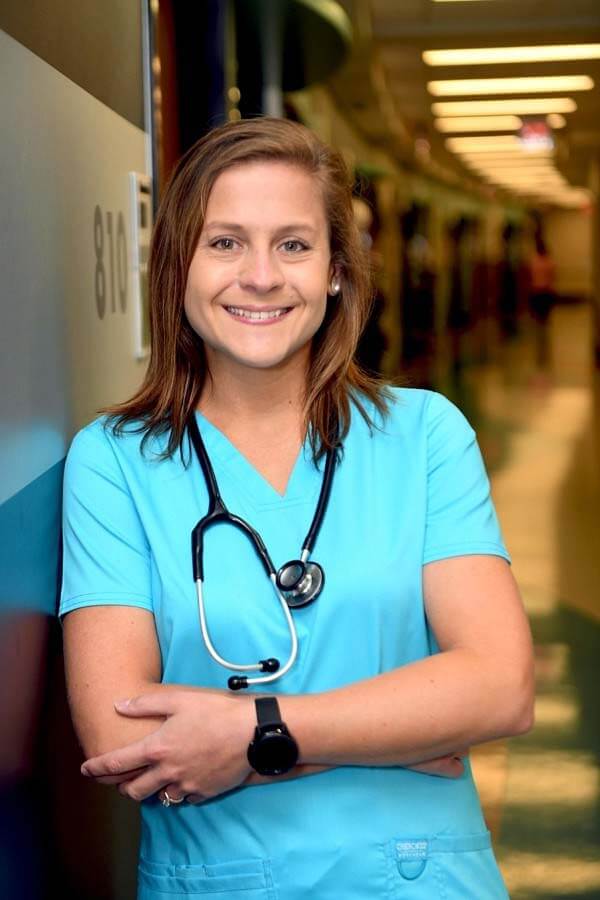
Brooke Routon was 12 years old when she was diagnosed with T-cell lymphoma. Before cancer, she was a cheerleader and played softball.Β βObviously I didnβt get to participate in those things that year,β she says.
Instead, she and her family traveled from Gadsden to Birmingham so Brooke could receive treatment at Childrenβs of Alabama. βI really didnβt bounce back after I was done with treatment,β Brooke says. βWhen I tried to start playing softball again it wasnβt the same.β

Brooke let go of her plans to play softball in college. But because of her experience at Childrenβs, she now had a new dream. βEver since I was treated at Childrenβs, I was set on being a nurse and working with kids with cancer,β she says. βThe nurses who took care of me were great. They were like our family, and they still are like our family.β
Today, Brooke is a nurse at Childrenβs of Alabama in the hospitalβs hematology and oncology unit. βChildhood cancer is dark and scary, and for someone to walk in the room and make you feel better about your situation, itβs just inspiring,β she says. βAll of the nurses that I work with now β thatβs just what they are and how they do their job.β
***
Jazzlind Cunningham says working as a registered nurse in the hematology and oncology unit at Childrenβs of Alabama is her dream job. βI prayed for this job,β she says. And she believes she does her job well, in part, because of her lifelong battle with sickle cell disease.
Sickle cell disease is an inherited red blood cell disorder in which the red blood cells become hard and sticky and look like a C-shaped farm tool called a βsickle.β The sickle cells die early, causing a constant shortage of red blood cells, which are responsible for carrying oxygen to the body. Sickle cells can also get stuck in blood vessels and clog blood flow, causing pain and other serious problems such as infection, acute chest syndrome, and stroke.
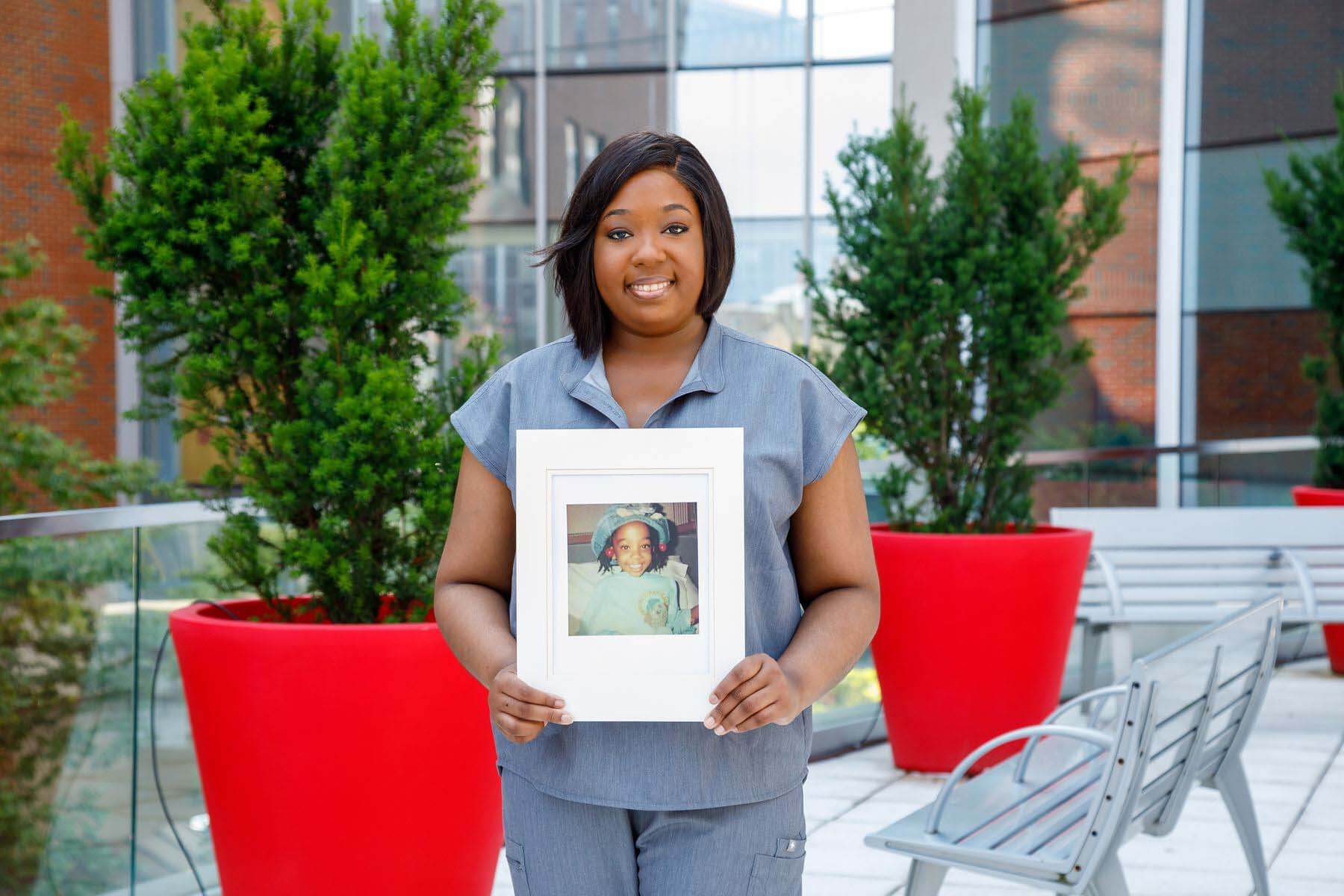
Jazzlind grew up in Montgomery but often traveled to Birmingham to be treated at Childrenβs of Alabama.Β βI would watch my nurses; I would watch everything they would do,β she says. βI knew I wanted to be a nurse. I wanted to help people like me.β
Whether sheβs working with sickle cell patients or children fighting cancer, Jazzlind believes her experience with sickle cell helps her give top-notch care. βI can tell them I understand what youβre going through and 100 percent mean it,β she says.
She knows what itβs like to have your childhood interrupted by an illness. Because of sickle cell disease, Jazzlind couldnβt play sports. She missed her junior prom and her senior trip. If a patient is scared or embarrassed about having a port (a device implanted under the skin that healthcare professionals use to draw blood and give medicine), she can show her patient she has a port of her own.
Jazzlind admits that her job can be tough. βWe are with them on the worst day of their lives,β she says of her patients and their families. βAnd you get so attached to these kids.β
Itβs hard not to worry about patients on days off, and losing a patient, of course, is heartbreaking. Nonetheless, Jazzlind looks forward to going to work every day.Β βI go to work to a job that I enjoy,β she says. βAnd I know that Iβm making a difference.β
If you would like to support the work of Childrenβs of Alabama in honor of Childhood Cancer Awareness Month or Sickle Cell Awareness Month, click here to make an online donation.Β
This article is sponsored by Childrenβs of Alabama. All photography provided by Childrenβs of Alabama.
Javacia Harris Bowser
Javacia Harris Bowser is a Birmingham-based freelance writer and the founder of See Jane Write, an online community and coaching service for women who write. With over 20 years of journalism experience, Javacia has received awards from the National Federation of Press Women, Alabama Media Professionals, Alabama Press Association, and the Alabama State Council on the Arts. When sheβs not writing, sheβs usually practicing Pilates, getting her 10K steps a day, or watching crime shows. Follow Javacia on Instagram @seejavaciawrite.