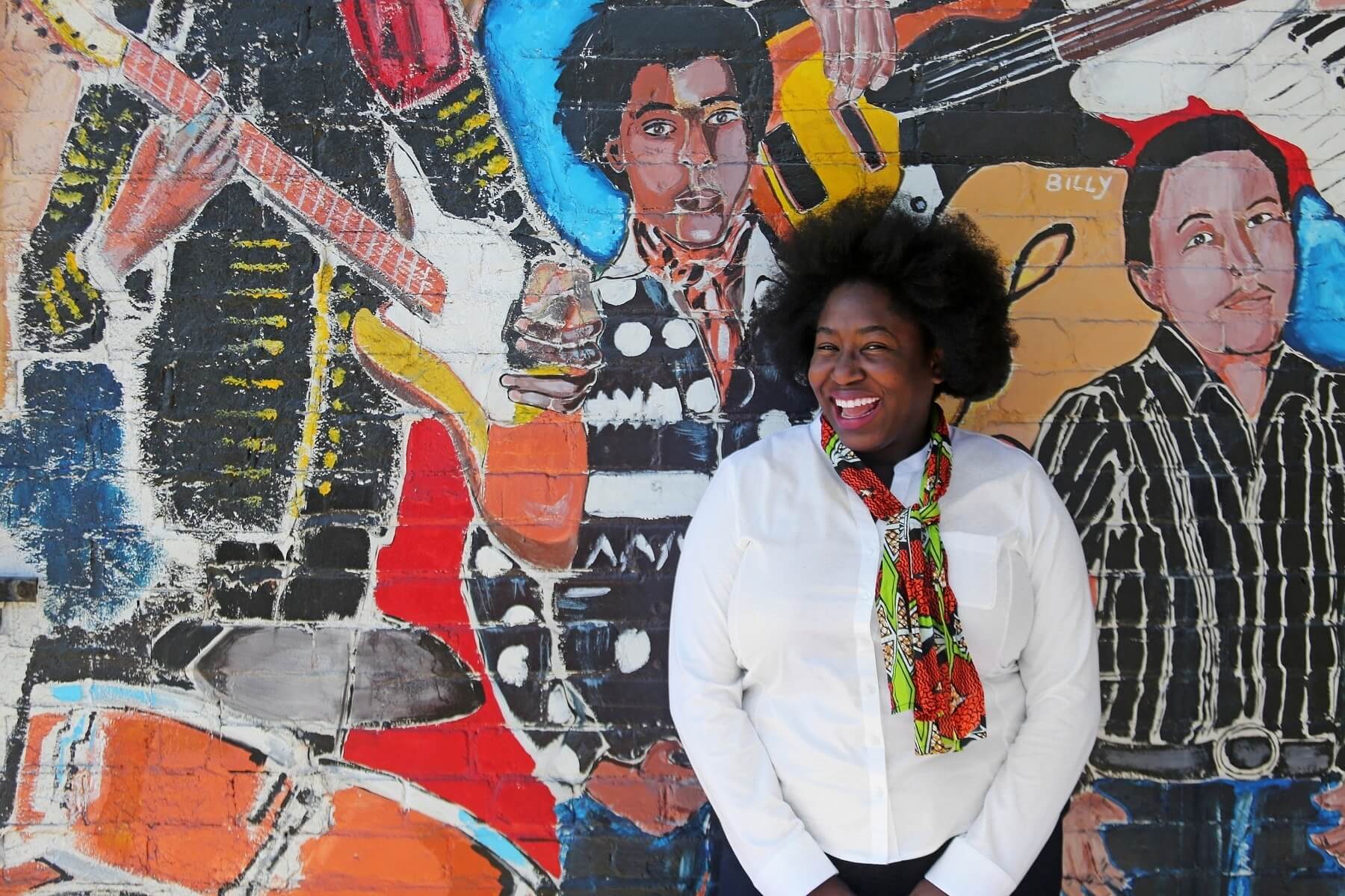
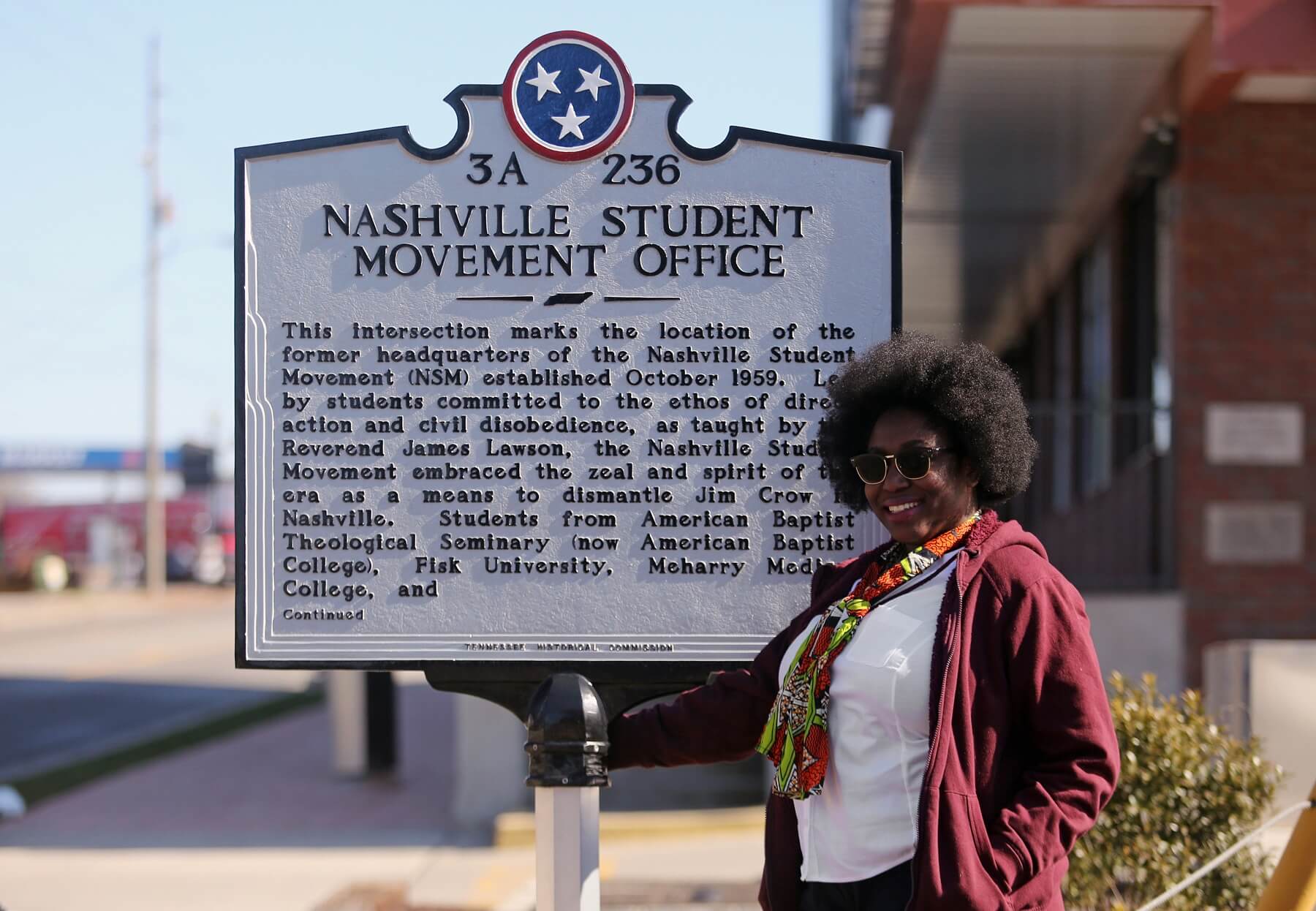
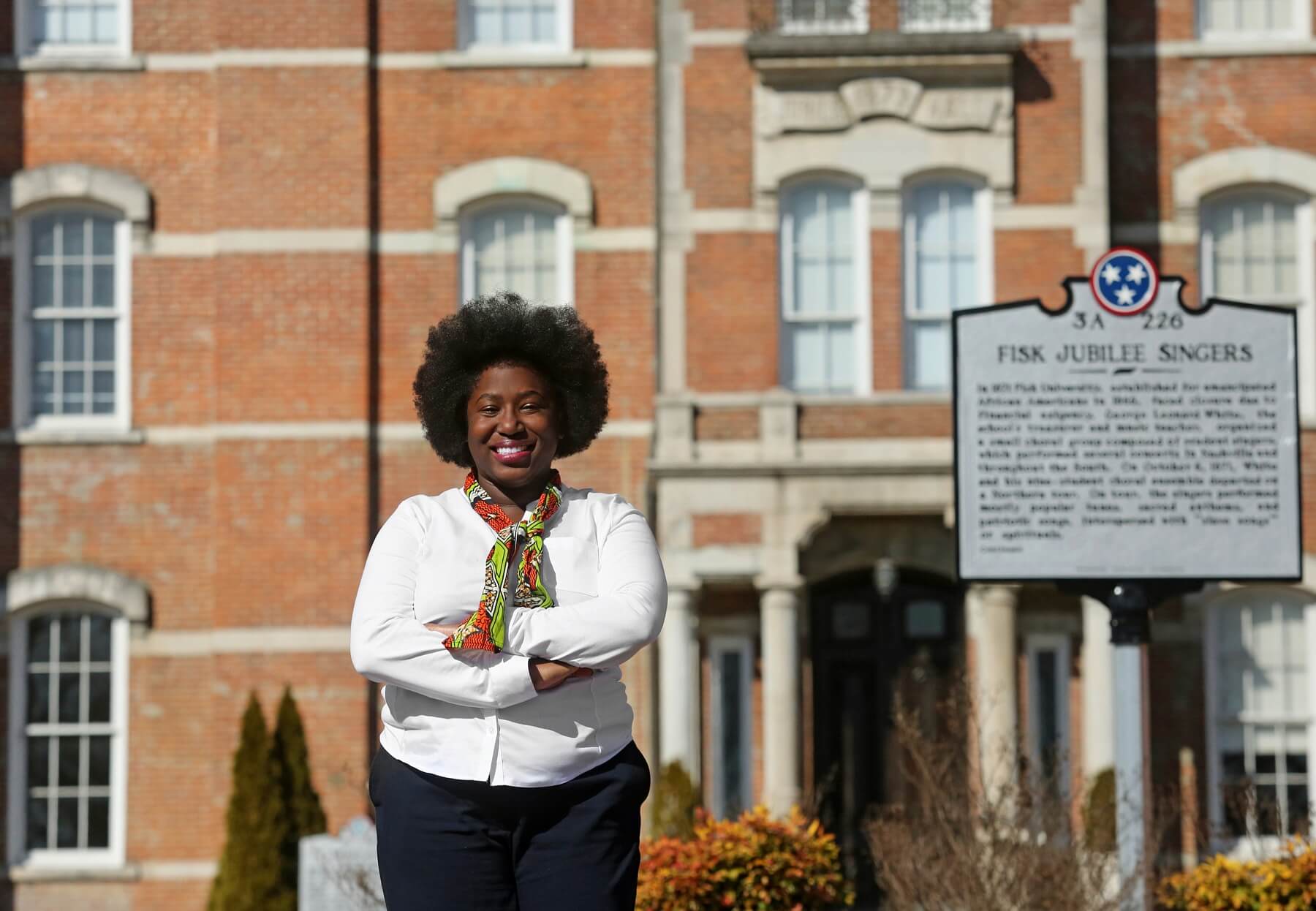
Chakita Patterson tells the stories that no one else has, and her passion for revealing Nashville’s real black history is what drives her five-star business. February is Black History Month, and appropriately, there’s perhaps no greater person to feature as our newest FACE of Nashville than Chakita, who is the founder of United Street Tours. She spends her days sharing stories from Nashville’s own black history in an effort to bring those stories — and their stars — to life. Indeed, we all have a basic understanding of black history (keyword: basic) as it’s taught in elementary school, but Chakita has honed her storytelling skills and done her history homework, and she’s sharing the stories that didn’t make it onto the pages of school textbooks. Born and raised in Memphis, this first-generation college graduate now calls Nashville home. Find out why she’s so committed to telling the stories that are otherwise untold, what she thinks is the solution to racial injustice and disparity, and then sign up for a United Street Tour experience. (You won’t be sorry!) Meet the endearing and delightful Chakita Patterson, our newest FACE of Nashville!PinChakita Patterson is the founder of United Street Tours, a Nashville walking tour company that showcases the lesser-known stories of Nashville’s black history.
We are grateful to all our sponsors:
You’re a former educator who now owns a walking tour company. How did that transpire?
I was working in the charter school system as a dean, and I wanted to make the programming more student-led. I was asking students before Black History Month, “What do you want to do? What do you want the theme to be?” In my mind, those were simple questions, but the students didn’t know much about Nashville’s African American history or black history aside from Martin Luther King, Jr. I realized that students haven’t been exposed to a wide variety of black history stories. I went home and complained to my fiancé for several months. Then one day he said, “Chakita, I love you, but I can’t take it anymore. You have the power to do something about this.” That is how United Street Tours came about.
How did you land on walking tours?
We love to travel, and any time we travel, we take walking tours, but the walking tours that we took had little to no black history mentioned. If black history was mentioned, there was only one black fact. We started with the idea of bus tours, but those require a lot of money to get started. So then we wondered What is the minimal thing we can do to get this out there? And landed on walking tours. We had other ideas after that, but I always came back to the walking tours idea. We said let’s build it out and see where it leads.
In terms of building it out, where did you begin?
I spent weeks on research! I reached out to some local history professors and talked to them about history, the narrative and their perspectives. I put the tour together and presented it to them and my friends. The response was, “That was awful!” They hated it! They said, “You’re telling us all facts. We don’t want to hear facts. We want to hear stories.”
You have to thank God for great friends and people who will tell you the truth! I went back to the drawing board and completely changed everything. Storytelling is a skill, and I had to learn that skill. Once I had it all together, it was beautiful. We have had nothing but five-star reviews. I have to attribute that to the moment when people said, “Chakita this isn’t great. This is bad.” If it wasn’t for that moment, it wouldn’t have pushed me to do better.
How many tours do you offer?
We have the Civil Rights Movement Tour, the Tour of African American Culture and the Nashville Black Wall Street Story. A staff member from the Black History Museum in Franklin reached out to have us put together a tour for them, and that will hopefully be launching in August.
PinChakita offers three different tours: the Civil Rights Movement Tour, the Tour of African American Culture and the Nashville Black Wall Street Story, and she’s launching a tour in Franklin in August.
What can someone expect from a tour with United Street Tours?
All of our public tours are 90 minutes, and we do customized tours as well. The Tour of African American Culture takes you on a journey through the African American culture in Nashville in 1779, when the first settlers came. When they came they brought slaves with them. One of those slaves was Robert — he was James Robertson’s slave. Robert and James Robertson were the best of friends according to the history books, but the truth was that Robert was James Robertson’s bodyguard. It’s likely that James Robertson told him, “We’re in enemy territory. Native Americans can attack at any time, and your job is to protect me.”
Another person we point out on the tour is Robert Renfro, aka “Black Bob.” He has a commemorative stone in Public Square. Black Bob was a quasi-independent slave — that’s a slave who was allowed to live and work off of the plantation. There were a lot of quasi-independent slaves in Nashville. Black Bob was well-loved by the community. He owned a tavern called Black Bob’s Tavern, where he entertained some of the most prominent citizens in Nashville. He couldn’t read or write, but he could sue people, and he did! He sued someone for breach of contract, he sued for assault — both white men. And he won a lot of his cases.
How do your tours differ from what children learn in school?
It’s how we word things and how history is told. For example, in school, black history starts with slavery, and it’s the narrative that black people came to America as slaves, but that’s not true. Africans came over and were made slaves. Then the Civil War happened, and black people were freed, Civil Rights happened, and we’re all equal. In the process of people gaining equality, leaders popped up, and one of them was Martin Luther King, Jr. That’s what we’re taught, but no one learns the stories in between — about the entrepreneurs, the quasi slaves and such. When we learn those little things in between, we close that information gap, and it makes you more familiar … it makes things less awkward to have cross-cultural conversations.
Where do you find those “in between stories”?
The Civil Rights Room at the downtown library was my very first office. There are timelines, books, folders — all of Nashville’s history all in one area. I spent hours and hours in there researching and studying and gaining information and writing things down. And when I had gained all the facts and figures, then it was time for outreach — to the library staff and history professors, asking them to tell me more about the stories, getting feedback based on their own upbringing and their professions. I also bring a lot of knowledge from working in education.
PinChakita honed her storytelling skills by watching storytellling videos on YouTube, reading blogs on how to structure creative stories and “a whole lot of feedback!”
When did you take the leap and leave your education career to make United Street Tours your full-time job?
My fiancé said, “I believe in this, and I believe in you. Your purpose is to educate a nation, and you can’t do that in one school.” So we decided to try it for six months, and if United Street Tours could replace my salary, then we’d keep going. It has been the biggest blessing — emotionally, socially, financially. It has been well worth stepping out in faith to see where it takes us.
What has been the most rewarding experience since you began United Street Tours one year ago?
After every tour, there is someone on the tour — sometimes multiple people — who cry. At first I felt bad, like people needed to leave happy. But then I realized after conversations with my guests that they’re happy tears — happiness in that people are searching for this information, and in our guts we know that something is missing. We know there’s an information gap — something is missing from the history we’ve been taught or told. And to finally get those answers and be able to access that information in a real and tangible way, it’s very emotional — no matter your age or your background. They are happy that this company is here to give them that. I don’t go into it with the intention of making guests cry, but when they do, I know it’s made an impact.
What do you think is the key to ending racial injustice and disparity?
Conversations. It’s very easy to be racist or hateful toward someone you’ve never had a conversation with. If you have a conversation with someone, they become a human being. The overall goal and purpose of United Street Tours is to close this information gap that prevents us from thinking inclusively and interacting with people from diverse backgrounds.
What is the number one thing you wish non-black people knew or understood about black history?
The one thing I want people to know about black history is that everyone wants the same thing. At the end of the day, our values are the same. Everyone wants to provide for their family, and everyone wants to be happy and at peace.
PinSpend an afternoon on a walking tour with Chakita Patterson, and you’ll leave with not only a new understanding of Nashville’s black history, but you’ll also have a new friend.
What’s the best piece of advice you’ve been given, and from whom?
My grandfather provided for my entire family before he passed away. When I was leaving to go to college, he pulled me into his room and said, “America is a melting pot. People come here from all over for opportunities. Although America is a melting pot, that does not include black people. There are going to be a lot of opportunities you’ll be left out of, and you can’t let that deter you. You have got to keep on keeping on.”
I have experienced racism and discrimination, and I have had to keep on keeping on. In that little snippet, that piece of advice, I was able to acknowledge the obstacles I’m going to face because I’m black and because I’m a woman, but despite that, I can still be successful and I can still keep on keeping on.
We are grateful to all our sponsors:
Aside from faith, family and friends, what are three things you can’t live without?
Community — especially the community where I was born and the African American community. A lot of what I do with the tours, I pull strength and knowledge and love and energy from the African American community.
That’s it — I can’t think of anything else if I can’t say family.
Thank you, Chakita, for your dedication to making Nashville an inclusive community. To learn more about United Street Tours — or to sign up to take one — visit unitedstreettours.com. Thank you, also, to Leila Grossman of Grannis Photography for the beautiful photos of Chakita.
**********
Our newest FACE of TriStar is a heart patient who is thriving thanks to the careful care she received at TriStar Centennial Medical Center. Read her success story, find out the heart health pointers and symptoms you should know and more — click HERE.Pin
Ashley is a StyleBlueprint contributor who was born and raised in the South. She loves hiking, travel, photography, and spending time with family and friends.
Our unofficial motto at StyleBlueprint is "Be kind. Do good." We encourage this to be the basis for all comments on our articles. Provide feedback that adds to the story. Some controversy or disagreements are part of any good dialogue between friends, but anything that tears down or belittles others is subject to disapproval or removal. Thank you for being a member of the StyleBlueprint community! View our Community Guidelines.