Native to North America, the American chestnut tree was not only favored for its nut harvest and easily worked, rot-resistant wood, but also for its coarse texture and beautiful golden and honey brown hues. It is the latter that has made the tree popular in design. A now-extinct tree hardwood, the America chestnut fell victim to chestnut blight (a fungal disease), making the material more treasured than ever. When Jamie Pfeffer, of Pfeffer Torode Architecture, purchased a piece of land in Summertown, TN, he made sure to value the farm’s cabin for its American chestnut construction. “The key starting point for the project was the existing log cabin with American chestnut logs,” Jamie says. “The question was how to use the 1880s log framing while keeping it as something special and sacred. We kept all of the logs and layout intact, and we accented the existing historic construction by bringing in life and volume.”
Pin“It is a charming jewel box in the middle of a spectacular landscape,” Jamie says of this Tennessee cabin.
The logs remain the central focus of structure and design, but the efficiency of space in the 1,650-square-foot cabin was what needed to be reimagined. The footprint of the structure was unchanged, but by gutting the interior, Jamie allowed the two bedrooms (each with an ensuite bathroom), a bunk room (with bathroom), kitchen and common living space to comfortably fit groups of 8 to 10 — the usual crowd size at the farm.
Situated on the Buffalo River and a half mile off the Natchez Trace, Shenandoah Farms is a place everyone is eager to experience for themselves. “It is not occupied every day,”Jamie says, “but when it is occupied, it is piled in with a lot of guests. Because it is a group-driven space, we wanted to make it user-friendly.”
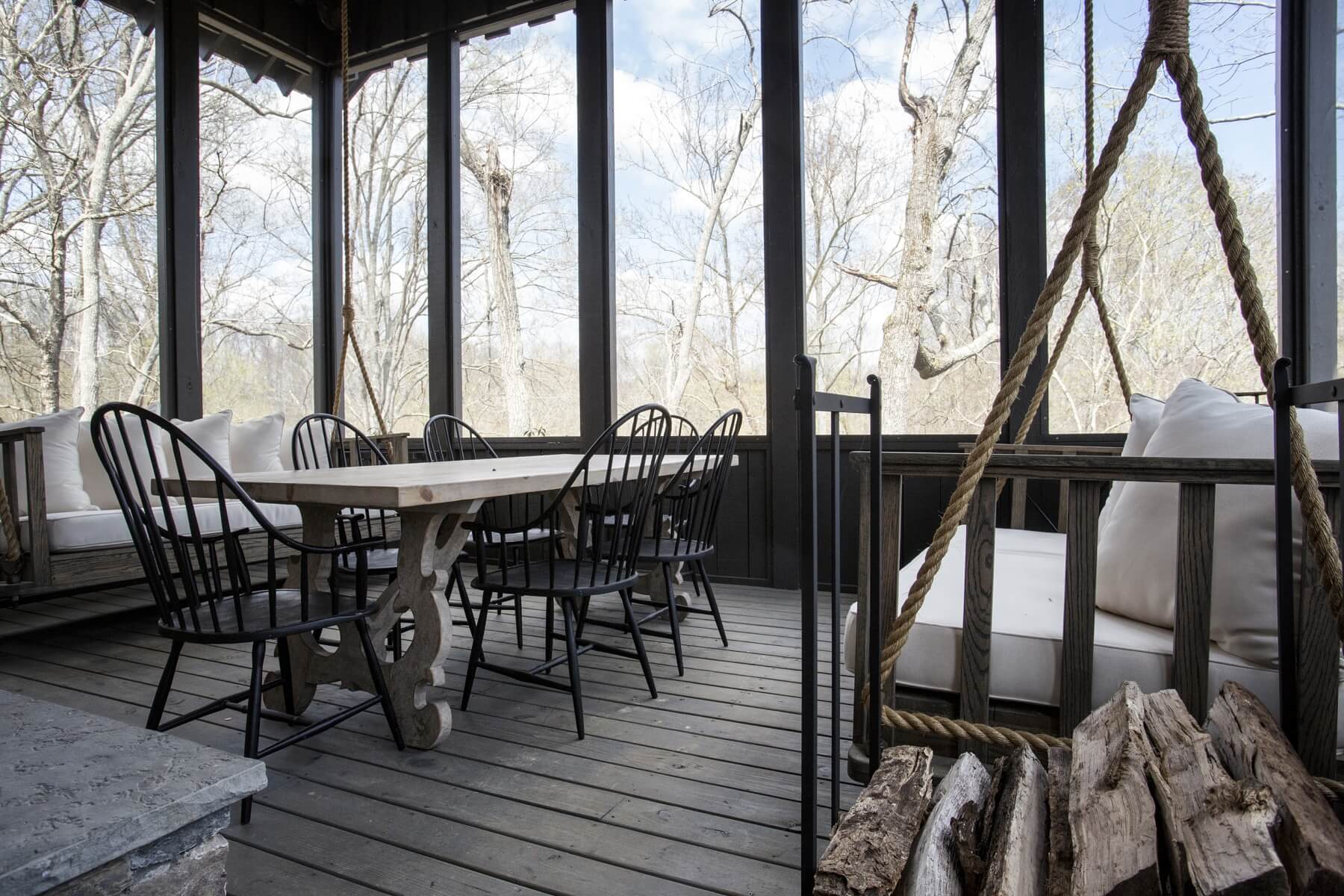
The main gathering spaces in the home are the kitchen and the connected screened porch. Not willing to give up square footage in the kitchen, Jamie created a flow that enables movement and conversation to carry from the eight-seat kitchen island to the indoor living space and outside to the screened porch, which overlooks the Buffalo River.
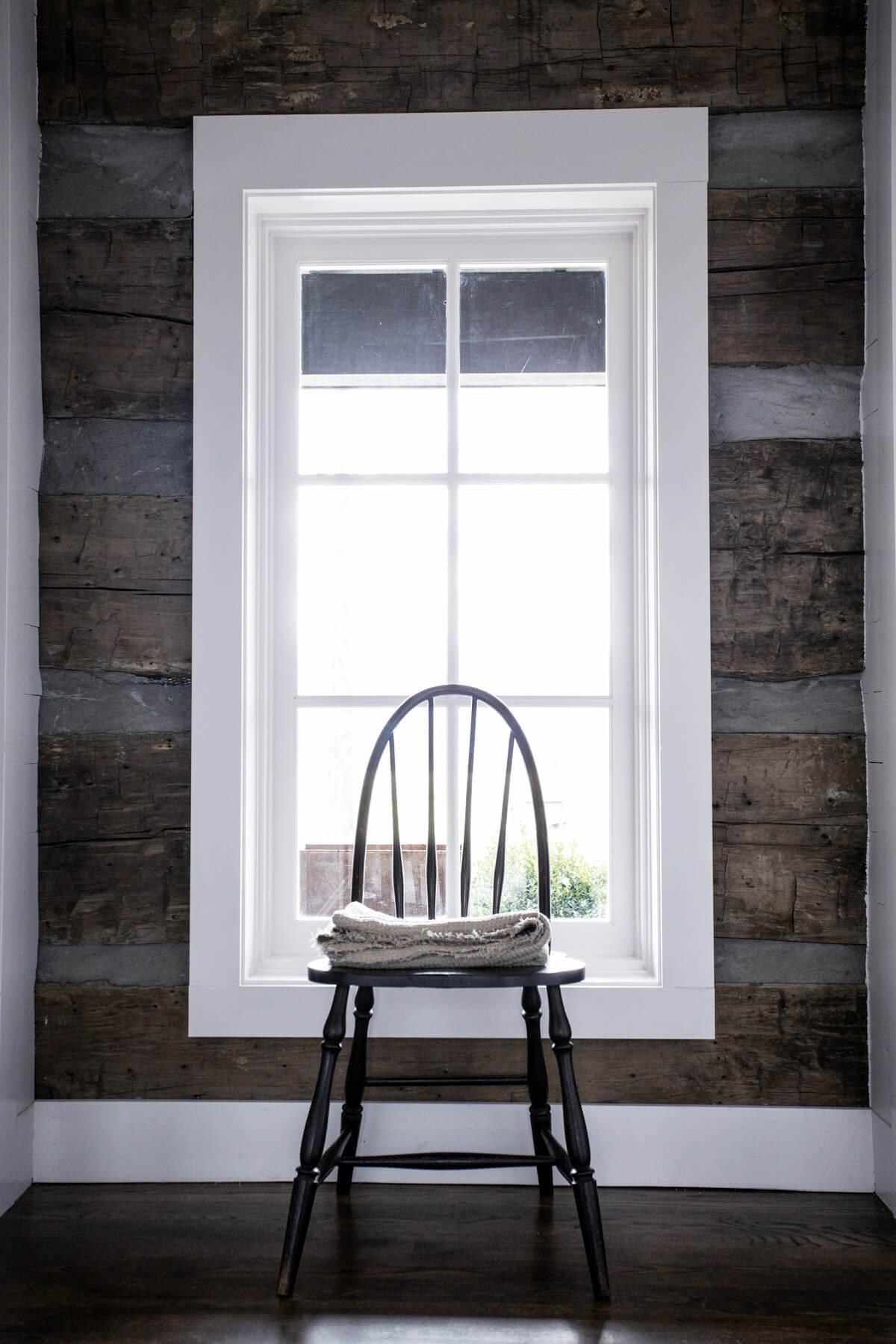
PinThe back screened porch overlooks the Buffalo River.PinThe sets of double doors lead into the kitchen and frame the fireplace.PinThroughout the home, you can see the historic American chestnut wood. In the kitchen, you will also find a vintage flag. “My father has always had a big passion for flags,” Jamie tells us. “I incorporated a flag for his benefit and out of respect for him. This flag has the number of stars from the year he was born.”
We are grateful to all our sponsors:
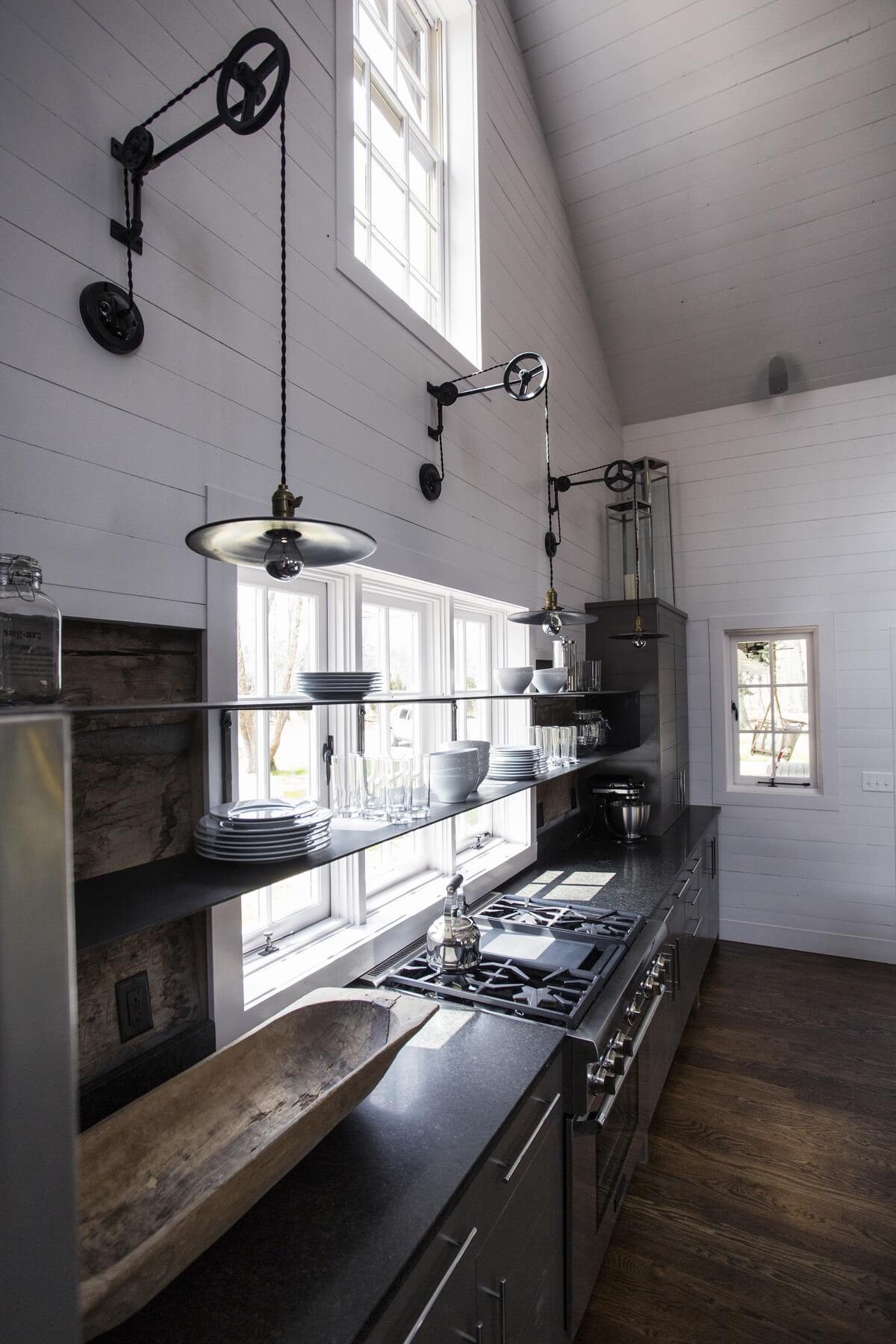
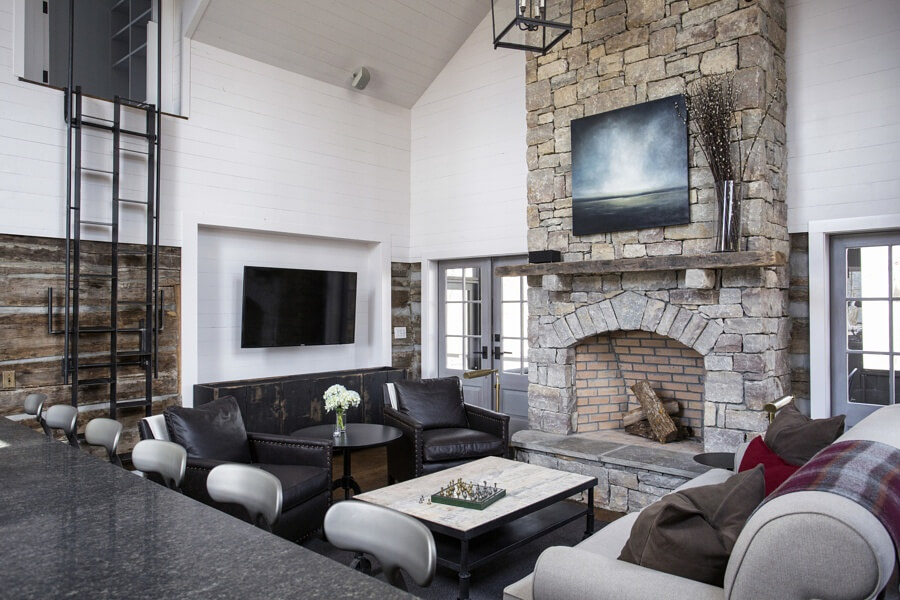
PinThe iron work and modernity of the kitchen juxtapose the white planking and original American chestnut.PinThe ships ladder folds out from the wall to allow access to the bunk room. The living space centers around the inviting hearth.
The cabin itself was in a heavy state of disrepair. It had been reassembled over the years and sat unoccupied for some time. In order to restore the structure to its former glory and retrofit the space for intimate, large group gatherings, a complete gut was necessary — with the exception of the existing log footprint, which Jamie says was the cabin’s “sacred element to capture.” Teaming up with skilled craftsmen made the aesthetic and functionality of the renovation possible.
“We let the historical things be historical, and the new things be new,” Jamie says of the studied combination of historical and industrial styles. “It wasn’t about high contrast; it was allowing each thing to be authentic in its own right. We like to think about all things with a matter of respect — respect for the materials and process. The steel shelves in the kitchen were handmade; the planking doesn’t compete with the American chestnut but is a material designed to last with tone and texture and great characteristics underneath it. We put these pieces and parts together in a way that lets you see and understand the past and present together while giving each a clear voice.
“Great craftsmen did outstanding work in the space,” Jamie continues. “For example, the ships ladder in the living space … Johnny Woolsey created this. It really is a work of art. The ladder allows the kids to get up to the bunk room. I couldn’t dedicate the square footage it would take to build stairs. The ships ladder folds out from against the wall and is easy for the kids to operate. The iron work is amazing — the details and the unique craft he applied to it.”
PinAt the top of the ships ladder, you will find the five-bed bunk room.PinJamie added additional space by building out the bunk room, which sleeps up to five and offers views that rival those of the rest of the house.PinEach window overlooks the expanse of the farm.
We are grateful to all our sponsors:
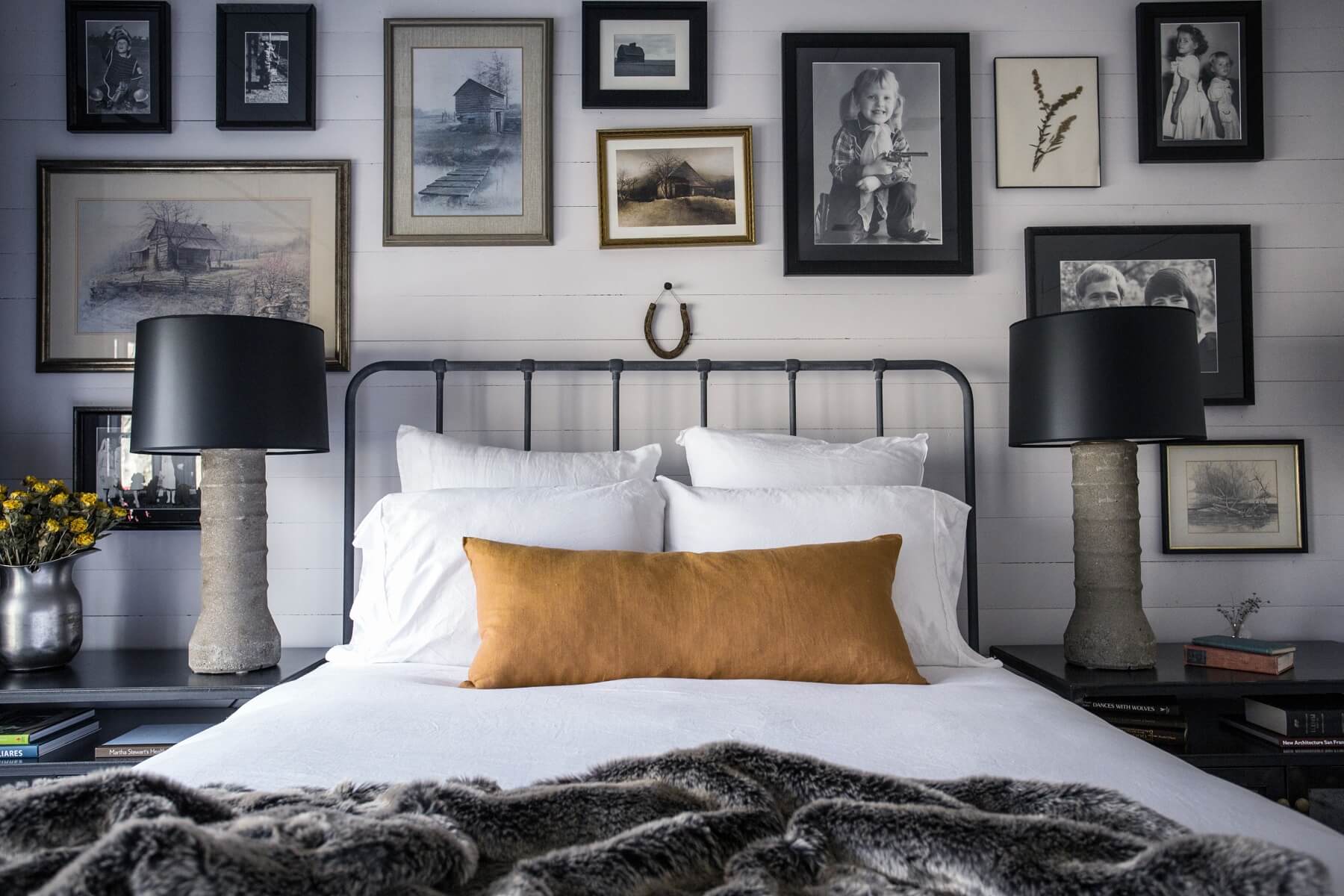
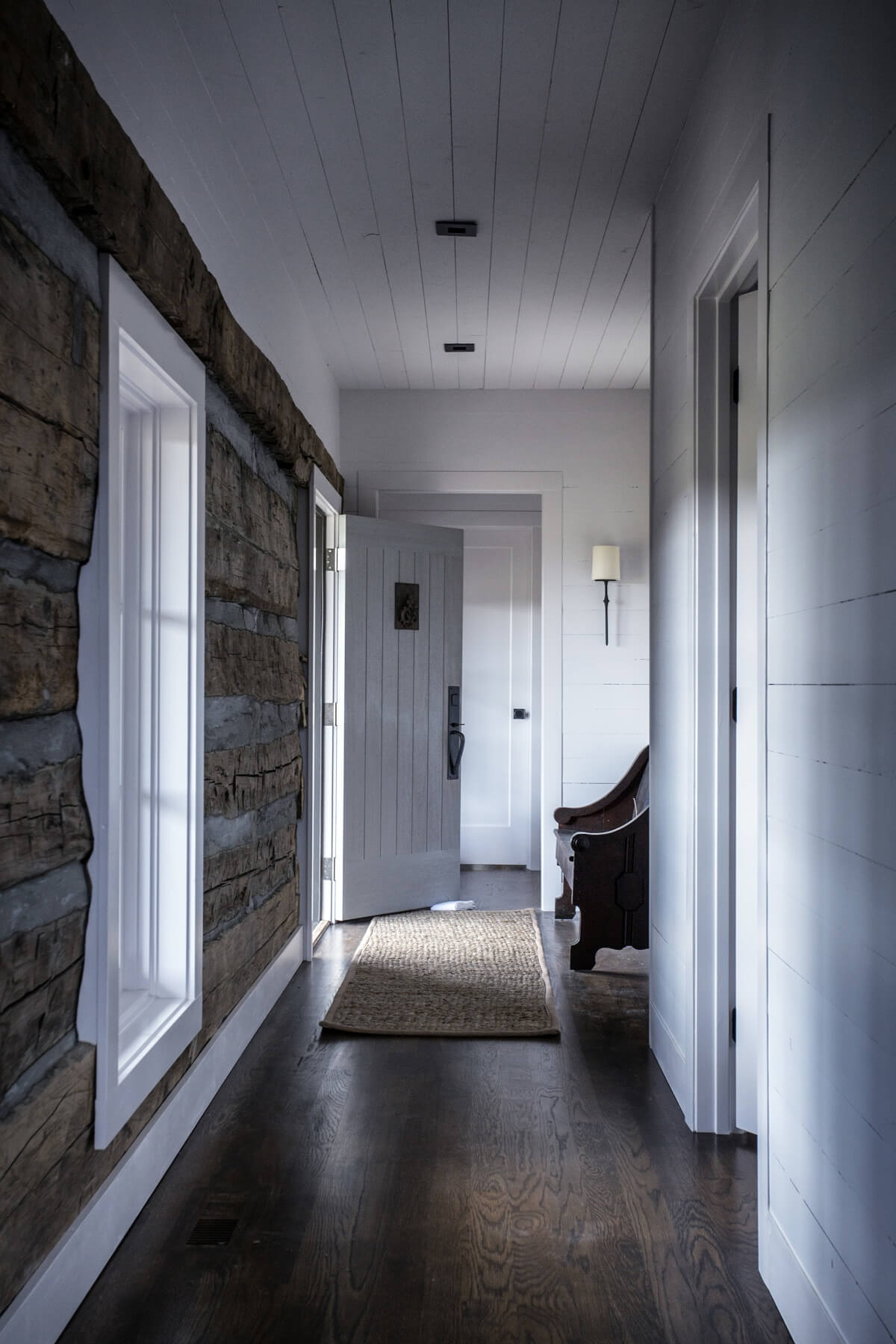
PinThis wall is adorned with photos detailing Jamie’s family’s past. “The gallery wall includes childhood photos of my parents and my wife’s parents, as well as a wedding photo of each couple, interspersed with prints of barns that I found in my parent’s attic,” Jamie shares.PinThis view from the kitchen shows the entryway and hallway that leads to the bedrooms.
Whether for a family gathering, or just for the weekend, Jamie can often be found on the property. “My farm is my favorite place on earth,” Jamie tells us. The 250-acre plot is a balance between work and play. It is a working cattle farm with 100 head of cattle that also offers plenty of opportunity for children and adults alike to explore swimming holes over the mile-and-a-half frontage on the Buffalo River.
PinWe wouldn’t mind spending an afternoon on the front porch of this Tennessee cabin!PinThe cabin is found on the lovely Shenandoah Farms property.
Thank you to Jamie for giving us a tour of his Tennessee cabin and thank you to Jon Cook at High 5 Productions for the photography.
RESOURCES
Interior architecture: Pfeffer Torode Architecture
Lead interior designer: Karen Sielatycki
Construction: Bill Moore of The Maintenance Company
Lead craftsman: Glenn Brown (rough and finished carpentry, tile work, painting and plumbing)
Custom steel: Johnny Woolsey
Cabinetry: John Morrissey
Windows: Vintage Millworks
*************
For more amazing spaces and inspiring interiors, click here.
Alex is a Southern writer known for hunting down delicious stories and traveling the world with hunger. Her passions and interests lie in food, travel, interior design and inspiring people, and her dream is to eat a dozen oysters a day.
Our unofficial motto at StyleBlueprint is "Be kind. Do good." We encourage this to be the basis for all comments on our articles. Provide feedback that adds to the story. Some controversy or disagreements are part of any good dialogue between friends, but anything that tears down or belittles others is subject to disapproval or removal. Thank you for being a member of the StyleBlueprint community! View our Community Guidelines.