Blue Delta Jeans: Made in MS, One Pair at a Time
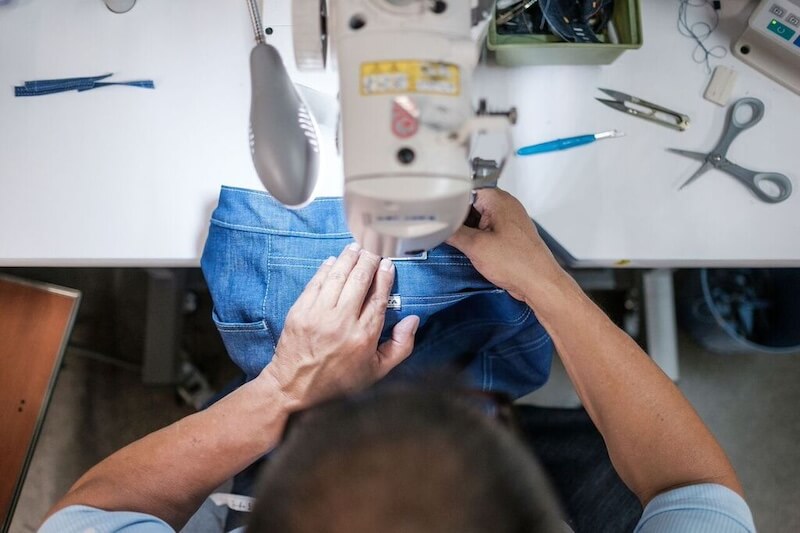
Blue Delta is proof that doing things the hard way still matters: custom jeans, sewn in Mississippi, designed to last a decade or more. Image: Blue Delta Jeans
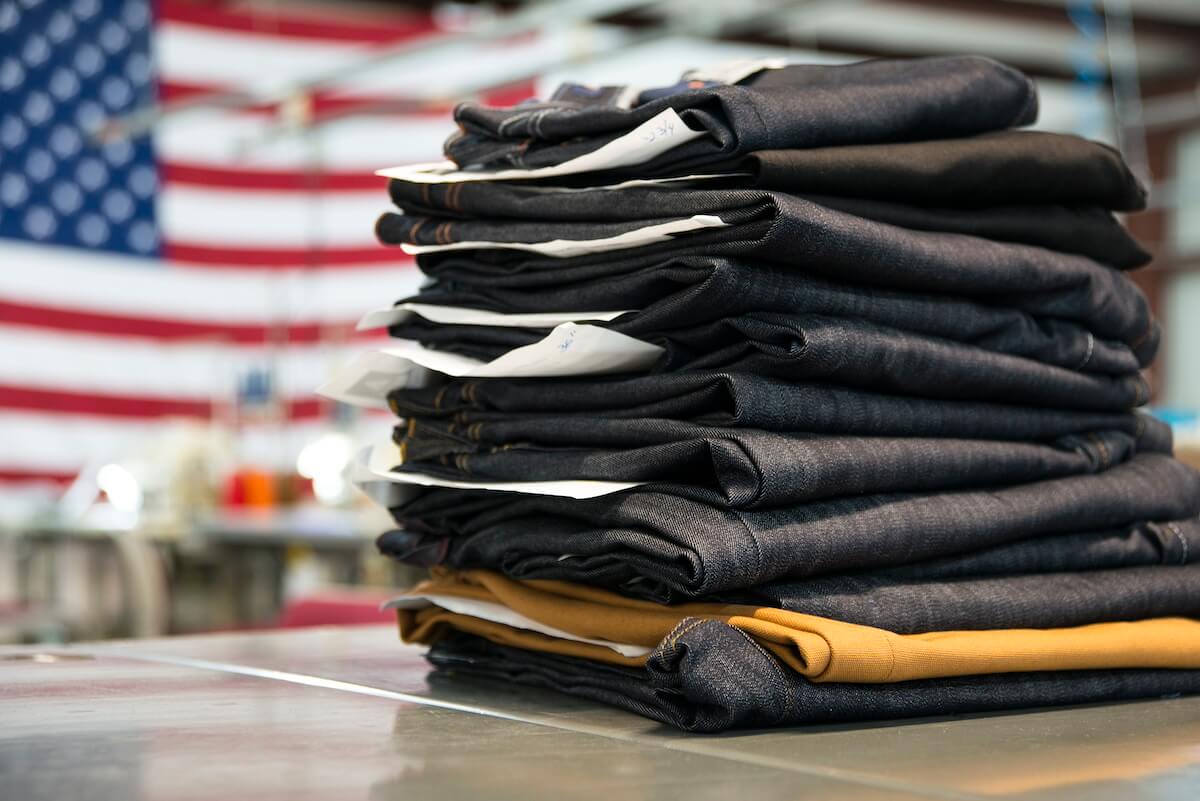
Before the Mannings came into the shop on the Square in Oxford. Before the CEO of Amazon gifted a pair to 50 other CEOs around the world. Before they became the preferred jeans of players in almost every major sports league, it was two childhood pals in Mississippi who noticed raw sewing talent and natural resources. Meet the guys behind a truly made-in-the-South brand, Blue Delta Jeans.
Opposites Attract (and Build a Brand)
Blue Delta didn’t start with a grand business plan or a fashion pedigree. It started with Nick Weaver and Josh West, two childhood friends who sat next to each other in alphabetical seating charts and reconnected years later with very different lives — and very different personalities.
“Josh West and I started the company about 14 years ago. We are childhood friends. I’ve known him since I was 10,” Nick says. He’s originally from Cleveland, Mississippi, which is evident in his voice. “I’ve got a southern drawl and a stutter; I couldn’t even prank call pre–caller ID. Everybody knew it was me,” he says.

By their late twenties, the two found themselves on opposite ends of the professional spectrum. Josh was working for a publicly traded company; Nick was at a software startup. What they did share was a sense that their skill sets complemented each other.
“Josh calls me one day and says, ‘Hey, I got it. Let’s start a custom jean company,” Nick recalls. “I was like, ‘What in the hell are you talking about?!’”
A Jeans Company? Really?
Neither of them could sew. Neither of them had money. Neither of them had inventory, marketing dollars, or a roadmap. But Josh explained to Nick that there were 3,000 seamsters in a 30-mile radius. And there used to be an old 501 plant nearby. So, they had blue jeans.
That regional knowledge changed everything. While much of the country had lost its cut-and-sew talent post-NAFTA, North Carolina and Northern Mississippi still had it, kept quietly alive by the furniture manufacturing industry.
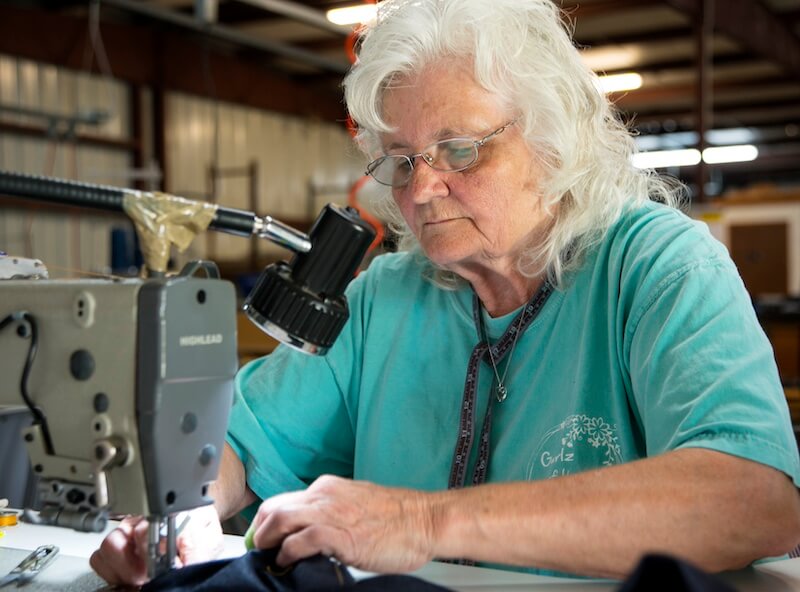
“Your grandma can sew, and you can’t,” Nick says. “It took one generation, and it’s gone.” So, they started with four fabrics — three of them blue — selling jeans out of a literal junkyard. Their first year brought in $7,000 in sales. The second year was worse.
“We were poor and stupid,” Nick laughs. “If you’re going to start a company with somebody, don’t both be poor and stupid.” What they did have was craftsmanship. Nick’s first three hires had more than 100 years of combined sewing experience. “They could make a jean from start to finish from scratch,” he says.
The Oxford Store That Changed Everything
With sales going the wrong direction, Nick made a leap. He quit his job, cleaned carpets to make a living, and opened a storefront on The Square in Oxford. “That’s really where things started to take off,” he says.
The store became a magnet. The Manning family came in. Eli liked the jeans so much that he bought pairs for the New York Giants. Morgan Freeman stopped by. One professional athlete told another … and then another. “I started with one Major League Baseball player,” Nick says. “By the end of 2016, I was servicing over 29 teams and had over 250 MLB players.”
Golf followed baseball. Then hockey. Then the PGA. Then the Ryder Cup. Then the Kentucky Derby. Then The White House. Corporate gifting took the brand global. “This year, I’ve been to nine different countries selling our product,” Nick says. “We’ve done gifting for the last two presidents.”
What made Blue Delta unusual was the order of operations. “Most companies try to get famous people in their product after they sell it to regular people,” Nick says. “Mine went to famous people first.” He needed to get regular people to buy in, and the Oxford shop played a crucial role in this effort.
The Amazon Moment That Says Everything
One of Nick’s favorite stories happened at the Kentucky Derby. Bourbon was involved, naturally. “I’m walking past the Amazon suite, and I see a man wearing my pink pants,” Nick says. “And I know my pants. And I’m loud. If you give me bourbon, I get louder.”
Nick struck up a conversation. The man started explaining how the pants were made. “I was like, ‘Yeah, I know,'” Nick told him. “‘Because I started the company!’” The man introduced himself: Andy Jassy, CEO of Amazon.
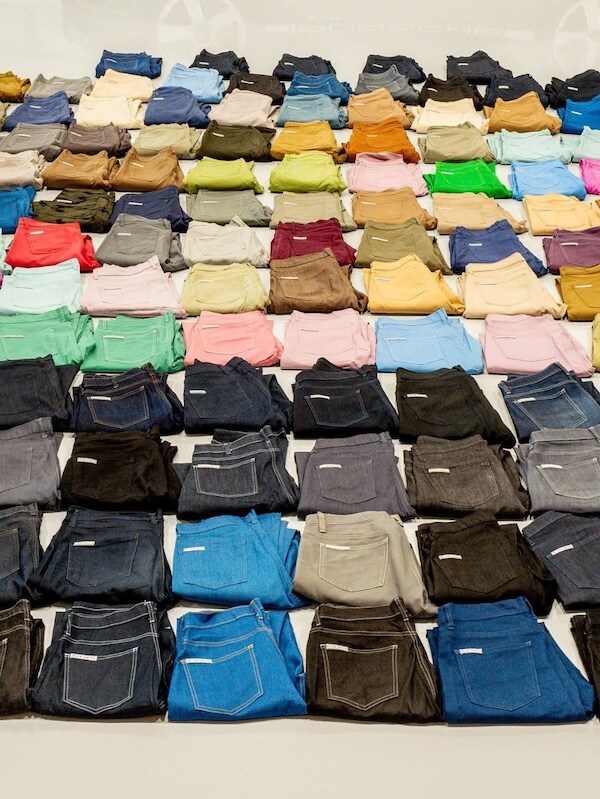
“A few months later, Andy welcomed the top 50 CEOs in the world to his house, and we were the gift,” Nick says proudly. “The NFL commissioner, everybody you can think of was there.” Nick joked about the irony of gifting something not sold on Amazon. Andy’s response stuck.
“He said, ‘That’s the point. These people have whatever they want. Your jeans are gender-friendly, size-friendly, and style-friendly.’ I told him, ‘Man, that’s better than my pitch. I’m stealing that!’”
What “Custom” Actually Means (And Why It Matters)
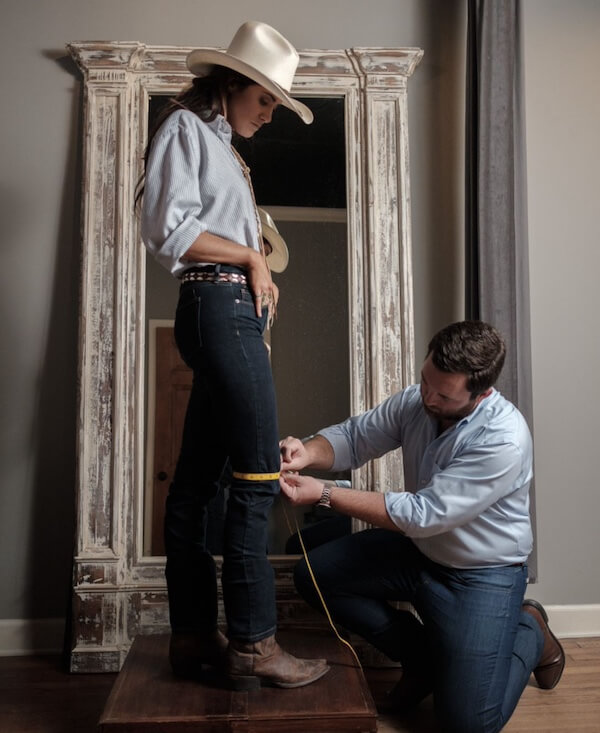
Blue Delta doesn’t do “custom” the way most brands mean it. “Custom is picking a button color and an inseam,” Nick explains. “Made-to-measure is different. We take your measurements. We draft your pattern.” Your measurements and selections are saved, and they’re yours forever. You can tweak them, copy them in another color, or start over when you want.
Whether in person or online — using a Mark Cuban–backed virtual tailoring technology — the result is the same. “You answer these nine questions online, and it predicts your measurements,” Nick says. “It’s insanely accurate.”
Jeans That Are Earned, Not Bought Broken-In
Nick is passionate about one thing above all else: letting good-quality denim live. “People point to the faded jeans [on the online tool that shows how the jeans will age] and say, ‘I want that one,’” he says. “Sorry — that’s not for sale. That’s earned.”
Mass manufacturing taught consumers to expect jeans already softened, distressed, and chemically aged. Blue Delta does the opposite. “Our jeans start off a little crunchy, a little stiff,” Nick says. “But as you wear them, they hold memory. They break in. Now my jeans feel like sheets. They move the way I move.”
Like a patinaed leather bag, a perfectly cooked steak, or anything worth waiting for. “It’s the difference between microwaving a steak and slow cooking it,” he says. You’ll value the difference once you experience it, but fast fashion has tempted us with a faster, easier way that might break down in six months. Buy it for life, or buy it twice, they say.
Made in the South — and Actually Meant That Way
For Nick, making jeans in Mississippi isn’t branding. It’s the point. “My people make good enough money where they can buy a house, buy a car, make a living,” he says. “Most products in your closet don’t want to answer the questions of where they’re made or who’s making them. That’s my highlight reel.”
He’s candid about competing with overseas factories. “If you see what a blue jean factory looks like in Indonesia, it’s horrible,” he says. “But my jeans are going to last a decade. And I guarantee fit for a year.”

“A lot of brands — and some making really awesome products, I might add — say they’re Southern, but they’re really made somewhere else,” he says. “It’s hard to make stuff here. It really is.” Just the cost of Blue Delta’s raw fabric is often more expensive than that of other denim companies’ finished products. And still, Nick wouldn’t trade it. “Mississippi’s been very good to me,” Nick says. “I’m proud of her.”
The Southern Tuxedo
Nick wears his jeans everywhere … weddings, funerals, Friday date night, even hunting. “A good pair of jeans is the Southern tuxedo,” he says. “If you get a good, solid product, you can wear it a lot. It’s pretty universal.”
Blue Delta didn’t set out to change denim. It just refused to cut corners. And somehow, one pair at a time, that’s precisely what they’ve done: altered the denim landscape and set the bar for what it means to be “made in the South.”
**********
Discover even more Southern stories worth sharing. Follow us on Instagram!

Zoe Yarborough
Zoe is a StyleBlueprint freelance writer, Charlotte native, Washington & Lee graduate, and Nashville transplant since 2012. She teaches Pilates, helps manage recording artists, and likes to "research" Germantown's food scene.