
Meet Angela Beck of Pomegranate, One of the South’s Favorite Textile Brands
From Cape Town to a lush Kentucky farm, Angela Beck grew beloved textile brand Pomegranate from tradition, color, and craft. A favorite among Southern hosts, her table linens feel like "comfort food" every time you pull them out. Image: Olivia Darnell Photography
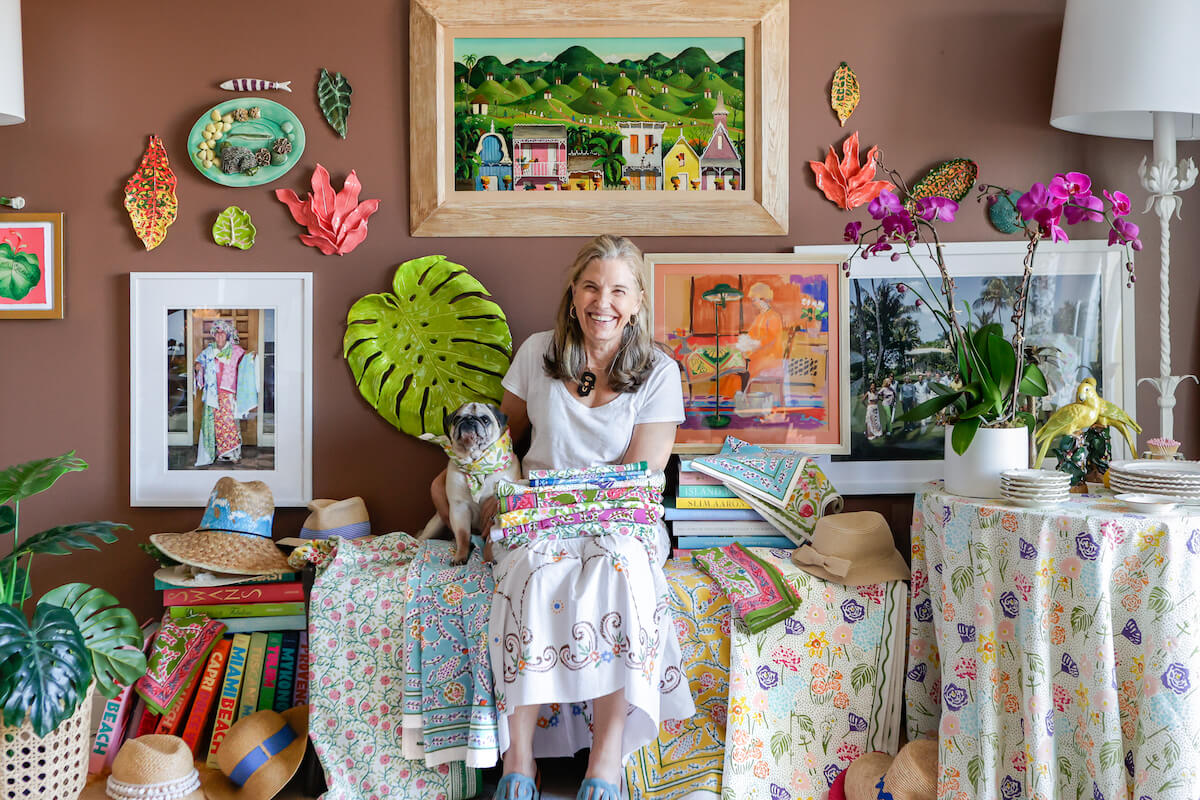
Angela Beck’s hands may be covered in specks of paint or a little farmland dirt, but her brain is laser-focused on the business of what Southern hosts want. She designs Pomegranate’s wildly popular block-printed linens, but she’s comfortable in spreadsheets, too. From Cape Town to Lexington, Angela started her brand in a 10-by-10 booth with a Baby Bjorn strapped to her chest.
Angela’s 30-year journey with Pomegranate is colored with intuition, resilience, and a refusal to mass-produce anything. Get to know this talented Southern textile designer!

When did you find that initial spark of artistic creativity?
My mom’s an artist, so I spent a lot of time in her studio. That was my world. I went to a Montessori school, which was pretty unusual back in the 1960s. I stayed there through second grade, and that experience greatly impacted me. I always knew I belonged in that space — crafting, making things by hand — it just felt right.
How did you land in the colorful world of block printing?
It started when I was living in Cape Town. My husband is South African, and we lived there for a few years. Our friend was importing Indian block-printed linens and selling them out of her garage. When she became ill and moved back to Australia, my husband stepped in to help keep it going.
It began as his passion project. I had just had our first baby and designed a print named after our daughter, Emma, which we still carry. Seeing it come to life sparked something in me. I was homesick and knew South Africa wasn’t forever. His family had a farm in Kentucky, and we decided to move.
I packed samples and drove to the Atlanta market with a tiny 10-by-10 booth and my daughter in a Baby Bjorn. Buyers would ask about delivery, and I’d say, “You’ll get it when you get it!” One of those buyers connected me to a showroom rep, which led to a larger showroom in Atlanta that carried high-end pieces like Lalique crystal. My line became their more accessible offering, and that’s when Pomegranate really began to grow.

Pomegranate has shifted its business model since then. Tell us about that.
We started as a wholesale business … Like any small business, we weathered recessions, market dips, and everything else. In 2019, I opened a full-time showroom in Atlanta. I was tired of schlepping samples to temporary booths. The space felt more like a home than a showroom. We had a couple of great markets … then COVID hit.
These containers were arriving from India, and stores were canceling orders. Our website, which had been just a digital business card, had to become a real sales channel. I taught myself to code and shifted us to direct-to-consumer in pure survival mode.
When things reopened, we returned to wholesale, but with more intention. Some of those stores have been with me since the Baby Bjorn days. Now, we split the line — different prints for wholesale and retail. It honors our partners while allowing the brand to grow online.

How does your Kentucky locale color your product?
I’ve lived in New York, Los Angeles, London, Cape Town, and outside of Philadelphia. So, I’ve experienced big-city living and rural life. But Kentucky, and especially where I live now, feels the most authentic. We’re on a farm that’s also a registered arboretum. It’s beautiful, relaxed, and definitely not the norm. But it’s very genuine.
That sense of ease plays into everything we do. It’s not precious or overly styled. It’s more like pulling something you love from the linen closet, mixing it with something else, throwing it on the table, and enjoying your people.

How do you stay inspired?
I’m very sensitive to my environment, but it’s never just about what I love — it has to sell. That balance has always shaped the brand. Thirty years ago, I knew pink and green frogs would sell in the South, so I had them block printed in India. I was probably among the first to push for such bright, non-traditional colors.
I try to tune out trends and trust my gut. If you chase the market, the brand zigzags. But if you stay consistent, it becomes like comfort food — familiar and dependable.
What’s something people are surprised to learn about you?
I’m not just a creative. I love a good spreadsheet. Math is my friend. Some think it’s unusual, but I don’t think being mathematically minded and creative are mutually exclusive. Math is incredibly creative — it’s about solving problems, which is a huge part of running a business.
I grew up with a mother who was an artist for art’s sake, but that wasn’t enough for me. Creativity has to be practical and make sense in the real world. If I design something beautiful, I want it to sell so we can make more, grow the brand, and support the people behind it.

What’s a common misconception people have about block printing by hand?
Block printing in India has been commercialized in many ways, but there are still people trying to maintain the integrity of handcraft, and I insist on that. I haven’t been perfect. Between child three and four, I hit that every-seven-years moment of wondering, What am I doing this for? So I tried screenprinting.
The product was fine and pretty, but didn’t have a soul. It looked like everything else out there, and I didn’t want to put it on the market. So, right before I opened the showroom, I made a hard shift back to handmade. When people walked in, there was something intangible about a space filled with handcrafted products instead of machine-made ones. It just felt different.
Block-printed textiles age beautifully. Yes, they fade in the sun, but that becomes part of their warmth. Like your favorite t-shirt or childhood blankie, there’s comfort in that. It’s grounding.

What’s the best advice you’ve received?
What comes to mind is something my grandmother used to say: Living your life is a responsibility. This was long before “live responsibly” became a catchphrase. I didn’t fully understand it then, but the older I get, the more it resonates.
You have a responsibility to your country, environment, family, and community. And that shows up in how you present yourself to the world. It’s about setting an example for the next generation.

Can you let us in on a hidden gem in Kentucky?
Hiking in the Red River Gorge, but instead of up along the rim, I like to be down low next to the water, where there’s so much green and you can smell the moss and see the sky through the trees. It hits all the senses all at once.
Finally, we always ask: What are three things you couldn’t live without?
Pugs, color, and a sunny day now and then.
This article contains product affiliate links. We may receive a commission if you make a purchase after clicking on one of these links.
**********
Meet more inspiring women from across the South in our FACES archives!

Zoe Yarborough
Zoe is a StyleBlueprint freelance writer, Charlotte native, Washington & Lee graduate, and Nashville transplant since 2012. She teaches Pilates, helps manage recording artists, and likes to "research" Germantown's food scene.