She wowed the design world last year with the launch of her textiles company. Meet designer Andra Eggleston, whose designs honor her father's influence, and find out why she's happy being back in the South.
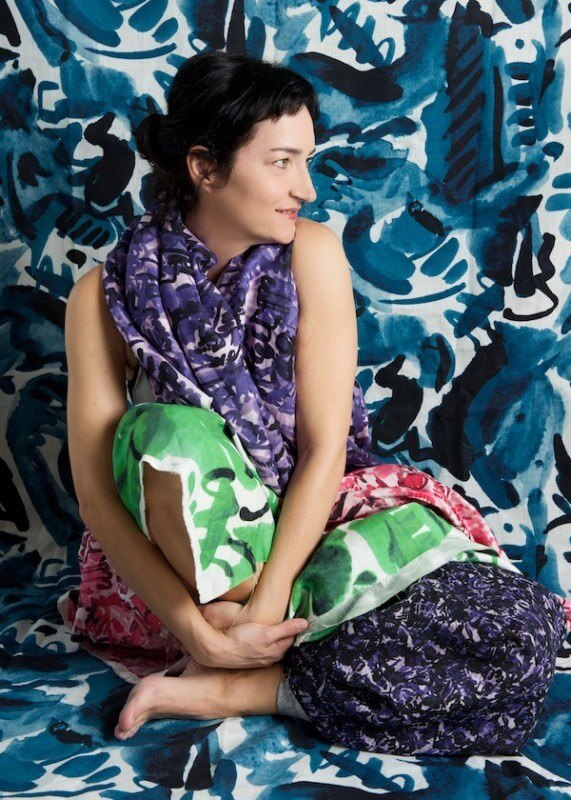
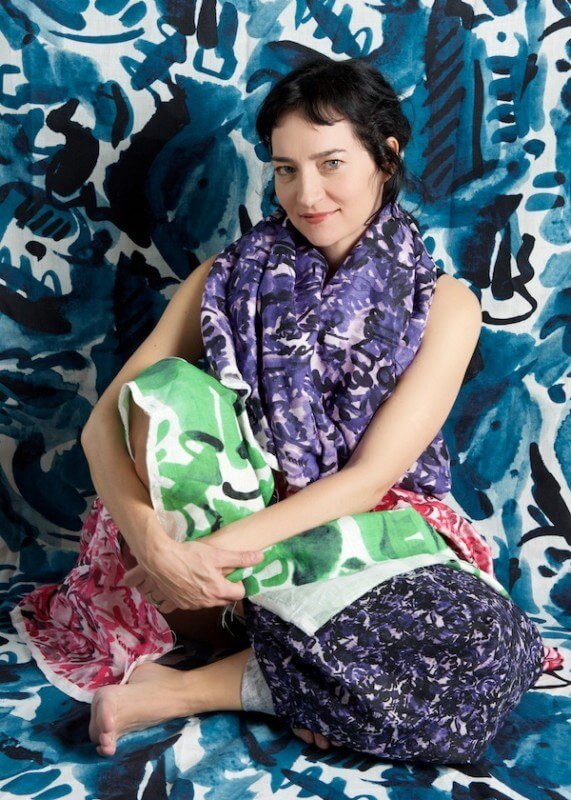
Andra Eggleston wowed the design market last year with her debut luxury textile collection, Electra Eggleston Fine Textiles. She credits her father, William Eggleston, the world-renowned Memphis native known as the Father of Color Photography, as a direct influence on her direction. Electra Eggleston was the name her father would have given her at birth, but her mother rejected it, proclaiming the name was “ … electrifying, charged, explicit.” Andra saw the name as perfectly fitting for an American textile brand and artistic rebirth.Andra earned a degree in textile design at the Fashion Institute of Design & Merchandising in Los Angeles, a program that included the opportunity to study textile design abroad at Central Saint Martins in London, which she says impacted her ability to take risks in her designs. She launched the Electra Eggleston collection in Nashville, the place she now calls home. “It meant a lot for me to launch it in the South, reflecting and honoring my father’s most influential environment,” she says. Today, we are proud to introduce Andra Eggleston as our FACE of Nashville.PinAndra Eggleston, today’s FACE of Nashville
How was the name Electra Eggleston created?
Electra was the name that my father, immediately after I was born, wanted to name me. My mother, who passed away last July, told me this story many times, and somehow it felt appropriately bold and striking and personified the feeling of my prints.
Where do you get your inspiration?
I do love looking at design magazines for color trends, but I do look at them very abstractly. Otherwise, I feel like my inspiration is whimsical. Once I was struck with the way a folding chair looked, so I designed a print based on folding chairs. Once I became obsessed with electrical towers in Los Angeles, so I made a textile print out of that.
PinDesigner and here, model, Andra credits the creativity of her parents as the primary source of her design inspiration.
How did your parents’ creativity inspire your success?
My mother was certainly not well known, but I was deeply inspired by her wit, candor and absolute uniqueness. She had incredible style and always loved textile prints. And of course, my father William Eggleston’s iconic place in the history of photography has blown my mind. His drawings really helped me to understand his photography even more.
How has your bow tie collaboration with Otis James encouraged you to take a second look at fashion?
My bow tie collaboration with Otis was inspired by a desire to make a special gift for my dad that he would cherish, one that would encapsulate the experiences that we had together. He loves bow ties, and I always think of him when I go vintage shopping. He was so touched when he saw them. I couldn’t think of a better way to show him how much he meant to me!
Fashion has always been an important part of my business model. I think licensing these prints to designers for fashion is going to be a perfect fit.
PinAndra models a variety of her vibrant prints.
Would you classify your textiles to be a living art?
I think my textiles are a functional art, and this pleases me deeply. I strove to combine the practicality of fabric into the powerful feeling I (and countless others) have felt when looking at a work of art — to be moved proudly, but hey, you can sit on them, too.
How do your designs tell a personal story, and where is your story going?
My designs tell the story of the special collaboration between myself and my father, which was the jumping off point for the brand. I am so close to this story, and the memory of that special time working together has always kept me grounded and focused.
Moving forward, I would like to open up new stories with other artists and the discoveries made. It is so much fun to work an artwork that was not originally intended for textile application into a textile. This is my favorite part of what I do, and I can’t wait to experience that with other artists in the future.
PinAndra Eggleston, a Memphis native, now lives in Nashville.
What has been the favorite transformation of your textiles?
I have two favorites. Absolutely what Otis James did with the bow ties. They are gorgeous, yet simple, classic and sophisticated. Also, I had a local interior designer do wall panels for a powder room — large pieces stretched onto wood frames and treated for waterproofing — covering the walls.
If you weren’t a designer, what would you be doing?
I would certainly still be acting. It is my first and last passion, and it always will be!
What is your favorite thing about living in the South?
I experience a sense of peace and contentment in the South that I cannot compare to anywhere else I have lived. I spent 18 years living bicoastal, and I am very urban. But I don’t think I could walk away now from the air, the trees, the seasons, the rain, the thunderstorms, the birds. And, unlike most people here, I love the heat.
Also, people here never seem to have an agenda, or if they do, they are earnest and genuine. And I can tell you, this is so different from New York or L.A.
I could do without the mosquitoes, so that might be a deal breaker one day.
PinLicensing her prints for designers to use is part of Andra’s business model.
What’s your best piece of advice for others?
The most important things in life are the things you cannot see, smell or touch. They are deep inside your gut. They are the things you must feel with your heart. Your intuition is everything, and it is important to exercise it as much as your body and your mind. It is an immeasurable tool.
What are three things you can’t live without excluding faith, family and friends?
My intuition, my mother’s collection of vintage dresses and tapes on Abraham-Hicks and the law of attraction, and the 2000 Lexus sedan that my mother left me when she died. It still smells like her, so I feel like she’s with me while I’m driving.
Thanks to photographer Ashley Hylbert for today’s beautiful images of Andra at her home in Nashville.Read about even more inspiring women who are making a difference in our city. Click here to get started!
Our unofficial motto at StyleBlueprint is "Be kind. Do good." We encourage this to be the basis for all comments on our articles. Provide feedback that adds to the story. Some controversy or disagreements are part of any good dialogue between friends, but anything that tears down or belittles others is subject to disapproval or removal. Thank you for being a member of the StyleBlueprint community! View our Community Guidelines.