
Amanda Storey: FACES of Birmingham
With her vivacious charm and razor-sharp wit, Amanda Storey is affecting serious change in Birmingham's education systems and communities through food.

The director of partnerships at Jones Valley Teaching Farm, Amanda Storey, has a way of completely engaging the people around her with her utterly honest and warm personality. One moment, she’s cracking you up, and in the next, she’s deeply moving you with a truthful, first-person account of the serious food justice issues she’s devoted her career to since 2009. Through her infectious laugh, razor-sharp wit, disarming self-awareness and detailed understanding of community change, Amanda is not only improving education through food, but arming students with life skills and confidence. We are delighted to welcome today’s FACE of Birmingham, Amanda Storey!

Where did you grow up, and if not a Birmingham native, what brought you to Birmingham?
I grew up in Columbus, GA, and I majored in magazine journalism and women’s studies at the University of Georgia. After graduating, I got an internship at Southern Living magazine in Birmingham, but I didn’t experience the city in those eight years. Then, in 2008, Southern Progress underwent a complete restructuring, and our entire marketing department was cut. So I knocked on the door at Jones Valley and said, “I have severance. How can I help?” And so I started volunteering there, and that is how I got to know Birmingham.
Tell us about your work as director of partnerships at Jones Valley Teaching Farm.
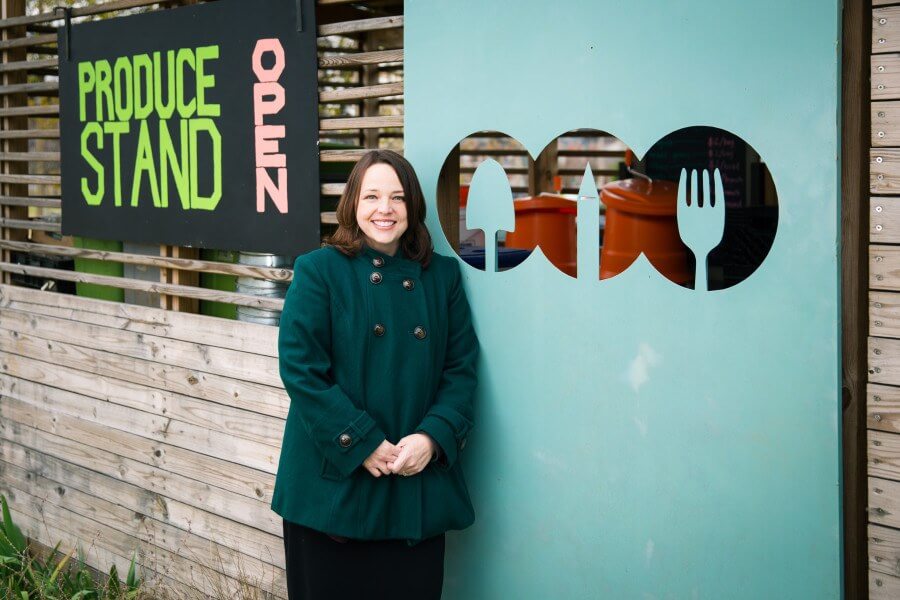
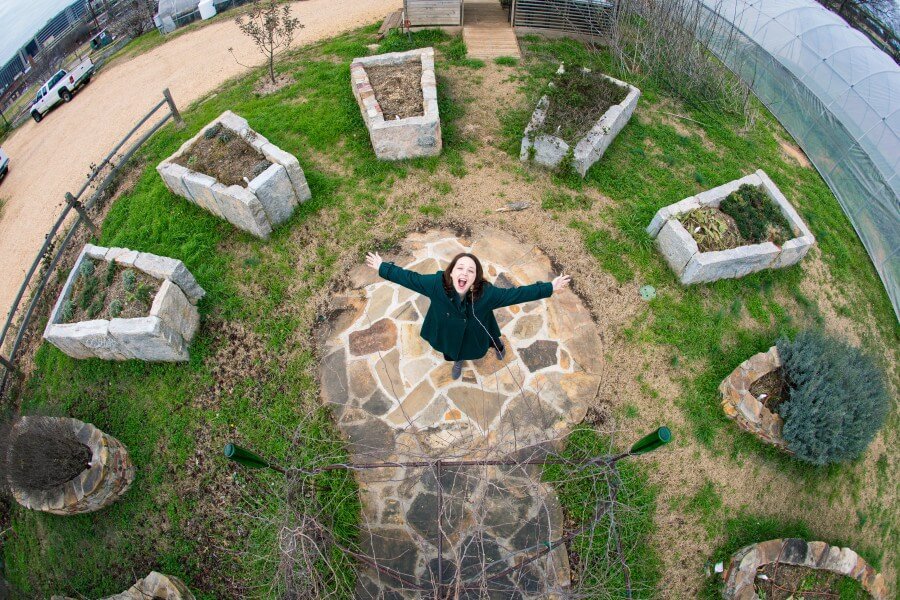
I connect and communicate Jones Valley Teaching Farm’s work across many partnerships: schools, donors, local and statewide initiatives, and the larger community. In 2012, JVTF refined our mission by focusing on one primary program called Good School Food, which is a hands-on food education program that connects students to food through cross-curricular, standards-based content during the school day. We have farm labs in the back of each of our partner schools with outdoor classrooms, raised beds and a pond. We staff each school with instructors, and they work directly with teachers to pair what we can do in the farm lab with what they are teaching. We also have after-school farm lab clubs where kids harvest the vegetables and a student market club where students run a farmers market for their school and the larger community. We just finished building an Urban Farm Center at Woodlawn High School where students will experience a program anchored by two core components: a two-acre urban farm and a student-run food business.

Did joining Jones Valley’s Community Supported Agriculture change your relationship with food?
So when I was volunteering for Jones Valley, they kindly offered me a CSA box each week in exchange for the work I was doing. That was my first exposure to many foods I had never known before. I never bought turnips or beets, ever! When you get a box, you go, “What am I going to do with kohlrabi? What in the world?” So I started this food journey, which is where my blog, Food Revival, came from.
What is most challenging about your job?
How complicated all of the pieces of the food world are. We work with Birmingham City Schools, and some of the students we work with face very specific challenges when it comes to how accessible and affordable food is. Food has cultural and historical significance. It can divide and unite us. We have to be mindful of all of these aspects when we talk about food through our program.
What is most rewarding?
I love to read the responses from students who are impacted. To see the growth and how they feel so tied to the farm labs and the instructors makes me so happy. And the people I get to work with, that’s very rewarding, too.
In serving Birmingham’s traditionally underserved neighborhoods through those initiatives, can you tell us what you have learned during that process?
I took an intense antiracism training course about three years ago and everyone was asked the same question: What is your favorite thing about being the color that you are? And I could not think of one thing that was associated with me being white. So I just sat there, and everyone else had pages and pages, and I had nothing. In that moment, I realized I’ve never had to think about being white. I’ve never been asked about it. I put on my clothes, and I don’t have to think about if anyone is going to think anything different of me, and, so for me, it was an acknowledgment of how disconnected I am from certain issues just based on the color of my skin. And that is OK. It means that I have to work at not talking all the time and listening more to people’s experiences that are not like mine and not thinking that I have the answers to solve something that isn’t always mine to solve. I think you have to start with yourself, recognize where your weaknesses are, work on the systemic issues around race and class and gender, and then do the hard work by tackling your own biases and the choices you make.

Do you have a favorite vegetable recipe?
The Barefoot Contessa’s roasted vegetable orzo and the vegetable paella from 101 cookbooks. One of my favorite meat recipes is Homesick Texan’s Houston-style carnitas. It’s just four ingredients, and it’s so good.
Do you have a mentor or role model?
Dolly Parton. She came from very humble beginnings. She kept the rights to all her songs, built an empire and gained complete control over her world. She churns out songs and is creative, is a strong businessperson, doesn’t care what people think of her and sticks to her gut at every step. And she is still a loving person who believes in the simple things in life.
How do you balance between your career, outreach work, blogging and family life?
I don’t. I don’t at all. There’s no balance. I’m out of balance! I was eating croutons out of a bag in my kitchen last week, as a snack. (laughs) I’m not balanced.
What is your best piece of advice?
Maya Angelou said, “When you know better, you do better.” That is the space and grace I give myself as I continually mess up. When I know better, I make different decisions, and I continue to live by that.
With the exception of faith, family and friends, what are three things you can’t live without?
Ice, fried potatoes — whether it’s potato chips or french fries — and human interaction. I am most drawn to people and their stories. That’s what drives me.
Thank you, Amanda! Learn more about Amanda’s work at Jones Valley Teaching Farm’s website.
And thank you to Brendon Pinola for the fantastic pictures of Amanda at Jones Valley’s urban farms!
**********
Want the best of everything local? Download our SB App. It’s FREE!

Lauren Helmer
Lauren Helmer is a writer, editor, and artist with a passion for food, the arts, interiors, and the people who create them.