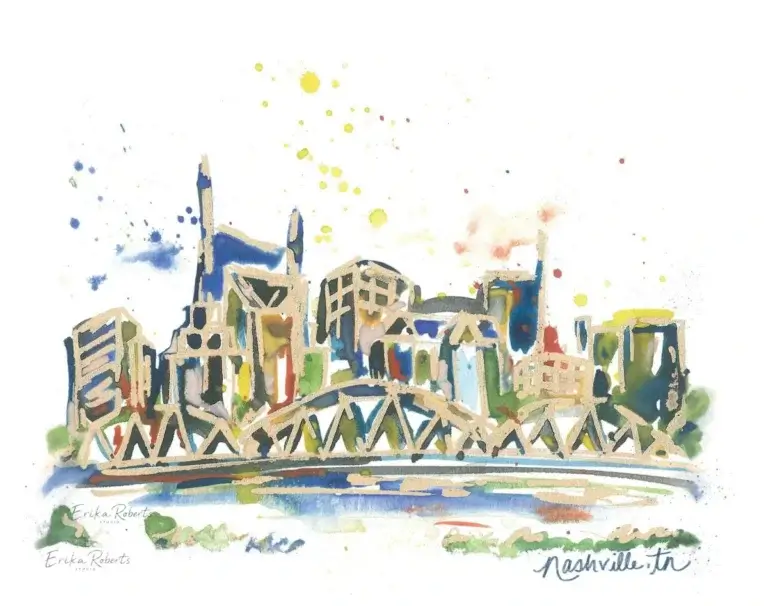
And She Calls Nashville Home: Youth Poet Laureate of the Southern United States
If you're looking to be inspired and energized by the next generation, look no further. This Youth Poet Laureate is using spoken word to incite change. Image: Yve Assad
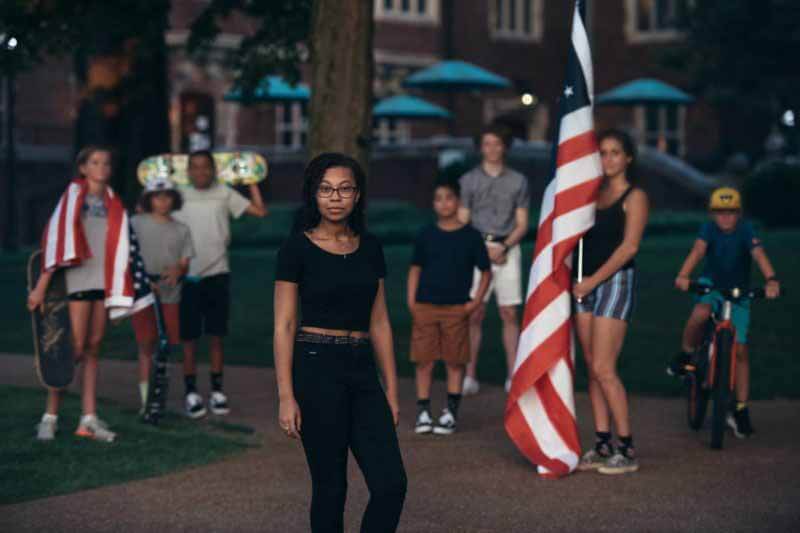
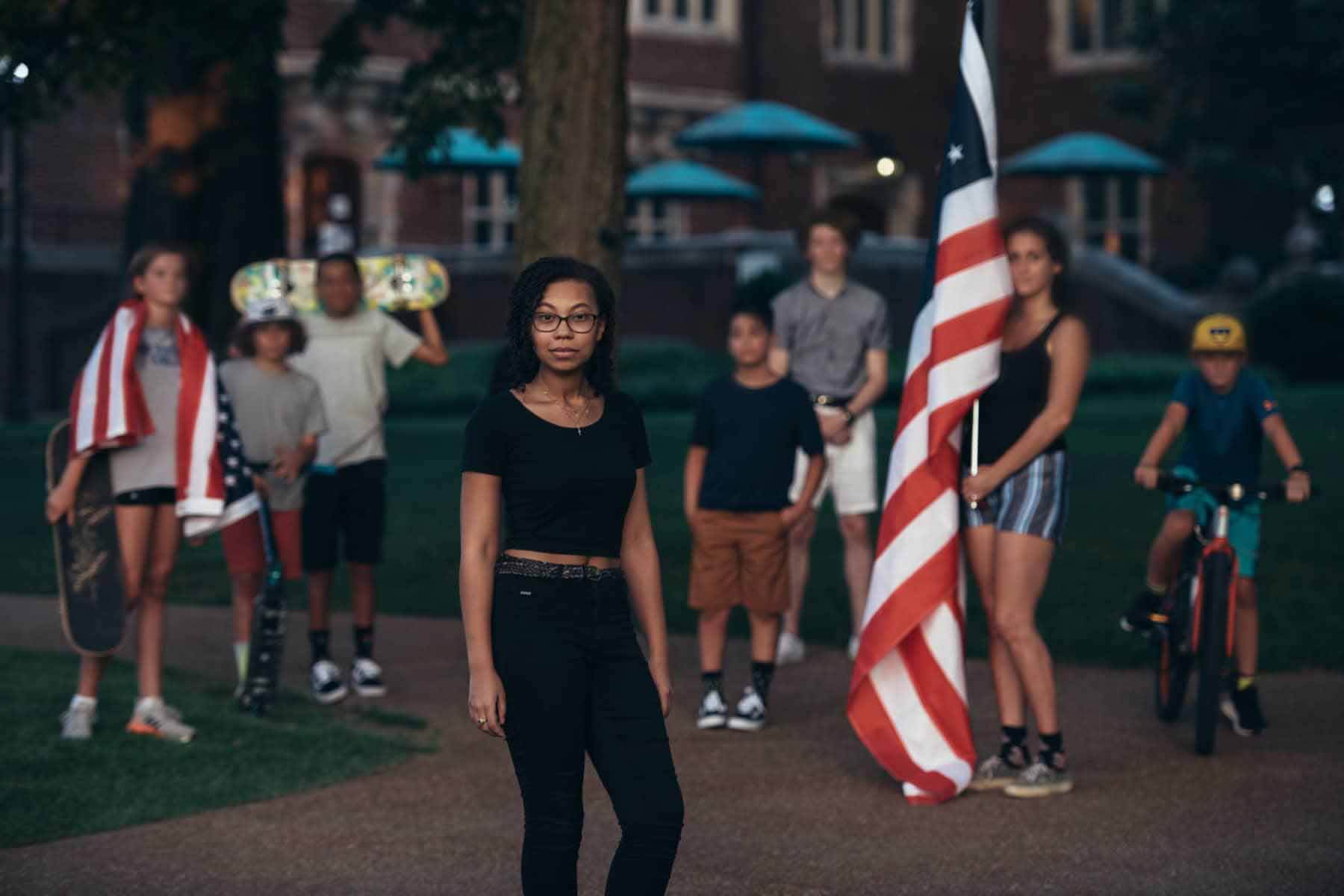
American novelist and poet Erica Jong once said, “You must have a certain amount of maturity to be a poet. Seldom do 16-year-olds know themselves well enough.” She’d clearly never met Hillsboro High School student Alora Young. At 17, the Nashville-based Youth Poet Laureate of the Southern United States absorbs inspiration and doles it back out tenfold with an enthusiasm that spreads like wildfire. Discovering her passion for storytelling at the ripe young age of 7, she’s now honored with the title of Nashville’s Youth Poet Laureate of 2020, and she’s a national finalist, too. To say her words and activism are remarkable is an understatement; she’s an old soul and an eloquent force of nature. With a budding nonprofit elementary school mentorship program called AboveGround and a true shot at being named National Youth Poet Laureate, this young dynamo is our newest FACE of Nashville. Meet Alora Young.
How old were you when you began writing, and what prompted you?
I’ve been a teller of stories, a writer, for most of my life. My mom said the first time I told her I wanted to be a writer, I was 2 years old, which is pretty crazy. I used to tell myself bedtime stories. I’ve always been an insomniac, so everybody else was asleep by the time I wanted a bedtime story. So, I’d sit in bed talking to myself and telling myself stories.
How did your writing take the form of poetry?
It started out as song. The first official song I remember writing was when I was 7, after I moved to Tennessee. I was really sad about having to move, and it was called “Stars of Sorrow, See You Tomorrow.” That sparked my first songbook, and now I’m thousands of songs deep. I had a lot of feelings, and I learned how to create and express my feelings through rhyme. Because I didn’t play any instruments at the time, poetry was the natural escalation of my love for rhyme and telling stories. I would write fiction stories, but then I would always end up writing poems. I have tomes of epic poems in my bedroom!
RELATED: 13-Year-Old Hannah-Kate McFadden Spreads Political Positivity with The Candidate Pledge

What do you typically write about? What inspires you?
I really like to write about social issues because I believe spoken word poetry has the unique ability to relay concepts in a way no other form of writing can. I believe it has a better capability of persuading someone, and I think I should use poetry like people use speeches or songs, which you can’t really do in front of the United Nations. But you can use spoken word poetry in that format! When they were having the climate committee at the United Nations, an incredible poet from the Marshall Islands talked [in a spoken word poem] about how with just 1.5 degrees of climate change, the Marshall Islands would go underwater and destroy her family’s homeland. Despite the fact that people had been saying it was impossible to get 1.5 degrees considered for the bill (because two degrees was the minimum), they were able to get the goal for climate change slowing to 1.5 degrees after her poem. Her words were that powerful. I think that’s a genuine scientific phenomenon we can research. There’s a reason Shakespeare and The Iliad and all of the ancient history poets were some of the most prominent figures. It’s because they can do something very few people can — convey human emotion in the format of spoken or written language. I hope one day I’ll be able to use my poems on the Congress floor. My sister wants to be a [congresswoman], and I want to write speeches for her and others, using my poetry to incite change.
RELATED: The Woman Behind WPLN’s Award-Winning Podcast, “The Promise”
What is your favorite poem you’ve written?
It’s in my book, which will hopefully come out at the end of this year or the beginning of next. The poem is called “When You’re Old Enough to Make Gumbo.” It’s really near and dear to my heart.

Can you tell us about the book you’re writing?
It’s called Walking Gentry Home. All of it is me trying to give advice I wish I’d had to the little girls who come after me — the girls with autism, and the girls with ADHD, and the weird girls, and the girls of color, and the girls who feel like they don’t belong anywhere. It’s the story of girlhood and of how my great-grandmother got married when she was 14 when she eloped with my great-grandfather. One day they got into a fight, so she ran away from the house where she lived with her husband and went back to the farm where she grew up. She spent the day there, and at the end of it, she said, “Mom, I want to come home.” Her mom said, “Okay,” then told her brother, “Walk Gentry home.” And he walked her back to the house with her husband.
The whole concept of that moment is that a growing girl’s adolescence is about the battle between the home you come from and the home you have to make for yourself. It’s the walk between the worlds of childhood and womanhood. We’re always walking. I’m still walking, and everywhere I walk, I walk with my great-grandmother Gentry, and my mom, and all of the women who walked the road before me.

Tell us about your nonprofit organization, AboveGround.
We haven’t been able to do as much as I’d like this year because of COVID. I go into a [local] elementary school and work with a group of kids. We use a combination of creative writing and Black history to show Black students they are a part of history. That’s something I struggled with as a child. I discovered my art form early, and I feel more kids — especially Black kids — should have the opportunity to do that. Being introduced to art and seeing yourself as an artist and a creator of culture from a young age is an advantage non-people of color don’t even realize they have.
What is the best piece of advice you’ve ever been given?
“So a man thinketh, so is he.” [My mom has] said it to me my whole life. People will tell you that you can’t do or be something, but the only person who can decide that is you.
Outside of faith, family and friends, what are three things you cannot live without?
Books, optimism, and candy.
**********
To read more inspiring FACES, visit our archives.

Jenna von Oy Bratcher
Jenna von Oy Bratcher is StyleBlueprint's Editorial Operations Manager and Lead Content Editor. The East Coast native moved to Nashville almost two decades ago, by way of Los Angeles. She is a lover of dogs, strong coffee, traveling, and exploring the local restaurant scene bite by bite.