We love the feeling of picking up fresh dry cleaning, but how much do you really know about the process and what actually needs to be dry cleaned? Get the best clean for your buck by separating dry cleaning fact from fiction.
Picking up your clothes from the dry cleaners feels almost as good as carrying out a bag of loot from your favorite boutique. The wrinkle-free freshness, service, attention, hangers and bag make choosing dry cleaning over home washing so much more fun. But the out-of-sight-out-of-mind mentality we blindly employ when we entrust our clothes to dry cleaners might actually be hurting us.
This article idea stemmed from a wildly popular Reddit thread, where a dry cleaning veteran — we’ll call him “Mike” — shared all sorts of insider knowledge from his 10+ years in the dry cleaning business. We checked his claims against a lot of other sources to create this go-to dry cleaning guide.
We’re here to help you get the best clean for your buck with some insider myths, tips and best advice from three dry cleaning pros.
PinSB TIP: The experience of dry cleaning gurus Caroline, “Mike” and Philip quoted in this article may not be that of all dry cleaners, so take that into consideration as you read.
We are grateful to all our sponsors:
LET’S DEBUNK SOME MYTHS
Myth: Dry cleaning is dry.
Truth: Dry cleaning isn’t really dry at all. “Instead of being cleaned in water, clothes are cleaned using a liquid chemical solvent. The simple fact that water is not used in the process makes it ‘dry,'” explains Caroline Tolmie, project manager at 2ULaundry, a unique Southern startup for laundry and dry cleaning services. Garments are placed in a large industrial machine based on color (yes, with other people’s stuff!) and submerged in a chemical solvent. “The clothes are cleaned in the fluid at a low-spin, which brings stains to the surface. Then they’re fully rid of the chemical and stains during a super-high-speed spin cycle,” Caroline continues. The clothes are completely dry when they come out of the machine, at which point they’re treated for stains, pressed and packaged for delivery or pick up.
Myth: I should store my clothes on the hangers and in the plastic from the cleaners.
Truth: It seems like a lot of work to tear off the plastic bags and switch out the wire hangers, but it’s worth it. Think about it: there’s a reason the dry cleaners hang and cover every piece of their customers’ clothing: it’s cheap. But it’s only meant to protect your items on their way home. Plastic has chemicals that your cotton, silk, rayon, wool and cashmere don’t jive with. The plastic suffocates fabric and can cause it to break down over time. Wire hangers can create harsh lines and new shapes along the shoulders and necks. We want a better life for our precious pieces, don’t we?!
Myth: Dry cleaning is expensive, and all cleaners are similar.
Truth: Dry cleaning costs can add up, that’s the truth, but do your research. “Check out online reviews before trying a new dry cleaner,” Caroline suggests. “When looking at reviews, check for volume and number of 5-star ratings. Also, ask your cleaner if they offer any special deals or promotions. Some cleaners offer discounts on lower volume days.”
We are grateful to all our sponsors:
RELATED: Why You Should Be Using Clean Beauty Products
Myth: My “green” dry cleaner is truly “green.”
Truth: Maybe. In general, a green dry cleaner is referred to as an alternative dry cleaner not using perchloroethylene, the main liquid chemical used to degrease and deodorize fabrics without shrinkage or fading. Although very good at its job — and still used at most dry cleaners — some think “perc” has negative side effects on the environment and potentially our health. There are some safer, non-toxic alternatives like professional wet cleaning, which uses water and special equipment that gently washes, dries and restores fabrics. Other “green” methods include liquid carbon dioxide, hydrocarbon or liquid silicone cleaning. Do a little research to find a non-perc cleaner near you.
Myth: I can carefully wash or spot clean my dry-clean-only items.
Truth: Don’t. No matter how tender you are with your clothes, it can be a costly mistake. Your items could shrink, stretch, tear, fade or bleed. And even if they do survive the gentle cycle or handwashing, stubborn stains will likely remain. Caroline says, “My golden rule when I get a spot is don’t touch it! Take it to your dry cleaner or schedule a pickup right away. Set-in stains are much harder to remove than fresh ones.”
She also suggests noting the source of the stain. “Dry cleaners use different processes for spot treating stains based on the type of stains. Understanding how to treat different types of stains takes knowledge and years of experience.”
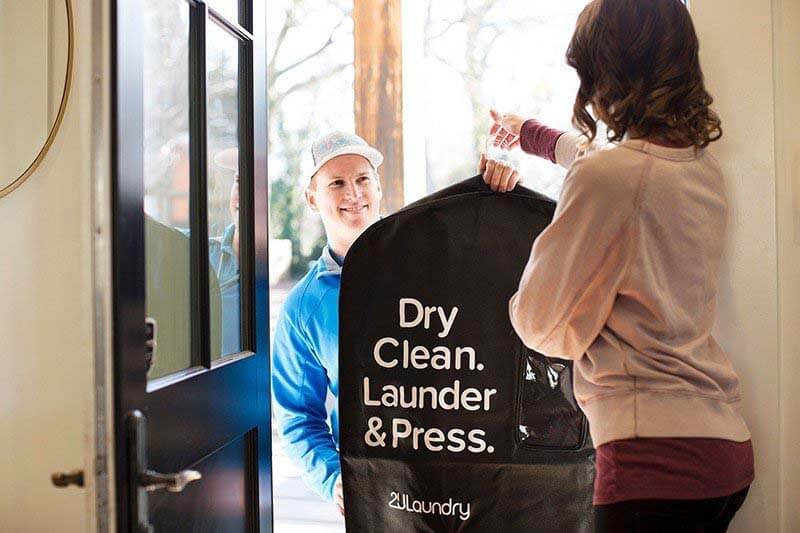
PinMany cleaners and third party businesses like 2ULaundry offer free delivery, so your clothes don’t sit in the back of your car for weeks. Image: 2ULaundry
THE THINK TWICE LIST: WHAT TO NEVER DRY CLEAN
Here’s where our intel from Mike on Reddit comes in. Mike owned a dry cleaner for five years and worked in one for 10 years before that, both on the front and back ends. He weighs in on the items we should think twice about before dry cleaning so we don’t unknowingly waste money.
Down
Down items are typically more expensive to clean because they have to be washed by themselves, lest the feathers get onto other people’s clothes. “Down coats are rarely dry cleaned, but laundered, then hung to dry overnight, and placed in a dryer for a few minutes to plump out the feathers before handing it back over to the customer,” says Mike. Down items are not pressed, so you could wash a down jacket yourself, hang it to dry, and get the same result.
Comforters
Rethink dry cleaning your comforter unless the tag specifically says “dry clean only.” According to Mike, some dry cleaner owners really don’t want to dry clean a comforter unless they have to because it’s cheaper to launder. Cleaning comforters can range from $40 or more, and you might be getting less quality than you would at a laundromat. “Comforters are rarely ever spotted for stains, and they’re laundered in a basic commercial machine with one setting, hung to dry overnight to save on drying time, and then placed in a commercial dryer and finished,” says Mike. Yikes. Moral of the story: You might be better off spraying for spots, paying $5 at a laundromat, and choosing your own cycle and spin settings.
Spot-clean-only dresses
“Many customers don’t check or understand their care labels, and dry cleaners love that,” Mike says. When some of our fancier items say “spot clean only,” that means it can’t be washed conventionally. But dry cleaning can melt sequins or embroidery glued to the fabric and damage the dress. “Dry cleaners might charge up to $50 depending on the fanciness of the dress when they can’t even clean it,” Mike warns. They might individually spot treat areas, or at best, hand wash the item by soaking it in cold water and hanging it to dry overnight — nothing you can’t do at home. And with fancy sequins or appliques, the item typically can’t be pressed.
We are grateful to all our sponsors:
Wedding dresses
A wedding dress can cost up to $200 to clean even though it’s dry cleaned the same way as a $6 pair of slacks. Mike says to never opt for the preservation box. This storage box can add $50 or more to your cost, but the cleaners don’t press the wedding dress that gets placed in the box. By the time you open it three or 20 (or more!) years later, you’ll find it’s not pressed, and it’s too late for the cleaner to redo. “You get more for your money if you buy the preservation box elsewhere, and put your cleaned and pressed dress in there yourself,” Mike says.
Leather
Leather is the most expensive item to clean, but most cleaners send it to a third-party cleaner. So you’re getting up-charged from the start. “Also, there is no special leather dry cleaning method,” explains Mike. “Leather is simply lightly spot cleaned with a dish soap leather formula, and then hung to air dry in a moisture-free environment overnight.” You’re essentially paying for the labor charge. To save money, lightly go over the jacket yourself with Dawn soap, water and a super-soft microfiber towel.
Sports jerseys and decorated garments
Sports jerseys and other decorated garments can’t be dry cleaned because logos and other glued extras will melt. However, they do look nice and fresh when pressed. Save money by washing items like jerseys and golf shirts yourself and bring them in for “press only” to keep them crisp and starched.
WORTH IT LIST: WHAT TO ALWAYS DRY CLEAN
Just as there are items you should not necessarily dry clean, there are certain pieces that should ALWAYS be dry cleaned. Those include:
Men’s dress shirts
Men’s shirts are the cheapest garment to dry clean. They’re laundered by the bulk and then heat-pressed on their own machine in less than 20 seconds. Dry cleaners don’t make their money off of this, so it’s an excellent value for the customer.
Wool
Wool is notorious for attracting lint, and it’s dry-clean-only. Counter employees will often remove the lint by scraping and shaving the fabric, so it looks much nicer for you at pick-up.
Dry-clean-only staples
Business suits, silk blouses, cashmere sweaters, etc., should be trusted to your dry cleaner.
Oil and grease spills
Dry cleaning is oil-based and will absorb oils on fabric, such as food, blood, body perspiration, motor oil, and other stains that water can’t lift. If you get any oil on your fabric, it’s worth it to dry clean. It’s especially great for removing pesky body oil stains around the armpit and collar areas.
PinAlthough dry cleaning is very effective at lifting stains, some just cannot come out.
We are grateful to all our sponsors:
Mike’s bottom line: To get the most of your money, if you drop something off at the dry cleaners, make sure it can benefit from the professional-grade pressing. If your item cannot be pressed, you are often paying more for an item you could be doing yourself.
RELATED: 5 Tips To Organize & Spring Clean Your Closet
THE CUSTOMER-CLEANER RELATIONSHIP
For a look into the customer experience at the cleaners, we spoke with Philip Lang, owner of the mom-and-pop Park Avenue Cleaners in Nashville (a very well-kept secret, but we’re letting the cat out of the laundry bag here). Philip runs a discount cleaner where every item is treated the same and costs $3.99 to dry clean. We asked what he wishes his customers knew before coming in. He laughed and replied, “Don’t bring shoes, purses, underwear or socks. So many people think we are a full-service laundering service, but most dry cleaners are not!”
PinPhilip’s storefront and website clearly state pricing terms and fabric rules, but you might need to ask your cleaner their policies, prices and turnaround times on fur, leather and suede.
Philip suggests getting four or more wears out of a suit before you clean it, but bring your shirts in after every wear. “Cuffs and collars get rings and dirt even after one wear.” And all three cleaning pros mention that cleaners will typically just press your items for much cheaper than the full dry clean. Philip will even do it while you wait.
What if you pick up your clothes from the dry cleaner and there’s a new stain on an item? “Stay calm, first and foremost,” Philip says. “Ask to speak with the owner or manager, and give them a chance to fix the problem. Ninety percent of the issues you find can be fixed.” If it can’t, most cleaners will pay for the item to make it right.
We hope that adherence to these myths, tips and best practices will create a freshly pressed dry cleaning experience for you and your family.
**********
For more ideas on getting clean, healthy and organized for the spring, click here!
Zoe is a StyleBlueprint freelance writer, Charlotte native, Washington & Lee graduate, and Nashville transplant since 2012. She teaches Pilates, helps manage recording artists, and likes to "research" Germantown's food scene.
Our unofficial motto at StyleBlueprint is "Be kind. Do good." We encourage this to be the basis for all comments on our articles. Provide feedback that adds to the story. Some controversy or disagreements are part of any good dialogue between friends, but anything that tears down or belittles others is subject to disapproval or removal. Thank you for being a member of the StyleBlueprint community! View our Community Guidelines.