The shift toward D.I.Y. and handmade goods — as well as a growing thirst for experiences — have infused fresh air into many traditional Southern art forms of the past. Here are five that are making a comeback both as hobbies and professions. Image: Emily Dorio
In the early South, when factory-made goods were expensive and scarce, craftsmanship was a means of survival, and artisans were essential. Artistry in the forms of expert skill and applied decoration began to grow, too, and a symphony of function and aesthetic emerged in many traditional art forms. Techniques and stories were often passed down through families, and then later formally taught and recorded. Through trying times of poverty and scarcity like the Industrial Revolution, the Great Depression, and both World Wars, artisans across the South came together to create a network and market for their crafts that are appreciated today more than ever.
While technology continues to make it easier, faster and cheaper to acquire art and products with the click of a button, we’re also becoming more informed about how and where things are made. The drive to prioritize experiences over things is an indisputable cultural shift in which certain crafts have a firm position. And even cooler still? Social media, YouTube, podcasts and blogs have created invaluable networks of information and stories, connecting the artistic community in ways that didn’t exist before. But the same digitization is also pushing us to fill a void in human connection and put facetime back ahead of screentime. We’re turning our attention back to well-crafted products … to knowing where things come from … to making things ourselves and with others. Let’s explore, and talk to a few experts in, five art forms seeing a resurgence as professions and hobbies.
We are grateful to all our sponsors:
Ceramics & Pottery
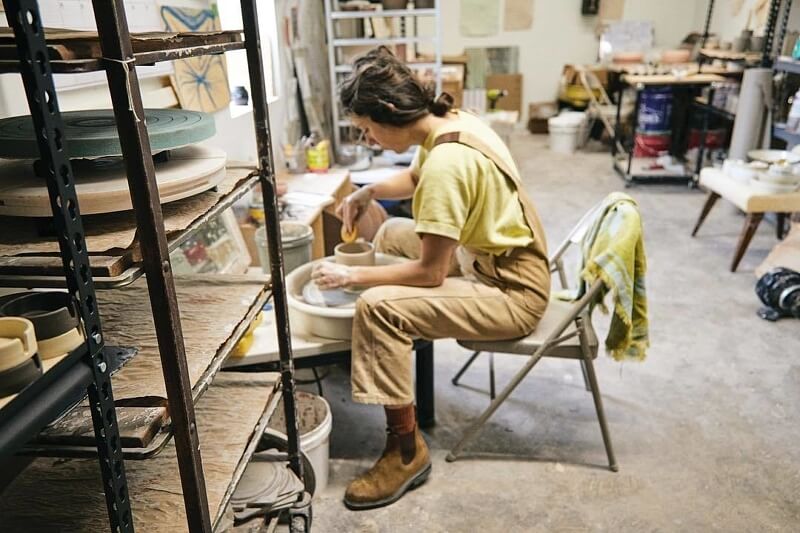
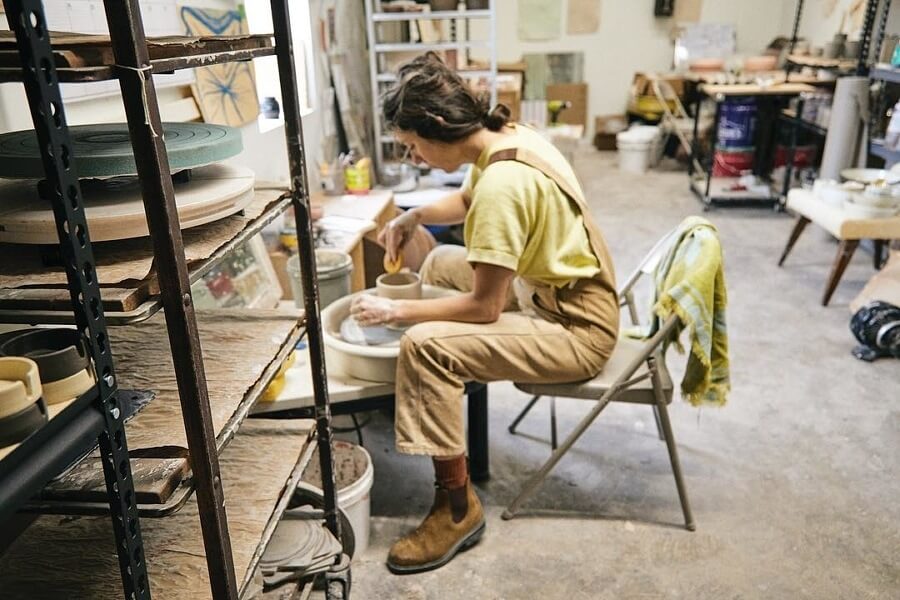
Pottery has a longstanding place in Southern life and art. Much like the other forms in this list, what began as a need for transporting liquid quickly became a honed skill with a rich decorative aspect. The earliest documented American Indian pottery was found in the southeastern United States and conveys the history and artistic heritage of some of our oldest cultures. Though pottery hasn’t seen a lull in artisan production, there is a new appreciation for handmade in business.
Jess Cheatham, ceramicist and owner of Salt Ceramics in Nashville, TN, tells us, “Even though handmade ceramics never really went away, we’ve definitely seen a resurgence of smaller makers on the tables of local restaurants and in hotels,” she says. “This could have to do with the (not new, but now popular) farm-to-table food movement that many chefs have utilized their whole careers. Recently, though, chefs not only want to shine a light on the farmers who make it possible for them to create such delicious food but also take pride in the presentation of their creations … enter the handmade vessel. Everything about the meal sitting on the table in front of you will quite literally be a work of art and will have been created with thoughtful, human hands.”
RELATED: Nashville Chefs Share Their Best Farmers’ Market Tips
Learning to work with clay has also gained popularity as a leisure activity. Many cities and towns in the South have seen a surge in adult pottery classes, perhaps pointing to this cultural yearning for the tangible and handmade. The process is as fun as the product and a bit of the artist remains — quite literally — in each work of art.
PinJess’s shop is chock-full of her artwork that can be used in everyday life. Image: Christen ClementPinJess’s pieces can be found in Rolf & Daughters, FOLK, Cafe Roze, Noelle, Firepot Tea Bar and Sólo Espresso. Image: Emily Dorio
Knitting
Nearly all rural Southern women of the 19th century practiced traditional textile arts, as quilts and warm clothes protected against the cold and working conditions. The 1920s saw a vast increase in the popularity of more artistic and fashionable knitwear. Through the Depression and World Wars, people relied greatly on knitting because it was transportable and cost-effective when factories turned to war efforts. In the 1950s, thousands of new patterns fed a post-war South hungry for vibrant colors and new designs. Through the ’70s, girls were taught to knit in school, but the ’80s saw a sharp decline in knitting, as low-cost, machine-knitted items became readily available on store racks. But in this 21st-century resurgence of D.I.Y. crafting, knitting is growing in popularity for other reasons.
Over the past decade, many studies have shown the therapeutic effects of knitting on helping anxiety and stress, delaying the onset of dementia, distracting from chronic pain and more. The trade group Craft Yarn Council estimates that 38 million people knit or crochet in the United States, and a recent survey found that 93% of people knit or crochet simply as a form of self-care. This number is staggering and tells us that people are returning to this art form as much for — if not more for — the process rather than for the final product.
PinThe Texas-based Craft Yarn Council has been promoting its Stitch Stress Away campaign since 2014, lauding the benefits of knitting to the mind and body. It can lower your heart rate, take your hands away from devices and reconnect you with others. Image: Craft Yarn Council
Storytelling
Words like storyteller and storytelling seem to be getting hotter by the minute. They’re seen in Instagram bios, they’re tactics in advertising, business and politics. We’re drawn to the voice of storytellers on wildly popular podcasts. Spoken word forums, symposiums and community events are on the rise, making it easier to speak out and share stories in the public arena. We want to feel, not just know. But it wasn’t always this way.
“This thirst for a well-told story may be rooted in two influential Old World source areas for the South’s population, Ireland and Africa, where the institution of community storyteller commanded great respect,” John A. Burstom writes in his paper Storytelling Tradition. The South’s large farming community also relied heavily on storytelling as entertainment. For many Southerners, oral education in the form of folktales and legends replaced novels and formal history books until the 20th century brought greater access to published works. But in the 20th century, people became obsessed with data and analysis, and storytelling detrimentally fell to the wayside. We started to put quantitative, hyper-intellect over an inquisitive, creative mind, reserving made-up stories for children’s bedtimes.
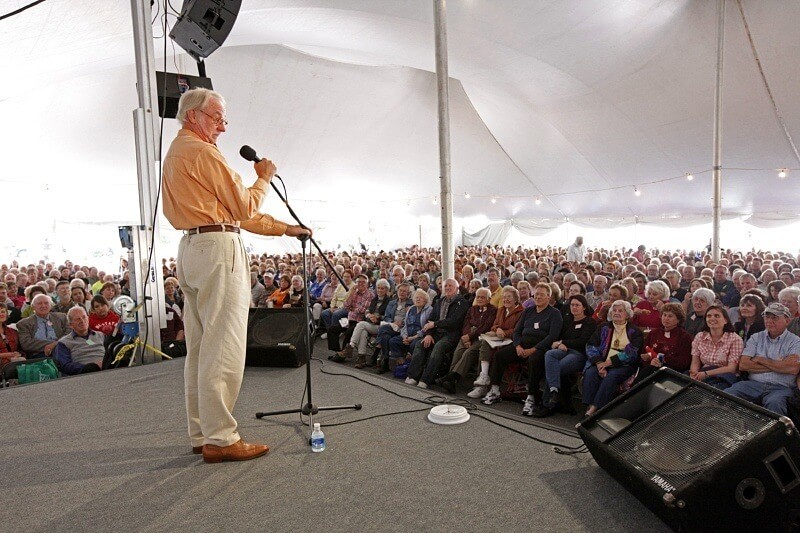
PinStoryteller Carmen Deedy performs fervently at the National Storytelling Festival. Image: Fresh Air Photographics
Today, the South’s reputation as a prime storytelling region remains, as people have moved past the spell of data obsession. Since its beginning in 1973, the National Storytelling Festival, produced by the International Storytelling Center in Jonesborough, TN, has nurtured and nourished this rebirth of storytelling. It’s proof we crave this reconnection and an avenue for our voices to be heard. The center’s history reads, “… For our lives are bound together with stories; the tales, perhaps ever so ordinary, that seem to catch us up and in some obscure, almost magical way, help us make sense of our world.” Professionals and enthusiasts alike enjoy a growing storytelling community in which they can breath new life into older, passed-down tales, or tell new ones.
RELATED: Southern Storytellers Keep an Ancient Art Alive, One Story at a TimePinStoryteller Donald Davis performs at the National Storytelling Festival, which takes place each year in Jonesborough, TN. Image: StorytellingCenter.net
Glassblowing
Glassblowing is another intricate, hands-on art that has gained momentum and popularity in recent years. It was introduced to the South when the British settled Jamestown, VA, in 1607, and the London Glass Company began to make and sell handmade bottles, jars and other items in newly founded America. While this plan fell financially short for the British colonists, it did leave behind an open door and many techniques for glass crafting to take off years later.
The rise of social media has allowed the world to see molten glass in all of its glory, drawing people to the glass experience almost as much as to the object itself. Kathryn Adams is the Operations Director at the North Carolina Glass Center in Asheville, NC, and she sees this swelling interest. “In the age of technology where people are feeling less than ‘connected’ by our phones, we have seen a lot of folks seeking experiences rather than just passively buying objects. Our hands-on glass classes have increased in popularity, which in exchange creates newfound excitement for the art form,” Kathryn says.
“Western North Carolina’s place in the glass art movement dates back to the 1970s, and now the region boasts hundreds of glass artists — one of the more concentrated groups in the country. The North Carolina Glass Center is home to more than 30 working artists from the yet-to-be-discovered to the established,” Kathryn says. “In my personal experience, working with molten glass is such a tremendous undertaking it truly does take a village, resulting in a community of supportive individuals.”
PinThree artisans are hard at work in the North Carolina Glass Center. The open garage door allows passersby in Asheville’s River Arts District to shop, watch the process or schedule a lesson themselves. Image: NC Glass WorksPinGlassblowing work can create everything from giant Dale Chihuly-caliber sculptures to ornaments to drinkware to jewelry. Image: Drew DeporterRELATED: 10 Southern Walking Tours to Take in Warmer Weather
Woodworking
Life skills like woodworking were passed down through generations, not only for the function of wood-crafted products but also to cherish and leave behind a handmade relic. Hobbyists are returning to the woodshop to build their own tables, chairs, bookshelves and more, and many are selling their wares on sites like Etsy, Facebook Marketplace, and at craft fairs and flea markets that seem to be popping up all over the South.
We are grateful to all our sponsors:
For Tennessee-based woodworker Doug Pace, it was a family craft and is now a gratifying hobby. “When I was growing up, my grandfather had a shop in his basement. He taught me how to use tools, the value of working with your hands and the importance of being patient. While woodworking is only a hobby for me, in this digital age of instant consumption, I find the months spent building a piece of furniture to be a unique, humbling and gratifying experience.”
Doug continues, “Over the past century, manufacturing (including woodworking and furniture building) in the U.S. evolved alongside the shift from a blue-collar to white-collar economy. When manufacturing is outsourced to emerging economies, so are many of the skills and traditions.” Prices drop, but the quality is often sacrificed. Doug believes that fine furniture is still valued, as evidenced in the furniture industry in High Point, NC, and the niche market of master woodworkers all over the country.
PinThis striking coffee table, made by Doug, is as much a piece of art as it is a functional piece of furniture. Image: Doug PacePinDoug makes everything from tables and chairs to large picture frames to these intricate wood-carved pens. (Maybe one day they’ll end up on the SB Shop!) Image: Doug Pace
These five forms are just the beginning of the world of art that is reconnecting us to our Southern heritage. Workshops, classes, meetups, and online groups are making it easier for artisans and storytellers of all kinds to come together, get started, learn from veterans and dive deep into their crafts. “The emergence of ‘maker spaces’ and online communities are helping to develop the next generation of woodworkers, making it easier than ever to learn a new craft,” Doug says.
We’re seeing hotels, shops, and restaurants take pride in supporting and showcasing handmade, local art. At the same time, we’re looking for a unique experience, an escape from reality, a connection that might leave us with something tangibly beautiful, but will always leave us with a nourishing conversation, a memory, or a story to tell. Art is an experience as much as it is an end result, and makers throughout the South are infusing this notion into our communities now more than ever.
**********
For the best of the South — straight to your inbox! — subscribe to our newsletter HERE!
Zoe is a StyleBlueprint freelance writer, Charlotte native, Washington & Lee graduate, and Nashville transplant since 2012. She teaches Pilates, helps manage recording artists, and likes to "research" Germantown's food scene.
Our unofficial motto at StyleBlueprint is "Be kind. Do good." We encourage this to be the basis for all comments on our articles. Provide feedback that adds to the story. Some controversy or disagreements are part of any good dialogue between friends, but anything that tears down or belittles others is subject to disapproval or removal. Thank you for being a member of the StyleBlueprint community! View our Community Guidelines.