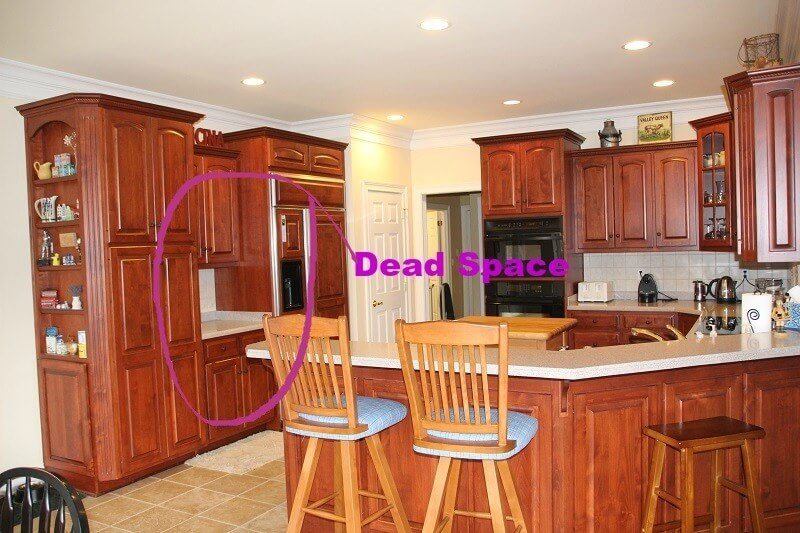
It is a familiar problem in a kitchen: a dead space. The space that becomes the catchall for mail, keys, purses … the general drop-off zone. Such was the case in an unused portion of this homeowner’s kitchen. There was a dead space countertop and cabinets between the refrigerator and larger cabinet area.
PinThis is about 30 inches of underutilized counter space and cabinetry.
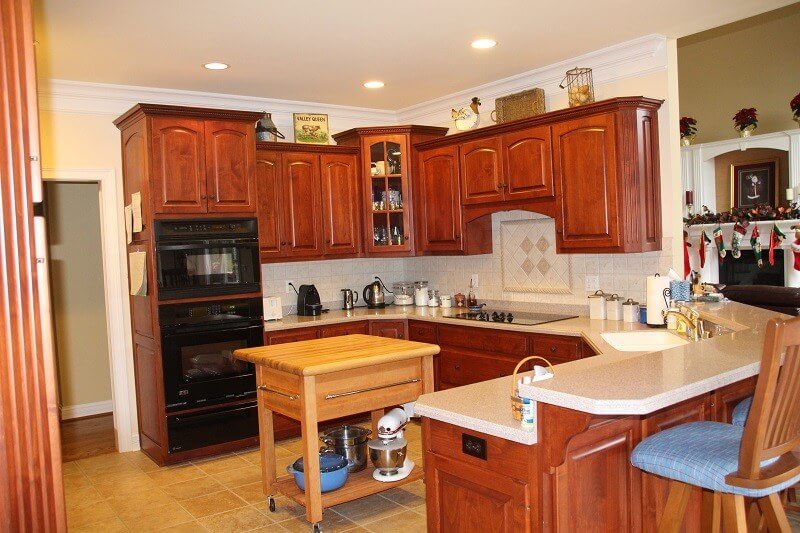
The homeowner, an avid cook and baker for her family who wanted to make better use of that space, turned to Robin Cook of Robin’s Nest Interiors for help. Previously, the homeowner used a kitchen island as the main staging area for her cooking and storage of her bigger appliances, such as her food processor and mixer. Robin knew that the homeowner enjoyed cooking and “she should have the tools she needs.”
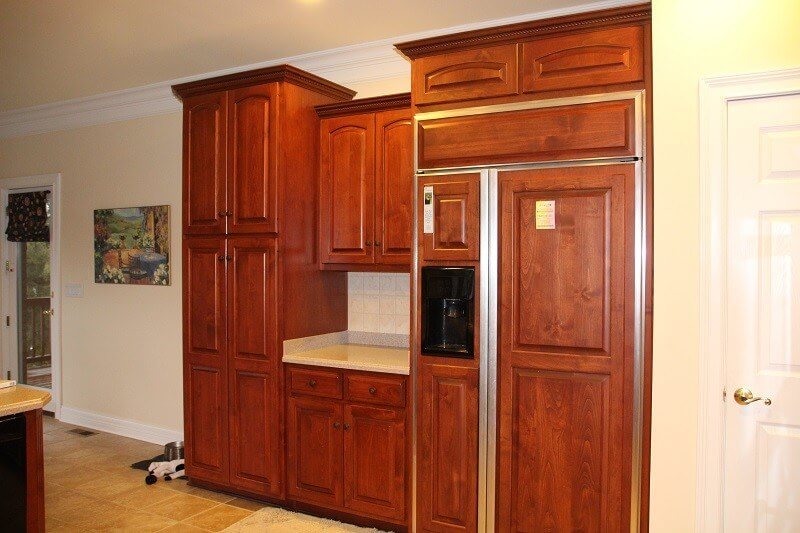
PinBEFORE: Another view of the dead space, with a large cabinet pantry and the refrigerator flanking it.PinBEFORE: The kitchen island was the cooking and staging area, as well as the area for storage of the mixer and the food processor.
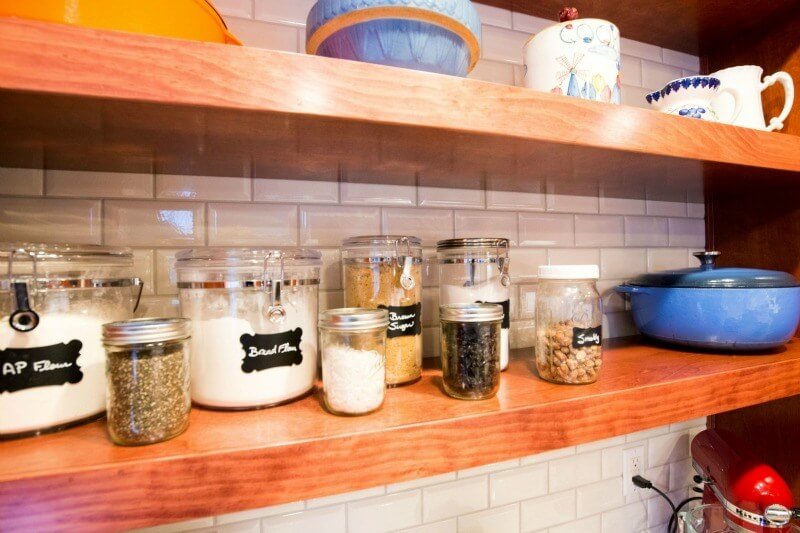
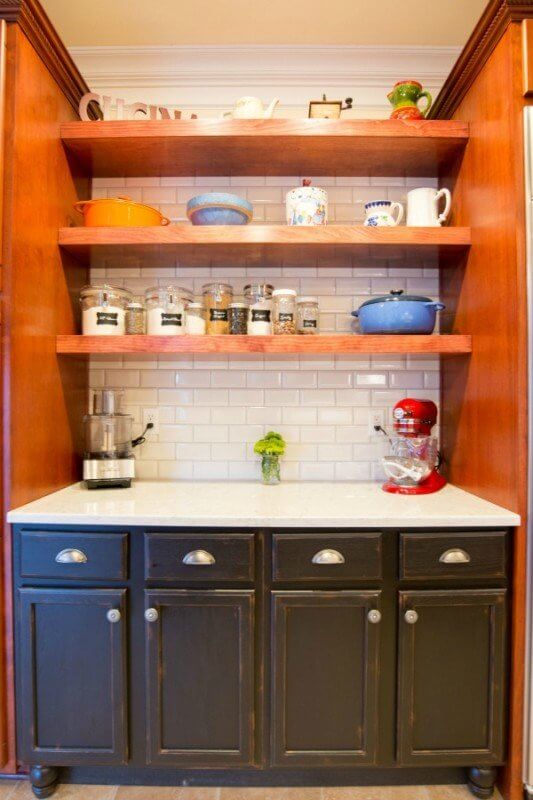
Robin decided on a baking nook for this dead space, which was only considered a kitchen update, not a kitchen remodel. She doubled the size of the countertop in the dead space from 30 inches to 60 inches. She took out the cabinets above the countertop, adding open shelving instead. Behind the countertop, she added a backsplash of subway tile that matched the backsplash throughout the rest of the kitchen. Open shelving is ideal for storage and is less expensive than cabinetry. Now the homeowner can display all the ingredients she uses to bake in an organized fashion, making everything easier to access.
PinAFTER: Open shelving is cheaper than cabinetry and everything is more accessible.
This kitchen update involved keeping the flooring and the cabinets, just replacing the countertops and backsplash and adding the baking nook cabinetry. The kitchen was large enough that they could slide the pantry cabinet down and add 30 additional inches of cabinet space, which doubled the nook space. Robin purchased basic kitchen cabinets and decided to customize them. She knew she wouldn’t be able to match the cabinet door style or the cabinet finish exactly, “so we decided to make the baking nook look more like a furniture piece by painting it black with a glaze that coordinated with the cabinet color and adding furniture feet.” Robin used Kelly Sisler with Kelly Faux Creations for the painting.
Shelves were also a consideration. Robin tells us, “Our contractor, Brad Anderson, is an accomplished trim carpenter, and he built the floating shelves. There was much discussion on the depth and placement of the shelves. The homeowner had specific baking tools that she wanted to place on the shelves, so we wanted to make sure we could accommodate everything. We took the subway tile up behind the shelves as a nice backdrop.”
PinAFTER: Everything is ready and at arm’s reach for the baker.
Everyday ingredients and also baking-specific ingredients are stored in clear glass canisters with chalkboard labels on each. Larger appliances, such as the food processor and the mixer, are out on the countertop and plugged in, ready for action. There is plenty of room on the countertop to spread out ingredients, roll out dough or have multiple batches going at the same time.
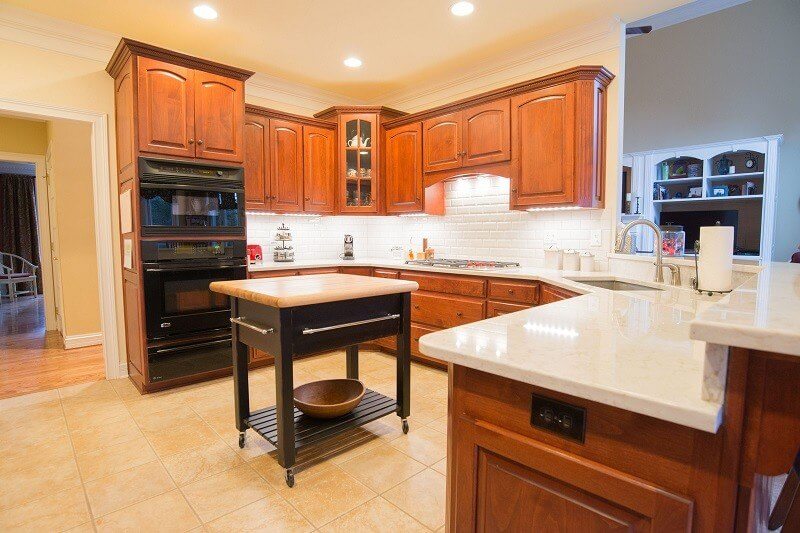
Kelly Sisler also painted the base of the butcher block island black to repeat the element. Now, the kitchen island is free for other cooking or serving options, and the baking is done over at the baking nook.
PinAFTER: The kitchen island was painted black in keeping with the theme of the baking nook cabinets.
The homeowner loves the new incarnation of her space, and she uses it every day. She recommends taking “something that was unusable and making it useful” so that you can enjoy it every day. The planning for this project took about four months total, while the actual work only took about three weeks.
PinWe fear we would eat all the ingredients if they were displayed all the time.
Converting these unused desk areas into a baking nook, or even a beverage station for coffee or a bar, just makes sense, Robin says, and we think she’s right!
Our unofficial motto at StyleBlueprint is "Be kind. Do good." We encourage this to be the basis for all comments on our articles. Provide feedback that adds to the story. Some controversy or disagreements are part of any good dialogue between friends, but anything that tears down or belittles others is subject to disapproval or removal. Thank you for being a member of the StyleBlueprint community! View our Community Guidelines.