Say This (and NOT This) to Friends Who Are Struggling
When you see a friend in distress, do you have a hard time finding the right words? We turned to the experts at Onsite to educate us on what to REALLY say (or not say) to loved ones when they're facing grief, anxiety, divorce, depression, and more.
Sometimes it’s hard to know how to handle a friend or loved one’s suffering. Sometimes it’s hard to manage our own.
We don’t want to get it wrong when we’re talking to a friend who just told us she thinks she’s depressed or might be separating from her husband; who got that dreaded diagnosis or phone call in the middle of the night; who’s drinking too much and is starting to realize it. We want to help her feel better. We want to help her find the right help. Most of all, we don’t want to make things worse by saying the wrong thing.
This is our first of a year-long series focusing on mental health with the guidance of our friends at Onsite, with locations in Tennessee and California as well as offerings online. Onsite has provided residential and non-residential therapeutic care to people seeking emotional health and healing for over 40 years, and it’s recognized as a leader in the field.
Here’s the advice Onsite offered for supporting friends and family members in a variety of challenging circumstances. You can use these links to skip straight to a helpful list of things to say, and NOT say, to a loved one who is:
Most importantly, don’t minimize what you or your friend is going through.
“When we, or the people we care about, experience difficulty, it can be tempting to minimize or compare our experience,” says Austin Houghtaling, Ph.D., LMFT, and Vice President of Clinical Services at Onsite.
“Minimizing is something we all do to an extent,” says Austin. “This coping strategy allows us to avoid (or at least try to avoid) how we really feel and the pain or sadness that may be coming up for us. It gives us a false sense of control because ‘things could be worse,’ but in reality, when we compare our suffering with someone else’s, it only puts our own pain on ice.”
When we minimize or compare our pain, it keeps us disconnected from ourselves and others. By minimizing our experience — or theirs — we tell others that their hardship has a measurement, and if their pain doesn’t cross the threshold, it doesn’t really matter.
But in fact, when we feel pain or discomfort, it is an invitation to pay attention to ourselves, extend empathy to our experience, and seek to understand what we actually need to move forward. When a loved one is suffering, we can invite them to do the same. None of us escapes adversity, but we all deserve to heal.
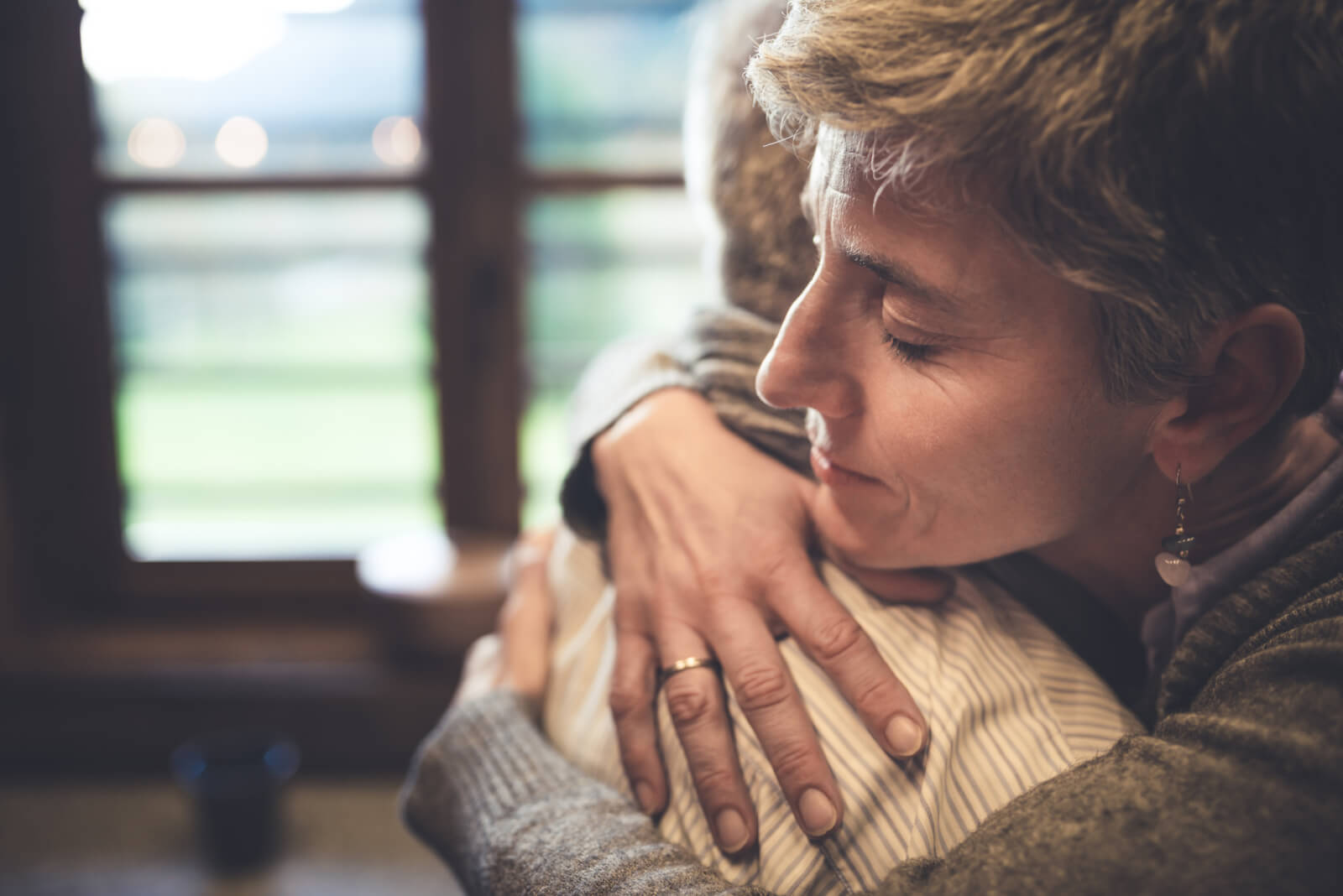
PinWhen confronted with a loved one’s suffering, the experts at Onsite encourage us to resist the urge to minimize their pain. Acknowledging their suffering is an important first step.
With that starting point in mind, here are some specific suggestions from the experts at Onsite:
When a friend is grieving
What to say:
I’m so sorry this is happening.
This feels really big. I’m not sure what to do, but I’m here.
Would you be willing to share your favorite memory of them?
No one deserves this type of pain or loss.
This matters.
What not to say:
At least they’re in a better place.
It could be so much worse.
You’re better off.
Look on the bright side.
It’s for the best.
When a friend has received a scary diagnosis
What to say:
I’m here with you.
There’s not a right or wrong way to respond.
You don’t have to have it all figured out.
I am here to help in whatever way is most helpful (and it’s okay if you don’t know what that is yet).
It’s okay to be scared.
What not to say:
At least it’s not … [fill in the blank]
You’ve lived a full life.
It’s going to be okay.
When a friend is going through a divorce or difficult breakup
What to say:
I’m sorry you’re hurting.
I’m with you.
You are worthy of love.
You’re allowed all the time you need to grieve this loss.
What not to say:
I never liked them anyway.
I knew you were too good for them.
There are plenty of fish in the sea.
You weren’t together that long.
PinUsing simple phrases like “I’m with you” can remind loved ones that they’re not alone.
You don’t have to show up any specific way for me.
You’re not weak or crazy or not normal.
I’m sorry you’re feeling this way. I’m here with you.
This is really big.
What not to say:
Just relax.
Look on the bright side.
You’re just too tense about everything; lighten up.
Stop worrying so much.
It will all work out.
When a friend is feeling depressed
What to say:
You’re doing enough.
You’re allowed to be sad.
Nothing is wrong with you.
You’re not too much.
Your life matters.
What not to say:
It could be worse.
Think of something happy.
You have so much to live for.
Just get outside and get some sunshine.
How to Know If Your Friend Needs Professional Help
We also asked Austin for signs to help us recognize when a friend might need professional help.
“Most people wait until the wheels are falling off the bus before they seek out a therapist. If eroding wheels get someone in the door of a helping professional, good. You’ve found the help you need, and I believe healing is always possible,” he says.
“But my hope would be that someone seeks a therapist when the level of their stress and pain is beginning to become unmanageable alone,” he adds. “At Onsite, we believe that seeking out help from a trusted professional is not something you need, but rather something we all deserve. We encourage people to seek a therapist from a place of self-compassion and curiosity. That curiosity can open you up to ask, ‘What more is possible?'”
Austin lists the following warning signs that we might observe in a friend — or ourselves:
You feel like you’ve exhausted your support system
Multiple people express concern for your wellbeing
You have begun to isolate and withdraw from support
Decreased physical health
Increase in medicating and avoidant behaviors as you seek out external things to turn down internal noise
Overall dissatisfaction
Destructive behaviors
Alarming, scary thoughts
If you see these warning signs in a friend or recognize them in yourself, and you need immediate support, please consider the resources shared at the Onsite website here.
Consider one of Onsite’s Online Emotional Health Master Classes or an in-person workshop on one of their two campuses in Tennessee or California for further exploration and growth.
You are never alone. There is always help just waiting for you to find it. Hold your friend’s hand, and help them find it too.
Thank you to Onsite for underwriting this year-long series to provide expert advice and insights!
Our unofficial motto at StyleBlueprint is "Be kind. Do good." We encourage this to be the basis for all comments on our articles. Provide feedback that adds to the story. Some controversy or disagreements are part of any good dialogue between friends, but anything that tears down or belittles others is subject to disapproval or removal. Thank you for being a member of the StyleBlueprint community! View our Community Guidelines.