
The Tidiness Double Standard
Do men and women see mess differently, or is something else going on here? Let's unpack the tidiness double standard, the "CleanTok" buzz, and the real meaning of mental load. Image: ChatGPT
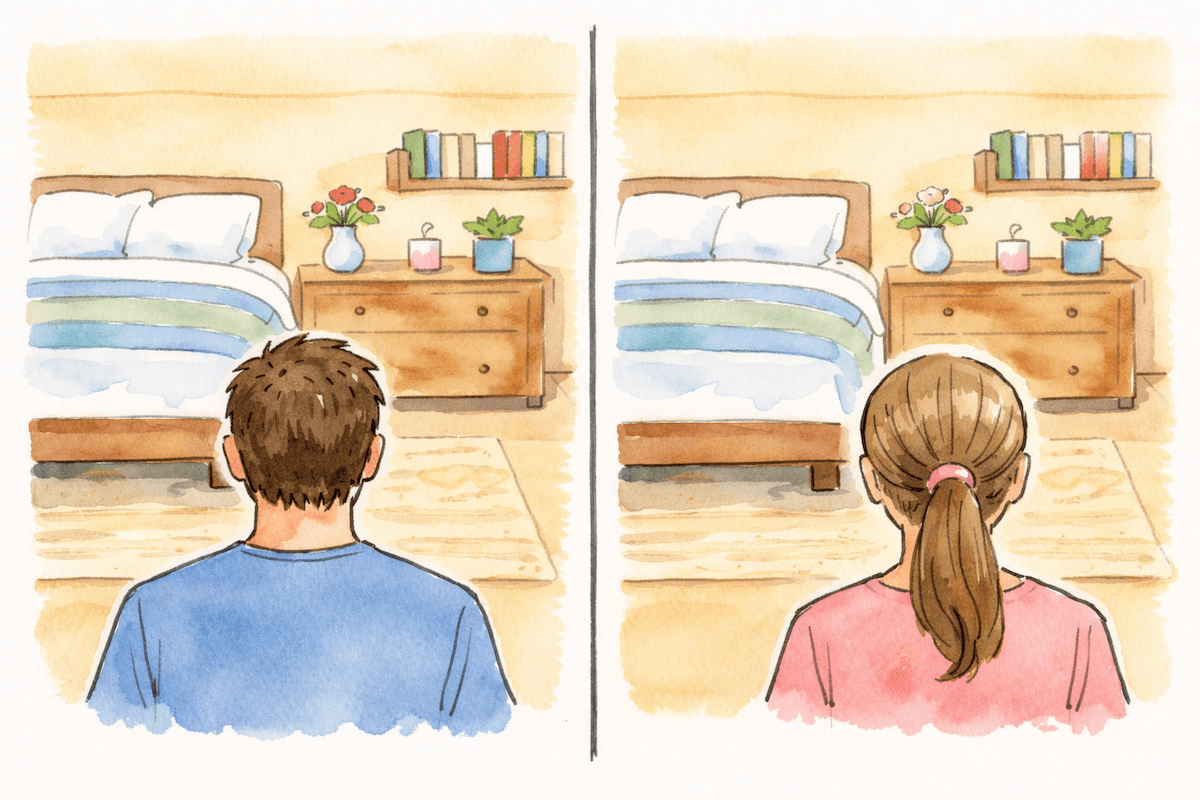
Every household seems to have its own version of the “mess debate.” One person walks into the room and immediately starts mentally cataloging dishes, laundry, and crumbs on the counter. The other sees a perfectly livable space and sits down on the couch.
This dynamic has fueled countless TikToks and dinner-table arguments, but researchers studying household labor say the truth is more nuanced than the stereotype. Men and women may actually notice the same mess; they just experience the responsibility for it very differently.
Seeing Mess as a Reflection of Self-Worth
I remember a younger me watching my mom get the house ready for any get-together. Karate chopping the pillows, wiping surfaces until they sparkled, lighting the guest bathroom candles, and clearing the front closet space for guests’ coats. My father shared the work, but he usually needed a list from my mom, and he didn’t approach it with the same urgency. He stayed up long after the guests left to clean the kitchen, and thrived on household work he could plainly see, and that had looser deadlines.
You’ve probably seen some version of the same video on social media: a woman pans the camera across a room full of dishes, unfolded laundry, and clutter while a man shrugs and says, “What mess?” And under it a slew of comments: “He really doesn’t see it!” “Weaponized incompetence!” “Men just don’t care about cleanliness the same way women do!” The StyleBlueprint team and I wanted to get to the bottom of this, or at least open the conversation.

The Tidiness Story is Well-Studied but Complicated
Scientists, sociologists, and psychologists have spent years studying household labor, mental load, and domestic expectations. And the data isn’t simply that men don’t notice mess or that men do less household work than women.
It points to something more layered: men and women often recognize mess similarly, but women are more likely to be held responsible for it, to anticipate it, and to carry the invisible planning around it. They’re also more likely to let clutter stress them out. Let’s dig into the research and how we might rethink and model tidiness in our own homes.
Do Men Really “Not See the Mess”?
One of the best and most frequently cited studies on this is “Good Housekeeping, Great Expectations: Gender and Housework Norms,” published in 2019. In the experiment, men and women rated a room for messiness or cleanliness similarly, undermining the lazy cliché that men are biologically oblivious to clutter. They do see it.
But the researchers took it a step further and randomly told respondents the room belonged to either “John” or “Jennifer.” Even though the rooms were identical, people judged them differently based on the name attached. Participants consistently held “Jennifer” to a higher standard of cleanliness, rating the room as less clean and more likely to draw criticism from visitors when they believed a woman lived there.
That finding raises an interesting question: If society still assumes that women are more responsible for the state of the home, is it any wonder many women feel more pressure to fix the mess? Do men feel the same social pressure to keep a house “guest-ready?” If expectations differ, the emotional stakes around tidiness may differ, too.
Understanding the inherent pressure women feel around this, and that it’s not just women judging the women, it’s everyone judging women, opened my eyes to why my mom, my girlfriends, and I run around tidying everything before hosting, even if it’s just one other couple coming over for dinner.
“Mental Load”: More Than Buzz Words
Cleaning itself is only part of the story. A growing body of research focuses on something called cognitive household labor, commonly referred to as the “mental load.” It’s not just the stuff that needs to get done. It’s the thinking about how and when it will get done, and who will do it.
“Mental load” includes the invisible tasks that keep a home running, like noticing when the laundry basket is full and the dishes need to be unloaded. It’s remembering that the dog needs heartworm medication, or that the kids’ books need to be returned to the library. It’s getting more toothpaste when the tube is empty, and realizing there’s nothing packed for school lunches tomorrow. It’s looking at the calendar, seeing a birthday party, and buying the gift a few days before the event.
Mental load is harder to quantify, but just last year, a fascinating study reached some alarming conclusions. The researchers found that women (specifically, mothers of small children) still do more of the overall domestic labor. But the disparity is much greater for mental labor, even in households where physical chores are more evenly split. And the mental load matters. Women who carried more of it reported higher levels of stress and relationship strain.
What’s Helpful, What’s Not
Both men and women work around the house. The U.S. Department of Labor’s 2024 Time Use Survey showed that, on an average day, 87% of women and 74% of men spent time on household activities (such as cleaning, cooking, lawn care, or household management). Women spent an average of 2.7 hours, while men spent 2.3 hours.
The physical household labor gap is still uneven, but it’s closing. The mental labor gap isn’t. One study showed mothers take on 71% of household mental load tasks, including planning, scheduling, and organizing, while fathers manage just 45%. This imbalance leads to stress, burnout, and friction within women’s careers and relationships. It also leads to another question many couples quietly wrestle with: Are we dividing all labor equally or just the visible labor?
It’s the “Just tell me what you need me to do” mindset of some men that women find increasingly irritating. Women don’t want to tell men what to do. We want our partners to recognize what needs to get done, and then do it. This lack of resourcefulness stirs up a lot of debate online. Take a look at this reel.
Some men in the comments argue, “We’re not incompetent, we are afraid of getting things wrong.” Is that a cop out? Are we holding our partners to too high a standard by expecting tasks to be done from start to finish without questions or our involvement? Completing tasks only after being asked, or doing only part of a task, can often add more stress than help.
Women are absolutely not without their own cleanliness faults. I will admit that in my own marriage, I get so overstimulated by clutter that I sometimes box up or bag up tons of stuff in an “out of sight, out of mind” way. But I know that my husband wants everything in its right place, and he takes the time to make sure we’re so organized around the house. It’s helpful to everyone to always know where things live.
How Mess and Stress Interact
Men and women both see the mess, but men aren’t as personally bothered by it as women are. My husband wants to come home and relax before cleaning, but I can’t relax until everything is clean. The UCLA Center on Everyday Lives of Families conducted a study in which researchers spent years observing middle-class families in their homes and analyzing how people talked about their living spaces.
They found a fascinating pattern among mothers in particular. Women who described their homes using words like “cluttered,” “chaotic,” or “messy” had significantly higher levels of the stress hormone cortisol throughout the day compared to women who described their homes as “restful” or “restorative.”
But this pattern did not appear nearly as strongly among fathers in the study. Researchers concluded that cluttered environments can create a persistent low-level stress response for many people, especially when they feel responsible for managing the home.
Reframing the Tidiness Conversation
Women may feel more pressure to maintain a tidy home because society has historically tied domestic order to their worth. Men may not feel the same scrutiny. But both partners may contribute to the household in different ways, some visible and some invisible. We’re making strides in sharing visible work, but sharing the mental load is important, too.
Experts say that the real opportunity for progress lies not in deciding whose definition of clean is correct, but in building a shared understanding of what it takes to keep a home running. The goal isn’t a perfectly spotless house. It’s a household where everyone feels heard, supported, and part of the team. And maybe … just maybe … where someone else notices the dishes before you do.
**********
Discover even more Southern stories worth sharing. Follow us on Instagram!

Zoe Yarborough
Zoe is a StyleBlueprint staff writer, Charlotte native, Washington & Lee graduate, and Nashville transplant of eleven years. She teaches Pilates, helps manage recording artists, and likes to "research" Germantown's food scene.