

Buckle Up, Nashville. The Next Cicada Swarm is Coming.
From pesky to downright earsplitting, Nashville cicadas are NOT our favorite locals. But we may as well buckle up for "Cicada-pocalypse" — another brood is rolling into town. Image: Unsplash
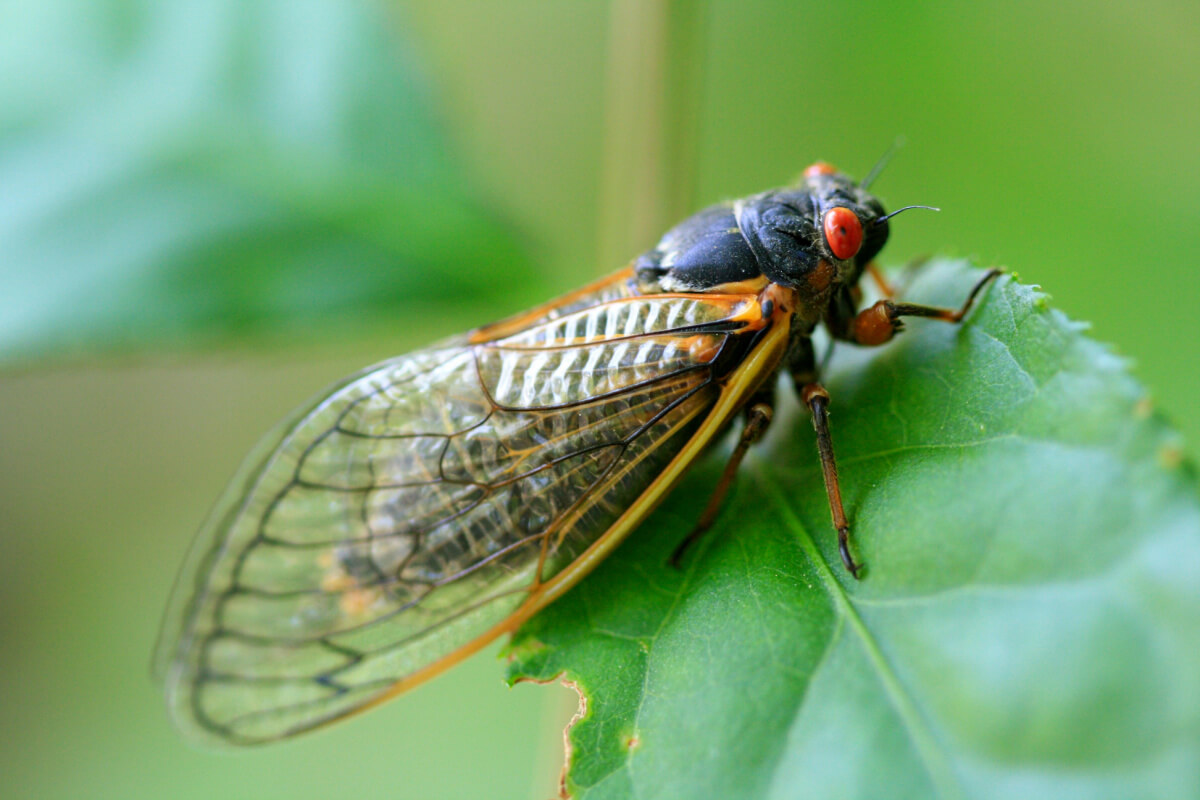

This year’s Brood XIV cicadas spend 17 years underground sipping sap from tree roots, only to emerge en masse for a few noisy weeks of mating and mayhem. When they surface, they do so in overwhelming numbers as a survival tactic: predators like birds and squirrels can’t possibly eat them all.
The male cicadas head for the treetops and sing their hearts out (though to be fair, you’ll find better singers at any Nashville karaoke venue). The chorus can reach roughly 85 to 88 decibels, which is about as loud as traffic on I-40 during rush hour.
To be clear, these aren’t the same green “annual” cicadas we hear every summer. Brood XIV cicadas have black bodies and fiery red eyes (not to be confused with locusts) — and luckily, these won’t munch on your garden veggies.
But most importantly: When are they coming, and how many can we expect?

The big emergence is expected … well … now. Middle Tennessee can likely expect the grand entrance during the first week of May. Once they pop out of the ground, the party will last around five to six weeks, and by late June, they’ll have done their thing and disappeared (all except for the exoskeletons they leave behind, but that’s another story).
In terms of sheer numbers, buckle up. Experts say billions of cicadas will emerge across the region, with up to 1.5 million cicadas per acre in some spots. Yes, you read that right — per acre! If you’re in a hotspot, your yard might crawl with them. Happy early Halloween.
The good news is that cicadas won’t hurt you or your pets. And with any luck, your dogs won’t turn your cicada-filled yard into an all-you-can-eat bug buffet (like mine do).
Despite their alien-like appearance, cicadas don’t bite or sting; they’re pretty gentle and harmless. In fact, cicadas might even do your yard some good! As they emerge, they aerate the lawn with little exit holes.
When their short lives above ground end, their bodies compost into nutritious garden fertilizer — free lawn care, courtesy of Mother Nature!

5 Tips for Dealing with Cicadas
1. Embrace it (or at least don’t panic). If you don’t love bugs, take heart that it’ll be over by mid-summer! If you love them, enjoy this once-in-17-years opportunity to witness nature’s big show up close.
2. Skip the pesticides. There’s no need for insecticides or sprays. They won’t make a dent and will just harm other critters. Spraying won’t speed up their departure, since these cicadas are on a fixed schedule and will disappear naturally in a few weeks. So save your money (and the environment) and let nature run its course.
3. Protect young trees. Newly planted or small ornamental trees (typically under four years old) could use some protection. Female cicadas cut little slits in narrow branches to lay eggs, which can weaken very young trees. The easy fix is to wrap a fine mesh netting around the small trees or shrubs to keep cicadas off. Older, established trees will be just fine without any intervention.
4. Gear up for the noise. If you’re sensitive to sound, you might want to have earplugs or noise-cancelling headphones handy for outdoor activities during the peak of the emergence. The mating calls of thousands of male cicadas can create a constant hum that’s louder than an AC/DC concert.
5. Drive and mow with care. Cicadas might land on you; just brush them off gently. When driving, be aware that cicadas are clumsy fliers; keep your windshield washer fluid topped up to handle the splatter (ew). And when mowing the lawn, consider doing it at midday when cicadas are more likely to be singing in the trees, rather than early morning or evening when they tend to emerge from the ground. No one wants their mower to become a bug blender.
**********
We’ve got SO much more than bugs on StyleBlueprint. Sign up for our daily emails to stay in the know!
Jenna von Oy Bratcher
Jenna von Oy Bratcher is StyleBlueprint's Editorial Operations Manager and Lead Content Editor. The East Coast native moved to Nashville almost two decades ago, by way of Los Angeles. She is a lover of dogs, strong coffee, traveling, and exploring the local restaurant scene bite by bite.