

Meet Memphis Jazz Musician Cequita Monique
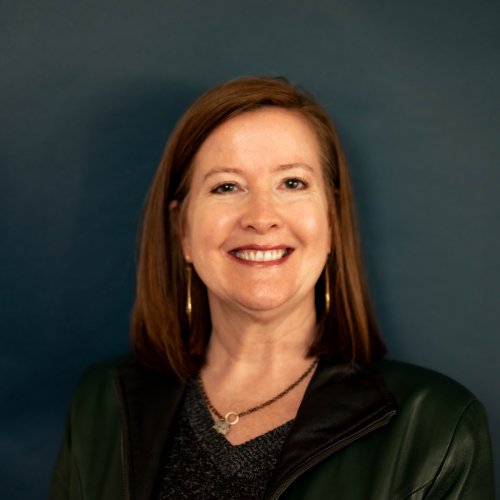
After a lifetime of music, storytelling, and community-building, jazz performer Cequita Monique is exactly where she belongs: making space for Memphis music, history, and culture at the Center for Southern Folklore's Jazz Pop-Ups. Image: Cequita Monique
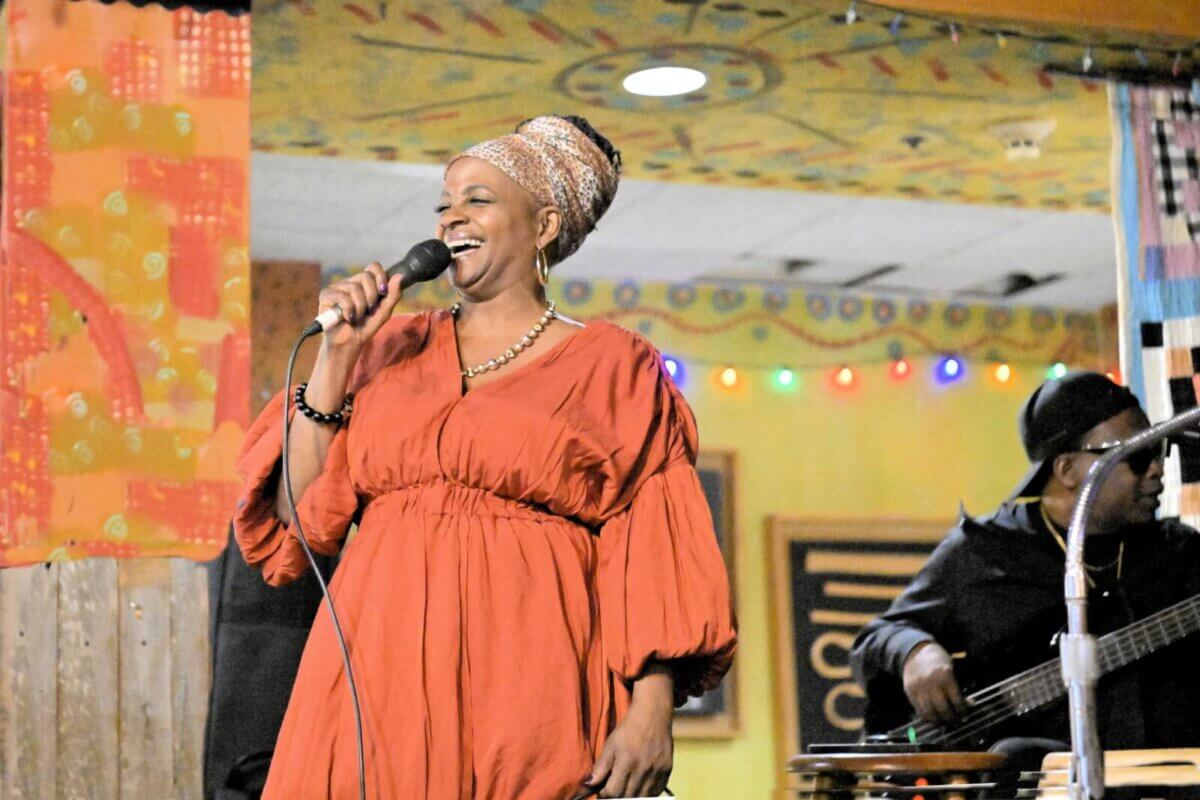
Memphis performer Cequita Monique has a gift for turning any room into a soulful, joy-filled gathering — and her latest venture does exactly that. Her First Sunday Jazz Jam Pop-Ups at the Center for Southern Folklore bring together musicians and music lovers for an afternoon of improvisation, collaboration, and pure jazz energy. With each monthly event, Cequita creates a welcoming space where community and creativity can flourish, reminding Memphis just how alive its music scene truly is.

Born in Holly Springs, MS, Cequita Monique grew up in a family filled with love and pride. Her childhood home was always overflowing with food, stories, and lively conversation. “Our house was a place that other people came to for refuge or retreat,” she says. “It wasn’t just blood family. It was community. Kindred spirits. People who loved one another.”
Her gift for performing came naturally. Cequita’s grandfather and uncles sang in gospel quartets and choral groups; her family held talent shows at home, and the house was always filled with music and laughter. “My grandfather was my first music mentor,” she says. “He instilled in me the confidence to sing and helped me discover the sound that would become my own.”
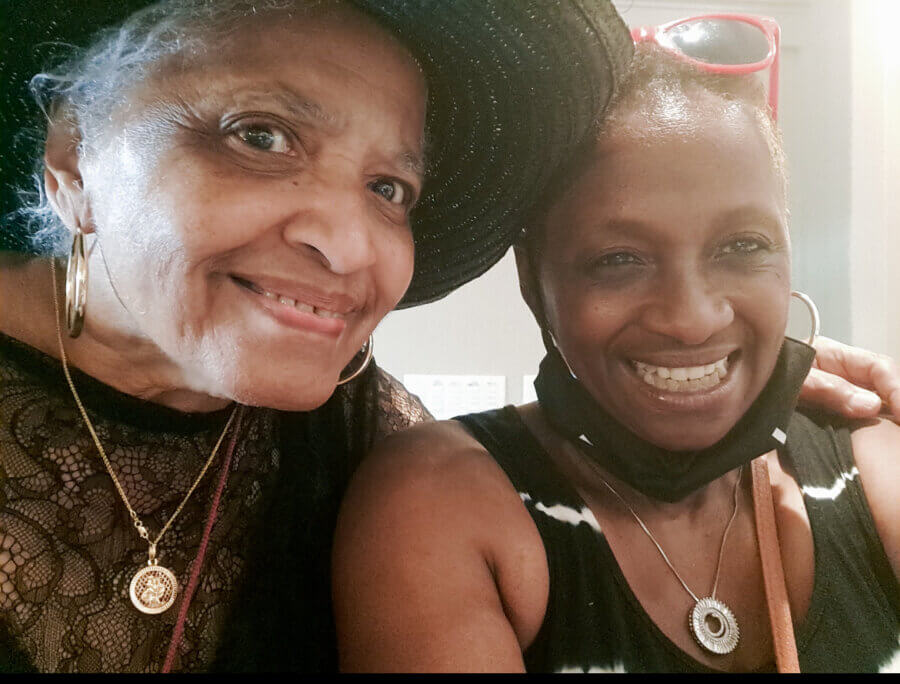
Growing up in choirs, bands, and school productions, Cequita felt increasingly at home on stage. After graduating from high school, she left Memphis for the University of Tennessee at Chattanooga. The campus’s social and political climate shaped her in new ways, particularly when she helped organize against the university’s refusal to crown the first Black Homecoming Queen.
“It wasn’t the opposition that moved me,” she says. “It was the opportunity to choose my position. To understand that my voice mattered.”
But after spending her freshman and sophomore years having “the time of her life,” it became apparent to Cequita’s family that her experience was primarily social. “Whatever life lessons I was learning were not showing up on the transcript. According to my mother, this is not what she had sent me to Chattanooga for.”

She returned to Memphis, enrolled at LeMoyne-Owen College, and threw herself into theater, literature, and music. Influential mentors, including professor Dr. Mildred Green, author Dr. Miriam DeCosta-Willis, musician Perry Michael Allen, and actor/playwright Danny Drew, pushed her to refine her craft and step into professional artistic spaces.
But one of the most powerful pivots of her life came after the death of her father. Although she was intrigued by the idea of traveling to perform, Cequita realized she was more interested in exploring the influence that Memphis music had on the world, and working consistently but with flexibility.
“I decided to establish and maintain a base in Memphis and come and go wherever and whenever opportunities prevailed,” she explains. “I considered my options as an independent artist and then an entrepreneur. How could I produce myself so that I could always have a gig? Be a part of presenting legends, but with everyday consistency?”
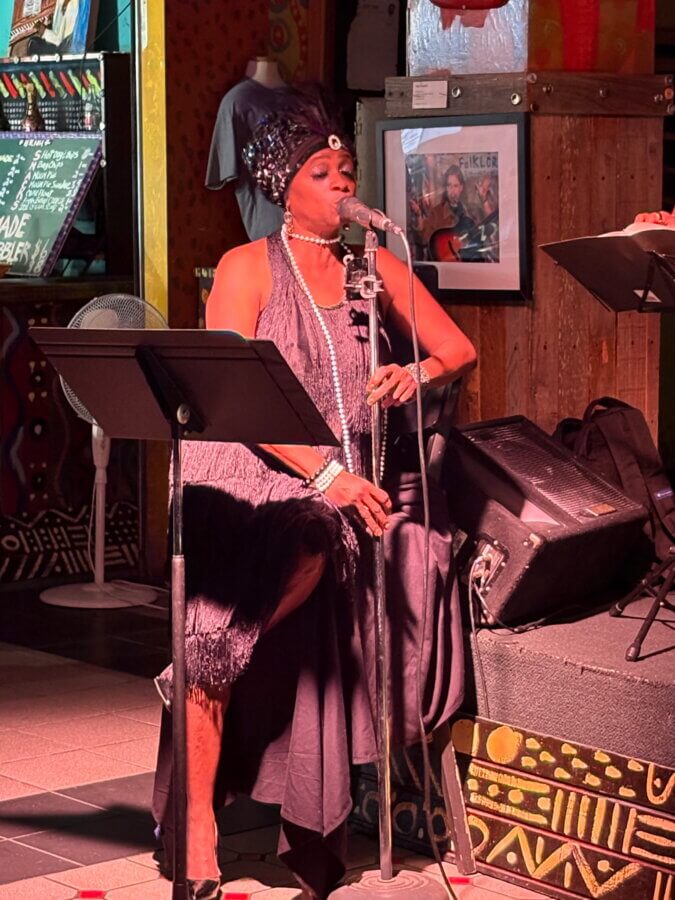
Her ideas blossomed into Precious Cargo Gourmet Café, a soulful gathering place she opened in downtown Memphis. Equal parts cultural hub, arts venue, coffee shop, and community refuge, Precious Cargo quickly became beloved. “It became so many things to so many people,” she says. “It was a vibe — a Memphis culture house.”
But the shifting downtown landscape made it difficult to sustain. Business slowed, and Cequita began working as a flight attendant for Northwest (later Delta) to supplement the café’s income. After years of holding on emotionally, she made the difficult decision to close Precious Cargo.
“That was my grief,” she says. “Flying helped me process it — or maybe avoid processing it. I’d return to Memphis again and again, and people still talked about the space, the vibe, the time that was. But I knew it was not to return.”
What did return was her artistic rhythm, and Cequita decided it was time to be on the ground. She began working with several theater companies and creative organizations in town, including Playback Memphis, Memphis Black Arts Alliance, and the Orpheum Theater Group. Work was plentiful, and her schedule was full.
She was working in theater production in Florida when COVID hit. Cequita returned home and dove into Zoom theater, writing, and new performance concepts. She wrote and produced Come Sunday, a musical vignette built around Sunday-themed songs that marked milestones in her life. At the same time, the trauma and violence unfolding across Memphis weighed heavily on her mind.
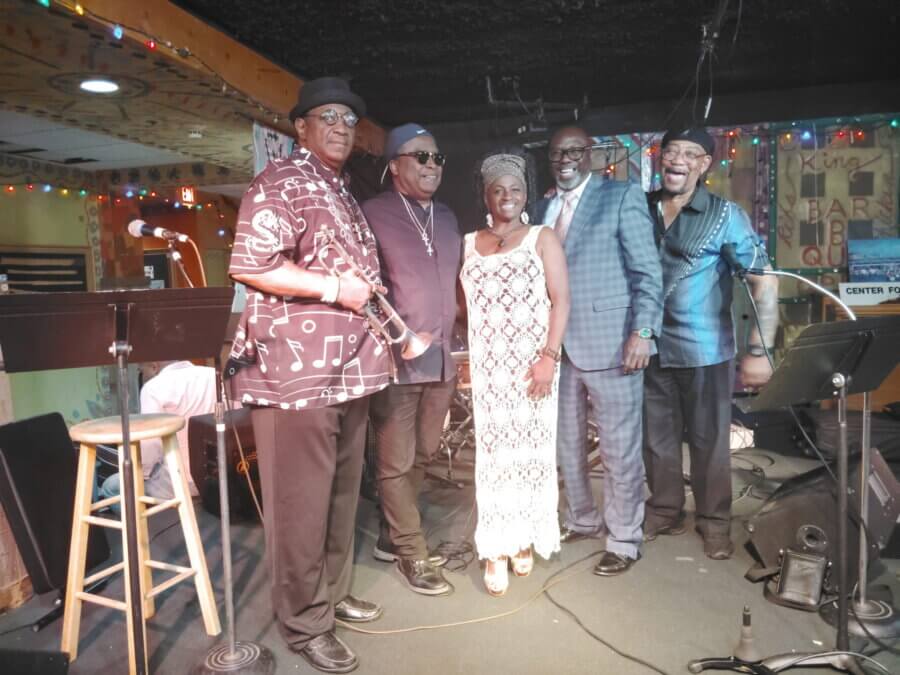
She longed for something specific: a consistent gig with musicians, rooted in Memphis, that would feed her soul and the community. The Center for Southern Folklore, a place she’d long considered a jewel in the community, kept popping up in her mind, and she created her own opportunity there.
“I took it upon myself to self-produce the First Sunday Jazz Jam Pop-Up in 2025,” she says. “If you don’t see the wave, make the wave.”
The monthly event is a slow-and-steady success. Designed as an inviting, open musical space, it brings together young, emerging musicians with seasoned professionals for pure, joyful collaboration. Cequita’s vision stretches far beyond a single Sunday each month. She plans to close 2025 with a holiday concert, brunch, and bazaar on December 7, followed by the launch of a First Sunday Gospel & Jazz Jam Brunch in February 2026.
And then there’s the project closest to her heart: The Memphis Series.
One of Cequita’s original Precious Cargo dreams was a living history museum and dinner theater, a place where Memphis stories and music come alive. In 2026, she plans to bring that concept to life with staged vignettes featuring iconic figures like Alberta Hunter, W.C. Handy, Memphis Minnie, and Jimmy Lunceford.
“It’s time to wake up the hidden voices,” she says. “If a race of people should know their history, the citizens of a city should know theirs, too.”
The Memphis Series will run monthly from April to September 2026 and will also be available as an educational field trip or a traveling cultural experience.

While building these ambitious programs, Cequita remains in high demand as a performer. She works with EveryStory Improv Theater (formerly Playback Memphis), collaborates with arts organizations across the city, and performs solo.
For aspiring musicians, her advice is simple and profound: “Allow yourself to know, trust, feel, and be.”
And the three things she can’t live without? “Water, music, and sleep!” she says.
**********
For more inspiring FACES of Memphis, click HERE!
Gaye Swan
As a professional writer of over 20 years, Gaye is an avid traveler and enjoys highlighting food, culture, and attractions around the South. While Gaye is passionate about life in Memphis, she grew up in Meridian and is still a Mississippi girl at heart.