
Meet Memphis Author Martha Park
Join us for a conversation with new author Martha Park — a Southern writer and illustrator who tackles the connections between motherhood, faith, and nature in her dazzling debut of illustrated essays! Image: Katie Barber
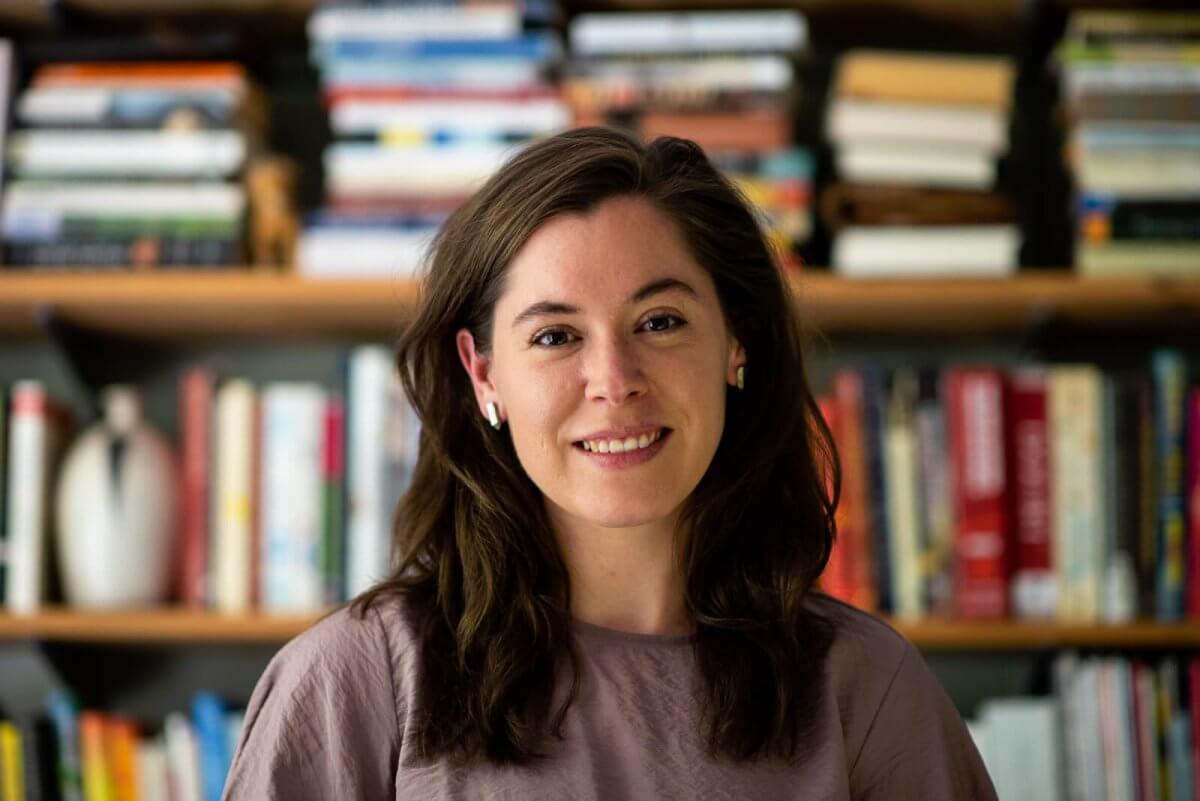
In her debut book, World Without End: Essays on Apocalypse and After, Martha Park explores the intersections of faith, climate change, and motherhood with an illustrator’s eye and a storyteller’s heart. She joined us to discuss her journey from freelance writer and illustrator to published author. We’re thrilled to introduce this week’s FACE of Memphis!

Could you tell us a little about your background?
I grew up a United Methodist preacher’s kid in Memphis. We lived in a series of church-owned parsonages for most of my childhood, and then settled into the Cooper-Young neighborhood before moving to a house near the University of Memphis.
I went to college at Ohio Wesleyan University in Delaware, Ohio, where I double-majored in Studio Art and Creative Writing. After grad school in Virginia, my husband and I moved to Memphis, hoping to be closer to family. (We bought the house next to my parents’, so we are very close!) We hoped to start a family of our own.
Can you give us a brief overview of your career?
I received a Master of Fine Arts from Hollins University. (I decided to go to Hollins based solely on the fact that author Annie Dillard went to school there.) After graduation, I was the Philip Roth Writer in Residence at Bucknell University. I’ve spent the last ten years working as a freelance writer and illustrator.
My work has been published in places like The Guardian, Oxford American, and The Bitter Southerner, and has received fellowships and support from the Virginia Center for the Creative Arts, the Religion & Environment Story Project, and the Economic Hardship Reporting Project.

You’re now a published author — congratulations! What has surprised you most about the experience of putting your book into the world?
It has been gratifying to experience the book moving from a very interior, private project to a shared one. It’s always encouraging to know that the questions I’ve been exploring — often in isolation — are resonant even for readers with wildly different life experiences.
Your book weaves faith, climate change, and motherhood — three deeply personal and complex themes. What moment or experience sparked the idea to explore them together in illustrated essays?
In 2020, while I was stuck at home during the pandemic and pregnant with my first child, I wrote a feature story for the Bitter Southerner about people in the Florida panhandle working to save one of the world’s rarest trees. It only grows along a stretch of the Apalachicola River, in an area an eccentric preacher and lawyer claimed (in the 1950s) was actually the location of the Garden of Eden.
While working on that story, I realized I couldn’t write the environmental story about the likely extinction of a rare tree and those working to save it, in isolation from larger questions of faith or from my own experience anticipating the birth of my son. They were all woven together. So, I wrote the story that way, and that experience really shaped all the work that came after it.

How did becoming a mother influence your view on climate change and your relationship with faith?
Motherhood has a way of imposing a kind of dual vision; you’re seeing the world with (at least) two perspectives at all times. My vision is narrowed to my children and their moment-to-moment experience of the world. At the same time, it is widened to include all children — to see the world as a vast array of people caring for and being cared for — and a broader timeline that stretches forward (and backward) generations.
Children have a way of stitching you into time expansively. I think that’s shaped how I think about climate change and faith. They’ve both become simultaneously more intimate and more expansive.
Were any essays or illustrations particularly difficult to write or draw? What made them so challenging … and rewarding?
The final essay in the book is about my son’s traumatic birth. In the rest of the book, my explorations are more intellectual, but the process of giving birth — and healing from birth — opened up new ways of experiencing the sacred that were deeply grounded in my body. When I decided to include the essay in the book, I was worried that readers would be thrown off by it; it’s a real departure from the other essays in some ways. So, it’s been rewarding to hear from readers who connect with that essay and find it to be a new entry point into the book’s larger questions.

Living in the South comes with a distinct blend of cultural, environmental, and spiritual identity. How do your Southern roots shape your work?
People often reference Flannery O’Connor’s description of the South as “Christ-haunted.” But I find the lines immediately following that famous quote even more resonant: “Ghosts can be very fierce and instructive. They cast strange shadows, particularly in our literature.”
I feel like my work and my perspective have been utterly formed by this place, as it has been shaped by the strange shadows of many ghosts. Nothing feels far away here. We are, as Annie Dillard wrote, on the “fringey edge where elements meet and realms mingle, where time and eternity spatter each other with foam.”
What do you hope readers carry with them after reading your book?
I hope readers carry with them a sense that the ordinary places where we live are deeply worth care and attention, and that questions about how to live in the world on the edge of the sacred are wells that never run dry.

Switching gears, where can we find you when you aren’t working?
I am almost always running around our neighborhood with one or more kids in tow.
What is your best piece of advice?
I’m not in the advice business, but I believe in heeding the creative work that calls and nourishes you, in whatever form that takes shape, especially while enmeshed in the work of parenting or caregiving.
Aside from faith, family, and friends, what are three things you can’t live without?
I could probably live without gardening, reading, and physical therapy, but I wouldn’t want to.

This article contains product affiliate links. We may receive a commission if you make a purchase after clicking on one of these links.
**********
For more creative and inspiring FACES, check out our archives!
Gaye Swan
As a professional writer of over 20 years, Gaye is an avid traveler and enjoys highlighting food, culture, and attractions around the South. While Gaye is passionate about life in Memphis, she grew up in Meridian and is still a Mississippi girl at heart.