Her New True Crime Podcast Uncovers “Everything They Missed”
After her own family's entanglement in the "Murdaugh Murders" saga, Stephanie Tinsley discovered a passion for investigation, uncovering shocking truths about a Memphis murder and the imprisoned man who she's confident is innocent. Image: Gayle Brooker

From corporate boardrooms to chilling cold cases, Stephanie Tinsley has made an unlikely midlife pivot. Inspired by her proximity to the “Murdaugh Murders” saga and the media frenzy that unfolded in her own living room, she’s now the voice behind Everything They Missed, a gripping new true crime podcast reexamining a Memphis murder case and the man she believes was wrongly convicted.

You had an entirely different career before all this — yet here you are, deep in case files and evidence logs. What called you here in your 50s?
I never set out to become an investigator. I honestly had no idea what I was getting into. I just knew I wanted to take on something big in my 50s, something that scared me a little. I’d spent my career in business, but I’d never really explored my creative side. After seeing how some of these documentaries were made, I thought, maybe I can do that.
I didn’t know that I had this dogged determination, this fearlessness in me. I didn’t realize how focused I could be, or that I had a writer’s brain. But once I started digging into the story, I couldn’t stop.
How did your family’s involvement in the Murdaugh case spark this interest in fighting for the truth?
My husband was directly connected to the Murdaugh case and to the very motive behind the murders. As a result, our lives were suddenly inundated with media attention. Some journalists were careful and compassionate; others were reckless and sensational.
When you’re fighting for the truth, you have to be brutally honest with yourself. You can’t stop at the first answer or the easy version of the story. The Murdaugh case taught me to keep peeling back the layers, to keep asking why, why, why — because the real truth is usually buried somewhere around the fiftieth question.

Was there a specific moment in the Andrew Hayes case that made you dig deeper?
SB Note: Andrew Hayes has served 18 years in prison for a crime many believe he was coerced into confessing to. In the first episode, we hear a never-before-heard conversation between a lawyer from The Innocence Project and a woman whom many believe could be the real perpetrator.
The phone call you hear at the beginning of Episode 1 changed everything for me. Once I met Andrew in prison, I knew he was telling me the truth. I couldn’t walk away. I had to find the woman behind that call, uncover what really happened, and prove what everyone else had missed.
Memphis has a complicated relationship with crime, justice, and race. How does that backdrop shape Everything They Missed?
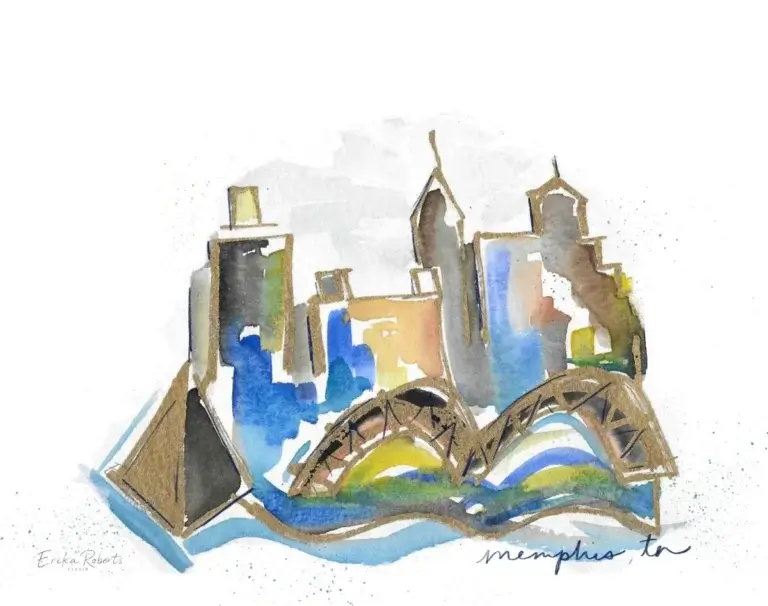
I’ve always said, if Nashville is the heart of Tennessee, Memphis is the soul. But it’s also burdened by corruption. The Department of Justice even found civil rights violations in the Memphis Police Department after a year-long investigation.
Memphis is also 63% Black, compared to Nashville’s 25%. That demographic shapes its culture — incredible food, music, and creativity — but also a justified mistrust of law enforcement. I wanted to confront that reality in the series.
One thing that infuriates me is that Tennessee is one of about 20 states that aren’t required to record police interrogations. Why? Recording protects everyone — the police, the suspects, the system. Andrew’s confession was never recorded, and it changed his life.

What skills or instincts from your other roles have unexpectedly served you in this new, investigative lane?
Motherhood taught me intuition … to trust that gut feeling you get when something doesn’t add up. As a Southern woman, I think we have a lot of guts. The small-town girl in me won’t give up. Being a wife to a trial lawyer taught me to listen carefully, pay attention to what’s not being said, and see how people use language to protect themselves. But also go for the jugular and toe-to-toe with someone when I need to.
I’m deeply invested in every life connected to this story. It’s not just reporting for me, it’s personal. Creating boundaries is still something I’m learning, but I wouldn’t trade the emotional connection for anything. It’s what makes the work human.

What’s something people are surprised to learn about you?
My creative side! My family — even my husband — didn’t see that coming. I was always the corporate girl, the “should” woman. I should go to work. I should stay in finance. I worked on this podcast for three months before I told anyone. I didn’t want anyone to tell me no. Most people were unaware of it until it launched. Once they heard it, they said, “This is so you.”
And on a lighter note, my teenage son is really into streetwear, and he’s completely rubbed off on me. We now take trips to New York, wander through SoHo, and shop together. It’s our thing, and it’s a reminder that creativity shows up in all kinds of ways.

What’s a common misconception people have about true crime journalism?
That it’s only entertainment. It can be different things. It can be an escape in your headphones for an hour-long walk. And that’s fine. But it’s more than just the crime. It’s about the people — the victims, the families, the ripple effect that one moment has on an entire community. Good true-crime storytelling isn’t voyeuristic; it’s empathetic.
Another misconception is that reporters or podcasters have all the answers when they start. The truth is, you often start with more questions than facts, and you have to be willing to sit in that uncertainty and to follow the story wherever it leads, even if it challenges your own assumptions.

What’s your all-time “favorite” piece of true crime media?
S-Town, without question. It broke every rule. It blurred the line between reporting and storytelling. It inspired this entire project and is why my production company is called StephTown Studios. Like S-Town, our show starts with a murder but becomes about character — about who people are, not just what they did.
Once this topic wraps up, do you have your sights set on a new case?
I’d absolutely like to do more of these, and the title lends itself well to that. Another case hasn’t officially found me yet, but I’ve been looking into a few that are incredible.
I also want to take it to the screen. I think connecting podcast storytelling with a visual format is powerful. Listeners want to see the people and places they’ve been imagining, and that feels like the natural next step for Everything They Missed.

What’s the best advice you’ve received?
Donald Albright told me, “Do something dope you want to listen to.” I think about it every day. I’m making a show I would be obsessed with. I followed my own curiosity. I chased the interviews I wanted to hear, went down the rabbit holes that fascinated me, and ignored the noise.
And finally, we always ask: Name three things you can’t live without.
- My bed — and a full eight hours of sleep — because I’m useless without it.
- My Peloton, which keeps me grounded and helps me process the weight of these stories.
- A creative outlet that lets me build, challenges me, and gives me purpose.
Watch the trailer for Stephanie’s podcast:
**********
Discover even more Southern stories worth sharing. Follow us on Instagram!

Zoe Yarborough
Zoe is a StyleBlueprint freelance writer, Charlotte native, Washington & Lee graduate, and Nashville transplant since 2012. She teaches Pilates, helps manage recording artists, and likes to "research" Germantown's food scene.